First, the triage — because chest symptoms have earned it: crushing or pressure-like pain, pain spreading to arm, jaw or back, shortness of breath at rest, cold sweat, nausea or faintness — that’s emergency-room territory now, quitting or no quitting. What this article covers is the other thing: the mild, intermittent chest tightness many quitters notice in the first weeks — which is common, usually benign, and has three well-understood causes.
Cause one: the airway spring-clean
Your bronchial tubes spent years partially constricted and chronically inflamed; your cilia were paralyzed. Within days of quitting, the tubes begin relaxing and the regrown cilia start hauling out years of accumulated mucus — the same cleanup driving smoker’s flu. That process is felt: a strange awareness in the chest, mild tightness, the recovering cough. Odd as it sounds, some of the sensation is repair work in progress — the construction noise of healing.
Cause two: anxiety’s physical echo
Withdrawal anxiety isn’t just mental — it lives in the body as chest tension, shallow breathing and the occasional alarming “can’t get a full breath” moment. This one loops nastily: the tightness worries you, worry tightens the chest. Knowing the mechanism breaks half the loop; the breathing below breaks the rest. (The anger and anxiety chemistry behind it is covered in the irritability guide.)
Cause three: the muscles themselves
Weeks of stressed, shallow breathing strain the intercostals and chest wall — ordinary muscle tension in an area where every sensation feels significant. If the tightness changes when you press on it, twist, or take a deliberate deep breath, the muscular component is likely large — and reassuringly mundane.
What relieves the normal kind
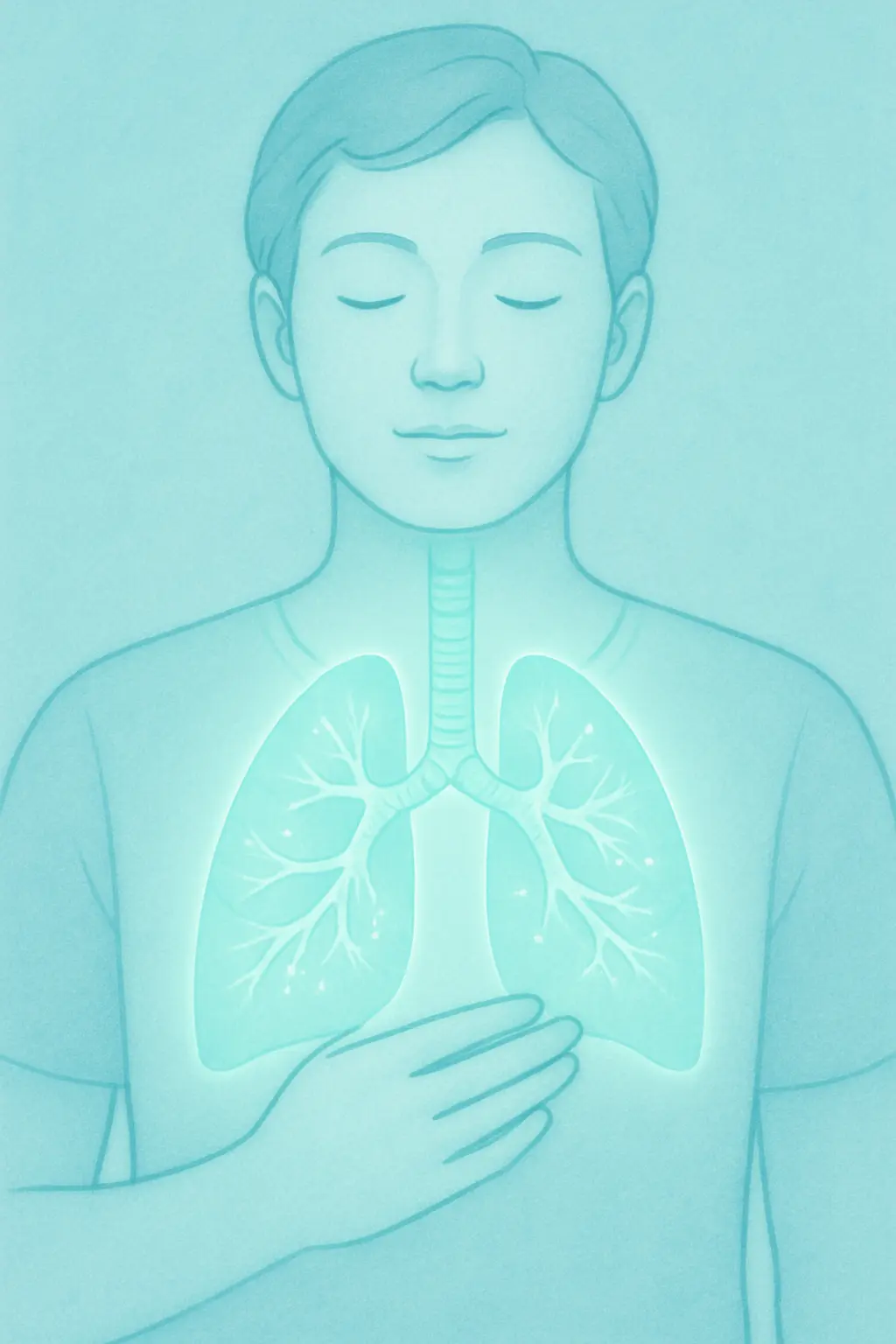
- Diaphragmatic breathing. Hand on belly, slow nasal inhale that moves the hand, long exhale. Five minutes releases the muscular guard and retrains the shallow pattern — the belly-breathing exercise in iQuit’s SOS flow paces it for you.
- Steam and water. Hydration thins the mucus the cilia are moving; a hot shower’s steam eases the airway component.
- Gentle walks. Movement mobilizes mucus, discharges anxiety, and proves to the worried brain that exertion is fine — which itself deflates the loop.
- Time. The typical arc: noticeable in weeks 1–2, fading by weeks 3–4 as the spring-clean completes and oxygen delivery normalizes.
The see-a-doctor list (non-emergency tier)
Book a prompt appointment — no panic, no delay either — for tightness that worsens week over week instead of easing, wakes you from sleep, comes with fever, wheezing that’s new, or any coughing of blood. Quitting occasionally unmasks conditions smoking was obscuring, and ex-smokers’ chests deserve a low threshold for checking. One more honest note: if you’re eligible (heavy smoking history, 50+), ask about lung-cancer screening — a low-dose CT is quick, and catching things early is the entire game.
Log it, watch it fade
Note the tightness in the free iQuit app journal — two weeks of entries usually show exactly the fading arc described above, which is both reassurance and, if the arc points the wrong way, the concrete record your doctor will want.
FAQ
Is chest tightness normal after quitting?
Mild and intermittent in the first weeks — yes, commonly: airway cleanup, anxiety tension and strained breathing muscles.
What are the emergency signs?
Crushing pressure, spread to arm/jaw/back, breathlessness at rest, sweating, nausea, faintness — ER, immediately.
How long does the normal kind last?
Typically fades by weeks 3–4 as the respiratory cleanup completes.
What relieves it fastest?
Diaphragmatic breathing, steam, hydration and gentle walks.
Guided belly breathing, one shake away: download iQuit free on Google Play.