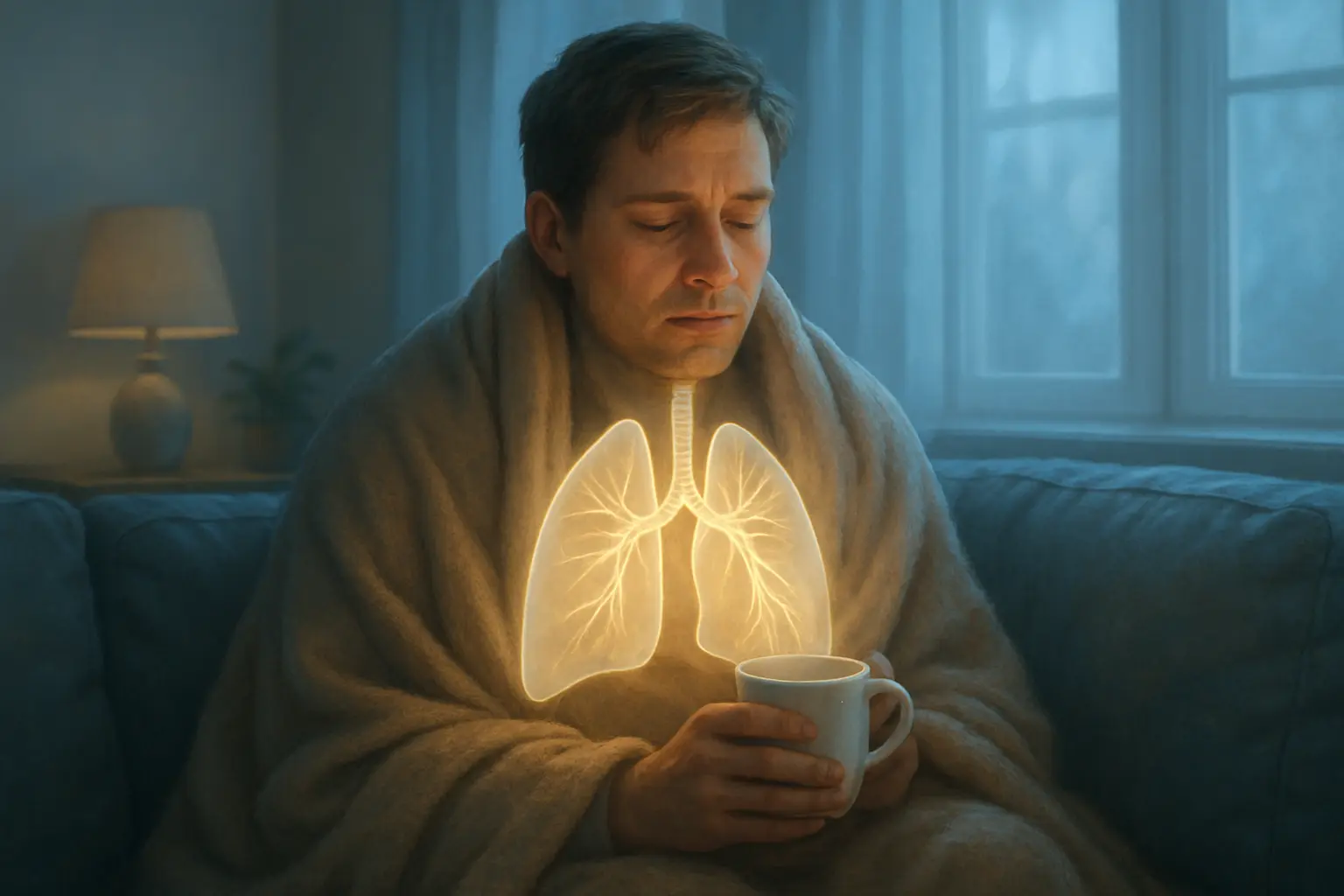
Getting sick days after quitting smoking is common enough to have a name: smoker’s flu. Sore throat, congestion, a worsening cough, headaches, fatigue, chills-like malaise — it feels like you caught something, but it isn’t an infection. It’s two overlapping processes: nicotine withdrawal hitting its peak, and your respiratory system switching its self-cleaning machinery back on after years of suppression. It’s uncomfortable, it’s temporary, and it is — genuinely — a sign of healing.
Why quitting can feel like getting sick
Process one: withdrawal. Nicotine was propping up your dopamine, adrenaline and cortisol patterns. Remove it and the recalibration produces headaches, fatigue, brain fog, irritability and disrupted sleep — the systemic “flu-ish” half of the syndrome, peaking around days 2–3 as the last nicotine leaves your body.
Process two: the great lung cleanup. Smoke paralyzes cilia — the microscopic hairs that sweep mucus and debris out of your airways. Within days of quitting, cilia start regrowing and reactivating, and they begin moving years of accumulated tar and mucus up and out. That’s the sore throat, the congestion, and the paradoxical cough that gets worse right after quitting: the janitors are back, and the building was filthy.
Symptom-by-symptom timeline
- Days 1–3: headaches, irritability, intense cravings, trouble focusing. Withdrawal’s peak. Heart rate, meanwhile, is already dropping toward normal hour by hour.
- Days 3–7: the respiratory phase arrives — sore throat, stuffy nose, chest congestion, the recovering cough. Fatigue is common; your body is doing real repair work.
- Weeks 2–4: systemic symptoms fade; the cough may linger as cilia keep clearing the backlog. Energy begins overshooting your smoking-era baseline.
- Week 4+: most quitters are through it entirely, with the one-month benefits — better breathing, taste, smell, energy — now unmistakable.
What actually helps
- Water, constantly. Hydration thins the mucus your cilia are hauling out and eases the sore throat. It also blunts cravings.
- Warm salt-water gargles and honey for the throat; humid air (shower steam, humidifier) for the congestion.
- Don’t suppress the cough by day — it’s the cleanup crew working. If it wrecks your sleep, ask a pharmacist about nighttime options.
- Gentle movement. Walks mobilize mucus and lift the withdrawal fog better than another coffee.
- Sleep generously. If insomnia is part of your withdrawal, the post-quit insomnia guide covers why it happens and how long it lasts.
The trap to avoid
Smoker’s flu is a notorious relapse window — feeling sick “because of quitting” makes a cigarette feel like the cure. Know the trap in advance: smoking again re-paralyzes the cilia and stops the cleanup, trading two weeks of discomfort for the years-long alternative. The free iQuit app is built for precisely this window — its day-by-day withdrawal guide tells you what’s normal today, the SOS tools handle the craving spikes, and the milestone tracker shows the recovery you can’t yet feel happening underneath the symptoms.
When it’s not smoker’s flu
See a doctor for high fever, coughing up blood, chest pain, shortness of breath at rest, or anything that keeps worsening after week two. Quitting doesn’t cause those — and a real infection can coincide with your quit week.
FAQ
What is smoker’s flu?
Flu-like symptoms in the first days after quitting — sore throat, cough, congestion, headache, fatigue — caused by withdrawal plus airway recovery, not infection.
How long does it last?
Worst days: 3–7. Mostly resolved: 2–4 weeks. A lingering recovery cough can take a few weeks more.
Why is my cough worse after quitting?
Regrowing cilia are sweeping years of tar and mucus out of your airways. The cough is the cleanup, and it’s temporary.
Can I prevent smoker’s flu?
Not entirely, but hydration, sleep, gentle exercise and gradual-reduction quitting approaches can soften it.
Get a day-by-day guide through the rough patch: download iQuit free on Google Play — withdrawal guide, SOS tools and milestones included.