If you are asking how long for lungs to heal after vaping, the honest answer is that nobody can give you a reliable number. Vaping is too new for doctors to have a tested recovery timeline like the ones that exist for smoking, and major health bodies do not publish one. What you can find is what is known about vaping and the lungs, what usually changes when you stop, and a plan for quitting without going back to cigarettes. This guide keeps those three things separate so you are not handed a made-up schedule.
How long for lungs to heal after vaping? What is known and what is not
The NHS Better Health page on vaping to quit smoking is direct about the limits of the evidence: “Vaping has not been around for long enough to know the risks of long-term use. While vaping is less harmful than smoking, it is unlikely to be totally harmless.” Its advice: “The healthiest option is not to smoke or vape.”
A 2026 narrative review in the Journal of Thoracic Disease reaches a similar place. It says chronic respiratory symptoms such as cough, breathlessness and wheeze are common among people who vape, “though the long-term impact of vaping on lung function and the development of chronic lung disease remains uncertain.”
The CDC’s e-cigarette page says only that “More research is needed to better understand the short- and long-term health effects of using e-cigarettes.” If a website promises that your lungs will be clear in exactly 30, 60 or 90 days, it is borrowing numbers from somewhere else. The table summarizes what the evidence does and does not support.
| Question | What the evidence shows | Source |
|---|---|---|
| Is there a proven healing timeline? | No published timeline | NHS, CDC, 2026 review |
| Are long-term lung effects known? | Uncertain | NHS; J Thorac Dis 2026 |
| Are respiratory symptoms linked to vaping? | Cough, breathlessness and wheeze are common | J Thorac Dis 2026 |
| Is lung function lower in users? | Reduced lung function and more asthma reported across reviews | BMJ Open 2025 umbrella review |
What vaping does to the lungs, as far as we know
The American Lung Association says e-cigarettes “produce a number of dangerous chemicals including acetaldehyde, acrolein, and formaldehyde.” The NHS lists coughing, dry mouth and throat, mouth and throat irritation, shortness of breath and headaches as common side effects of vaping.
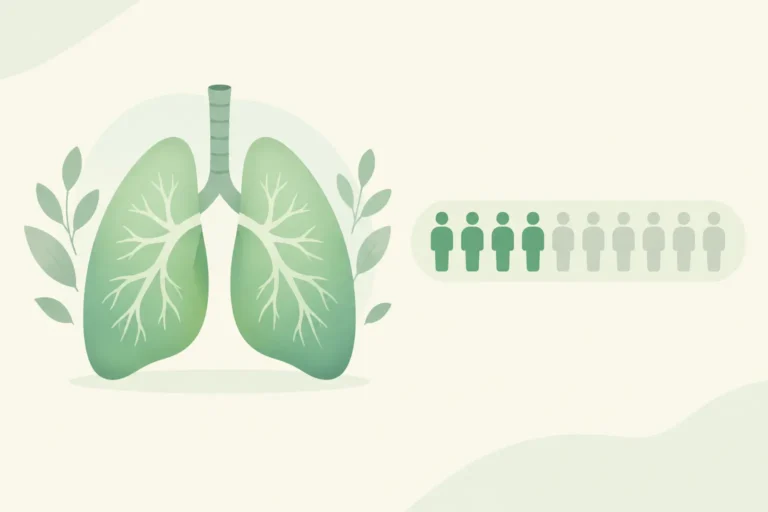
A 2025 umbrella review of 69 systematic reviews in BMJ Open reported reduced lung function and a higher incidence of asthma in nine studies (odds ratio 1.30, 95 percent confidence interval 1.1 to 1.55). A 2025 meta-analysis of 17 observational studies found higher odds of COPD among e-cigarette users: 1.48 for current users and 1.84 for former users.
Read those numbers with care. They come from observational studies, which show an association and cannot show cause. The higher odds among former users do not mean lungs fail to recover, and they do not mean they recover. Some people may stop vaping because a symptom has already appeared, and these studies cannot rule that out. They do not give a recovery timeline, which is the point of this article.
In this Mayo Clinic video, an expert answers questions about the unknowns of vaping.
First days and weeks: withdrawal comes first
The thing you will most likely notice after stopping is not lung repair but nicotine withdrawal. The NHS guide on how to quit vaping lists the symptoms to expect: strong cravings to smoke or vape, feeling irritable or low, trouble concentrating, feeling hungrier than usual and difficulty sleeping. It adds that everyone’s experience is different.
The NHS does not give a number of days for when airway irritation settles, and the other sources cited here do not either. So this guide does not promise that a cough clears by a certain date. If you want a day-by-day view of the withdrawal side, which is well described, read our vape withdrawal timeline what to expect guide.
If you vape and smoke cigarettes, or vaped to quit smoking, there is an important safety point from the NHS: “You should only quit vaping if you are confident you can do it without smoking cigarettes.” Going back to cigarettes would undo the main benefit of having switched.

Cough, mucus and breathing: what to watch
A persistent cough, wheeze or breathlessness is not something to wait out. The 2026 Journal of Thoracic Disease review describes chronic respiratory symptoms as common in people who vape, and no published health guidance says how fast they fade after quitting. If you are still coughing weeks after stopping, or if symptoms are getting worse, see a clinician. They can check for other causes, including asthma, which the BMJ Open umbrella review found more often in users.
If you smoked cigarettes before or during vaping, the picture changes, because smoking has well-documented lung effects and recovery timelines. Our what happens when you quit smoking complete health recovery guide covers that, and if you worry about emphysema in particular, see can emphysema be reversed after quitting. Those timelines belong to smoking, so do not assume they transfer to vaping.
EVALI is a different problem
You may have heard about vaping lung injury. The condition is called EVALI, short for e-cigarette, or vaping, product use-associated lung injury. On its archived outbreak page, the CDC reported that as of February 18, 2020, “a total of 2,807 hospitalized EVALI cases or deaths have been reported to CDC,” with 68 confirmed deaths. Vitamin E acetate was identified in lung fluid samples from 48 of 51 EVALI patients.
The CDC and FDA recommend that people not use THC-containing e-cigarette or vaping products. For anyone worried about EVALI, the CDC’s advice is to contact a healthcare professional. EVALI is an acute injury linked to specific products; it is not the same thing as the slower questions this article is about, and the CDC outbreak page does not give recovery guidance. If you have severe breathlessness or chest pain, get medical care urgently.
A related fear is “popcorn lung.” The NHS says vaping does not cause it, and our popcorn lung vaping evidence explained article walks through the evidence.
Dual users: quit both, not one
Many people vape and smoke at the same time. A 2025 analysis of US PATH survey data, published in Nicotine & Tobacco Research, followed adults who smoked and had a cough or wheeze. Smokers who moved completely to e-cigarettes were more likely to see wheeze resolve (incidence rate ratio 1.33, 95 percent confidence interval 1.01 to 1.75), but not cough. Those who became dual users without cutting back on cigarettes had 15 percent lower rates of symptom resolution than people who kept smoking.
That study is about smokers, not people who vape only, so it cannot tell you how fast vaping-only lungs recover. What it supports is the practical message the NHS also gives: the benefit comes from replacing cigarettes entirely, and then, when you feel sure you will not go back, quitting nicotine vaping too.
A quit plan for vapers
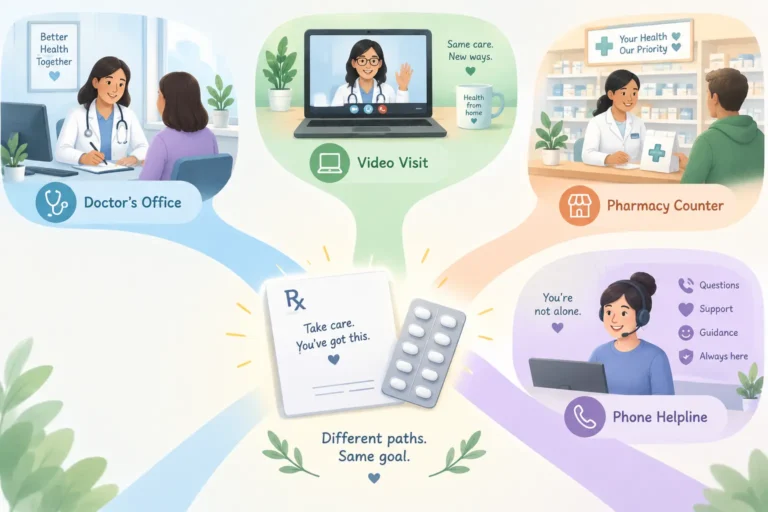
The NHS describes two main routes. To cut down gradually, you can lower the nicotine strength of your e-liquid, increase the time between sessions, and create vape-free spaces and times, widening them over time. To stop in one step, the NHS suggests asking a pharmacist or stop smoking adviser about switching to a nicotine replacement product, and notes that, in the UK, Nicorette QuickMist is currently the only approved NRT for quitting vaping. Availability differs by country, so ask a local pharmacist.
- Write down why you want to stop. The NHS lists breaking nicotine dependence, long-term health concerns and saving money as common reasons.
- Choose gradual reduction or a one-step stop, and tell someone close to you.
- Plan for cravings: keep your hands busy, take a walk, and ride the urge out, because they pass.
- Expect withdrawal and mood changes, and look after your mental health.
- If you slip, the NHS says it is okay if it takes a few tries, and if you were vaping to stay off cigarettes, going back to a vape is much better than going back to smoking.
For the practical details, our how to quit vaping cold turkey first week guide covers the hardest days, and the how to quit vaping step by step complete plan 2026 walks through a gradual approach.
An app can help with the habit side. The free iQuit app lets you pick cold turkey or gradual reduction, log each craving with its trigger and intensity, and use SOS tools when an urge hits; its dashboard counts smoke-free days and shows money saved in your own currency. It does not measure or treat your lungs. If you want to compare apps first, see our best quit smoking apps feature comparison rankings.
Frequently Asked Questions
How long does it take for lungs to heal after vaping?
There is no established timeline. The NHS says vaping has not been around long enough to know the long-term risks, and a 2026 review in the Journal of Thoracic Disease says the long-term impact on lung function remains uncertain. Anyone quoting an exact number of days is estimating (NHS; J Thorac Dis, 2026).
Will my cough go away after I quit vaping?
No published health guidance gives a time frame. Chronic cough, breathlessness and wheeze are described as common in people who vape, so a cough that lasts weeks after stopping, or that worsens, deserves a clinician’s check rather than waiting it out (J Thorac Dis, 2026).
Can vaping damage lungs permanently?
It is not yet known. Reviews report reduced lung function and higher asthma incidence in vapers, and observational studies link e-cigarette use with higher odds of COPD, but these show association and not cause. The NHS says long-term effects are unknown (BMJ Open, 2025; NHS).
What is EVALI and is it the same as vaping lung damage?
EVALI is e-cigarette, or vaping, product use-associated lung injury. The CDC counted 2,807 hospitalized cases or deaths by February 18, 2020, and found vitamin E acetate in lung fluid from 48 of 51 patients. It is an acute injury, and the CDC and FDA advise against THC-containing vapes (CDC archive).
Should I quit vaping if I vape to stay off cigarettes?
The NHS says to aim to eventually stop vaping too, once you are sure you will not return to smoking. It also says you should only quit vaping if you are confident you can do it without smoking cigarettes, and that going back to a vape beats going back to cigarettes (NHS).
What are the withdrawal symptoms when you quit vaping?
The NHS lists strong cravings to smoke or vape, feeling irritable or low in mood, trouble concentrating, feeling hungrier than usual and difficulty sleeping. Everyone’s experience is different, and gradual reduction can make quitting easier (NHS).
Is it better to quit vaping cold turkey or gradually?
The NHS describes both. Gradual options include lowering nicotine strength, extending the time between sessions and creating vape-free spaces. For a one-step stop it suggests asking a pharmacist about nicotine replacement. Which suits you depends on how dependent you are (NHS).
Ready to Put the Vape Down?
Stopping is the step that removes the exposure. iQuit is free on Google Play and the App Store and lets you log cravings, track nicotine-free days and use SOS tools when urges hit.