Can emphysema be reversed? No. The damage that emphysema does to the tiny air sacs in your lungs is permanent, and no treatment currently restores it. But that is not the end of the story, because stopping smoking is the single most effective thing you can do to slow the disease, and the evidence shows that people with airway damage still gain from quitting. This guide explains what emphysema is, what stopping changes in the numbers, and which treatments help.
Can emphysema be reversed? The damage stays, the decline can slow
Emphysema is one of the two main conditions grouped under COPD. The NHS page on COPD states that “the damage to the lungs caused by COPD is permanent, but treatment can help slow down the progression of the condition.” It adds that the condition cannot be cured or reversed, but that for many people treatment can keep it under control so it does not severely limit daily activities.
That wording matters. It means no inhaler, supplement, breathing gadget or diet will rebuild destroyed air sacs. It also means that what you do next still counts. The same NHS treatment page says that although damage “cannot be reversed, giving up smoking can help prevent further damage,” and that “it’s never too late to stop – even people with more advanced COPD will benefit from quitting.”
If you are here because you have been told you may have emphysema, or because you are frightened by a cough you cannot shake, take one practical step first: see a doctor for a breathing test. The rest of this article explains what to expect.
What emphysema is
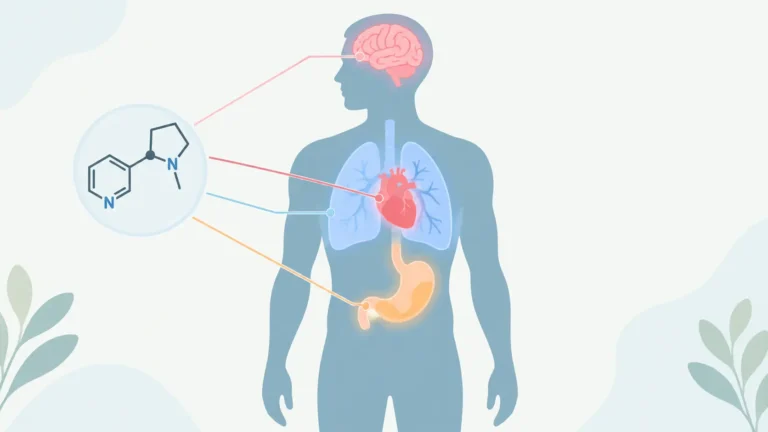
The US National Heart, Lung, and Blood Institute (NHLBI) explains that emphysema “develops when there is damage to the walls between many of the air sacs in the lungs.” Normally these sacs are stretchy, like small balloons: they fill when you breathe in and deflate when you breathe out. In emphysema it becomes harder for the lungs to move air out of the body.
The NHLBI says that most people with COPD have a mixture of emphysema and chronic bronchitis in different proportions, and that cigarette smoking is the main cause of COPD in the United States and other high-income countries. The NHS agrees that the main cause is smoking and says the likelihood of developing COPD increases the more you smoke and the longer you have smoked.
The NHLBI reports that COPD affects more than 14 million adults in the United States and that many others do not know they have it. For the bigger picture on numbers, see our COPD statistics prevalence deaths smoking breakdown.
Symptoms and how it is diagnosed
Emphysema usually develops slowly. The NHS says most people with COPD do not have any noticeable symptoms until they reach their late 40s or 50s. The common symptoms it lists are:
- shortness of breath, which may only happen during exercise at first;
- a persistent chesty cough with phlegm that does not go away;
- frequent chest infections;
- persistent wheezing.
The NHS also warns that symptoms usually get gradually worse and that there can be sudden flare-ups, called exacerbations. If you have these symptoms and smoke or used to smoke, particularly if you are over 35, the NHS says to see a GP and not to ignore them.
The breathing test that confirms it
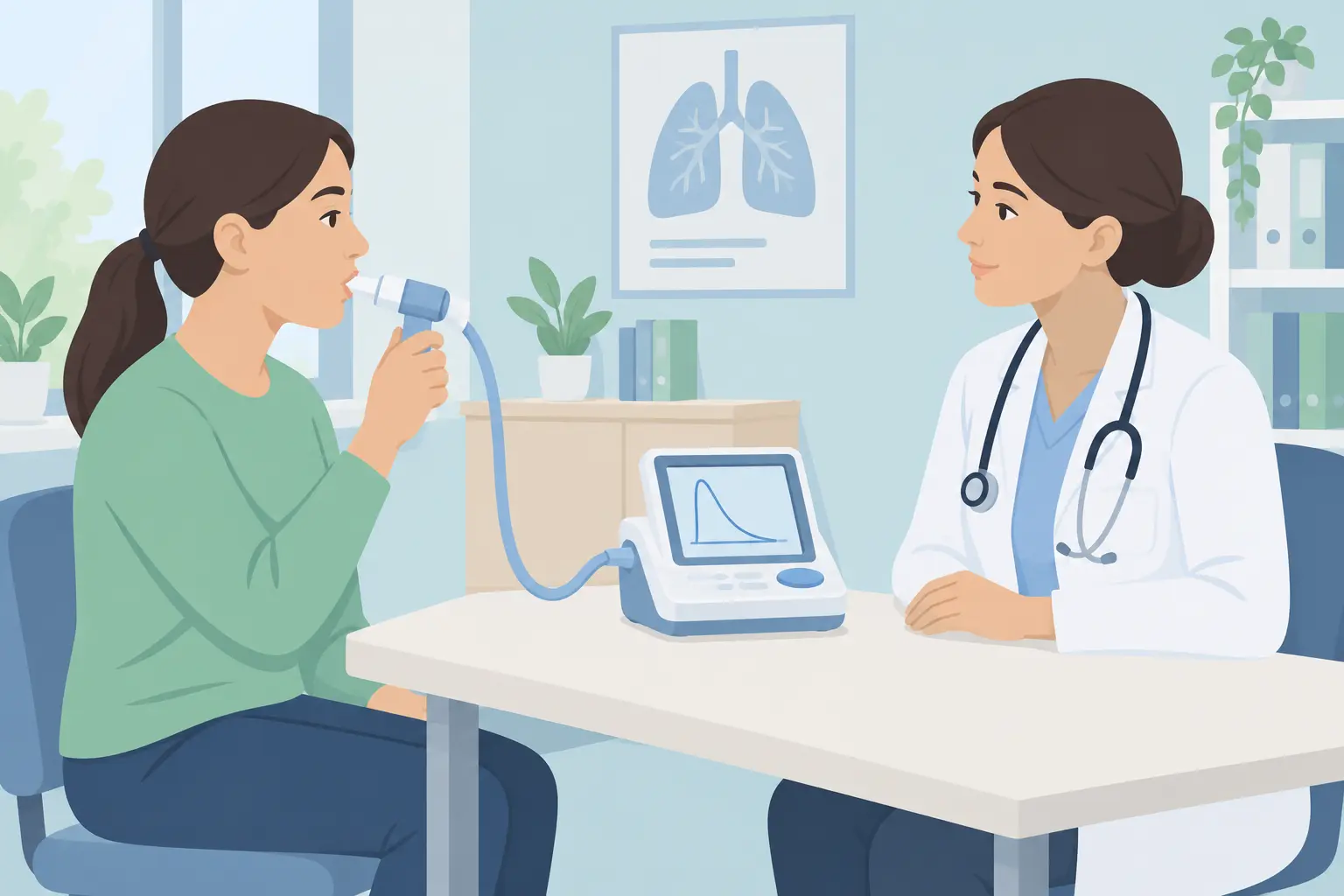
A doctor cannot diagnose emphysema from symptoms alone. The NHS describes a breathing test called spirometry, in which you breathe into a machine that measures the volume of air you can breathe out in one second and the total amount you can breathe out. The readings are compared with normal results for your age to show whether your airways are obstructed. Depending on the results, a doctor may also arrange a chest X-ray, blood tests, or a CT scan to check for other problems or to judge how severe the disease is.
If you have been coughing for a long time and want to know when it needs checking, our guide to breathlessness after quitting smoking timeline explains what is normal in early recovery and what is not.
What quitting changes: the lung-function numbers
The best evidence on what stopping does for people who already have airway damage comes from the Lung Health Study, a large randomized trial run at ten centers in the United States and Canada. Participants were smokers aged 35 to 60 with early signs of COPD on breathing tests.
In the 1994 report in JAMA, 5,887 smokers were randomized to an intensive stop-smoking program or to usual care. The authors concluded that an aggressive smoking intervention “significantly reduces the age-related decline in FEV1 in middle-aged smokers with mild airways obstruction.” FEV1 is the amount of air you can blow out in the first second of a breath.
A later analysis of 3,926 of these smokers, published in 2000, put numbers on it. People who stopped smoking had an average improvement in FEV1 of 47 ml, or 2 percent, in the year after quitting. After that, the yearly decline among sustained quitters was half the rate among continuing smokers: 31 ml versus 62 ml, a rate the authors described as comparable to that of never-smokers. They concluded that smokers with airflow obstruction benefit from quitting despite previous heavy smoking, advanced age, or poor baseline lung function.
| Measure | Sustained quitters | Continuing smokers |
|---|---|---|
| FEV1 change in the year after quitting | Average improvement of 47 ml (2%) | No such improvement reported |
| Yearly decline in FEV1 afterward | 31 ml | 62 ml |
| All-cause deaths up to 14.5 years (whole groups, not quitters only) | Stop-smoking program group: 8.83 per 1,000 person-years | Usual-care group: 10.38 per 1,000 person-years |
The last row comes from the 14.5-year follow-up. It compares the whole intervention group with the usual-care group, not quitters with smokers, and at 5 years 21.7 percent of the intervention group had stopped compared with 5.4 percent of usual care. The authors concluded that stop-smoking programs can have a substantial effect on later mortality “even when successful in a minority of participants.”
One honest caveat: these participants had mild to moderate obstruction. The study does not say how much a person with severe emphysema gains in ml. What the NHS and NHLBI say for people with more advanced disease is the same direction of travel: stopping helps slow the disease.
For more on how lungs recover in general, read can your lungs heal after years of smoking, and for the whole-body timeline see our what happens when you quit smoking complete health recovery guide.
This Cleveland Clinic video explains day-to-day ways to manage COPD symptoms, which include emphysema.
Treatments that help (without reversing it)
There is no cure, so treatment aims to control symptoms and slow progression. The NHS lists four main elements: stopping smoking, inhalers and tablets, pulmonary rehabilitation, and surgery or a lung transplant for a very small number of people.
Inhalers and medicines
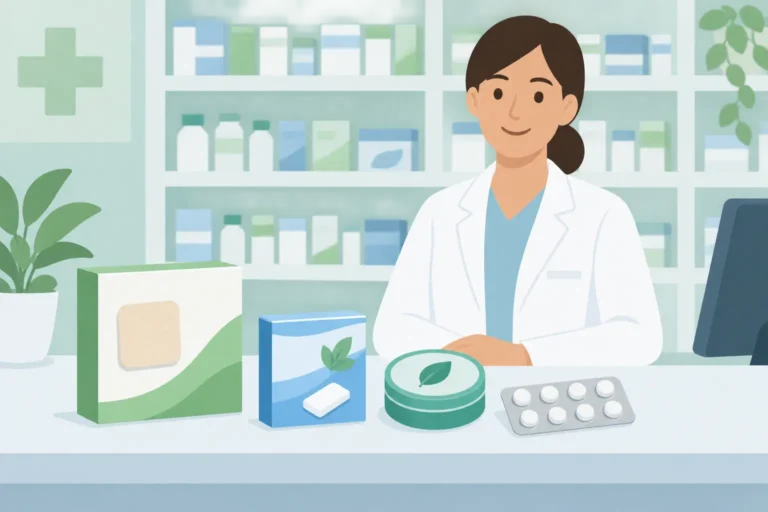
If COPD affects your breathing, the NHS says you will usually be given an inhaler. For most people the first treatment is a short-acting bronchodilator, which relaxes and widens the airways. If symptoms persist or flare-ups are frequent, a long-acting bronchodilator, and sometimes a steroid inhaler, may be added. Tablets such as theophylline and mucolytics can help in some cases. Which medicine suits you is a decision for your clinician; this article cannot and does not give dosing advice.
Pulmonary rehabilitation and oxygen
The NHLBI describes pulmonary rehabilitation as a supervised program that includes exercise training, health education, and breathing techniques. Oxygen therapy may be needed if your blood oxygen levels are too low. The NHLBI adds an important safety note: oxygen poses a fire risk, so you should never smoke or use flammable materials when using it.
Lung volume reduction and transplant
Surgery is only an option for some people. The NHLBI says it usually applies when serious symptoms have not improved with medicines. Options it lists include bullectomy (removing very large air spaces), stents, one-way endobronchial valves, and lung volume reduction surgery, which removes damaged tissue so the lungs work better. A lung transplant replaces a diseased lung with a healthy one and is used to improve quality of life and extend lifespan for people with severe or advanced lung conditions that do not respond to other treatments.
The NHS stresses that surgery or transplant is only an option for a very small number of people. These are specialist decisions. Ask your care team whether any of them could apply to you.
Living well with emphysema
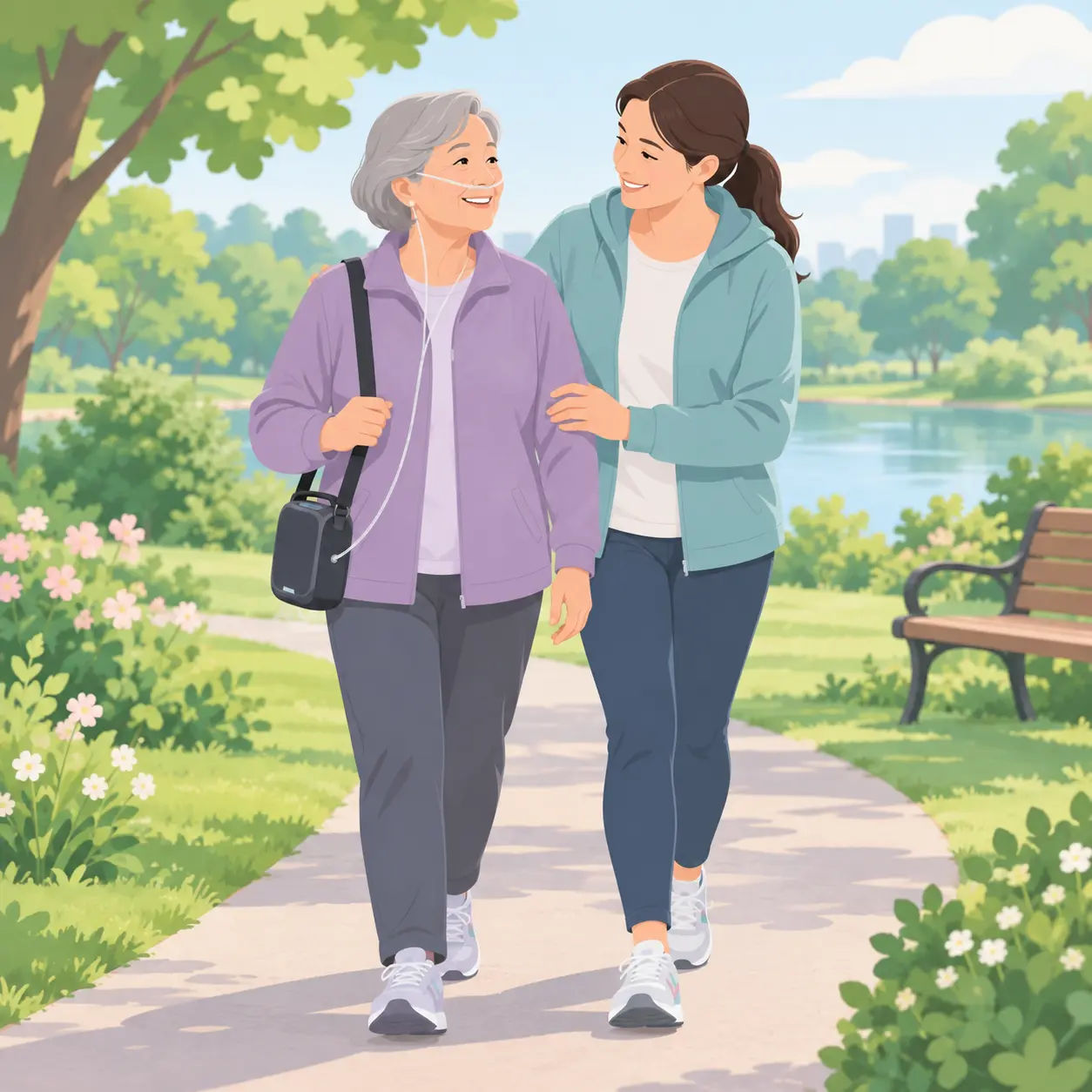
The NHS living-with-COPD advice is practical. Take prescribed medicines, including inhalers, because this helps prevent bad flare-ups; exercise regularly, within what your care team advises; maintain a healthy weight, since extra weight can make breathlessness worse; and get vaccinated, because COPD can make you more vulnerable to infections, so everyone with COPD is encouraged to have the annual flu shot and the one-off pneumococcal vaccination.
A practical plan if you smoke and have symptoms
- Book a GP or clinic visit and ask for a spirometry test.
- Ask what stop-smoking support is available where you live, including medicines and counseling.
- Pick your quitting approach: cold turkey or gradual reduction both have a place, and what matters is that you end at zero.
- Tell someone close to you what you are doing and why.
- Plan for the hard moments: cravings usually pass, so have something ready to do when one hits.
For figures on how often quit attempts succeed, see our page on quit smoking success rates statistics. And if you want a way to check on your own breathing against your age, our explainer on what a lung age test means shows how that estimate works and where it falls short.
The free iQuit app can support the quitting part of this plan: you can pick cold turkey or gradual reduction, log each craving with its trigger, use SOS tools when one hits, and watch your smoke-free days and money saved add up. iQuit helps you stop smoking; it does not test your lungs, diagnose emphysema or treat it, so keep your medical care with your clinician.
Frequently Asked Questions
Can emphysema be reversed?
No. The NHS says the damage to the lungs caused by COPD, which includes emphysema, is permanent and that the condition cannot be cured or reversed. Treatment and quitting smoking can slow progression and help control symptoms, so a diagnosis is a reason to act early and not a reason to give up (NHS).
Can your lungs heal from emphysema if you quit smoking?
The destroyed air sacs do not grow back, but quitting still matters. The NHS says giving up smoking can prevent further damage, and the Lung Health Study found sustained quitters lost lung function at about half the rate of continuing smokers, 31 ml versus 62 ml a year (Am J Respir Crit Care Med, 2000).
Is it too late to quit if I already have emphysema?
The NHS says it is never too late to stop and that even people with more advanced COPD will benefit from quitting. Stopping is described as the most effective way to prevent COPD getting worse, and help is available from a GP and stop smoking services (NHS).
What is the difference between emphysema and COPD?
COPD is the umbrella name for a group of lung conditions. The NHS says it includes emphysema, which is damage to the air sacs, and chronic bronchitis, which is long-term inflammation of the airways. The NHLBI adds that most people with COPD have a mixture of both (NHS; NHLBI).
How is emphysema diagnosed?
A GP asks about symptoms and smoking history, listens to your chest, and usually arranges spirometry, a breathing test measuring how much air you can blow out in a second and in total. A chest X-ray, blood tests or a CT scan may add detail on severity or rule out other conditions (NHS).
What are the first symptoms of emphysema?
Common early symptoms are shortness of breath, often only during exercise at first, a persistent chesty cough with phlegm, frequent chest infections and persistent wheezing. The NHS says most people have no noticeable symptoms until their late 40s or 50s, so a smoker’s cough is worth checking (NHS).
Does quitting smoking improve life expectancy with COPD?
In the Lung Health Study, which followed people with early airway obstruction for up to 14.5 years, all-cause mortality was lower in the stop-smoking intervention group than in usual care: 8.83 versus 10.38 deaths per 1,000 person-years. The authors noted results apply only to people with airway obstruction (Ann Intern Med, 2005).
What treatments are there for emphysema?
The NHS lists stopping smoking, inhalers and tablets, pulmonary rehabilitation, and surgery or a lung transplant for a very small number of people. The NHLBI also describes oxygen therapy, bullectomy, valves and lung volume reduction surgery. Your clinician decides which fit your stage (NHS; NHLBI).
Take the Step That Slows the Damage
Quitting is the one move that slows lung decline. iQuit is free on Google Play and the App Store and helps you track smoke-free days, log cravings and use SOS tools when urges hit.