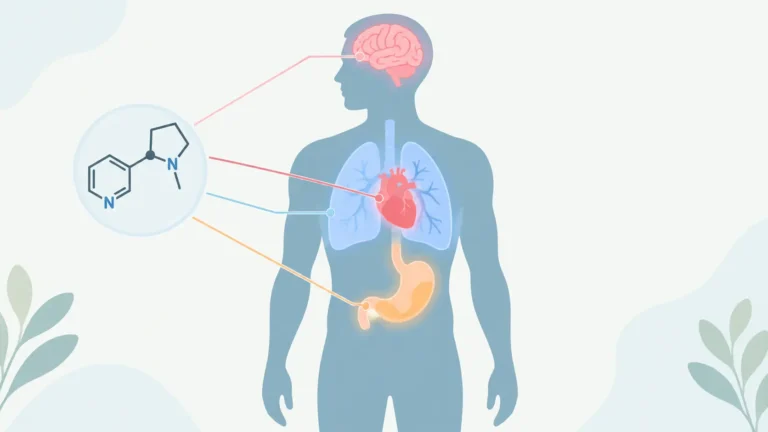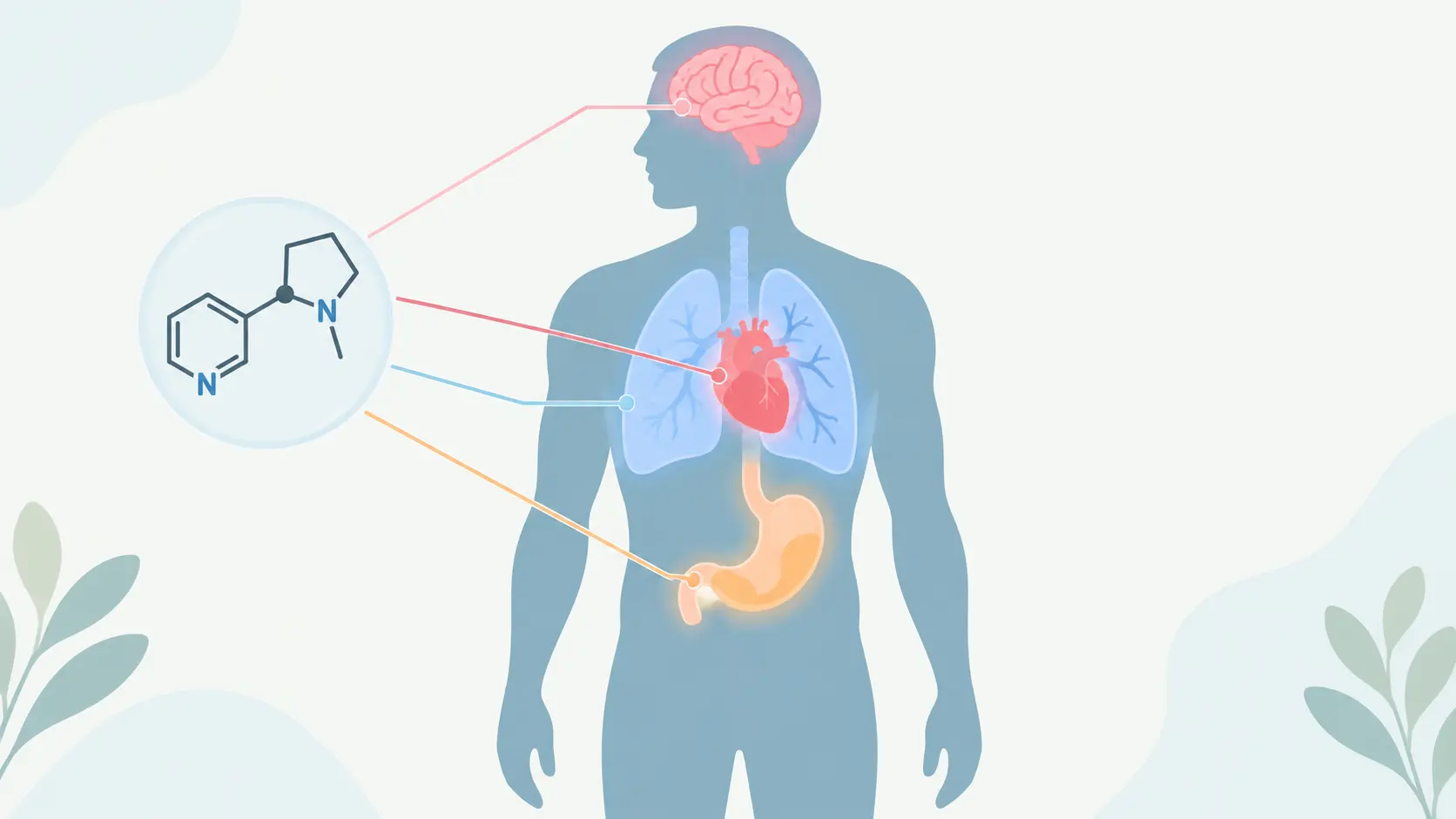
So what does nicotine do to your body? In short, it acts first on your brain, where it triggers dopamine and builds dependence, then on your heart and blood vessels, your appetite and your blood sugar. It does most of this within seconds of reaching your bloodstream. Nicotine is not the chemical that causes most smoking-related disease, though. That job belongs to the smoke itself. This guide walks through each organ, says plainly where the evidence is strong and where it is thin, and covers what changes when you stop.
Brain: Dopamine, Reward and Dependence
The brain is where nicotine does its most important work. The National Institute on Drug Abuse (NIDA) explains that “like other drugs of abuse, nicotine increases levels of the neurotransmitter dopamine in these reward circuits,” which reinforces the behavior of taking the drug (NIDA, Is nicotine addictive?). Repeated exposure then alters how sensitive those circuits are to dopamine and changes other circuits involved in learning, stress and self-control.
Speed matters here. NIDA reports that when cigarette smoke enters the lungs, nicotine “levels peak within 10 seconds of inhalation,” and the effects fade quickly too. That rapid rise and fall is why a smoker keeps dosing: the next cigarette relieves the first signs of withdrawal. The FDA makes the same point, noting that some tobacco products “are designed to deliver nicotine to the brain within seconds,” which makes dependence easier to develop and harder to break (FDA, Nicotine Is Why Tobacco Products Are Addictive).
Short-term mental boost, long-term cost
Nicotine does produce a real, temporary lift. NIDA notes it “temporarily boosts aspects of cognition, such as the ability to sustain attention and hold information in memory.” But the same page adds that long-term smoking is associated with cognitive decline, and that people in withdrawal have problems with attention and memory. In other words, part of the “focus” a smoker feels from a cigarette is simply relief from the dip that nicotine itself created.
If you want the deeper mechanics of the craving cycle, our explainer on the nicotine brain dopamine craving loop goes step by step, and the piece on whether nicotine is a stimulant or depressant explains why it can feel both energizing and calming.
The National Institute on Drug Abuse produced a short video on how nicotine hooks the brain:
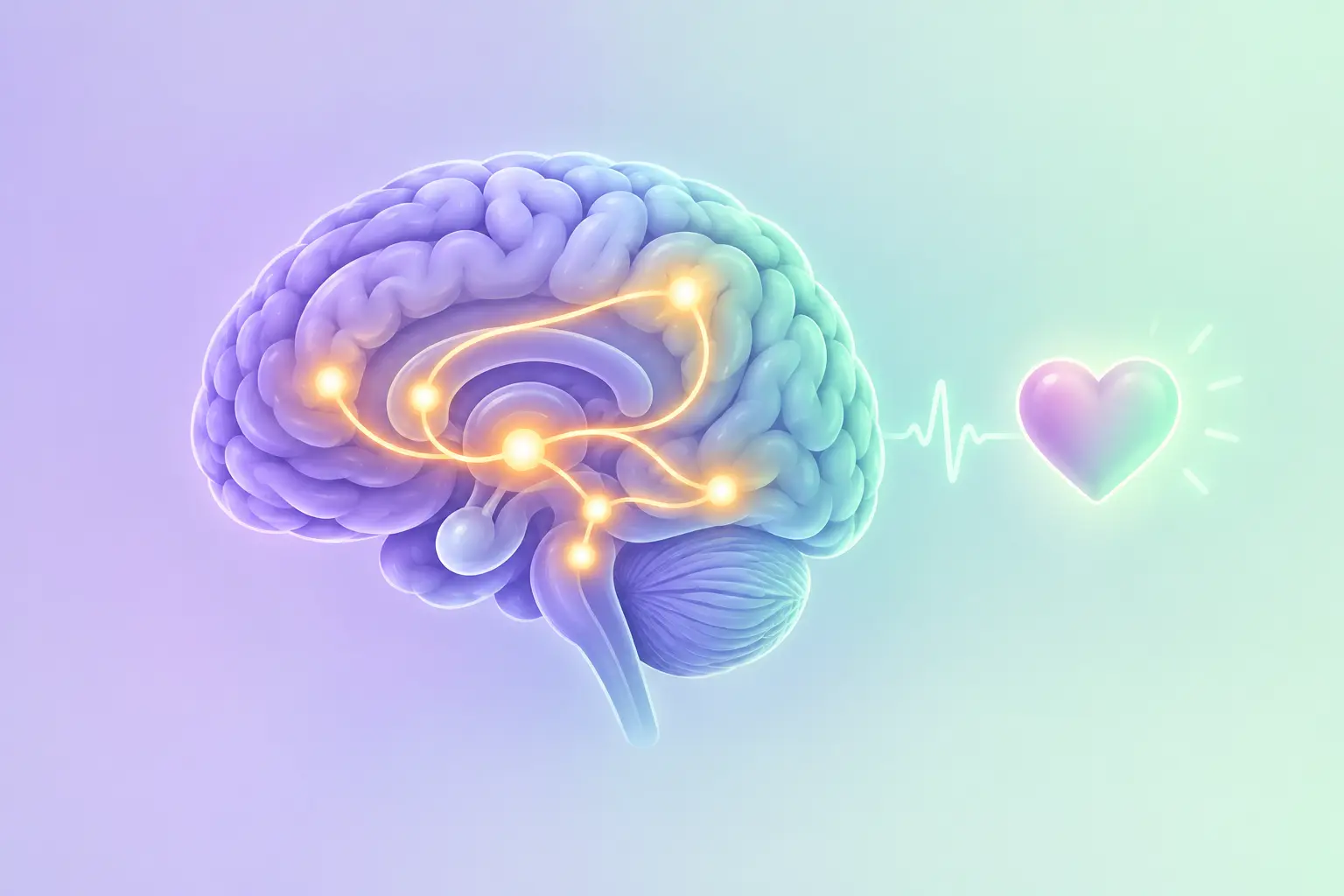
Heart and Blood Vessels: Pulse, Pressure and Strain
The cardiovascular effects of nicotine show up quickly. In a small laboratory study of 18 smokers aged 18 to 30, researchers gave each person an intravenous nicotine dose of roughly the amount (about 1 mg) delivered by smoking a standard cigarette, at three different speeds. They found that “the 1-min infusion induced a greater heart rate and blood pressure increase” than slower delivery (Psychopharmacology, 2020). The takeaway is that the faster nicotine arrives, the harder the heart and blood vessels feel it, which is why delivery speed matters.
What about long-term damage? A 2016 review in Trends in Cardiovascular Medicine concluded that “nicotine exerts pharmacologic effects that could contribute to acute cardiovascular events and accelerated atherogenesis experienced by cigarette smokers.” The same review found that studies of nicotine medications and smokeless tobacco indicate the risks of nicotine without combustion products “are low compared to cigarette smoking, but are still of concern in people with cardiovascular disease” (Trends in Cardiovascular Medicine, 2016).
Put plainly: nicotine is not good for your heart, and it is a bigger worry if you already have heart disease, but burning tobacco adds far more harm than nicotine alone. Our evidence summary on whether nicotine is bad for your heart goes deeper on this.
Lungs and Airways: Mostly the Smoke, Not the Nicotine
People often assume nicotine is what damages the lungs. The FDA is clear that it is not: “This toxic mix of chemicals—not nicotine—cause the serious health effects among those who use tobacco products, including fatal lung diseases, like chronic obstructive pulmonary disease (COPD) and cancer.” The agency adds that cigarettes deliver “more than 7,000 chemicals along with nicotine.”
That distinction explains the FDA’s ranking of products by risk. Combustible products such as cigarettes are the most harmful. FDA-approved nicotine replacement therapies, which deliver nicotine without the smoke, are the least harmful. Noncombustible products such as smokeless tobacco and e-cigarettes fall in between. If you are curious about nicotine and cancer specifically, we cover the research in does nicotine cause cancer.
This is not a reason to treat nicotine as harmless. It is the reason smoking is so hard to quit, and it keeps people exposed to the smoke that does the damage.
Gut and Appetite: Why Nicotine Suppresses Hunger
Many people who smoke notice they eat less and weigh less than they would otherwise. A 2021 review in the journal Appetite included 65 studies and reported that “nicotine has been shown to decrease appetite, food intake (FI) and body weight, but the mechanisms are unclear.” The authors suggest nicotine alters appetite-regulating brain signals, and that it also “increases resting EE (REE) and physical activity EE (PAEE) in both smokers and non-smokers,” where EE means energy expenditure (Appetite, 2021).
The review is also careful about what it cannot say. It states there is not enough evidence to tie changes in appetite to peripheral hormones after nicotine use, and calls for more human research. So the honest summary is that the effect on appetite and weight is real, but the exact pathway is still being worked out.
This matters when you stop. NIDA lists “increased appetite” among the withdrawal symptoms, alongside irritability, craving, anxiety and sleep disturbances. Expect your appetite to return, plan for it with regular meals and snacks, and do not read it as a sign that quitting is failing.
Hormones and Blood Sugar
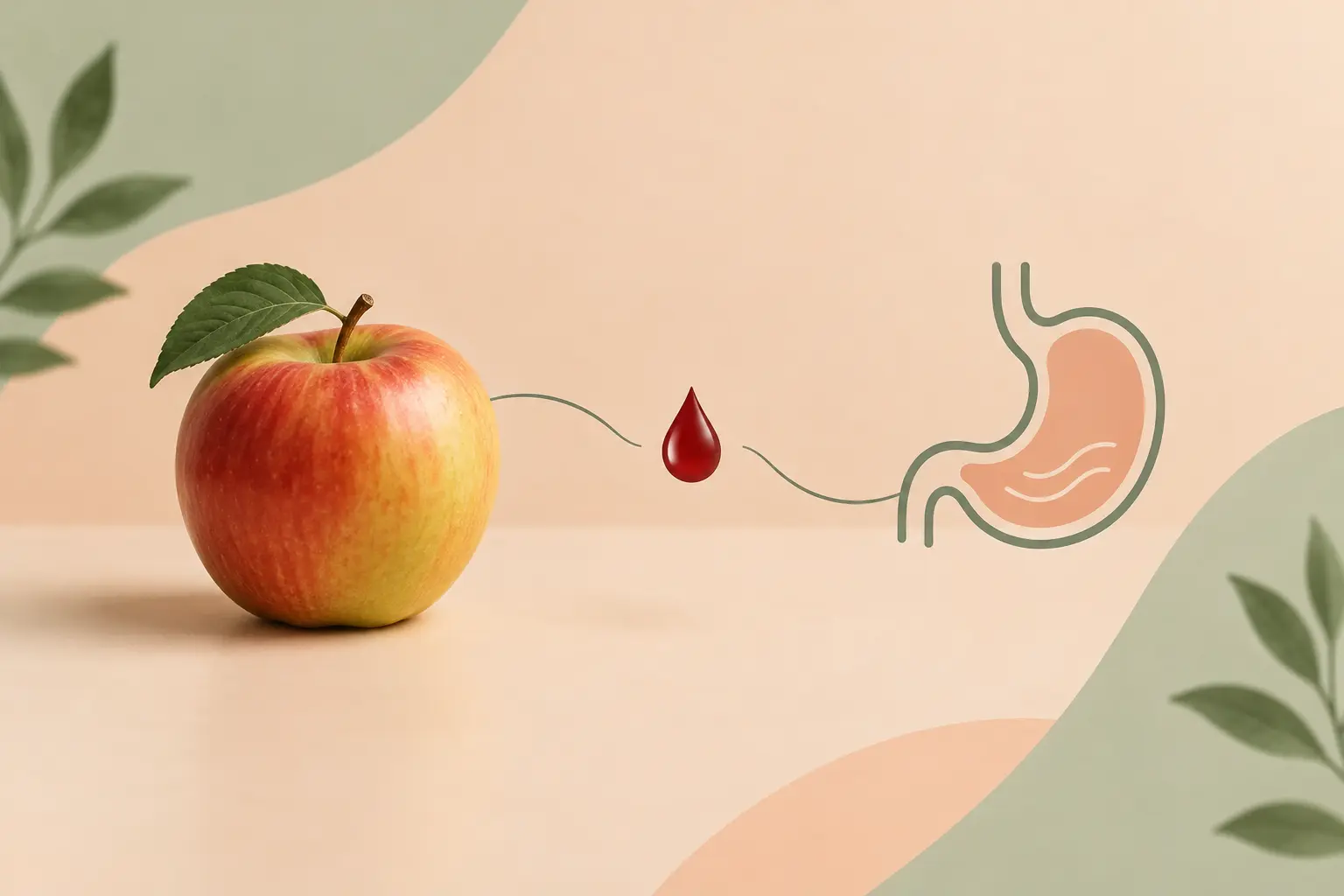
Nicotine also interferes with how the body handles glucose. A 2023 review in Pharmacological Research summarized human and animal research and reported that “nicotine can elevate blood glucose levels, disrupt glucose homeostasis, and induce insulin resistance” (Pharmacological Research, 2023). The authors describe nicotine as a possible link between cigarette smoking and type 2 diabetes, a connection whose exact causal mechanisms they say remain poorly understood.
If you have diabetes or are at risk of it, tell your care team about all nicotine use, including vapes and pouches, so they can interpret your glucose readings correctly and help you plan a quit attempt. It is a topic for your clinician, not a reason to delay quitting.
Pregnancy and Teens: The Groups at Greatest Risk
Two groups are the most vulnerable to nicotine itself. The first is pregnancy. The FDA states: “Nicotine can cross the placenta when a pregnant person uses tobacco products.” It lists possible effects on the baby including premature labor, low birth weight, respiratory failure at birth and sudden infant death syndrome. If you are pregnant or planning a pregnancy, speak with your doctor or midwife about the safest way to stop.
The second is adolescents. The FDA says that “because their brains are still developing, young people have a higher risk of becoming addicted to the nicotine in tobacco products than adults,” and that nicotine exposure during adolescence “can disrupt normal brain development.” A review of the adolescent brain in The Journal of Physiology describes adolescence as “a sensitive developmental period of enhanced clinical vulnerability to nicotine, tobacco, and e-cigarettes” (J Physiol, 2015).
If you started young, you are in good company, and there is no shame in it. Our piece on how long nicotine stays in your body explains the timeline for clearing it once you stop.
What Does Nicotine Do to Your Body? Effects by Organ at a Glance
This table pulls the findings above into one view, with the strength of the evidence noted.
| Organ or system | What nicotine does | Evidence note |
|---|---|---|
| Brain | Raises dopamine in reward circuits; builds dependence; temporarily improves attention | Strong (NIDA, FDA) |
| Heart and vessels | Raises heart rate and blood pressure; may contribute to acute events and atherosclerosis | Established short-term; long-term risk lower than smoking but a concern in heart disease (Trends Cardiovasc Med 2016) |
| Lungs | Not the main cause of lung disease or cancer; smoke chemicals are | Stated by the FDA |
| Appetite and weight | Lowers appetite and food intake; raises energy expenditure | Real effect, mechanism unclear (Appetite 2021) |
| Blood sugar | Can raise glucose and cause insulin resistance | Human and animal data (Pharmacol Res 2023) |
| Pregnancy | Crosses the placenta | Stated by the FDA |
| Adolescent brain | Can disrupt normal development | Stated by the FDA; reviewed in J Physiol 2015 |
Notice how often the honest answer is “real effect, mechanism unclear.” Nicotine research, especially on non-smoking-related harm, is still developing, and anyone claiming certainty either way is overreaching.
What Happens When You Stop Nicotine
When you stop, your body has to relearn how to work without a daily dose. NIDA describes withdrawal as irritability, craving, depression, anxiety, cognitive and attention deficits, sleep disturbances and increased appetite, noting that “withdrawal symptoms peak within the first few days of the last cigarette smoked and usually subside within a few weeks.” For some people, symptoms last longer, and NIDA says severity appears to be influenced by genes.
Two things help most. First, nicotine replacement can ease the chemical side of withdrawal. The FDA says NRTs “can double the chances of successfully quitting cigarettes” when used properly. Our how to quit smoking in 2026 complete evidence based guide compares every option.
Second, cravings often outlast the chemistry because they are tied to cues such as coffee, stress and phones. NIDA points out that nicotine replacement “may help alleviate the physiological aspects of withdrawal,” but cravings often persist because of the power of cues, and behavioral strategies help you spot and manage triggers. That is where a tracking tool earns its place. In iQuit you can log each craving with its trigger and intensity, use the SOS tools when one hits, and check the predictive craving forecasts before a high-risk stretch. It will not treat any medical condition, so check with a doctor first if you are pregnant or have a heart or blood sugar condition.
Frequently Asked Questions
What does nicotine do to your body right away?
Within seconds of reaching the brain, nicotine raises dopamine in reward circuits. NIDA reports blood nicotine from smoking peaks within about 10 seconds of inhalation. Heart rate and blood pressure also rise, and faster delivery produces a bigger rise (NIDA; Psychopharmacology 2020).
Is nicotine itself harmful, or just the smoke?
Both matter. The FDA says the toxic chemicals in tobacco, not nicotine, cause the fatal lung diseases and cancers. Nicotine is still highly addictive, affects the heart, can disrupt adolescent brain development and crosses the placenta, so it is not harmless (FDA).
Does nicotine raise blood pressure?
Yes, temporarily. A small study of 18 smokers found that a nicotine dose (about the amount in one cigarette) delivered over one minute caused a greater rise in heart rate and blood pressure than the same dose delivered more slowly. Long-term effects are less certain, and nicotine without smoke is a bigger concern in people with cardiovascular disease (Psychopharmacology 2020; Trends Cardiovasc Med 2016).
Does nicotine make you lose weight?
Nicotine reduces appetite and food intake and raises energy expenditure, according to a 2021 review of 65 studies. The review says the mechanisms are unclear and more human research is needed. NIDA lists increased appetite as a withdrawal symptom, so expect hunger to return after you stop (Appetite 2021; NIDA).
Does nicotine affect blood sugar?
A 2023 review reports that nicotine can elevate blood glucose, disrupt glucose homeostasis and induce insulin resistance, drawing on human and animal studies. If you have diabetes, tell your care team about all nicotine use before and during a quit attempt (Pharmacological Research 2023).
Is nicotine safe in pregnancy?
The FDA says nicotine can cross the placenta and may contribute to premature labor, low birth weight, respiratory failure at birth and SIDS. If you are pregnant and use any nicotine product, speak with your doctor or midwife about the safest way to stop (FDA).
How long do nicotine withdrawal symptoms last?
NIDA says withdrawal symptoms peak within the first few days after your last cigarette and usually subside within a few weeks. For some people they persist for months, and severity appears to be influenced by genes. Appetite often increases during this period (NIDA).
Get Help With the Nicotine Part of Quitting
Nicotine Is the Reason It Is Hard. Habits Are the Part You Can Train.
iQuit pairs an AI coach and predictive craving forecasts with craving logging, SOS tools and a real-time dashboard of days smoke-free, cigarettes avoided and money saved. Free on Google Play and the App Store.
Download iQuit Free on Google Play
Download on the App Store