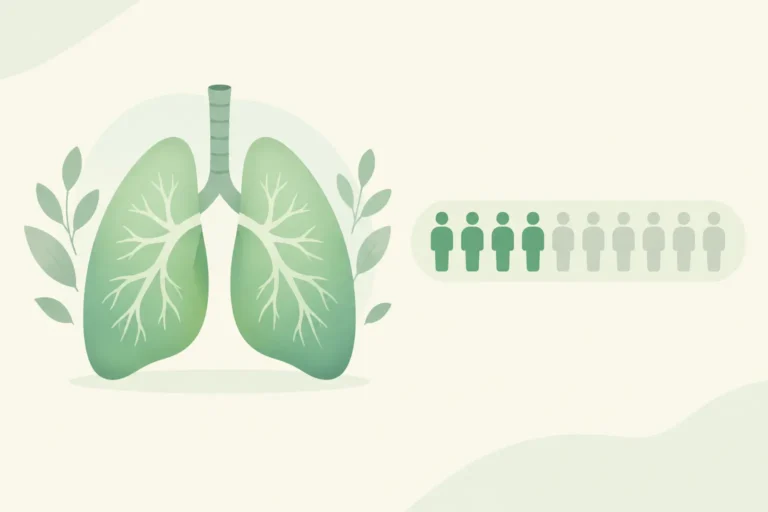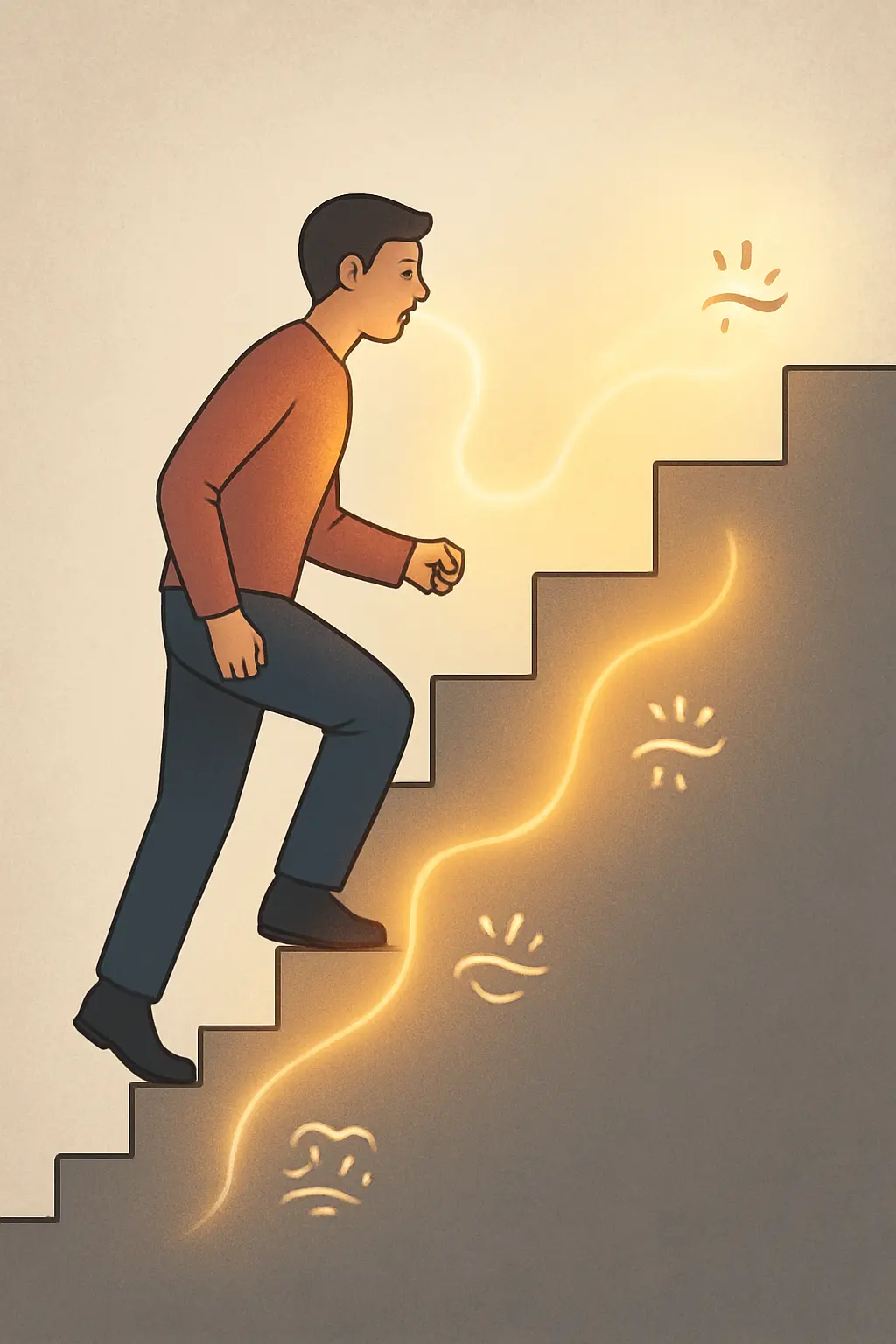
You quit smoking expecting your breathing to improve right away, and for some things it does — but exertional breathlessness, the kind you notice on stairs or a brisk walk, often takes longer, and can briefly get worse before it gets better. Breathlessness after quitting smoking follows a real, documented timeline: fast wins in the first two days, a confusing dip in the first few weeks as your airways start clearing themselves out, and gradually building gains over the following months as lung function genuinely improves. This guide walks through that timeline, how to track your own progress, and the red flags that mean it’s time to see a doctor rather than wait it out.
Why Breathlessness Doesn’t Improve Instantly
Nicotine has a numbing effect: it relaxes airway muscles and dulls the natural cough reflex, which can mask how tired your lungs actually feel while you’re still smoking. Once nicotine is gone, many people notice they’re more aware of their breathing, not less — not because quitting made things worse, but because the natural warning signals nicotine was suppressing have come back online. This is a normal, well-documented part of how your lungs heal after quitting, not a sign that something has gone wrong.
It also helps to separate two different kinds of breathlessness that get lumped together. There’s the everyday exertional kind — noticing stairs a bit more than you’d like — and there’s a genuinely alarming kind that comes with chest pain or happens at rest. Almost everyone reading this is dealing with the first kind, which is uncomfortable but expected and improving. The second kind is covered later in this guide, under the red flags that mean it’s time to see a doctor.
The First 48 Hours: Oxygen Delivery Improves Fast
This part of the timeline is genuinely quick. Carbon monoxide from cigarette smoke binds to red blood cells in place of oxygen, reducing how much oxygen your blood can carry. According to the CDC and the WHO’s health benefits of smoking cessation guidance, carbon monoxide levels return to normal within 12 to 24 hours of your last cigarette — full detail in the carbon monoxide and oxygen recovery guide. Many people do notice a small, early improvement in stamina during this window, purely from better oxygen transport, even before any structural healing has had time to occur.
Weeks 1–3: Why It Can Get Worse Before Better
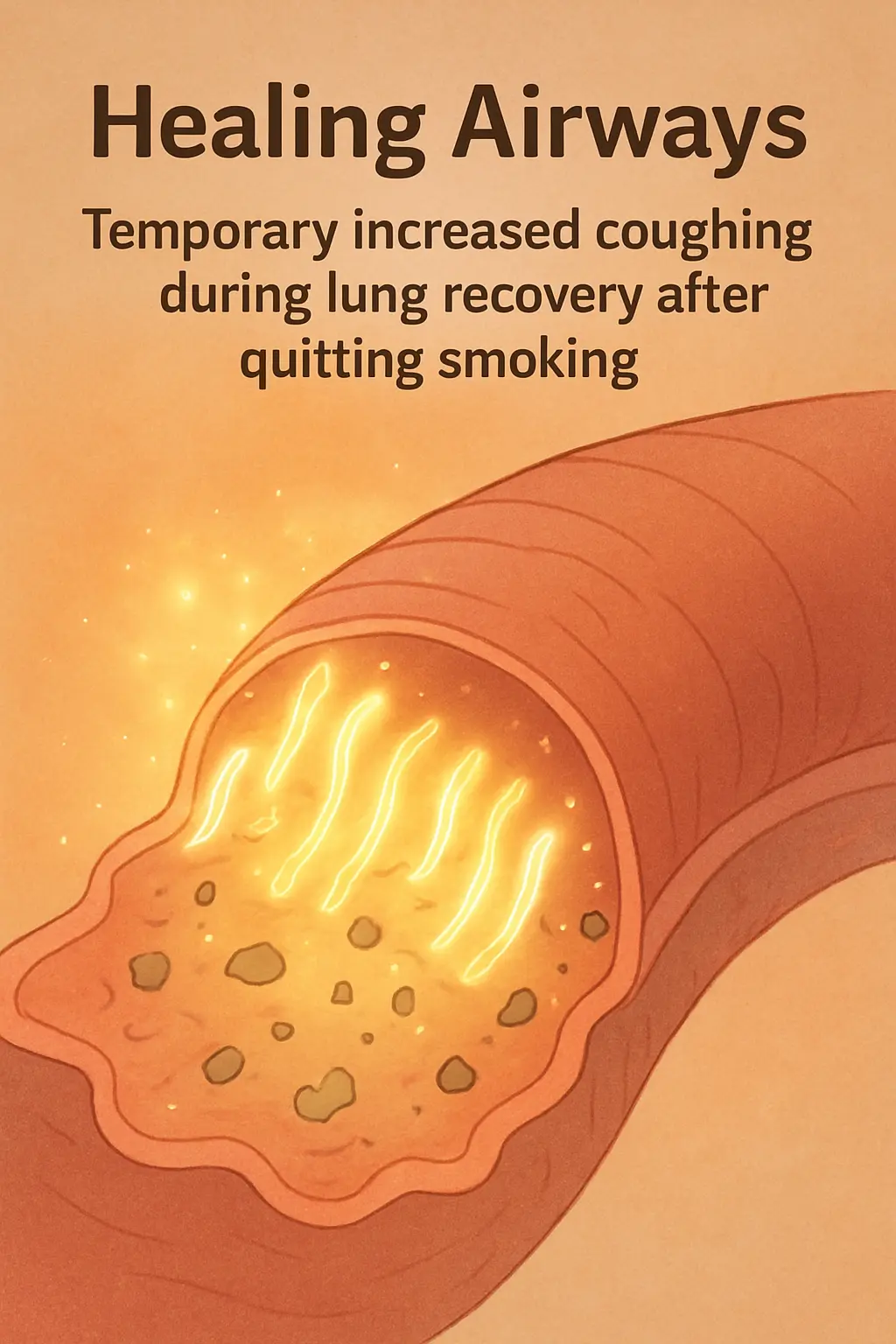
This is the stage that confuses people. The airway lining is covered in tiny hair-like structures called cilia, which sweep mucus and debris up and out of the lungs. Years of smoke exposure damage and paralyze cilia, and once smoke exposure stops, cilia begin regenerating — but a partially-recovered, more active cilia layer can temporarily increase coughing and the sensation of mucus and tightness as it clears out years of accumulated residue. This is closely related to why the cough gets worse before it gets better and can overlap with the sensation described in the guide to chest tightness after quitting smoking. For most people, this transient dip settles within the first few weeks as the airway clears out and inflammation continues to subside.
Months 1–3: Cilia Recovery and Less Inflammation
The World Health Organization notes that between one and nine months after quitting, coughing and shortness of breath decrease as cilia function continues to improve and airway inflammation subsides, giving air more room to move freely. The American Lung Association places the start of that lung function improvement at two weeks to three months. Neither body publishes a single percentage figure for how much you will gain — the size of the improvement depends heavily on your smoking history, age, and any existing lung condition — but the direction of travel for nearly everyone who stays smoke-free is genuine, measurable improvement.
Months 3–9: Measurable Lung Function Gains
Spirometry studies tracking FEV1 (the volume of air you can forcefully exhale in one second, a standard lung function measure) after cessation find real, if variable, gains. A 2024 systematic review and meta-analysis in Frontiers in Public Health pooled studies of people with COPD and found that those who quit smoking had higher FEV1 as a percentage of predicted (mean difference 6.72 points) and walked meaningfully further in the six-minute walk test (mean difference about 64 meters) compared with those who kept smoking. Those are group averages across studies of people who already had significant lung disease, not a promise for any individual, and the confidence intervals were wide. But the pattern across the literature is consistent: functional capacity keeps improving well past the first month rather than stopping at a single early milestone.
| Timeframe | What’s happening |
|---|---|
| 0–48 hours | Carbon monoxide clears; blood oxygen-carrying capacity returns to normal |
| Weeks 1–3 | Cilia regrow and become more active; coughing and mucus sensation can transiently increase |
| Months 1–3 | Inflammation subsides further; cilia function keeps improving; breathlessness starts easing |
| Months 3–9 | Measurable FEV1 and exercise-capacity gains; coughing and shortness of breath continue to decline |
| Beyond 9 months | Gains plateau toward your new baseline; any fixed damage sets the remaining ceiling |
The Ceiling: What Fixed Damage Means
Recovery is real, but it isn’t unlimited. Years of smoking can cause structural damage — including permanently lost elastic lung tissue in emphysema — that regeneration cannot fully reverse. What quitting reliably changes is the rate of further decline: after cessation, lung function decline slows to something close to a never-smoker’s normal age-related rate, rather than the accelerated decline seen in people who continue to smoke. For most people without a diagnosed lung condition, that means the majority of exertional breathlessness genuinely resolves; for people with COPD or long smoking histories, quitting still delivers a real and lasting benefit even if some baseline limitation remains. This is discussed further in the FEV1 recovery data, and anyone rebuilding cardio capacity may find the research on whether exercise helps you quit smoking useful for structuring a return to harder exertion.
This is also why timelines online can feel contradictory. A 25-year-old who smoked for three years and a 55-year-old who smoked for thirty are both genuinely healing, but starting from very different baselines, so comparing your week-by-week experience to someone else’s post online is rarely useful. Your own trend over your own weeks is the number that matters.
Self-Test Your Progress
Rather than guessing, you can track functional recovery with a few simple, repeatable checks:
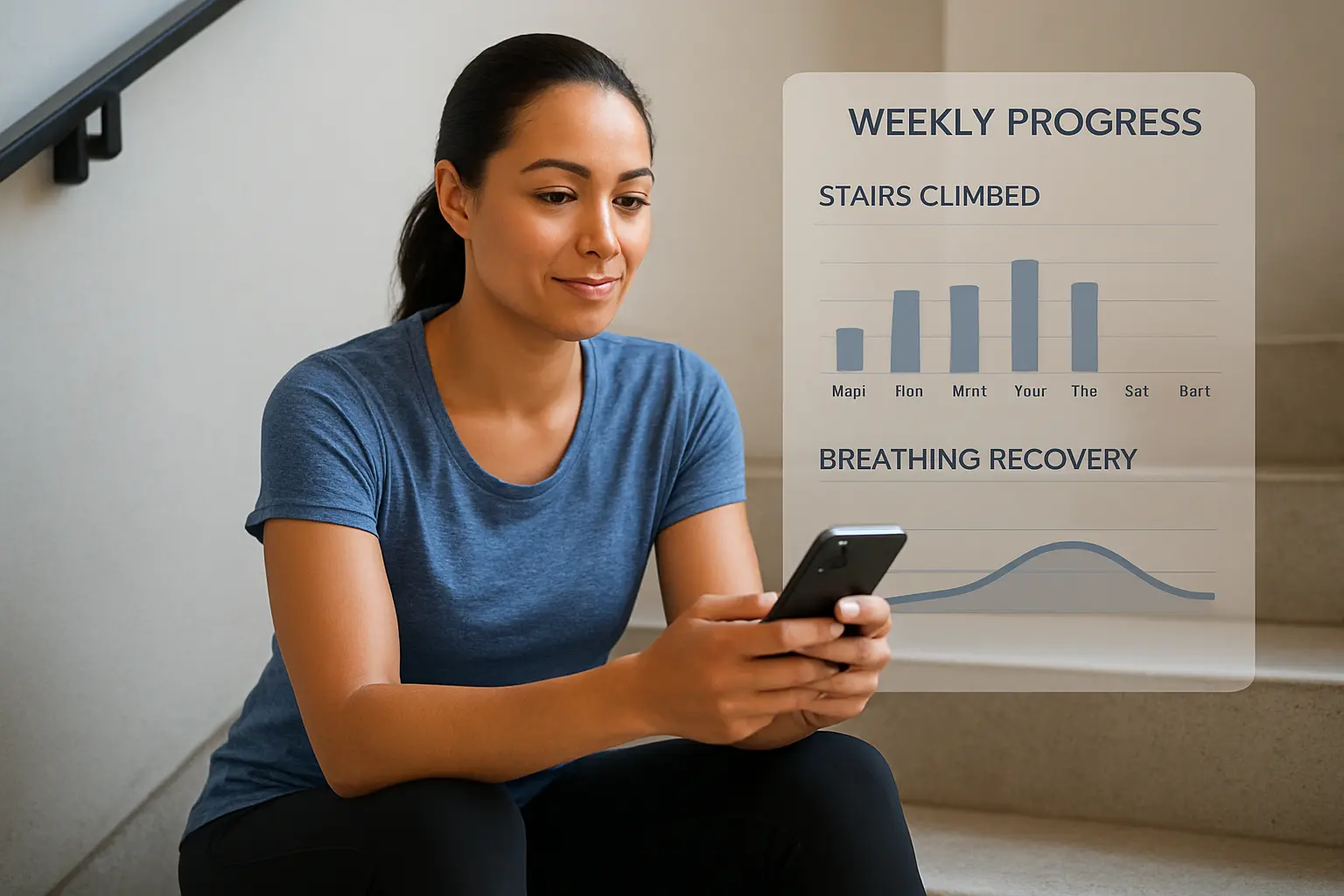
- Stairs test: Note how many flights you can climb before needing to pause, and re-check weekly. Trending better over weeks is a good sign; trending worse warrants a doctor’s opinion.
- Talk test: If you can hold a normal conversation during light-to-moderate activity, you’re within a safe, expected exertion range. Needing to stop mid-sentence during everyday activity is worth flagging to a clinician.
- Recovery time: Normal breathlessness is proportional to effort and recovers quickly once you stop; abnormal breathlessness is disproportionate to the activity and recovers slowly, or the same activity keeps costing more effort over time rather than less.
Logging how you feel after routine activities — the school run, a flight of stairs, a short jog — turns a vague sense of “still out of breath” into a visible trend line, which is exactly the kind of pattern iQuit’s craving and mood journal is built to capture alongside your smoke-free milestones. If your pharmacy or GP has ever given you a spirometry-based “lung age” result, the guide to what your lung age result means explains how to read it and what genuinely moves the number.
When to See a Doctor
Mild, gradually improving breathlessness on exertion is expected. Seek prompt medical evaluation if breathlessness is new, sudden, or worsening rather than improving; occurs at rest or wakes you from sleep; comes with chest pain, dizziness, heart palpitations, or swelling in the ankles or legs; or if the same everyday activity is costing you noticeably more effort over successive weeks instead of less. These patterns can indicate an underlying heart or lung condition that needs professional assessment rather than more waiting.
Call emergency services rather than waiting for an appointment if breathlessness comes on suddenly and severely, or is accompanied by crushing chest pain, blue-tinged lips, confusion, or fainting. Nothing about having recently quit smoking changes that advice — and nothing about needing medical help means quitting was the wrong decision.
Frequently Asked Questions
Why am I more breathless after quitting smoking, not less?
Nicotine masks lung fatigue by relaxing airway muscles and dulling your cough reflex. Once it’s gone, you become more aware of your actual lung state, and regenerating cilia can temporarily increase coughing and mucus sensation in the first few weeks — a normal, transient part of healing, not a sign of harm.
How long until breathlessness actually improves?
The WHO notes coughing and shortness of breath decrease over one to nine months as cilia function and airway inflammation continue improving, and places increased lung function at two to twelve weeks. The size of the gain varies with age, smoking history, and existing lung conditions, so expect a trend rather than a fixed number.
Will my lungs ever be back to normal?
Most functional capacity recovers, but any permanent structural damage, such as lost elastic tissue in emphysema, cannot fully reverse. What quitting reliably does is slow further lung function decline to close to a never-smoker’s normal rate, which is a major, lasting benefit regardless of starting point.
What is the “talk test” and how do I use it?
If you can hold a normal conversation during light-to-moderate exertion, like a brisk walk, you’re in a safe range. If you need to stop mid-sentence to catch your breath during everyday activity, that’s worth mentioning to a doctor rather than dismissing.
Is coughing more after quitting a bad sign?
Usually not. An uptick in coughing in the first few weeks typically reflects regenerating cilia clearing out mucus and debris more effectively than before, which is a sign of healing. Persistent coughing with fever, blood, or weight loss should always be checked by a doctor.
Do people with COPD get any breathing benefit from quitting?
Yes. A 2024 meta-analysis in Frontiers in Public Health found people with COPD who quit had a higher FEV1 percent predicted and walked meaningfully further in the six-minute walk test than those who continued smoking. These are averages across studies rather than individual guarantees, but the benefit is consistent.
Does exercise help breathlessness recover faster?
Gradual, regular activity such as walking or cycling supports cardiovascular and respiratory recovery and can improve how efficiently your body uses oxygen over time. Start gently and build up, especially if you have a long smoking history or any diagnosed lung condition.
Should I get a spirometry or lung function test?
If breathlessness is persistent, worsening, or you have a long smoking history, a spirometry test can give an objective baseline and track genuine improvement over time. It’s also a strong motivational tool — seeing your own numbers improve.
When is breathlessness an emergency?
Sudden, severe breathlessness, especially with chest pain, blue-tinged lips, confusion, or fainting, needs emergency care immediately. Breathlessness at rest, or that wakes you from sleep, also warrants prompt medical attention rather than a wait-and-see approach.
Watch Your Recovery Add Up
iQuit’s 15 health milestones and mood journal turn slow, hard-to-notice healing — like easier breathing on the stairs — into a visible daily record, so progress feels real even in the confusing weeks when it doesn’t feel linear.