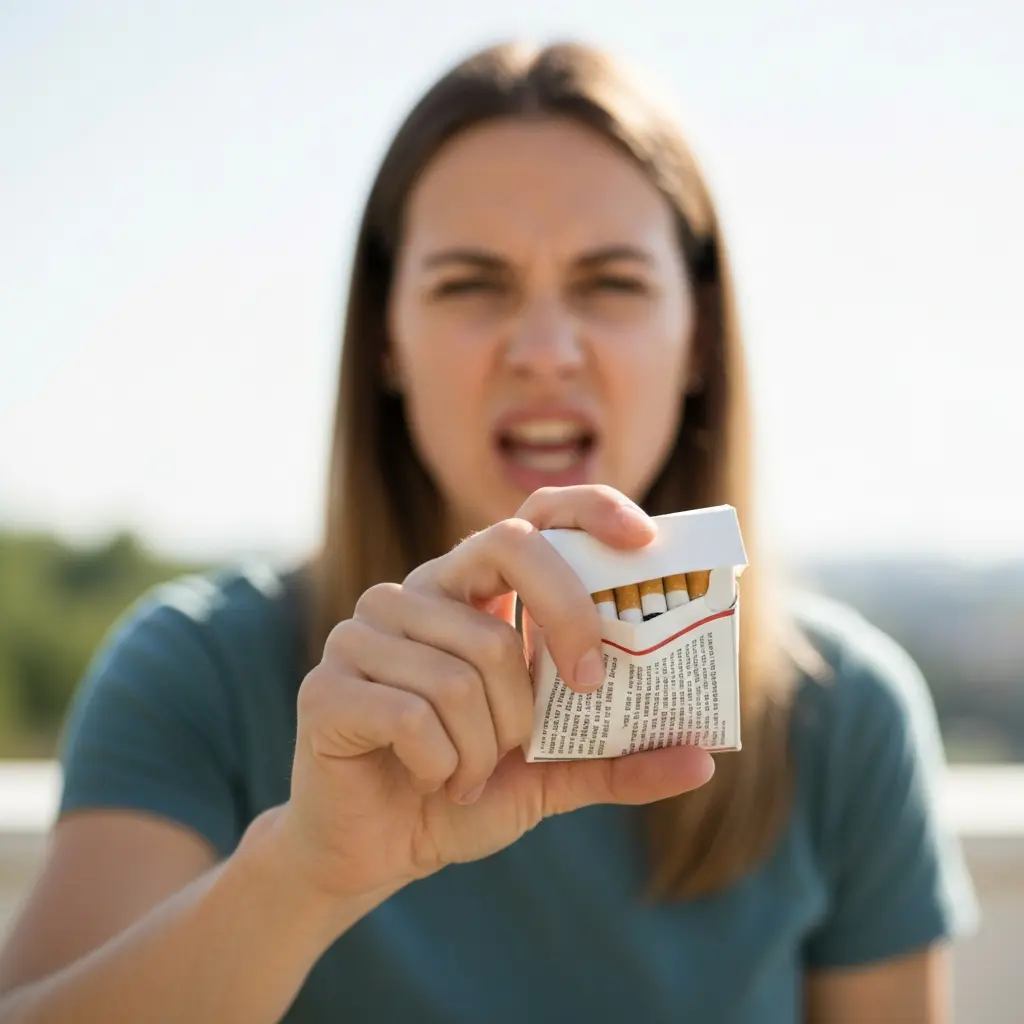
Quit Smoking Cold Turkey: 2026 Complete Survival Guide
Deciding to quit smoking cold turkey is one of the bravest — and statistically smartest — choices you can make. Cold turkey means setting a quit date, smoking your last cigarette, and stopping completely. No gradual reduction. No slow taper. Just a hard stop. Despite a reputation for being brutal, a landmark 2016 Annals of Internal Medicine randomised controlled trial found that abrupt quitters achieved a 22% six-month abstinence rate versus 15.5% for gradual reducers — making cold turkey the superior method when tested head-to-head. If you have been wondering whether you can actually do this, the science says: yes, cold turkey gives you the best shot.
That said, the first week is genuinely hard. Nicotine withdrawal peaks at 48–72 hours and does not ease up until week two. Most people who try unassisted cold turkey — meaning no medication, no coaching, no support tool — achieve only a 3–5% one-year success rate. The survival guide below closes that gap. It gives you a preparation checklist, a day-by-day first-week roadmap, evidence-backed coping tactics, a framework for deciding when to add NRT, a lapse-recovery protocol, and a 10-question FAQ. Everything you need to quit smoking cold turkey in 2026 and stay quit.
What Does Quitting Cold Turkey Actually Mean?
The term “cold turkey” dates to early 20th-century slang for abrupt drug withdrawal, referencing the cold, clammy, goosebump-covered skin that can accompany sudden nicotine cessation. In clinical literature it is called abrupt cessation — stopping all tobacco use on a predetermined quit date, with no planned reduction in cigarettes beforehand and no nicotine replacement in the initial hours or days.
Cold turkey is distinct from:
- Gradual reduction — slowly cutting cigarettes per day over 2–4 weeks before the final quit date
- NRT-assisted quitting — using patches, gum, or lozenges from day one to blunt withdrawal
- Prescription-assisted quitting — using varenicline (Champix/Chantix) or bupropion to reduce cravings before or on quit day
Cold turkey is the most common quit method globally. According to the Truth Initiative, the majority of successful long-term ex-smokers quit without any pharmacological aid. Cold turkey is free, requires no prescription, and works on any quit date — including today.
Cold Turkey Success Rates: What the Research Says in 2026
Understanding the numbers honestly sets realistic expectations — and reveals exactly where support tools like iQuit make the biggest difference.
| Method | 1-Year Abstinence Rate | Source |
|---|---|---|
| Cold turkey (unassisted) | 3–5% | CDC, WHO |
| Cold turkey (abrupt, with behavioural support) | 22% at 6 months | Lindson-Hawley et al., 2016, Ann Intern Med |
| Gradual reduction | 15.5% at 6 months | Lindson-Hawley et al., 2016 |
| Varenicline alone | 33% | Cochrane Review 2023 |
| Combination NRT | ~25% | Cochrane Review 2023 |
The headline finding: the 3–5% unassisted figure is not a ceiling — it is a floor for people who go in with no plan and no support. When cold turkey is paired with behavioural support (tracking, coaching, accountability), six-month abstinence rates quadruple. That is exactly the gap that an AI-powered quit coach like iQuit is designed to close.
The 7-Day Pre-Quit Preparation Checklist
The week before your quit date is the single highest-leverage window of your entire quit attempt. Use it.
Mindset and planning
- Set a firm quit date — ideally 7 days from today, written down and shared with at least one person
- Write down your top three reasons for quitting and put them somewhere visible (phone lock screen, bathroom mirror)
- Identify your top five smoking triggers (morning coffee, driving, stress, after meals, social situations)
- Plan a specific coping response for each trigger before day one
- Tell three people your quit date and ask them to check in on you during the first week
Environment preparation
- On the night before quit day: discard all remaining cigarettes, lighters, and ashtrays from home, car, and workplace
- Deep-clean areas associated with smoking — the smell itself is a craving trigger
- Stock the fridge with healthy snacks for oral substitution (carrot sticks, sugar-free gum, fruit)
- Download iQuit and configure your craving tracker before day one, not on day one
- Have a water bottle at every smoking hotspot — hydration blunts craving intensity
Medical preparation
- If you smoke more than 20 cigarettes per day, consider booking a GP appointment to discuss varenicline — it can be started before quit day
- Purchase nicotine patches or gum in advance as an emergency backstop (see When to Add NRT)
- If you have a diagnosed mental health condition, inform your care team — mood changes during withdrawal can be significant
Day-by-Day: Surviving Your First Week Cold Turkey
The first seven days are the medical and psychological epicentre of cold turkey quitting. Here is what to expect and how to respond at each stage. For a full symptom timeline extending to 30 days, see our nicotine withdrawal timeline.
Day 0 — Quit Night
Smoke your last cigarette consciously. Notice everything about it. Then discard the pack, lighter, and any remaining cigarettes permanently. Log your quit time in iQuit. Go to bed slightly earlier than usual — sleep is protective against early cravings.
Day 1 — The First 24 Hours
- What happens physically: Within 20 minutes of your last cigarette, heart rate and blood pressure begin normalising. At 8 hours, blood carbon monoxide levels halve and oxygen delivery to tissues improves.
- Cravings: Moderate, spaced 30–60 minutes apart. Each lasts 3–5 minutes.
- Emotions: Restlessness, mild anxiety, heightened awareness of cigarette-related cues.
- Action: Apply the 5-D rule for every craving: Delay (wait 5 minutes), Deep breathe, Drink water, Do something else, Discuss with someone. Keep your hands busy. Check your iQuit craving log to see your streak building.
Day 2 — The Taste of Freedom (and Irritability)
- What happens physically: Nicotine is now largely cleared from blood plasma. Taste and smell begin recovering. The body starts clearing mucus from airways.
- Cravings: Intensifying — this is often the first truly difficult day.
- Emotions: Irritability, difficulty concentrating, possible mild headache.
- Action: Protect your morning routine — this is when most day-2 relapses happen. Replace the morning cigarette with a 10-minute walk. Avoid alcohol today.
Day 3 — Peak Withdrawal
- What happens physically: Nicotine fully eliminated. Bronchial tubes begin relaxing, making breathing easier — though you may feel a tightness in the chest as airways adjust.
- Cravings: Highest frequency and intensity of the entire quit attempt.
- Emotions: Anxiety, irritability, insomnia, and strong urge to smoke are all at their peak.
- Action: This is the day that breaks cold turkey attempts. Know in advance it will be hard. Schedule something physically demanding for the afternoon — exercise floods the brain with dopamine naturally. If day 3 symptoms feel medically unbearable, see When to Add NRT.
Day 4 — The Turn
- What happens physically: Physical withdrawal symptoms begin their first measurable decline.
- Cravings: Still frequent, but peak intensity is behind you.
- Emotions: Many people report feeling slightly more optimistic on day 4 — the worst of the physical storm is passing.
- Action: Acknowledge the milestone. Use iQuit to see your money saved so far. Reward yourself with something non-food (a film, a purchase from the money saved).
Day 5 — Building Momentum
- Cravings: Decreasing in frequency; situational triggers (coffee, driving) remain powerful.
- Emotions: Energy levels begin returning. Sleep quality often improves from the nadir of day 2–3.
- Action: Map your remaining triggers explicitly. For each one, pre-commit to a specific substitution behaviour.
Day 6 — First Full Week in Sight
- Physical milestone: Lung cilia — the tiny hair-like structures that clear debris from airways — begin recovering function, improving respiratory health.
- Cravings: Noticeably less intense and less frequent than the peak.
- Action: Social situations become manageable but remain a risk. If you are attending a social event, have your phone ready with iQuit’s craving nudge feature active.
Day 7 — One Week Smoke-Free
- Medical milestone: At one week, your risk of having a heart attack starts to fall measurably. Your sense of taste and smell are substantially restored. Circulation is improving.
- Cravings: Still present but manageable for most people.
- Action: Celebrate concretely. Share your one-week milestone in iQuit’s community. The second week is much easier — but overconfidence is itself a relapse risk. Stay vigilant.
12 Coping Tactics That Work When Cravings Hit
Every craving lasts 3–5 minutes. Your only job is to outlast it. These tactics are ranked from fastest to implement to those requiring more planning.
- Box breathing (immediate): Inhale 4 seconds, hold 4, exhale 4, hold 4. Repeat four times. Activates the parasympathetic nervous system and drops urge intensity within 90 seconds.
- Cold water: Drink a full glass of cold water slowly. Addresses the oral fixation component and the mild dehydration that amplifies cravings.
- The 5-minute rule: Tell yourself you will wait 5 minutes before doing anything. Set a timer. The craving almost always subsides before it ends.
- Physical movement: A 2-minute brisk walk or 20 jumping jacks spikes adrenaline, blunts dopamine hunger, and gives your hands something to do.
- Log the craving in iQuit: The act of opening the app, selecting a trigger, and rating intensity interrupts the craving cycle and produces a data point that makes future quits easier.
- Chew something: Sugar-free gum, carrot sticks, or a toothpick address the oral component of nicotine cravings — which is separate from the pharmacological component.
- Call or text a support person: Vocalising a craving to someone who knows you are quitting reduces its psychological intensity. Pre-arrange this with at least one person before day one.
- Distraction with novelty: A 2-minute YouTube video, a puzzle, or an unexpected sensory input (strong mint, cold water on your wrists) breaks the craving loop.
- Visualise the outcome: Close your eyes and spend 60 seconds vividly imagining yourself one year from now — healthy, energetic, free from smoking. Research on mental simulation shows this activates motivational regions of the prefrontal cortex.
- NRT as emergency backup: Keeping a pack of 2 mg nicotine gum available without using it on easy days — but reaching for it on a day-3 level crisis — is a tactically smart use of NRT as a safety net rather than a crutch.
- Change your location: If you are in a smoking-associated place, physically move. Even moving to a different room or stepping outside briefly (not to smoke — to change the environmental context) reduces craving strength.
- Review your reasons list: Open your phone and read the three reasons you wrote before quit day. One minute of re-grounding in your why is clinically proven to increase quit motivation in the moment.
For more on managing cravings in real time, see our guide on how to quit smoking step-by-step.
When to Add NRT After Starting Cold Turkey
Starting cold turkey does not mean you are locked out of using NRT. If withdrawal symptoms are severe enough to genuinely threaten your quit attempt, adding NRT is a clinically sensible decision. It is always better to use a nicotine patch than to relapse to cigarettes.
Signs it may be time to add NRT
- You have been awake for more than two nights due to insomnia tied to withdrawal
- Mood symptoms (anxiety, depression, irritability) are affecting your ability to work or care for others
- Cravings are not decreasing at all by day 4
- You have already had one lapse and feel a second is imminent
- You are smoking more than 20 cigarettes per day at quit date
What to use
| Product | Best for | Notes |
|---|---|---|
| Nicotine patch | Background nicotine maintenance, reducing baseline craving level | 21 mg for >20 cigs/day, 14 mg for 10–20, 7 mg for <10 |
| Nicotine gum/lozenge | Acute cravings, situational peaks | Use as needed; 4 mg for heavy smokers |
| Combination NRT | Heavy dependence | Patch + gum together; Cochrane shows ~25% 1-year abstinence |
Adding NRT after starting cold turkey does not mean you have failed. It means you are making an intelligent adjustment to protect the quit you have already started.
Cold Turkey vs. Gradual Reduction: Making the Right Call
The 2016 Lindson-Hawley RCT is the most cited head-to-head comparison. Abrupt cessation won on six-month abstinence (22% vs. 15.5%, p=0.003). A subsequent meta-analysis in Tobacco Induced Diseases confirmed the effect. But statistics describe populations, not individuals. Consider gradual reduction if:
- You have tried cold turkey multiple times and relapsed every time on days 2–3
- You smoke more than 30 cigarettes per day and medical guidance recommends a stepped approach
- You have a clinical anxiety disorder where abrupt withdrawal could trigger a crisis
Consider cold turkey if:
- This is your first serious quit attempt and you have strong motivation
- You find partial quitting mentally harder than a clean break
- You want to get through withdrawal as quickly as possible
- The research consistently favours you: abrupt quitters outperform gradual reducers in most trials
For a detailed comparison of all quitting methods including NRT and varenicline, see our guide on the cold turkey vs gradual quit smoking comparison.
Lapse Recovery: How to Bounce Back Without Quitting the Quit
A lapse is one or a few cigarettes. A relapse is a return to regular smoking. They are not the same thing, and a lapse does not have to become a relapse.
Immediate steps after a lapse
- Discard immediately: Do not finish the pack. Throw away any remaining cigarettes in the moment.
- Do not catastrophise: “I’ve failed” is a cognitive distortion. Most people who quit for a full year had at least one lapse. The research on quitting cold turkey consistently shows that how you respond to a lapse — not whether it occurs — determines long-term outcome.
- Identify the trigger: Write down exactly what you were doing, feeling, and thinking in the 10 minutes before the lapse. Be specific.
- Update your coping plan: Add a specific contingency for that trigger going forward.
- Recommit to your quit date: If you have not already, treat the day after the lapse as a fresh quit date. Log it in iQuit.
- Contact support: Tell one person what happened. Secrecy increases shame; shame increases relapse risk.
The 48-hour rule
Research shows that the majority of lapses either resolve (the person recommits) or escalate to full relapse within 48 hours of the lapse event. The most important 48 hours of your entire quit attempt may be the 48 hours after your first lapse. Treat them accordingly.
Frequently Asked Questions
What does quit smoking cold turkey mean?
Quitting cold turkey means stopping all cigarette use immediately on a chosen quit date, with no gradual reduction and no nicotine replacement in the first days. You go from your normal smoking level to zero on day one. The term derives from early 20th-century slang for abrupt drug withdrawal.
What is the cold turkey success rate?
Unassisted cold turkey has a 3–5% one-year abstinence rate in the general population. However, a 2016 Annals of Internal Medicine RCT found that abrupt quitters with behavioural support achieved a 22% six-month abstinence rate — versus 15.5% for gradual reducers. The 3–5% figure represents people who quit with no plan or support, not cold turkey itself as a method.
When is cold turkey hardest?
The peak of cold turkey difficulty is hours 24–72, when nicotine is fully cleared from blood plasma and withdrawal symptoms — cravings, irritability, anxiety, and insomnia — are most intense. Day 3 is typically the hardest single day. After day 3, physical withdrawal intensity begins to decline measurably.
How long do cold turkey cravings last?
Individual craving episodes last 3–5 minutes regardless of intensity. The frequency of cravings peaks around day 2–3 and decreases over weeks 1–4. Most people experience significant reduction in craving frequency by the end of week 2, though situational cravings (linked to specific triggers) can persist for months.
Is cold turkey better than gradual reduction?
For most people, yes. The 2016 Lindson-Hawley RCT in Annals of Internal Medicine found abrupt quitting produced a 22% six-month abstinence rate versus 15.5% for gradual cutting (p=0.003 — statistically significant). A meta-analysis in Tobacco Induced Diseases confirmed the pattern. Abrupt cessation is favoured in most clinical guidelines.
Can I add NRT after starting cold turkey?
Yes, and it is clinically recommended if withdrawal is severe enough to threaten your quit. If you are unable to sleep, experiencing significant mood disruption, or feel a relapse is imminent, adding a nicotine patch or gum is far better than returning to cigarettes. Starting cold turkey and adding NRT later is a legitimate and effective strategy.
What happens to your body in the first week after quitting cold turkey?
Within 20 minutes heart rate drops. At 8 hours carbon monoxide levels halve. By day 2 taste and smell improve noticeably. Days 2–3 are the withdrawal peak. By day 5 cilia in the lungs begin recovering. By day 7 heart attack risk starts to fall and circulation is measurably improving. For a full timeline, see our nicotine withdrawal timeline.
How do I handle a lapse after quitting cold turkey?
A lapse (one or a few cigarettes) is not the same as a relapse (return to regular smoking). Discard the remaining cigarettes immediately, identify the specific trigger, update your coping plan, and recommit to your smoke-free status. Research shows that how you respond to a lapse — not whether it occurs — is the primary determinant of long-term quit success.
Does weight gain happen when quitting cold turkey?
Average weight gain after quitting is 4–5 kg over the first year, driven by increased appetite and slowed metabolism as nicotine’s stimulant effect wears off. Regular aerobic exercise (30 minutes, 5 days/week) and a protein-rich diet substantially reduce this effect. Weight gain, where it occurs, is vastly outweighed by the cardiovascular and pulmonary benefits of quitting.
How can iQuit help me quit smoking cold turkey?
iQuit’s AI coach tracks your cravings in real time, identifies your personal trigger patterns, sends personalised coping nudges during peak urge windows, calculates your money saved hour by hour, and connects you to a community of cold turkey quitters. The behavioural support provided by iQuit targets the exact gap between the 3–5% unassisted rate and the 22% rate seen when cold turkey is combined with structured support.
Ready to Quit Cold Turkey? Start With iQuit
The biggest predictor of cold turkey success is not willpower — it is preparation and support. iQuit gives you an AI-powered craving tracker, a personalised quit plan, real-time nudges during high-risk windows, and a community who have been exactly where you are now.
Your first week smoke-free is the hardest week of the entire quit. Do not go through it alone. iQuit is with you from hour one to year one — tracking every minute you are smoke-free, every craving you outlast, and every pound you save.
Download iQuit today and set your quit date for the coming week. The research says cold turkey works. iQuit makes it work for you.