Smoking causes a small share of home fires and a very large share of the deaths, and that gap is the whole story. In England, smokers’ materials started 7.6% of accidental dwelling fires in 2025/26 but accounted for 27% of the deaths. This page sets out the published figures on house fires caused by smoking from the two fire authorities that count them, keeping incidents and deaths strictly apart.
The headline numbers
Two national bodies publish usable counts. In the United States the National Fire Protection Association analyses the US Fire Administration’s National Fire Incident Reporting System. In England the Home Office publishes fire and rescue service returns as open data tables.
The NFPA’s most recent report covers 2019 to 2023 and gives annual averages: 15,209 reported home structure fires started by smoking materials, 590 civilian deaths, 1,048 civilian injuries and $674 million in direct property damage. In its classification, smoking materials means cigarettes, pipes, cigars and undetermined smoking material, not lighters or matches, which are counted separately.
The Federal Emergency Management Agency sets out the practical side of the same data.
Why the death share is four times the fire share
Keep incidents and deaths in separate columns and the pattern becomes obvious. The England data is the cleanest illustration, because the Home Office publishes both counts from the same table for the same year.
| Year | Fires | Share of all fires | Deaths | Share of all deaths |
|---|---|---|---|---|
| 2022/23 | 1,989 | 8.3% | 70 | 36.8% |
| 2023/24 | 1,523 | 6.6% | 39 | 24.2% |
| 2024/25 | 1,541 | 6.7% | 47 | 26.4% |
| 2025/26 | 1,819 | 7.6% | 43 | 26.7% |
In every one of those years, smoking materials caused under a tenth of accidental dwelling fires and between a quarter and a third of the deaths. A cooking fire happens while somebody is standing in the kitchen. A smoking fire often starts while the person who dropped the cigarette has fallen asleep, in a room full of soft furnishings, with nobody watching it develop.
Where and how these fires start
The NFPA report is specific about location, and the answer is not where most people guess.
- Exterior balcony or porch: 3,148 fires a year, the single most common area of origin. With another 894 starting on an exterior wall surface, these two areas account for 27% of all home fires started by smoking materials.
- Bedroom: 1,919 fires a year, 13% of the total.
- Living room: 1,038 fires a year, 7% of the total.
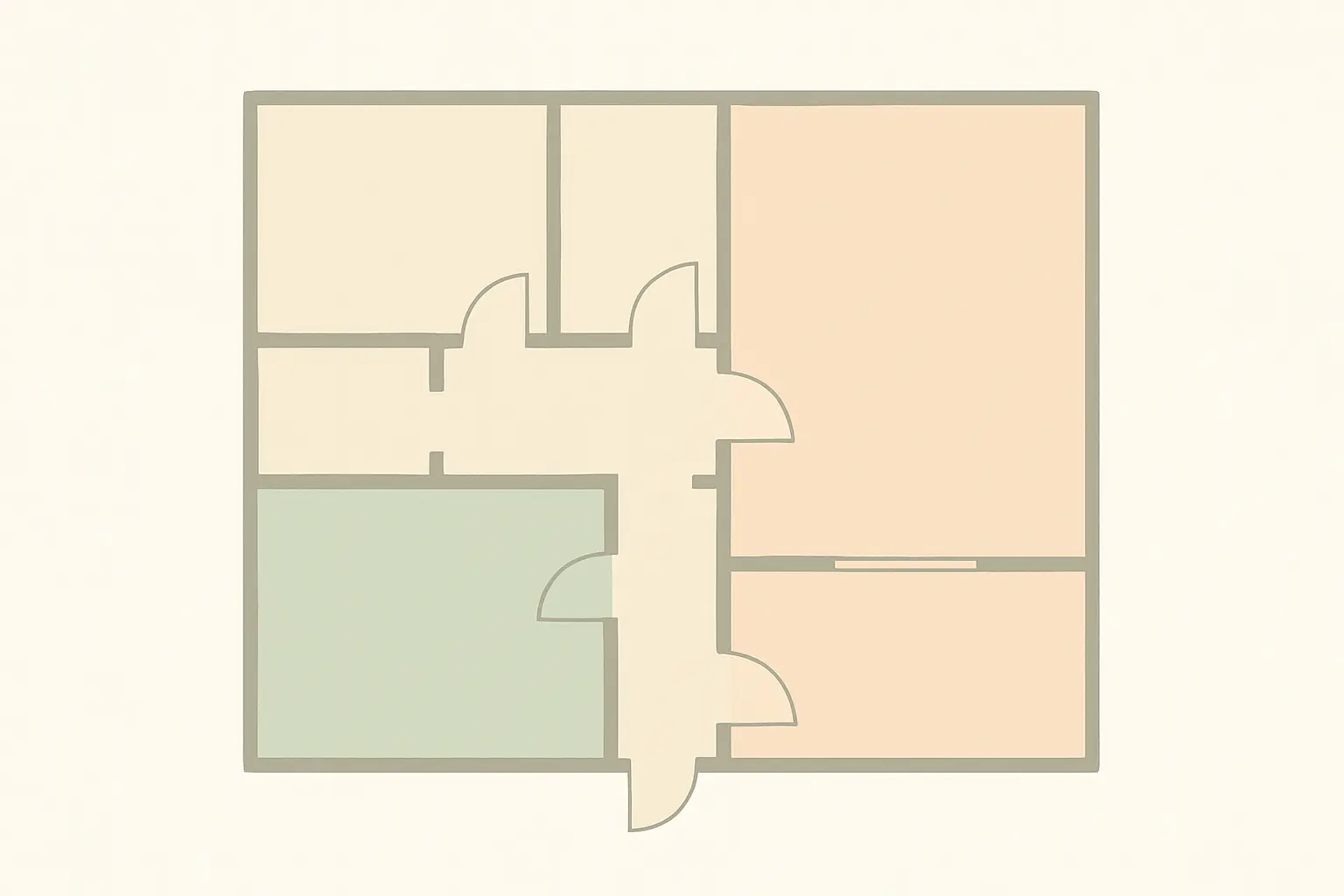
Outdoor ignition points dominate the fire count, and indoor ones dominate the death count. Living room fires were associated with an estimated 228 deaths a year, 39% of the total, and bedroom fires with 179 deaths, 30%. Between them, two areas that account for one fire in five account for roughly seven deaths in ten.
The item that catches is the mechanism. NFPA records upholstered furniture as the item first ignited in fires causing an estimated 156 deaths a year, 26% of the total, and bedding, meaning blankets, sheets and comforters, in fires causing 106 deaths, 18%. England’s data agrees from a different direction: in 2025/26, textiles, upholstery and furnishings were the item first ignited in 7,054 dwelling fires and in 95 of the 184 dwelling fire deaths, which is 52% of all deaths in dwelling fires from a single material category.
The England figures in detail
Beyond the headline counts, the Home Office tables record non-fatal casualties. Smokers’ materials were the ignition source in 395 non-fatal casualties from accidental dwelling fires in 2025/26, up from 349 in 2024/25, against all-cause totals of 4,314 and 4,205.
It is worth stating what these figures are not. They count fires attended and recorded by fire and rescue services in England, so smaller incidents that were put out and never reported are missing, and Scotland, Wales and Northern Ireland publish separately. The financial year runs from April to March. None of that changes the death share, which has been stable for fifteen years.
Who gets hurt
Two findings from the NFPA report deserve to be read slowly.
First, the largest share of deaths, 342 a year or 58%, occurred when the victim was in the area of origin and involved in the fire’s ignition. In other words, most people killed by a smoking fire are the person who was smoking. Second, 88% of those fatally injured and 67% of those non-fatally injured were at least 45 years old.
That skew matters because it lines up with reduced mobility, with medication that causes drowsiness and with living alone. It is also why the risk is not evenly shared inside a household: children and non-smoking partners are more often exposed to the smoke than to the fire, and the scale of that exposure is set out in our page on household smoke exposure data.
The long decline, and what it does not mean
Smoking fires have fallen substantially, tracking the fall in smoking itself and the switch to reduced-ignition-propensity cigarettes. The NFPA puts US home fires started by smoking materials at an estimated 13,900 in 2023 against 18,307 in 2003. Over the same span the five-year averages moved from 19,430 fires, 695 deaths and 1,283 injuries a year in 2003 to 2007, to 15,209 fires, 590 deaths and 1,048 injuries a year in 2019 to 2023.
Fires fell by about 22% while deaths fell by about 15%. The fires that still happen are, if anything, slightly more lethal per incident than they were two decades ago, which is consistent with an older and less mobile population of smokers. A falling national total is not a falling risk for any individual household that still has someone smoking indoors.
What these fires cost
The NFPA puts direct property damage from US smoking-material home fires at an estimated $674 million a year over 2019 to 2023. In England, Action on Smoking and Health includes £383 million a year in smoking-related fires within its estimate of the £44.8 billion annual cost of smoking to society.
Those are the accounting figures. They exclude the uninsured losses, the rehousing, and the fact that a dwelling fire usually destroys things that had no price. The broader ledger is in our summaries of healthcare cost data and the wider economic cost.

What changes when the house is smoke-free
This is the one risk on the list that goes to zero rather than falling gradually. Lung tissue repairs over years; circulation improves over weeks; the chance of a cigarette igniting a sofa while you sleep ends the night the last cigarette leaves the house.
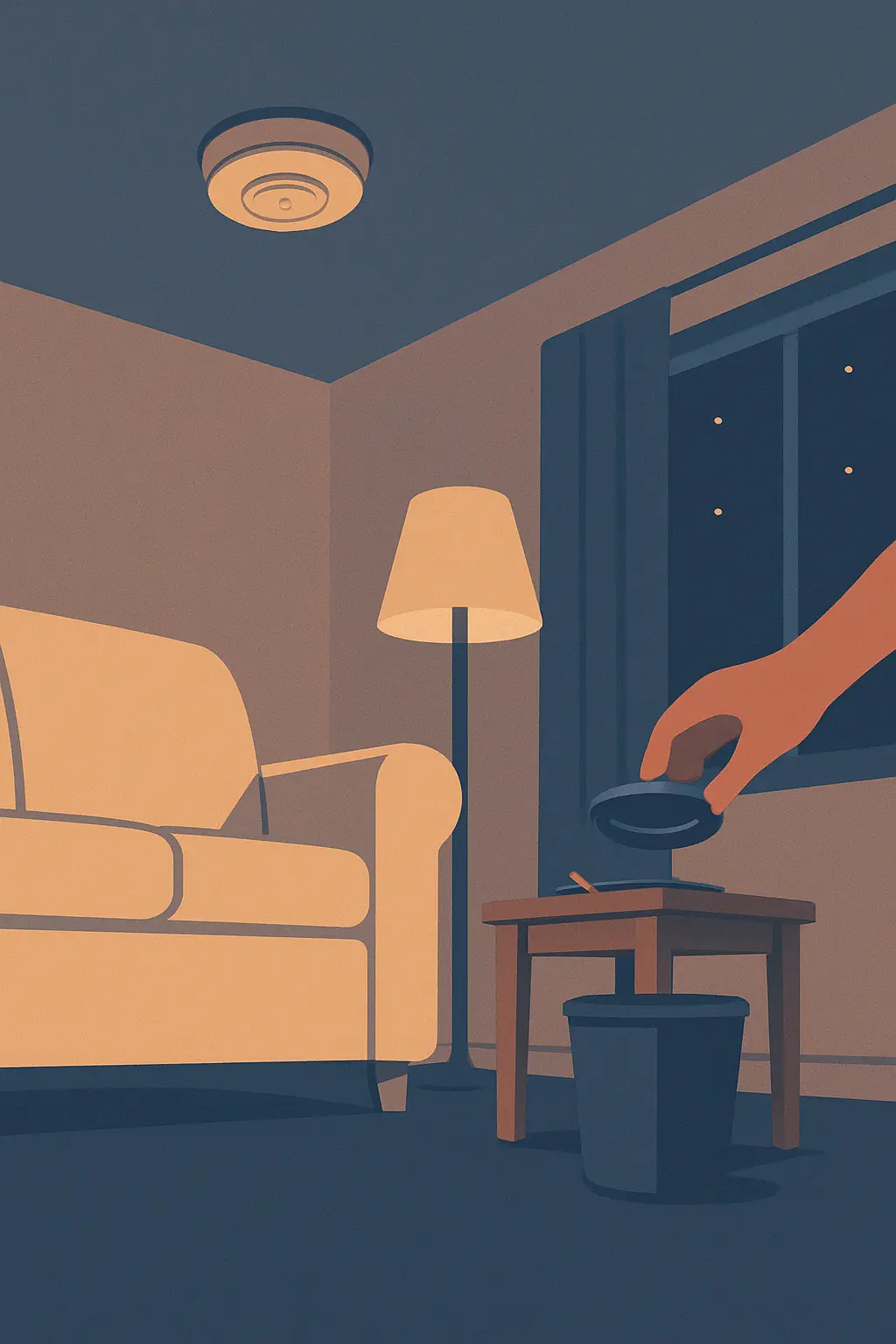
Until then, the standard fire-service advice is worth following: never smoke in bed, never smoke when drowsy or after taking medication that causes drowsiness, use a deep sturdy ashtray on a stable surface away from anything that can burn, wet the contents before emptying, and keep working smoke alarms on every level. Balconies deserve particular attention given that they are the most common area of origin.
If you are quitting partly for the household rather than for yourself, the argument is easier to make with a number attached. Our page on quitting to protect the people you live with covers how to have that conversation, and clearing smoke from the house covers what to do with the residue afterwards.
Making the last cigarette the last one
iQuit: Stop Smoking & Quit is free on Google Play and the App Store. Alongside days smoke-free, cigarettes avoided and money saved, it logs cravings with their triggers and time of day, which is exactly the information that tells you which evening habit is the risky one. If most of your smoking happens late at night on the sofa, that pattern will show up in your own data within a week.
The wider picture on who manages to stop, and when, is in our summary of who quits.
Frequently Asked Questions
How many house fires are caused by smoking?
The NFPA estimates an annual average of 15,209 US home structure fires started by smoking materials over 2019 to 2023. In England, the Home Office recorded 1,819 accidental dwelling fires with smokers’ materials as the source of ignition in 2025/26, which was 7.6% of all accidental dwelling fires that year.
How many people die in smoking-related house fires?
An estimated 590 civilian deaths a year in the United States over 2019 to 2023, plus 1,048 injuries, on NFPA figures. In England, smokers’ materials were the ignition source in 43 of the 161 deaths from accidental dwelling fires in 2025/26. Deaths and incidents are different counts and should never be combined.
Why are smoking fires so much deadlier than other house fires?
Because of what catches and who is present. Upholstered furniture was the item first ignited in fires causing an estimated 156 US deaths a year and bedding in fires causing 106. Living room and bedroom fires together produced about 69% of the deaths from only a fifth of the incidents, and 58% of deaths occurred with the victim in the room where the fire started.
Where do smoking fires usually start?
On the outside of the home, most often. The NFPA records an exterior balcony or porch as the most common area of origin, with 3,148 fires a year, and a further 894 starting on an exterior wall surface, together 27% of the total. Bedrooms account for 1,919 and living rooms for 1,038 a year.
Who is most likely to be killed in a smoking fire?
The person smoking, and usually an older person. The NFPA found 58% of deaths occurred when the victim was in the area of origin and involved in the fire’s ignition, and that 88% of those fatally injured were at least 45 years old.
Are smoking fires becoming less common?
Yes, slowly. The NFPA estimates 13,900 US home fires started by smoking materials in 2023 against 18,307 in 2003. Comparing five-year averages, fires fell from 19,430 to 15,209 a year and deaths from 695 to 590, so incidents have fallen faster than deaths.
What do these fires cost?
An estimated $674 million a year in direct property damage in the United States, on NFPA figures for 2019 to 2023. Action on Smoking and Health puts smoking-related fires in England at £383 million a year within a total societal cost of £44.8 billion.
Does an ashtray make smoking indoors safe?
It reduces the risk rather than removing it, because most of the deaths involve a person falling asleep or dropping a cigarette rather than an ashtray failing. Fire services advise a deep, sturdy ashtray on a stable surface away from anything flammable, wetting the contents before emptying, never smoking in bed, and never smoking when drowsy or after medication that causes drowsiness.
Do smoke alarms help with smoking fires?
Working alarms on every level are standard fire-service advice for all home fires, and they matter most where the fire develops while people are asleep, which is the pattern in bedroom and living room smoking fires. Alarms shorten the time to discovery; they do not remove the ignition source.
Take the ignition source out of the house
iQuit is free on Google Play and the App Store. Track days smoke-free, cigarettes avoided and money saved, log cravings with their triggers, and see which times of day carry your real risk.
Download iQuit Free on Google Play Download on the App Store
Sources: NFPA, Home Structure Fires Started by Smoking Materials; Home Office, fire statistics data tables FIRE0602 and FIRE0603; ASH, the economic impact of smoking.