
Plenty of people who smoke are not short on reasons to stop. What holds them back is a quieter feeling that shows up every time a quit date gets close: dread. If you are scared to quit smoking, you are not weak or unmotivated. You are reacting to real questions about pain, weight, stress, failure and who you will be afterwards. This guide takes the seven most common fears one at a time, sets each against what the evidence actually shows, and gives you one concrete move for each.
Why Fear Stops More Quit Attempts Than Cravings Do
Cravings are a problem you meet after you quit. Fear is the problem that keeps you from starting. It works in advance, imagining the worst version of every week ahead, and it rarely shows up with numbers attached. That makes it feel bigger than it is.
Fear also hides behind reasonable-sounding delays. “After this busy month.” “When work calms down.” “Once I’ve sorted my diet.” None of these is wrong on its own, but stacked together they can push a quit date back for years.
It helps to separate fear from ambivalence. If part of you honestly does not want to stop yet, our guide to quitting when you don’t want to is the better starting point. This article is for the opposite reader: you do want to quit, and something in your stomach tightens whenever you picture actually doing it.
The approach below is simple. Say the fear out loud, look at what the research says, and pick one move that makes it smaller. You do not need to beat all seven. Most people have two or three that really matter.
| Fear | What the evidence says | One counter-move |
|---|---|---|
| Withdrawal will be unbearable | Symptoms peak in the first few days and usually ease within 3 to 4 weeks (NHS) | Line up a stop smoking product before quit day |
| Weight gain | Average gain is about 4 to 5 kg at 12 months, with wide variation (BMJ, 2012) | Plan snacks and daily movement in week one |
| Losing stress relief | The “relief” is largely withdrawal easing; stress scores tend to fall after quitting | Rehearse one non-smoking stress routine |
| Failing again | Many successful quitters needed several attempts first | Write a lapse plan before you start |
| Losing your social life | Quitting is not linked to worse social quality of life (Cochrane, 2021) | Tell one smoking friend your plan |
| Mental health getting worse | Anxiety and depression symptoms tend to improve after quitting | Ask your doctor about support if you have a diagnosis |
| Losing your identity | Identity shifts gradually as new routines build up | Choose what you want to be known for instead |
Before working through the fears one by one, this short NHS video looks at the question many nervous smokers ask first.
Fear 1: The Withdrawal Will Be Unbearable
This is the most common fear, and it is based on something real. Withdrawal does happen. The NHS lists strong urges to smoke, trouble concentrating, restlessness, poor sleep, irritability and feeling anxious or low as the usual symptoms (NHS Better Health).
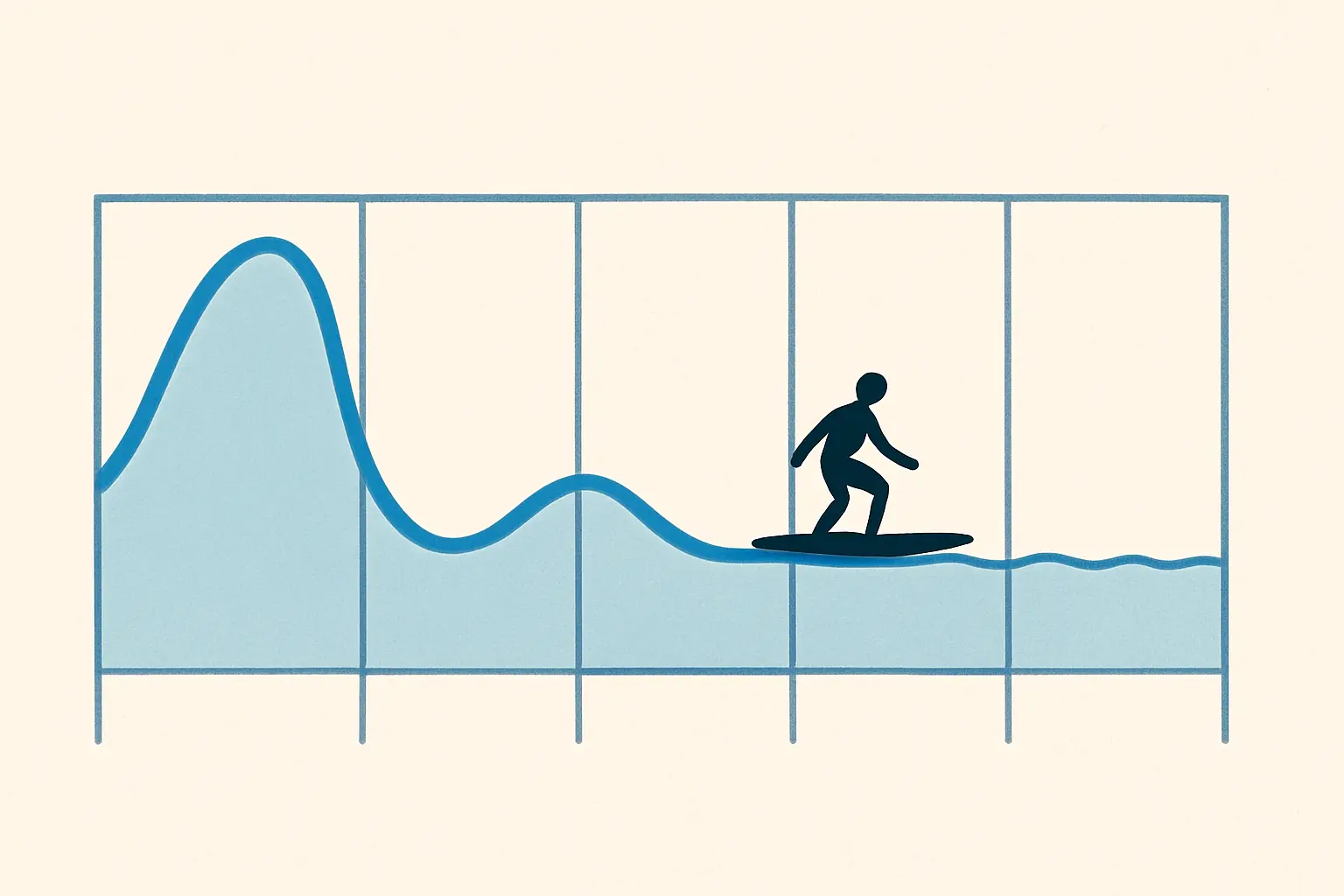
What fear leaves out is the shape of it. According to the same NHS page, symptoms can start within a few hours, are usually strongest in the first week and especially the first three days, and last three to four weeks on average. Some people feel them for longer. Individual cravings are much shorter, and the NHS says a single craving lasts up to about 15 minutes.
If you are worried that the symptoms themselves could harm you, read our explainer on whether withdrawal is dangerous. For a clear picture of what to expect and when, see the withdrawal timeline hour by hour.
Counter-move: do not face withdrawal bare-handed. The NHS notes that combining a nicotine-free medicine with patches or gum makes you much more likely to quit for good. Nicotine replacement often costs less than people expect, and our guide on getting free or cheap nicotine patches shows where to start.
Fear 2: I Will Gain Weight
This fear is honest, and the research does not pretend otherwise. A meta-analysis of 62 studies in the BMJ found that people who quit without treatment gained an average of 4.67 kg (about 10 lb) after 12 months, with most of that gain happening in the first three months (Aubin et al., BMJ, 2012).
The same study shows how much people vary. At 12 months, 16% of quitters had lost weight, 37% had gained under 5 kg, 34% had gained 5 to 10 kg and 13% had gained more than 10 kg. The average is not your destiny.
The NHS is clear on the trade-off: most people gain some weight after quitting, and the health benefits of stopping are far greater than the risks of that gain. Nicotine replacement can also help limit weight gain while you adjust.
Counter-move: plan the first 12 weeks, because that is when most gain happens. Stock easy snacks you like, add a daily walk, and keep something in your hands. Our weight gain prevention guide has a fuller plan.
Fear 3: I Will Lose My Only Stress Relief
For many people a cigarette is the only five minutes of the day that feels like theirs. Losing that feels like losing a coping tool, not just a habit.
Here is the uncomfortable part. The NHS explains that the calm you feel when you smoke fades quickly, and as nicotine leaves your body it triggers irritability and anxiety, which you then relieve with the next cigarette. Many smokers mistake that withdrawal for everyday stress. Our article on the stress-relief myth walks through the cycle in detail.
Research backs this up. In a Cochrane review of 102 studies, people who quit smoking had a small improvement in stress symptoms compared with people who kept smoking, alongside better mood (Taylor et al., Cochrane, 2021).
Counter-move: keep the break, drop the cigarette. Step outside at the same times, take slow breaths, drink a glass of water or text a friend. If a hard moment arrives at night, iQuit’s SOS tools give you breathing exercises and a craving timer, and the AI coach is there for 2am doubts when nobody else is awake.
Fear 4: I Will Fail Again
If you have tried before, this fear can be the heaviest. Each past attempt feels like evidence that you cannot do it.
Look at it differently. A Canadian study that followed 1,277 people who tried to quit estimated that, depending on the method used, the average number of attempts before success ranged from about 6 to about 30. The authors concluded that for many people it may take 30 or more attempts (Chaiton et al., BMJ Open, 2016). You can read more about how many attempts it usually takes.
The NHS also separates a lapse from a relapse. One cigarette or a single puff is a lapse, a slip you can shrug off. Going back to regular smoking is a relapse, and even then the advice is to set a new quit date, ideally within two weeks.
Counter-move: write your lapse plan before you start. What will you do in the hour after a slip? Who will you tell? What will you change next time? iQuit’s slip recovery and streak shields are built around this idea, so one bad evening does not erase weeks of progress.
Fear 5: I Will Lose My Social Life
Smoking breaks can be where friendships happen at work, outside a bar or at family gatherings. It is natural to worry you will be left standing inside alone.
The Cochrane mental health review looked at this directly and found that quitting was not associated with a drop in social quality of life. There is another side too. A long-running study of 12,067 people in the Framingham Heart Study found that smoking and quitting spread through social ties. When a spouse quit, a person’s chance of smoking fell by 67%, and when a friend quit it fell by 36% (Christakis and Fowler, NEJM, 2008). Your quit could help someone else quit too.
Counter-move: tell one smoking friend your plan and ask for something specific, like not offering you a cigarette for the first month. Our guide to parties, pubs and social situations covers the rest.
Fear 6: My Mental Health Will Get Worse
People living with anxiety or depression are often told, directly or indirectly, that cigarettes are keeping them steady. This fear deserves a careful answer.
The Cochrane review found that quitting was associated with small to moderate improvements in anxiety, depression and mixed anxiety and depression symptoms, along with better positive mood and psychological quality of life. The authors concluded that mental health does not worsen as a result of quitting. These improvements appeared in people with diagnosed mental health conditions as well, although the certainty of evidence ranged from very low to moderate. Our summary of what the research says about smoking and mental health goes deeper.
The early weeks can still feel rough, because withdrawal can include low mood and anxiety. That is temporary, and it is different from long-term mental health.
Counter-move: if you take medication for a mental health condition, talk to your doctor or pharmacist before quitting. NICE guidance notes that doses of some other medicines may need adjusting when someone stops smoking. Ask about stop smoking support at the same appointment.
Fear 7: I Will Not Know Who I Am
After 10 or 20 years, smoking can be part of how you see yourself. It is how you start the day, end a meal and mark the end of work. The NHS notes that some people say quitting feels like losing a friend.
This fear is less about nicotine and more about change. It does not have a neat statistic, but it has a practical answer: identity follows behavior. The first weeks feel strange because the old routines are gone and the new ones are not built yet. As the new ones repeat, “someone trying not to smoke” slowly becomes “someone who does not smoke.”
Counter-move: decide what you want to be known for instead. It might be the person who walks at lunch, the one who took up cooking, or the one who finally booked that trip with the money saved. Write it down and put it where you will see it.
Turning Fear Into a Quit Date
Fear gets smaller when it has a plan attached. Use this short sequence over the next seven days.
- Name your top two fears. Write them in a sentence each. Be specific about what you picture happening.
- Match each fear to its counter-move. Use the table above and pick the move you can do this week.
- Choose your support. Pick a stop smoking product, a local stop smoking service or your doctor. The NHS says that with professional help you are three times more likely to quit for good.
- Set a date within two weeks. Close enough to keep momentum, far enough away to prepare.
- Plan the first 28 days. The NHS says that once you reach 28 days smoke-free, you are five times more likely to stay quit.
You will probably still feel nervous on the morning of quit day. That is normal. Courage is not the absence of fear; it is having a plan you trust more than the fear.
Frequently Asked Questions
Is it normal to be scared to quit smoking?
Yes. Fear of withdrawal, weight gain, failure or losing a coping tool is very common, and it often delays quit attempts more than cravings do. Naming the specific fear and matching it to a plan makes it far more manageable. The NHS stresses that withdrawal symptoms are temporary and that support makes quitting easier (NHS Better Health).
How long does nicotine withdrawal last?
According to the NHS, withdrawal can start within a few hours of your last cigarette, is usually strongest in the first week and especially the first three days, and lasts three to four weeks on average. Some people notice symptoms for longer, and a single craving usually passes within about 15 minutes (NHS Better Health).
How much weight do people gain after quitting smoking?
A BMJ meta-analysis found an average gain of about 4 to 5 kg after 12 months among people who quit without treatment, mostly in the first three months. Results varied widely: 16% lost weight and 13% gained more than 10 kg. The NHS says the health benefits of quitting far outweigh the risks of some weight gain (Aubin et al., BMJ, 2012).
Will quitting smoking make my anxiety or depression worse?
The evidence suggests the opposite over time. A Cochrane review of 102 studies found that quitting was associated with small to moderate improvements in anxiety, depression and stress, including in people with mental health conditions. Early withdrawal can feel low, so speak to your doctor if you take medication (Taylor et al., Cochrane, 2021).
I have failed to quit many times. Is there any point trying again?
Yes. A study of 1,277 Canadian smokers estimated that many people need several attempts before quitting for good, and possibly 30 or more. Each attempt shows you which triggers and support gaps to fix next time. The NHS advises setting a new quit date, ideally within two weeks, after a relapse (Chaiton et al., BMJ Open, 2016).
Will I lose my friends if I stop smoking?
Quitting is not linked to a worse social quality of life in the Cochrane review. Research from the Framingham Heart Study also found that quitting spreads through networks, so a friend quitting lowered a person’s chance of smoking by 36%. Telling friends your plan usually helps more than hiding it (Christakis and Fowler, NEJM, 2008).
What is the first step if fear is stopping me from quitting?
Write down your top two fears and one counter-move for each, then choose support such as nicotine replacement, a stop smoking service or your doctor. Set a quit date within the next two weeks. The NHS says professional help makes you three times more likely to quit for good (NHS Better Health).
Face Your Quit Day With Support in Your Pocket
iQuit gives you SOS craving tools, a craving and mood journal, slip recovery with streak shields, and an AI coach that adapts to your progress. Track days smoke-free and money saved from the first hour. Free on Google Play and the App Store.