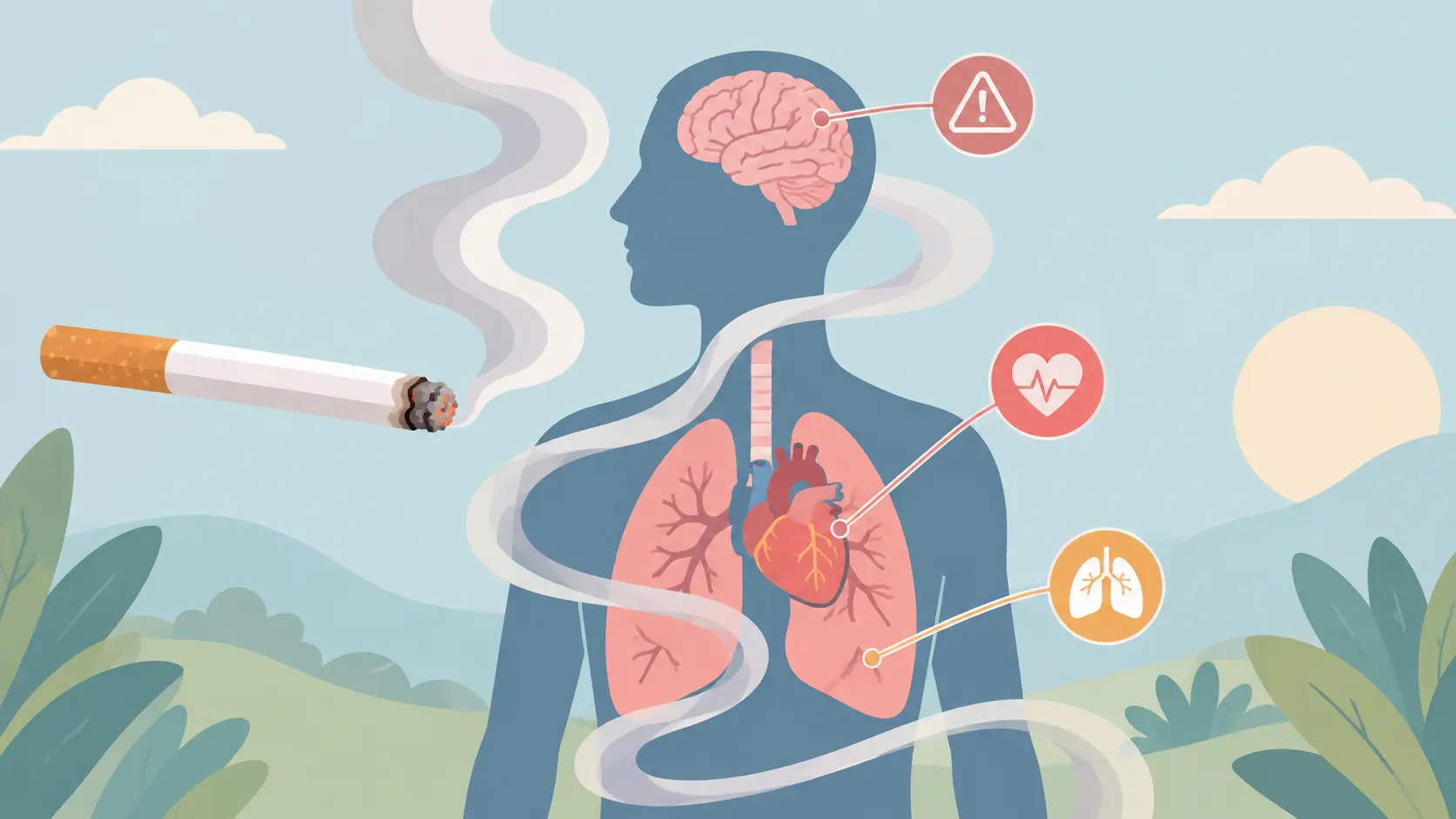
Why is smoking bad for you? Smoking is bad for you because cigarette smoke carries more than 7,000 chemicals into your body, including at least 69 that cause cancer. These toxins damage your lungs, heart, blood vessels and DNA, raising your risk of cancer, heart attack, stroke and lung disease. Smoking harms nearly every organ, but much of the damage starts to reverse once you quit.
This guide is a head-to-toe answer hub. Below you will find 12 specific ways smoking harms your body. Each section opens with a short, direct answer, gives one key fact from a trusted health source, and explains how that part of your body recovers after you stop.
What is in cigarette smoke that makes smoking bad for you?
Cigarette smoke is a toxic mix created by burning tobacco. According to the National Cancer Institute, tobacco smoke contains more than 7,000 chemicals, at least 250 of which are known to be harmful and at least 69 of which can cause cancer.
The main troublemakers fall into three groups. Tar coats the lungs and carries many of the cancer-causing chemicals. Carbon monoxide displaces oxygen in your blood, so your organs work harder with less fuel. Nicotine is the addictive drug that keeps you coming back, and it also speeds up your heart and narrows your blood vessels.
Other chemicals include formaldehyde, benzene, arsenic, ammonia and heavy metals such as cadmium. Many of these would never be considered safe to breathe in any other setting.
The scale of harm is large. The CDC reports that smoking and secondhand smoke cause more than 480,000 deaths each year in the United States, nearly one in five deaths, and that more than 16 million Americans live with a disease caused by smoking.
1. How does smoking damage your lungs?
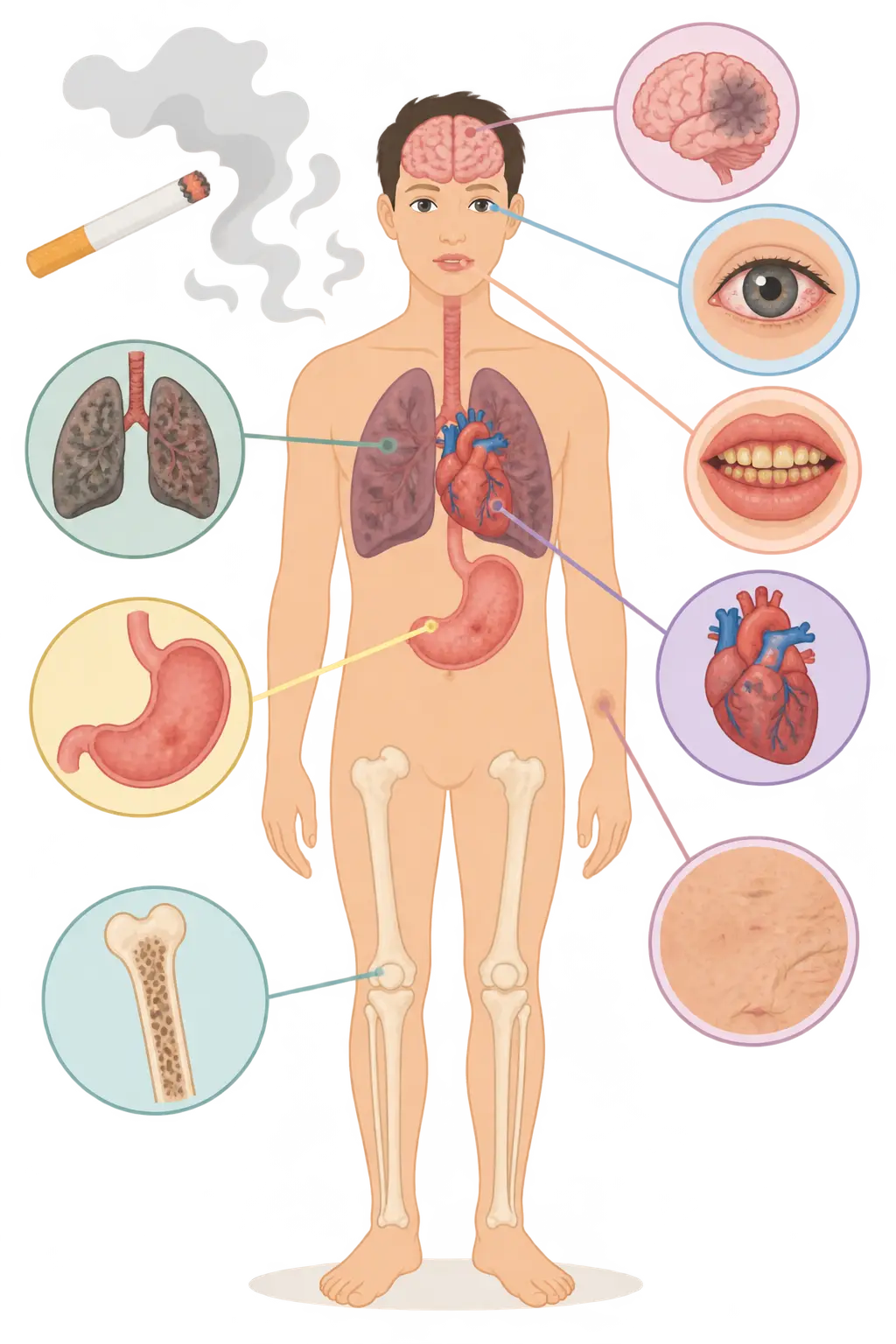
Smoking inflames your airways and destroys the tiny air sacs that move oxygen into your blood. Over time this causes chronic bronchitis and emphysema, together known as COPD. The National Cancer Institute reports that about 24% of smoking-related deaths in the US come from lung disease.
Your airways are lined with cilia, tiny hairs that sweep out mucus and dirt. Smoke paralyzes and damages them, so mucus builds up. That is why many smokers develop a persistent morning cough.
Deeper in the lungs, smoke breaks down the walls of the alveoli. Once destroyed, these air sacs do not grow back, which is why emphysema causes lasting breathlessness.
Recovery: Cilia begin to regrow within weeks of quitting, and coughing and shortness of breath typically improve over the first one to nine months. Lost air sacs cannot be replaced, but quitting slows further decline significantly.
2. Why does smoking cause cancer?
Carcinogens in smoke damage the DNA in your cells, and damaged cells can grow out of control. Smoking is best known for lung cancer, but the National Cancer Institute lists 14 cancer sites it causes, including the mouth, throat, esophagus, stomach, pancreas, kidney, bladder, cervix, colon and blood (acute myeloid leukemia).
Cancer accounts for about 36% of smoking-related deaths, according to the same source. Lung cancer is the leading cause of cancer death, and most cases are linked to smoking.
The more you smoke and the longer you smoke, the higher the risk. But there is no safe threshold. Our guide on whether smoking 1 cigarette a day is bad explains why even light smoking raises cancer and heart risk.
Recovery: Cancer risk falls gradually after quitting. Within 10 to 15 years, the risk of lung cancer is roughly halved compared with continuing to smoke, and the risk of mouth, throat and bladder cancers also declines over time.
3. How does smoking hurt your heart?
Smoking raises your blood pressure, speeds up your heart and damages the lining of your arteries. This leads to plaque buildup and blood clots, the main causes of heart attacks. The National Cancer Institute reports that heart disease and stroke account for about 39% of smoking-related deaths in the US.
Carbon monoxide reduces the oxygen your blood can carry, so your heart has to pump harder. At the same time, nicotine triggers a surge of adrenaline that tightens blood vessels. Together they put the heart under constant strain.
Smoking also makes blood stickier and more likely to clot. A clot in a coronary artery can cause a heart attack. Read more on whether nicotine is bad for your heart for the specific role nicotine plays.
Recovery: Heart rate and blood pressure begin to fall within hours of your last cigarette. After about one year, the excess risk of a heart attack drops sharply, and it continues to decline over the following years.
4. What does smoking do to your blood vessels and circulation?
Smoking narrows and stiffens blood vessels throughout your body, reducing blood flow. This raises the risk of stroke, peripheral artery disease in the legs and aneurysms. Poor circulation is also why smokers often have cold hands and feet and heal more slowly.
When the arteries to your brain are damaged or blocked, a stroke can occur. When the arteries to your legs narrow, walking can become painful, and in severe cases tissue can die from lack of blood.
Reduced blood flow to the extremities also affects wound healing. Surgeons often ask patients to stop smoking before operations for this reason.
Recovery: Circulation starts to improve within two to twelve weeks of quitting, which many people notice as warmer hands and feet and easier walking. Stroke risk falls steadily over the following years.
5. How does smoking affect your brain and mood?
Nicotine changes your brain’s reward system, creating addiction and a cycle of stress and relief. Each cigarette releases dopamine, but as nicotine levels fall you feel irritable and anxious, which drives the next cigarette. Many smokers believe cigarettes calm them, but much of that calm is simply relief from withdrawal.
Smoking also raises stroke risk, which can cause lasting brain damage. Research links long-term smoking to faster cognitive decline in later life.
Our explainer on what nicotine does to your body breaks down how the drug affects the brain and other organs.
Recovery: Withdrawal symptoms such as irritability and poor concentration usually peak in the first week and ease within two to four weeks. Many people report lower stress and better mood once they are past this stage.
6. Why is smoking bad for your teeth and gums?
Smoking stains teeth, causes bad breath and seriously raises the risk of gum disease. The CDC states that people who smoke have twice the risk of gum disease compared with non-smokers, and the risk grows with the number of cigarettes and years smoked.
Smoking reduces blood flow to the gums, which can hide warning signs like bleeding. It also weakens the immune response in the mouth, so infections take hold more easily and heal more slowly. Advanced gum disease can lead to tooth loss.
Smoking also dulls your senses of taste and smell and raises the risk of mouth and throat cancers. Oral nicotine products are not risk-free either; see our guide on whether Zyn is bad for you for the gum risks of pouches.
Recovery: Taste and smell often sharpen within days to weeks of quitting. Gum health improves over months as blood flow returns, and the extra risk of gum disease falls over the years.
7. Can smoking harm your eyes?
Yes. Smoking raises the risk of cataracts and age-related macular degeneration, two leading causes of vision loss. The toxins in smoke damage the lens and the retina, and reduced blood flow deprives the eye of oxygen.
Cataracts cloud the lens and blur vision. Macular degeneration damages the center of the retina, making it hard to read, drive or recognize faces. Smoking also worsens dry eye and can damage the blood vessels in the eye for people with diabetes.
Recovery: Quitting lowers the risk of developing these conditions and slows their progression if you already have early signs. Regular eye checks are wise for long-term smokers and former smokers alike.
8. Does smoking raise blood sugar and diabetes risk?
Yes. Smoking makes your body less sensitive to insulin, raising the risk of type 2 diabetes. The CDC reports that people who smoke cigarettes are 30% to 40% more likely to develop type 2 diabetes than people who don’t smoke, and the risk rises with the number of cigarettes smoked.
For people who already have diabetes, smoking makes blood sugar harder to control and increases the risk of complications such as kidney disease, nerve damage, foot ulcers and vision problems.
Recovery: Insulin sensitivity improves after quitting. Some people gain a little weight when they stop, so pairing your quit with healthy eating and activity helps keep blood sugar steady.
9. How does smoking weaken your immune system?
Smoking suppresses your immune defenses, making infections more common and more severe. Smokers are more likely to catch colds and flu, to develop pneumonia and tuberculosis, and to take longer to recover. Smoking also worsens autoimmune conditions such as rheumatoid arthritis.
Damaged cilia mean germs are not cleared from the airways effectively. Smoke also disrupts the white blood cells that fight infection and drives chronic, low-level inflammation throughout the body.
Recovery: Immune function begins to rebound within weeks of quitting, and many former smokers notice they catch fewer chest infections in the first year. Inflammation markers continue to improve over time.
10. Is smoking bad for your bones?
Yes. Smoking lowers bone density and raises the risk of osteoporosis and fractures. Toxins in smoke interfere with the cells that build bone, reduce blood supply to bones and affect hormones such as estrogen that help keep bones strong.
Smokers are more likely to break a hip and tend to heal more slowly after fractures. Smoking also raises the risk of back pain and slows recovery after bone and joint surgery.
Recovery: Quitting helps slow bone loss. Fracture risk drops over several years after quitting, and bones heal better once blood flow improves. Weight-bearing exercise, calcium and vitamin D support this recovery.
11. How does smoking affect fertility and sexual health?
Smoking reduces fertility in both women and men and raises the risk of pregnancy complications. In women it can make it harder to conceive and increases the risk of miscarriage, ectopic pregnancy, premature birth and low birth weight. In men it can damage sperm and contribute to erectile dysfunction.
Erectile problems are linked to the same blood vessel damage that causes heart disease. In pregnancy, carbon monoxide and nicotine reduce the oxygen supply to the developing baby.
Recovery: Fertility improves after quitting, and stopping at any point in pregnancy benefits the baby. Many men also notice improved erectile function as circulation recovers.
12. Why does smoking age your skin?
Smoking speeds up skin aging by reducing blood flow and breaking down collagen and elastin. This leads to earlier wrinkles, sagging, a dull or gray complexion and lines around the mouth. Smoking also slows wound healing and is linked to psoriasis.
Repeated pursing of the lips and squinting against smoke add to facial lines. Smoking can also yellow fingers and nails.
Recovery: Skin often looks brighter within weeks of quitting as blood flow and oxygen improve. Existing wrinkles may not disappear, but further damage slows.

How much does smoking shorten your life?
Smoking shortens life by around a decade on average. The National Cancer Institute reports that smokers’ death rates are about three times higher than those of people who have never smoked. Quitting earlier saves more years, but stopping at any age helps.
According to the National Cancer Institute, people who quit:
| Age at quitting | Years of life gained (approx.) |
|---|---|
| 25 to 34 | About 10 years |
| 35 to 44 | About 9 years |
| 45 to 54 | About 6 years |
| 55 to 64 | About 4 years |
Quitting before age 40 reduces the risk of dying from smoking-related disease by about 90%. That makes quitting one of the most powerful health decisions a person can make.
What happens to your body when you quit smoking?
Your body starts repairing itself within hours of your last cigarette. Heart rate drops first, carbon monoxide clears from the blood within a day or two, and breathing and circulation improve over weeks and months. Over years, your risk of heart disease, stroke and cancer keeps falling.
- 20 minutes to a few hours: heart rate and blood pressure begin to settle.
- 12 to 48 hours: carbon monoxide levels fall and oxygen levels rise.
- 2 to 12 weeks: circulation and lung function improve.
- 1 to 9 months: coughing and breathlessness ease as cilia recover.
- 1 year: excess heart attack risk drops substantially.
- 10 years and beyond: lung cancer risk falls to about half that of a continuing smoker.
For an hour-by-hour breakdown, read what happens when you stop smoking. For an organ-by-organ view, see our guide to body recovery after quitting smoking.
Tracking these milestones can be a powerful motivator. The iQuit app shows each milestone as you reach it, so you can see your heart, lungs and circulation recovering in real time.
Frequently Asked Questions
Why is smoking bad for you in simple terms?
Cigarette smoke contains more than 7,000 chemicals, at least 69 of which can cause cancer. They damage your lungs, blood vessels and DNA, which raises your risk of cancer, heart disease, stroke and lung disease.
How many people does smoking kill each year?
In the United States, smoking and secondhand smoke cause more than 480,000 deaths each year, nearly one in five deaths, according to the CDC.
What is the worst thing smoking does to your body?
Cancer and cardiovascular disease are the biggest killers. The National Cancer Institute reports that about 39% of smoking-related deaths come from heart disease and stroke and about 36% from cancer.
How many years does smoking take off your life?
Smokers’ death rates are about three times higher than never-smokers’. People who quit between ages 25 and 34 gain about 10 years of life compared with those who keep smoking.
Is light or occasional smoking still bad for you?
Yes. There is no safe level of smoking. Even a few cigarettes a day raise the risk of heart disease and some cancers well above that of non-smokers.
Can your body repair itself after you quit smoking?
Much of it can. Circulation and lung function improve within weeks to months, and the risk of heart disease, stroke and several cancers falls steadily over the years after quitting.
Does smoking affect mental health?
Nicotine creates a cycle of withdrawal and relief that can increase anxiety between cigarettes. Many people find their stress and mood improve after the withdrawal period ends.
Is it ever too late to quit smoking?
No. The National Cancer Institute reports that even people who quit at ages 55 to 64 gain about four years of life on average.
Is secondhand smoke bad for you too?
Yes. Secondhand smoke raises a non-smoker’s heart disease risk by an estimated 25 to 30% and lung cancer risk by 20 to 30%, according to the National Cancer Institute.
The bottom line: why is smoking bad for you?
Smoking is bad for you because it damages almost every organ in your body, from your lungs and heart to your bones, skin, eyes and fertility. The good news is that your body begins to recover as soon as you stop, and every smoke-free day lowers your risk.
If you are ready to start, download the iQuit app to follow your health milestones, count your savings and get support whenever a craving hits.