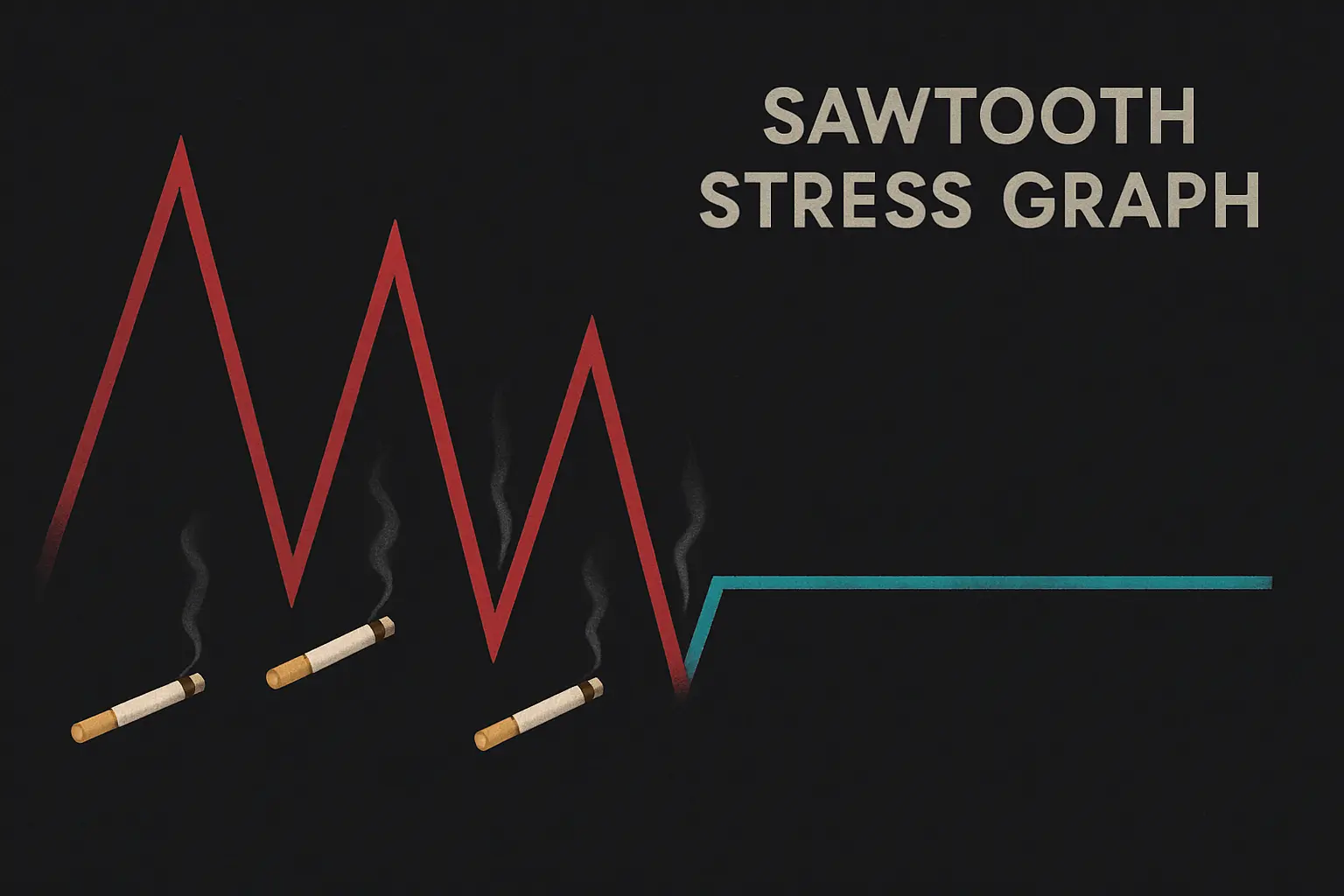
Here’s the trick cigarettes played on you for years: they sold you the cure after causing the disease. Nicotine’s half-life is about two hours — so between cigarettes, withdrawal sets in: restlessness, tension, irritability, poor focus. Those sensations are chemically indistinguishable from stress. The next cigarette relieves them, and your brain files the experience as “smoking calms me down.” It never noticed the fine print: the tension being relieved was manufactured by the previous cigarette. That’s not stress relief. That’s a subscription to stress with scheduled refunds.
The evidence against the myth
- Smokers are more stressed, not less. Across studies, smokers report higher baseline stress and anxiety than non-smokers — the opposite of what a genuine anxiolytic would produce in its users.
- Quitting lowers stress. The landmark BMJ meta-analysis following quitters found anxiety, depression and stress scores improving after cessation — with effect sizes for mood comparable to antidepressant treatment. The therapy you feared losing was the burden.
- The mechanism is visible in your day. Track a smoker’s mood hour by hour (researchers have) and it sawtooths: rising tension between cigarettes, brief normalization after each. Non-smokers just… don’t have the sawtooth. Ex-smokers lose it within weeks — the same recalibration described in the dopamine loop article.
The three real ingredients of the “calm”
To be fair to the illusion, the cigarette moment did contain genuine calming agents — nicotine just wasn’t one of them:
- Withdrawal relief — the counterfeit ingredient, available only to the addicted.
- Paced breathing — a drag is a slow inhale, pause, long exhale. That’s a relaxation technique with solid physiology behind it, and it works identically without smoke: it’s literally the pattern in box breathing.
- The licensed pause — permission to step away for three minutes. The permission was doing real work; the cigarette was just the permission slip.
Quitting doesn’t mean losing ingredients two and three. It means keeping them and cancelling the counterfeit.
Replacing the “stress cigarette,” concretely
- Keep the break, change the contents. When pressure spikes, still step away — but run six breathing cycles or a two-minute walk instead. Same pause, same exhale physiology, no re-subscription.
- Expect a rough fortnight, then a dividend. During withdrawal, stress genuinely runs hot (see the irritability guide). Push through it and your baseline lands below your smoking-era stress — the sawtooth flattens.
- Watch for the myth’s last stand. Months in, a crisis will whisper “a cigarette would help right now.” Now you know the accounting: it would add withdrawal to your crisis within two hours. The whisper is the old subscription trying to renew.
Tools for the pressure moments
The free iQuit app packages the real ingredients: guided breathing and grounding behind the SOS button for acute spikes, an AI coach for the “today was brutal” evenings, and a craving log that will show you — in your own data — stress cravings getting rarer as your baseline calms. The stress relief you were promised by cigarettes is, ironically, delivered by quitting them.
FAQ
Does smoking relieve stress?
It relieves nicotine withdrawal, which feels like stress. Smokers run higher baseline stress; quitting lowers it.
Why does a cigarette feel calming then?
Withdrawal relief + paced breathing + a licensed pause. The last two work without smoke.
Will quitting make my anxiety worse?
Briefly, during withdrawal — then measurably better in the meta-analyses, often within weeks.
What do I do in a real crisis without cigarettes?
The break and the breathing — the parts that actually worked — plus support that doesn’t bill you in withdrawal two hours later.
Cancel the stress subscription: download iQuit free on Google Play.