Smoking During Pregnancy: Risks, How to Quit, and What Happens When You Do (2026)
If you are pregnant and still smoking, you have already heard the warnings — but knowing the risks and finding the strength to act on them are two entirely different things. Smoking during pregnancy remains one of the most preventable causes of infant illness and death worldwide, yet in 2021 approximately 5.4% of pregnant women in the United States still smoked at some point during their pregnancy, according to the CDC’s Pregnancy Risk Assessment Monitoring System. The good news is that quitting at any point — even in the third trimester — delivers measurable benefits to both you and your baby. This guide gives you the evidence, a practical quit plan, and the reassurance that it is never too late to make a difference.
The chemicals in every cigarette you smoke — nicotine, carbon monoxide, formaldehyde, and more than 7,000 other compounds — cross the placenta directly. Your baby cannot filter them out. Their heart rate rises with every puff, their oxygen supply drops, and their developing organs absorb the same toxic load that is damaging yours. Understanding this mechanism is not meant to create guilt; it is meant to make the decision to quit feel as urgent and as achievable as it truly is.
How Harmful Is Smoking During Pregnancy?
The short answer: very. A 2021 CDC study covering 45 US states found that 5.4% of women smoked during pregnancy — and that figure underestimates exposure because it excludes vaping and secondhand smoke. The UK’s NHS reports that around 9% of women are still smoking at the time of delivery. Global data from the WHO suggest that in some low-income regions, prevalence exceeds 20%.
Tobacco smoke contains nicotine — a potent vasoconstrictor that narrows blood vessels throughout the placenta — and carbon monoxide, which displaces oxygen from fetal haemoglobin. The result is a baby who is chronically oxygen-deprived, even when the mother feels fine. This dual mechanism explains why nearly every adverse pregnancy outcome is statistically elevated in smokers.
The dose-response relationship is clear: heavier smoking produces worse outcomes. But there is no safe level. Even one to five cigarettes per day measurably increases the risk of preterm birth and low birthweight.
Risks to Your Baby
The evidence base here is enormous — decades of epidemiological data and mechanism studies converge on the same conclusions.
Premature Birth
Smoking roughly doubles the risk of preterm birth (delivery before 37 weeks). Babies born prematurely face elevated risk of breathing difficulties, feeding problems, brain bleeds, vision loss, and developmental delays. The earlier the birth, the more serious the consequences.
Low Birthweight
Nicotine restricts blood flow through the placenta, limiting the nutrients and oxygen that reach the fetus. Babies born to mothers who smoke weigh an average of 200 grams less than babies of non-smokers — a difference large enough to affect health outcomes in the first weeks and months of life.
Placental Complications
Two severe placental problems are directly linked to smoking:
- Placenta previa — the placenta covers the cervix, causing severe bleeding and often requiring emergency caesarean delivery.
- Placental abruption — the placenta separates from the uterine wall before delivery. This is a life-threatening emergency for both mother and baby.
Smoking roughly doubles the risk of both conditions.
Birth Defects
Research published in peer-reviewed journals consistently shows elevated rates of orofacial clefts (cleft lip and/or palate), congenital heart defects, and gastroschisis (an abdominal wall defect) in babies exposed to tobacco smoke in utero. The absolute risk remains low, but the relative increase is statistically meaningful.
Sudden Infant Death Syndrome (SIDS)
SIDS risk is approximately two to three times higher in babies whose mothers smoked during pregnancy. Postnatal secondhand smoke exposure compounds this risk further. The mechanism is not fully understood but likely involves nicotine’s effect on the infant’s developing brainstem respiratory control centres.
Long-Term Developmental Effects
Prenatal nicotine exposure is associated with higher rates of ADHD, poorer academic achievement, and altered brain development measurable on neuroimaging in preadolescence. These are not subtle statistical artefacts — they represent real differences in children’s cognitive and behavioural trajectories.
Risks to the Mother
Pregnancy itself places significant demands on the cardiovascular system. Smoking amplifies every cardiovascular risk. Pregnant smokers face:
- Doubled risk of abnormal bleeding during pregnancy and delivery
- Higher rates of ectopic pregnancy — a life-threatening condition where the embryo implants outside the uterus
- Increased risk of preterm premature rupture of membranes (PPROM), which triggers early labour
- Greater anaesthetic risk due to reduced lung function and airway irritability
Quitting reduces all of these risks. Cardiovascular improvements begin within hours of the last cigarette.
Does It Still Help to Quit in the Second or Third Trimester?
Absolutely — and the research is unambiguous. A systematic review found that quitting before 15 weeks of gestation produces the greatest benefit, essentially normalising birthweight and reducing preterm risk to near-baseline levels. But quitting at any stage helps:
| When You Quit | Key Benefits |
|---|---|
| Before conception | Full risk normalisation; improved fertility |
| Before 15 weeks | Near-normal birthweight; greatly reduced preterm risk |
| 15–28 weeks (second trimester) | Significant improvement in birthweight; reduced SIDS risk |
| After 28 weeks (third trimester) | Reduced SIDS risk; better lung maturity; lower NICU admission rates |
If you are in your third trimester reading this, quitting today still matters enormously for SIDS prevention and your baby’s lung health.
How to Quit Smoking While Pregnant
Quitting during pregnancy is harder than it sounds. Nausea, food aversions, stress, and heightened nicotine sensitivity all work against you. These evidence-based strategies give you the best chance:
1. Set a Quit Date and Tell Someone
A specific quit date backed by social accountability doubles your likelihood of success. Tell your midwife, partner, or a friend. Make it concrete: write it on paper, add it to your phone. Accountability is one of the most powerful tools in cessation research.
2. Use a Dedicated Quit-Smoking App
The iQuitNow app tracks your quit streak, logs your financial savings, and gives you evidence-based coping techniques for cravings. Research shows that app-based support improves quit rates, particularly for women under 35. Unlike many apps, it tracks health milestones from your first smoke-free minute — which matters when you need motivation at 3 a.m.
3. Identify Your Triggers
Most smoking behaviour is cue-driven. Common triggers during pregnancy include morning coffee, stress about the birth, boredom, and social situations. Write your top three triggers down. For each one, write a substitute behaviour — a short walk, cold water, or a breathing technique.
4. Behavioural Support (Counselling)
Specialist stop-smoking services double quit rates compared with going it alone. In the UK, NHS Stop Smoking Services are free. In the US, call 1-800-QUIT-NOW for free telephone counselling. The ACOG (American College of Obstetricians and Gynaecologists) recommends integrating cessation counselling into every prenatal visit.
5. Manage Withdrawal With the 4 Ds
When a craving hits: Delay (it will pass in 3–5 minutes), Deep-breathe (four counts in, four out), Drink water, Distract yourself. Cravings during pregnancy are intense but brief. The 4-D technique has solid evidence in the cessation literature.
For a step-by-step action plan, see our guide on how to quit smoking with an evidence-based approach.
Is Nicotine Replacement Therapy Safe in Pregnancy?
This is one of the most common questions midwives and GPs receive. The evidence-based answer: NRT is safer than continuing to smoke, but it should be used only after behavioural support alone has been tried or when smoking carries clearly greater risk.
NRT during pregnancy delivers nicotine without the carbon monoxide and 7,000+ other chemicals in tobacco smoke. Studies comparing NRT-assisted quitting to continued smoking consistently show better outcomes with NRT. However, nicotine itself does cross the placenta, so NRT is not without risk.
If your doctor recommends NRT, the usual approach is:
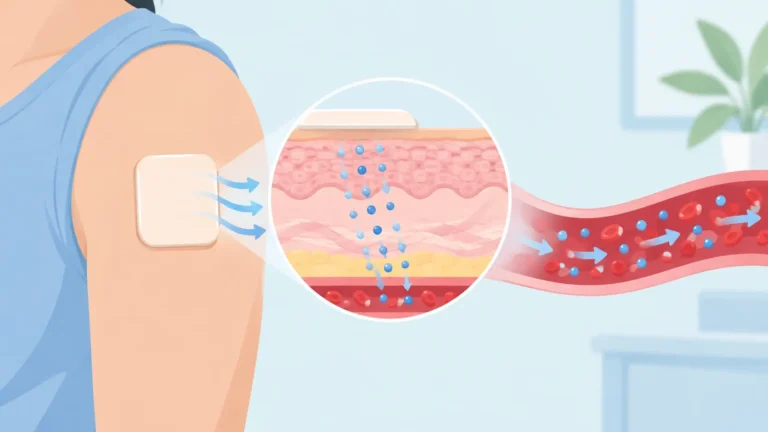
- Patches: 16-hour patches (removed at night) rather than 24-hour patches, to minimise fetal nicotine exposure overnight
- Gum or lozenge: intermittent forms used only when cravings are intense
- Combination NRT: patch plus gum — this increases quit rates by approximately 25% versus single-form NRT, per NIHR evidence
Varenicline (Champix/Chantix) and bupropion are not recommended during pregnancy. There is insufficient safety data for use in pregnant women.
For a full comparison of NRT options, see our article on best NRT options compared (2026).
What Happens to Your Baby When You Quit
The body’s recovery after quitting is one of medicine’s most powerful stories — and when you are pregnant, many of those improvements happen to your baby simultaneously.
- Within 20 minutes: your blood pressure drops, pulse slows, placental blood flow increases
- Within 8–12 hours: carbon monoxide leaves your bloodstream; fetal oxygen levels begin to normalise
- Within 24–48 hours: fetal heart rate variability (a sign of neurological health) improves measurably
- Within 2 weeks: placental blood flow continues to improve; risk of premature rupture of membranes decreases
- After 4+ weeks: fetal growth accelerates toward normal curves
For the full body recovery picture, read our quit smoking benefits timeline from 20 minutes to 20 years.
Getting Support That Works
Research is consistent: smokers who receive support are twice as likely to quit successfully compared to those who try alone. During pregnancy, the following resources are available:
- US: 1-800-QUIT-NOW (free telephone coaching), SmokeFree Women (smokefree.gov/smokefreewomen), quitSTART app
- UK: NHS Stop Smoking Services (free), NHS Pregnancy Smoking Helpline: 0300 123 1044
- Australia: Quitline 13 7848, My QuitBuddy app
- Global: WHO Framework Convention on Tobacco Control resources at who.int
Your partner quitting at the same time dramatically increases your success rate — secondhand smoke exposure at home is the single biggest predictor of relapse during pregnancy.
If you slip after quitting, remember that relapse is part of the process for most people. Read our guide on nicotine withdrawal and how to navigate the first weeks to understand what to expect.
Frequently Asked Questions
Can smoking one cigarette a day harm my baby?
Yes. There is no safe level of smoking during pregnancy. Even one to five cigarettes per day measurably increases the risk of low birthweight, preterm birth, and SIDS. The dose-response relationship means that reducing cigarettes helps, but only stopping completely eliminates the risk.
Is vaping safer than smoking during pregnancy?
No. Vaping still delivers nicotine — which restricts placental blood flow and harms fetal brain development — plus a range of other chemicals whose long-term effects in pregnancy are not yet fully understood. Neither the CDC nor the NHS recommends vaping as a cessation tool during pregnancy. Behavioural support and, if needed, nicotine replacement therapy are the evidence-based alternatives.
What if I quit smoking but my partner still smokes indoors?
Secondhand smoke carries many of the same risks as direct smoking. If your partner smokes indoors, your baby is exposed to carbon monoxide, nicotine particulates, and carcinogens even if you yourself have quit. Ask your partner to smoke outside, away from doors and windows, and consider enlisting their help to quit together — couples who quit simultaneously have significantly higher long-term success rates.
Will quitting smoking cause stress that harms my baby more than smoking would?
This is a common concern, but the evidence does not support it. Nicotine withdrawal causes temporary irritability and anxiety, but these effects are far smaller — and shorter-lived — than the documented harms of continued smoking. Moreover, quitting reduces chronic cortisol levels over time, making you physiologically calmer after the first two weeks of withdrawal.
Can I use nicotine patches throughout my entire pregnancy?
NRT is generally recommended only for the period needed to quit, not as a long-term substitute for smoking throughout pregnancy. Your doctor or midwife will advise on the appropriate duration — usually 8–12 weeks — and will support you in stepping down the dose as cravings reduce. Always use NRT under medical supervision during pregnancy.
I smoked heavily in the first trimester before I knew I was pregnant. Should I be worried?
Many women are in this situation, and worrying will not change what has already happened. The most important thing now is to quit immediately. Discuss your history honestly with your midwife or obstetrician — they can arrange additional ultrasound monitoring of fetal growth if appropriate. Your baby’s ability to recover once the toxic exposure stops is remarkable.
Ready to Protect Your Baby’s Future?
The iQuitNow app gives you a personalised quit plan, real-time health milestones, and evidence-based craving tools — everything you need to make this the last cigarette of your pregnancy.