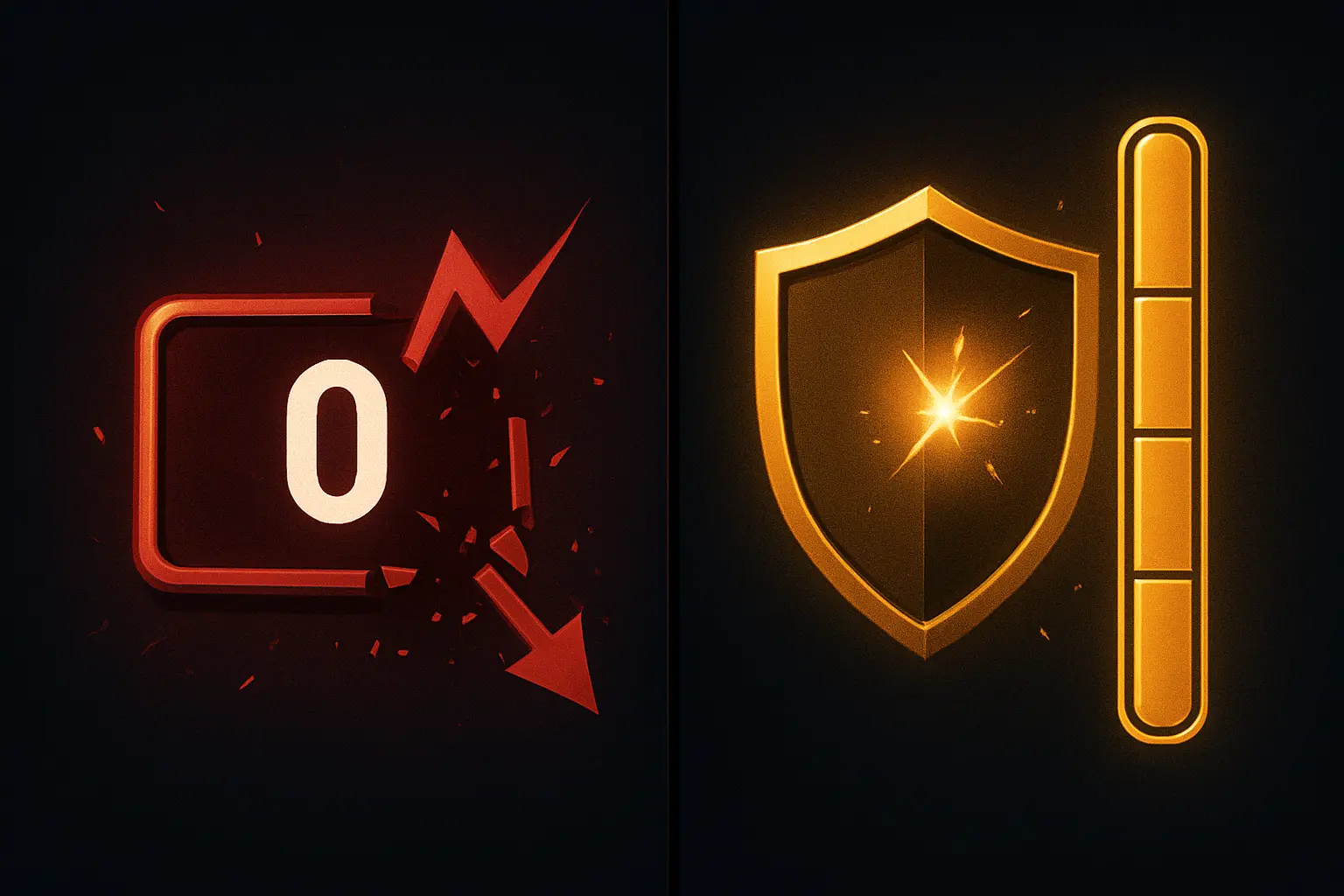
Two quit apps watch the same event — a 47-day quitter smokes one cigarette at a wedding — and tell two different stories. App A: your streak is now 0 days. App B: a shield absorbed the slip; your streak stands, here’s your 24-hour recovery plan. Same cigarette, opposite psychology — and relapse research says the difference between those two screens often decides whether that wedding cigarette stays a footnote or becomes a full relapse.
The case for the hard reset (and why it fails)
Reset-to-zero has an honest logic: accountability. A streak should mean “consecutive smoke-free days,” and it keeps the stakes high. The problem is what high stakes do after a stumble. Psychologists call it the abstinence violation effect: when one lapse is framed as total failure, shame and all-or-nothing thinking take over — “I’ve lost everything anyway” — and the single cigarette becomes a pack by the weekend. The counter designed to motivate becomes, at the worst possible moment, the strongest argument for giving up. Users of reset apps describe the same sequence again and again: slip → watch 47 become 0 → delete the app.
The shield model: accountability without the cliff
The alternative, used by iQuit’s streak shields, restructures the stakes. You hold up to three shields; a slip consumes one instead of your streak. Shields are scarce — one refills per week, and daily journaling earns them back — so they can’t be farmed into a smoking allowance. Crucially, the slip is still logged, and it triggers a recovery flow: “Nothing you built is gone,” two concrete next-24-hour moves chosen by you, and follow-up check-ins at +3 and +20 hours, when second-cigarette risk peaks. Accountability moved from the metric to the response — which is where clinicians put it, since what happens after “just one” depends entirely on the next day’s behavior.
Head to head
| Hard reset (traditional) | Streak shield (iQuit) | |
|---|---|---|
| After one slip | Counter → 0 | Shield spent; streak survives |
| Slip honesty | Logged (then punished) | Logged (then coached) |
| Psychological frame | Perfection or failure | Lapse ≠ relapse (clinical framing) |
| Post-slip support | None — you start over | Recovery plan + timed check-ins |
| Abuse resistance | N/A | Max 3 shields, slow refill, journaling-earned |
| Typical failure mode | Slip → shame → app deleted | Slip → plan → quit continues |
What the psychology literature actually supports
Marlatt’s relapse-prevention model — the framework behind most modern cessation therapy — explicitly distinguishes a lapse (an event) from a relapse (a pattern) and treats the post-lapse response as the decisive intervention point. Self-compassion after a stumble predicts continued abstinence; shame predicts collapse. In product terms: the streak metric should describe a campaign, not a glass sculpture. The shield model is that literature translated into UI. The reset model is a slot machine that pays out guilt.
The verdict
If you have never slipped and never will, both models look identical. For the other 95% of quitters — the ones the relapse statistics describe — the shield model keeps you in the game on the exact day the reset model pushes you out of it. Choose the app built for the quit you’ll actually have, not the perfect one. iQuit’s shields, slip recovery and craving toolkit are free on Google Play.
FAQ
Should an app reset your streak after one cigarette?
Relapse psychology says no — resets trigger the “lost everything” spiral that converts lapses into relapses. Log the slip; preserve the progress.
Isn’t a forgiving streak cheating?
The slip is still recorded and followed up. What survives is the accurate story: weeks of progress plus one lapse is not zero.
Which apps use the shield model?
iQuit — up to 3 shields, weekly refill, journaling-earned, with a recovery plan behind every use.
What if I use all three shields?
The recovery flow still runs, focusing on your restart. Shields limit the metric damage, not the support.
Pick the streak that survives real life: get iQuit free on Google Play.