
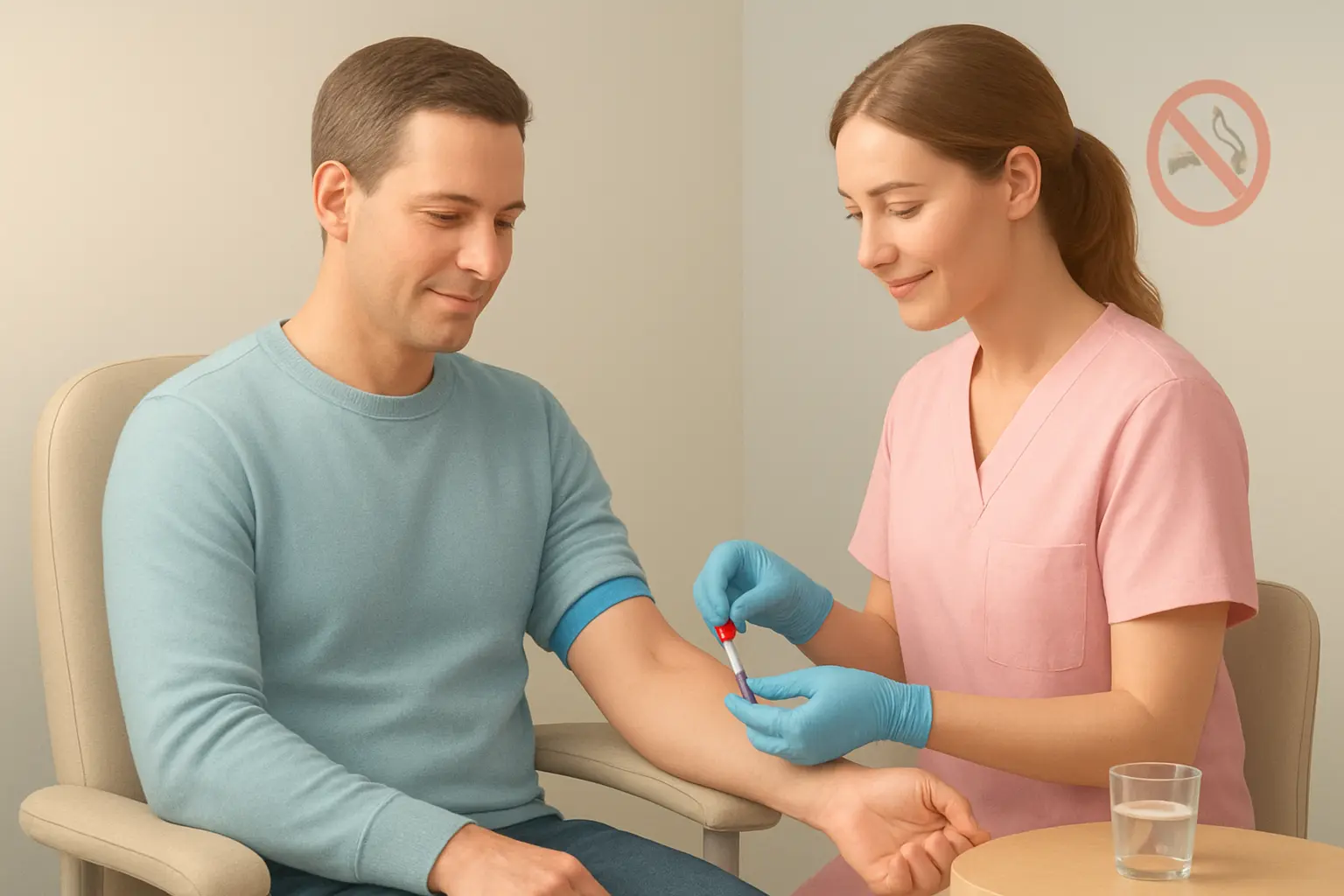
It is best not to. If you have been asked to fast, can you smoke before a blood test has a clear answer: no. MedlinePlus lists smoking among the things to avoid while fasting, along with eating and exercise. For other blood tests, follow the instructions you were given, and if you are unsure, skip the cigarette and ask. Smoking can change several common results, from white blood cell count to cholesterol and carbon monoxide levels.
This guide explains what smoking changes in your blood, how fasting rules apply, how long before a test to stop, whether vaping or nicotine replacement count, and why nicotine and cotinine tests are a different matter altogether.
Short answer: should you smoke before a blood test?
No, not if you can avoid it. The US National Library of Medicine’s MedlinePlus guide to preparing for lab tests lists not smoking among the common instructions patients may be given. It also stresses that even a small change from the instructions can have a big effect on results, and asks you to be honest if you did not follow them exactly.
The reason is simple. A blood test is only useful if it reflects your usual state of health. If a cigarette shortly before the test nudges some values up or down, your doctor may see a picture that is slightly off, which could mean a repeat test or, occasionally, a wrong conclusion.
That said, do not panic if you forgot and had a cigarette. Just tell the nurse or phlebotomist taking your blood, or the doctor who ordered the test. They can decide whether to go ahead, note it on the form, or rebook.
| Situation | What to do |
|---|---|
| You have been told to fast | Do not smoke during the fasting period, usually 8 to 12 hours |
| Routine test, no special instructions | Follow what your clinic says; if unsure, avoid smoking beforehand and ask |
| You smoked by mistake | Tell the person taking your blood or the doctor who ordered the test |
| A test for nicotine or cotinine | Any nicotine use can show up; be honest about all nicotine sources, including NRT |
What smoking changes in your blood results
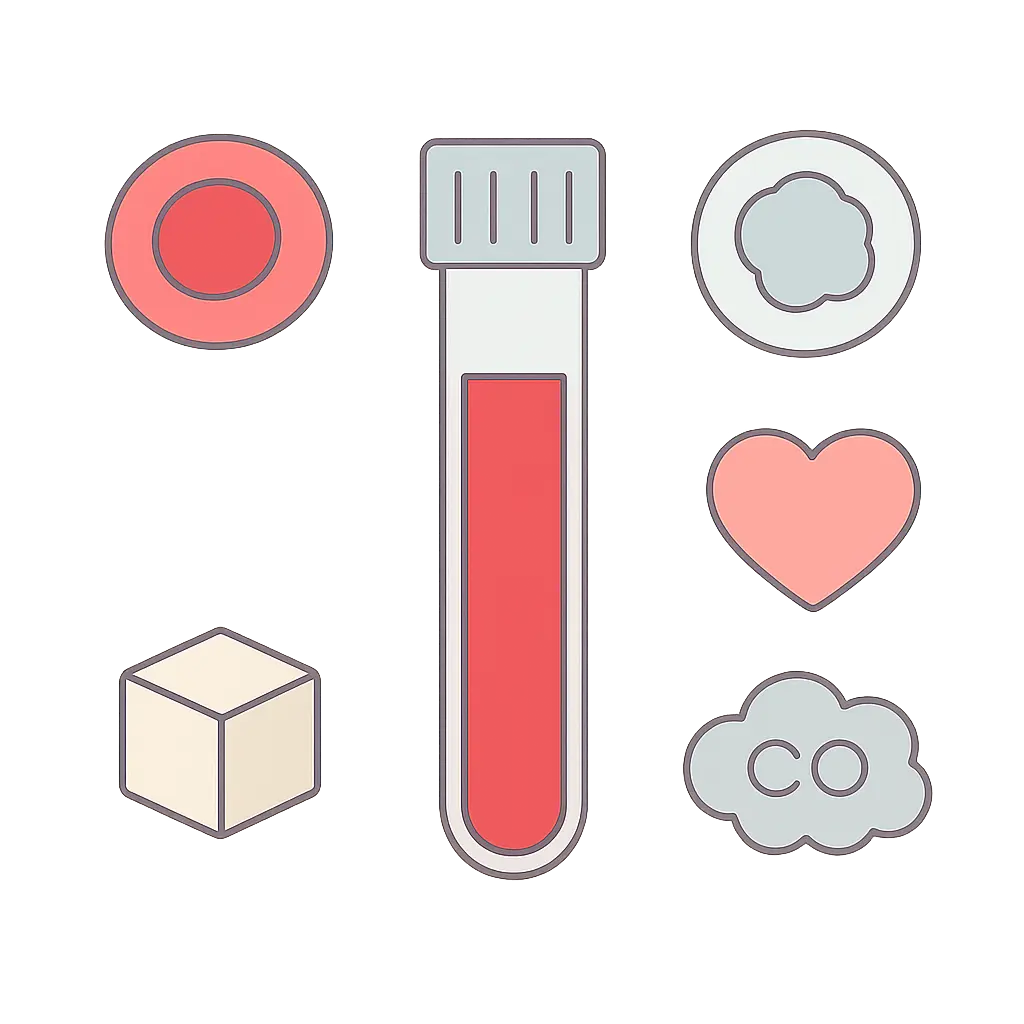
Smoking affects blood in both short-term and long-term ways. Some changes reflect years of smoking and will not disappear by skipping one cigarette. Others, like carbon monoxide, change within hours. Here are the markers most often affected.
Carbon monoxide (carboxyhemoglobin)
Cigarette smoke contains carbon monoxide, which binds to hemoglobin in red blood cells. According to the NIH’s StatPearls review of carbon monoxide toxicity, carboxyhemoglobin is normally under 3% in non-smokers but can be as high as 10% in people who smoke. It has a half-life of about 4 to 6 hours on room air, so a cigarette in the morning can still show up in an afternoon test. Our guide to carbon monoxide in the first 48 hours after quitting explains how quickly this clears.
White blood cells
MedlinePlus lists smoking among the causes of a high white blood cell count, alongside stress, some medicines and pregnancy. A mildly raised count in a smoker may reflect smoking rather than infection. In a study of 784 smokers published in Mayo Clinic Proceedings, those who stopped smoking had a rapid and sustained drop in white blood cell and neutrophil counts over a year compared with those who kept smoking.
Hemoglobin
MedlinePlus includes smoking in the list of factors that can affect hemoglobin results. Doctors interpret hemoglobin alongside your history, so it helps them to know that you smoke.
Cholesterol
MedlinePlus notes that smoking lowers HDL, the “good” cholesterol, especially in women, and raises LDL, the “bad” cholesterol. These are longer-term effects of smoking rather than something a single cigarette changes, but they matter when your doctor calculates heart risk. See our article on cholesterol after quitting for how these numbers improve.
Blood sugar
Blood glucose tests are among the most common fasting tests. Because fasting instructions include not smoking, a cigarette during that window breaks the preparation your doctor is relying on. If you have diabetes or prediabetes, our guide to blood sugar after quitting explains the longer-term link between smoking and glucose control.
Fasting blood tests and cigarettes
If your doctor has asked you to fast, MedlinePlus explains that you should not eat or drink anything except plain water for several hours beforehand, and that you should also not smoke or exercise during that time. Fasting usually lasts 8 to 12 hours, and your provider will tell you exactly how long. Cholesterol tests may need a 9 to 12 hour fast.
Fasting matters because what enters your body is absorbed into your bloodstream and can change the levels being measured. Smoking during a fast undermines the same principle.
Common tests that may need fasting include:
- Blood glucose (blood sugar) tests
- Cholesterol and lipid tests
- Some other tests your doctor will specify
The NHS blood test guidance also says you may be asked to fast or to stop certain medicines before a test. Never stop a prescribed medicine unless you are told to.
Practical tips for a fasting morning
- Book an early appointment so most of the fasting window falls while you are asleep.
- Keep cigarettes and lighters out of reach the night before, so the first-thing-in-the-morning habit is harder to act on.
- Drink plain water, which fasting rules allow, and have something to do with your hands on the way to the clinic.
- Plan a reward for afterward that is not a cigarette, like a proper breakfast.

How long before the test to stop
For a fasting test, the answer is at least the whole fasting period you have been given, which is usually 8 to 12 hours. For tests without fasting, there is no single universal rule in the guidance we reviewed, so the instructions from the clinic or doctor who ordered the test come first. If none were given, ask when you book.
A few points help put timing in perspective:
- Carbon monoxide clears over hours. With a half-life of about 4 to 6 hours, levels fall by about half every few hours without smoke.
- Long-term effects do not reset overnight. A raised white cell count or lower HDL linked to smoking reflects ongoing smoking, so one smoke-free morning will not hide it. That is one reason honesty with your doctor matters more than timing.
- Nicotine and its breakdown products clear on their own timeline. Our guide to how long nicotine stays in your body has the timeline.
If going 8 to 12 hours without a cigarette feels hard, that is useful information in itself, and a test day can double as a trial run for quitting. iQuit, free on Google Play and the App Store, has SOS craving tools such as breathing exercises and craving timers that can help you get through the morning, and a dashboard that starts counting your smoke-free time.
Does vaping or NRT count?
Fasting instructions are usually written with cigarettes in mind, and the sources we reviewed do not give specific rules for vapes, nicotine gum or patches before routine blood tests. Because rules differ between tests, the safest approach is:
- Ask specifically about vaping. Do not assume it is allowed during a fast just because it is not smoke.
- Mention nicotine gum and lozenges. These are chewed or dissolved in the mouth, which may matter for fasting rules, so check first.
- Do not drop your NRT without advice. If you are using NRT as part of a quit attempt, ask the clinic whether to keep it on, rather than stopping on your own and risking a relapse.
- Always tell staff what nicotine products you use, especially if the test is for nicotine or cotinine.
Nicotine and cotinine tests are different
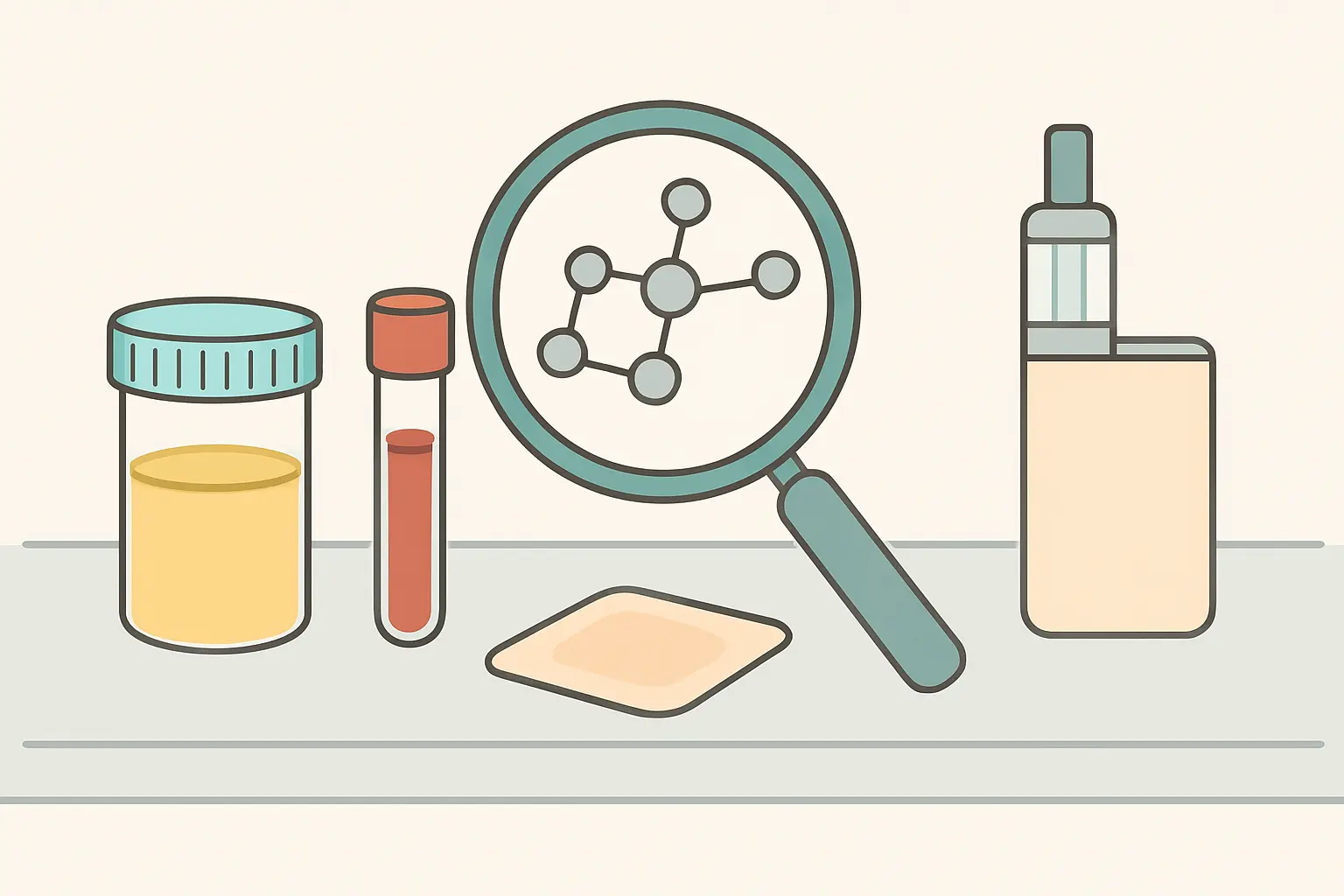
Some blood, urine or saliva tests look for nicotine use itself, for example before certain surgeries, for life insurance or in research. These usually measure cotinine, the main breakdown product of nicotine. A 2009 review by Benowitz and colleagues describes cotinine as the most widely used marker of nicotine intake, measurable in blood, urine, saliva, hair or nails, and suggests a plasma cut-point of 3 ng/ml to separate smokers from non-smokers in the US population.
Cotinine reflects nicotine from any source, so nicotine replacement and vaping can also produce a positive result. When doctors need to tell tobacco use apart from NRT use, for example before a transplant, laboratories may test for tobacco-specific alkaloids such as anabasine and anatabine, which are used to differentiate tobacco users from people using nicotine replacement.
If you are facing a cotinine test, avoiding a cigarette on the morning of the test will not make it negative. Our article on when you count as a non-smoker explains how long it takes for tests and insurers to treat you as smoke-free. If your doctor is also checking thyroid function, see our guide to smoking and thyroid disease.
When to talk to your doctor
Ask the doctor who ordered the test if you are unsure about any preparation, if you smoked or vaped against instructions, or if a result comes back abnormal and you smoke. The NHS advises asking a healthcare professional whenever you have questions about results or do not understand them.
Blood Test FAQ
Can I smoke before a fasting blood test?
No. MedlinePlus advises that while you are fasting for a blood test you should not smoke or exercise, and should drink only plain water. Fasting usually lasts 8 to 12 hours, and your provider will tell you the exact time (MedlinePlus, Fasting for a Blood Test).
What happens if I smoked before my blood test?
Tell the person taking your blood or the doctor who ordered the test. MedlinePlus says it is important to be honest if you did not follow preparation instructions, because even a small change can affect results. They may proceed, note it, or rebook (MedlinePlus, How to Prepare for a Lab Test).
Can smoking raise your white blood cell count?
Yes. MedlinePlus lists smoking as a possible cause of a high white blood cell count. A study of 784 smokers found white cell counts fell quickly and stayed lower in people who quit (MedlinePlus; Abel et al., Mayo Clinic Proceedings 2005).
Does smoking affect cholesterol test results?
Smoking lowers HDL, the good cholesterol, especially in women, and raises LDL, the bad cholesterol, according to MedlinePlus. Cholesterol tests may need a 9 to 12 hour fast, during which you should not smoke (MedlinePlus, Cholesterol Levels).
How long does carbon monoxide from smoking stay in the blood?
Carboxyhemoglobin has a half-life of about 4 to 6 hours on room air. It is normally under 3% in non-smokers and can reach about 10% in people who smoke (StatPearls, Carbon Monoxide Toxicity).
Can I vape before a blood test?
Ask the clinic first. General fasting guidance does not give specific rules for vapes, so do not assume vaping is allowed during a fast. Vaping and nicotine replacement can also make nicotine or cotinine tests positive (MedlinePlus; Benowitz et al. 2009).
Will a cotinine test show nicotine patches?
It can, because cotinine is produced from nicotine from any source. When doctors need to tell tobacco use apart from NRT, laboratories can test for tobacco alkaloids such as anabasine and anatabine instead. Tell staff about any NRT you use (Benowitz et al. 2009; studies on anabasine testing, 2023).
Turn test day into day one
Get through the morning with SOS craving tools and breathing exercises, then watch your smoke-free time and health-recovery milestones build. iQuit is free on Google Play and the App Store.
Download iQuit Free on Google Play
Download on the App Store


