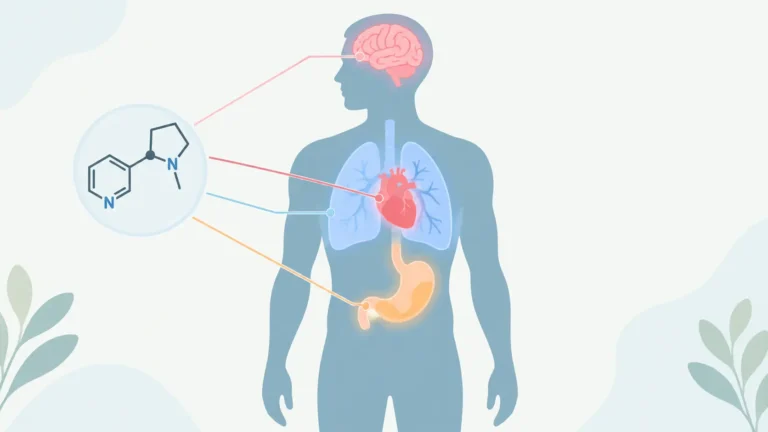
Yes, smoking can work against your gym progress, and the evidence is clearer than most lifters expect. If you are asking does smoking affect muscle growth, the short version is that research on smokers’ muscle shows slower protein building, weaker oxygen delivery and poorer endurance, and that many of these effects appear to be reversible after quitting. The studies are small and mostly not done on gym-goers, so this guide sticks to what each one actually found and does not promise a percentage of lost gains.
Short answer: yes, it works against muscle
Muscle is built by a daily balance. Your body makes new muscle protein, and it breaks old protein down. Training tips that balance toward growth, and anything that slows the building side or speeds the breakdown side makes gains harder to come by.
A review by Degens and colleagues in the American Journal of Respiratory and Critical Care Medicine pulled together the human evidence on this. It concluded that the muscles of smokers without lung symptoms are weaker and less fatigue resistant than those of non-smokers, and that cigarette smoke constituents and inflammatory signals enhance protein breakdown and inhibit protein synthesis, leading to loss of muscle mass (Degens 2015, PubMed).
The same review notes that physical inactivity among smokers explains some of what is seen, but that smoke exposure itself can also cause muscle dysfunction. That matters for lifters: you cannot dismiss the findings by saying you train hard, because the review points to effects that go beyond lifestyle.
What the 2007 muscle protein study found
The study most often quoted on this topic is a 2007 paper in the American Journal of Physiology, Endocrinology and Metabolism. Researchers compared eight long-term smokers (20 or more cigarettes a day for 20 or more years) with eight non-smokers, matched for sex, age and body mass index. Everyone received an infusion of labeled leucine so the team could measure how fast muscle protein was being made (Petersen 2007, PubMed).
| Measure | Smokers | Non-smokers |
|---|---|---|
| Muscle protein synthesis rate (% per hour) | 0.037 | 0.059 |
| Myostatin gene expression (a muscle growth inhibitor) | about 33% greater | baseline |
| MAFbx gene expression (a protein breakdown pathway) | about 45% greater | baseline |
The authors concluded that smoking impairs the muscle protein synthesis process and increases expression of genes linked to poor muscle maintenance, so that smoking likely raises the risk of sarcopenia, the age-related loss of muscle mass.
What this study does not tell you
Be careful with this one. The participants averaged about 65 years old and had smoked heavily for two decades. There were only eight people per group. They were not lifters on a training plan, and the study did not measure how muscle responds to resistance exercise.
So it supports the idea that smoking is bad for muscle at the cellular level, but it does not let anyone say that smoking costs a 25-year-old lifter a specific amount of gains. Any article that gives you that number is stretching the evidence.
Carbon monoxide and oxygen delivery
Muscle needs oxygen to produce the energy for hard sets and fast recovery between them. Cigarette smoke carries carbon monoxide, which binds to hemoglobin and crowds out oxygen. The Degens review explains that reduced muscle endurance in smokers may result from impaired oxygen delivery to the mitochondria and a reduced ability of the mitochondria to make energy, due to the interaction of carbon monoxide with hemoglobin, myoglobin and parts of the respiratory chain (Degens 2015, PubMed).
For a plain-language look at how quickly that blockage clears after the last cigarette, see our article on carbon monoxide and oxygen in the first 48 hours.
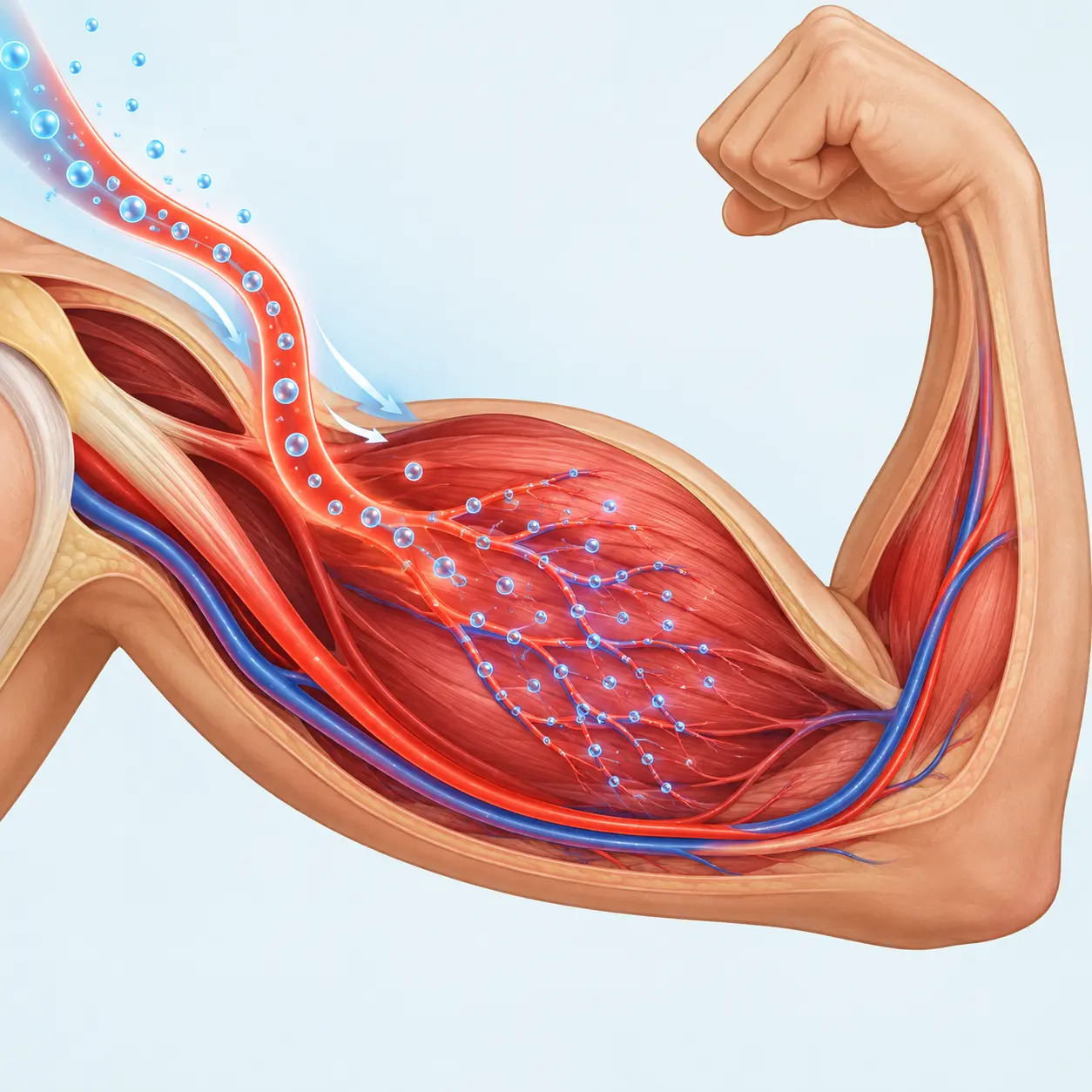
What about young smokers?
A 2025 study in the European Journal of Applied Physiology looked at a much younger group. It compared 40 university students who smoked with 30 who did not, all around age 23. Researchers measured oxygen levels in the thigh muscle during a six-minute walking test (Kerget 2025, PubMed).
Smokers had higher exhaled carbon monoxide, higher pulse, and higher breathlessness and fatigue scores. Their muscle oxygen saturation was lower, and the more they smoked, the lower it was. The authors concluded that smoking decreases muscle oxygenation depending on the amount smoked.
This was a walking test in young adults, not a lifting study, and it was a single snapshot rather than a before-and-after. Still, it shows that the oxygen effect is visible in people in their early twenties, not just in older heavy smokers.
The testosterone question
Lifters often ask whether smoking drains testosterone, and whether quitting brings it back. The studies cited in this guide did not measure hormones, so we will not state a number or a direction as settled fact here. The evidence has its own page: does quitting smoking increase testosterone. Read that before you base training decisions on a hormone claim from a forum.
What you can say safely from the studies above is that muscle protein metabolism looks worse in smokers even before hormones enter the conversation.
Vaping and gains
If you have switched to vaping, you might assume your muscles are in the clear. The evidence is thin, and the study below was done in animals, not in people.
Animal research, not human data: a 2026 study in Physiological Reports exposed male mice to tobacco smoke or e-cigarette vapor for four weeks. Both exposures reduced mitochondrial respiration in the leg muscle compared with room air, though muscle contractile function was not changed in that experiment (Mazirka 2026, PubMed). There were only four to five mice per group, so the result cannot tell you what vaping does to a human lifter.
The fair reading is that vapor is not shown to be harmless to muscle cells in animals, and that we found no human study of vaping and strength gains to cite. If you are still using nicotine and want to stop, a quit plan that covers vapes as well as cigarettes is the goal.
Training after you quit
Here is the encouraging part. The Degens review states that, in contrast to lung damage, many of the effects of smoking on skeletal muscle are most likely reversible by smoking cessation (Degens 2015, PubMed). It is a review rather than a trial of gym-goers, so it gives direction, not a timetable.
Our running guide, running and fitness after quitting smoking, tracks how endurance changes, and the one-month benefits guide shows what to expect in the first weeks.
Practical training tips for the first weeks
- Keep sessions, lower the pressure. Cravings are strongest in the first days. A workout is a good craving break, so protect the habit even if the weights are lighter.
- Do not use a heavy day as a test. Expect some days to feel off while your body adjusts. Judge progress over weeks, not one session.
- Plan around your triggers. Many lifters smoke between sets or after training. Decide in advance what replaces that moment, such as water, gum, a walk or a breathing exercise.
- Eat and sleep as usual. Quitting changes appetite for some people. Keep protein and meal timing steady so you are not adding a second variable.

Using iQuit alongside your training log
The free iQuit app has a dashboard that counts your smoke-free days, cigarettes avoided and money saved, plus a health-recovery timeline. Many lifters already keep a training log, so it can sit beside it. You can also log each craving with its trigger and intensity, which makes patterns such as post-workout cravings easy to spot, and the SOS tools give you something to do in the moment.
The long game: strength and frailty
Gym gains are a short-term motivator, but the longer view matters too. A 2026 cohort study in Frontiers in Aging followed 4,574 men in Singapore for 20 years. Persistent smokers had higher odds of physical frailty in late life than never smokers (odds ratio 1.34). Men who quit before age 60 had odds similar to never smokers, and the authors concluded that quitting for at least 10 years, or before 60, could mitigate the risk substantially (Lee 2026, PubMed).
That study is observational, so it shows an association rather than proof of cause. It is still a useful reminder that the muscle you build now has to last decades, and that quitting earlier is linked with a better outcome. For the bigger picture of recovery, see our complete health recovery guide.
If you want help choosing a tool, our comparison of the best quit smoking apps in 2026 lays out the options, and the NHS publishes its own Better Health quit smoking page for UK readers.
Frequently Asked Questions
Does smoking affect muscle growth?
The evidence says it works against muscle. A 2015 review found smokers’ muscles are weaker and less fatigue resistant, and that smoke constituents promote protein breakdown and inhibit synthesis. The studies are small, so no exact loss of gains can be stated (Degens 2015).
How much does smoking slow muscle protein synthesis?
In one 2007 study of eight heavy smokers aged about 65 and eight non-smokers, the muscle protein synthesis rate was 0.037% per hour in smokers versus 0.059% per hour in non-smokers. That sample was small and older, so it does not apply directly to young lifters (Petersen 2007).
Can smoking reduce my strength and endurance in the gym?
It can reduce the oxygen your muscles receive. In a 2025 study of students around age 23, smokers had lower thigh muscle oxygenation during a walking test, and the more they smoked, the lower the level. It was not a lifting study (Kerget 2025).
Do the muscle effects of smoking reverse after quitting?
Probably in many cases. A 2015 review concluded that, unlike lung damage, many effects of smoking on skeletal muscle are most likely reversible by smoking cessation. It does not give a timetable, so recovery speed varies from person to person (Degens 2015).
Does vaping hurt muscle growth too?
No human data on vaping and gains were found for this article. A 2026 study in mice, which is animal research and not proof for people, found that both tobacco smoke and e-cigarette vapor reduced mitochondrial respiration in leg muscle after four weeks (Mazirka 2026).
Does quitting smoking help with strength in later life?
A 2026 Singapore cohort of 4,574 men found persistent smokers had higher odds of late-life frailty than never smokers, while those who quit before age 60 had similar odds to never smokers. It is an association, not proof of cause (Lee 2026).
Should I quit smoking before or during a bulk or cut?
No study here compares timing, so there is no evidence-based answer. Many people simply pick the date they can commit to and keep training steady. Waiting for a perfect phase often just delays the quit.
Quit Smoking and Keep Your Training on Track
iQuit is free and gives you a smoke-free day counter, craving logging with triggers, SOS tools for the moment a craving hits, and a health-recovery timeline to sit next to your training log.