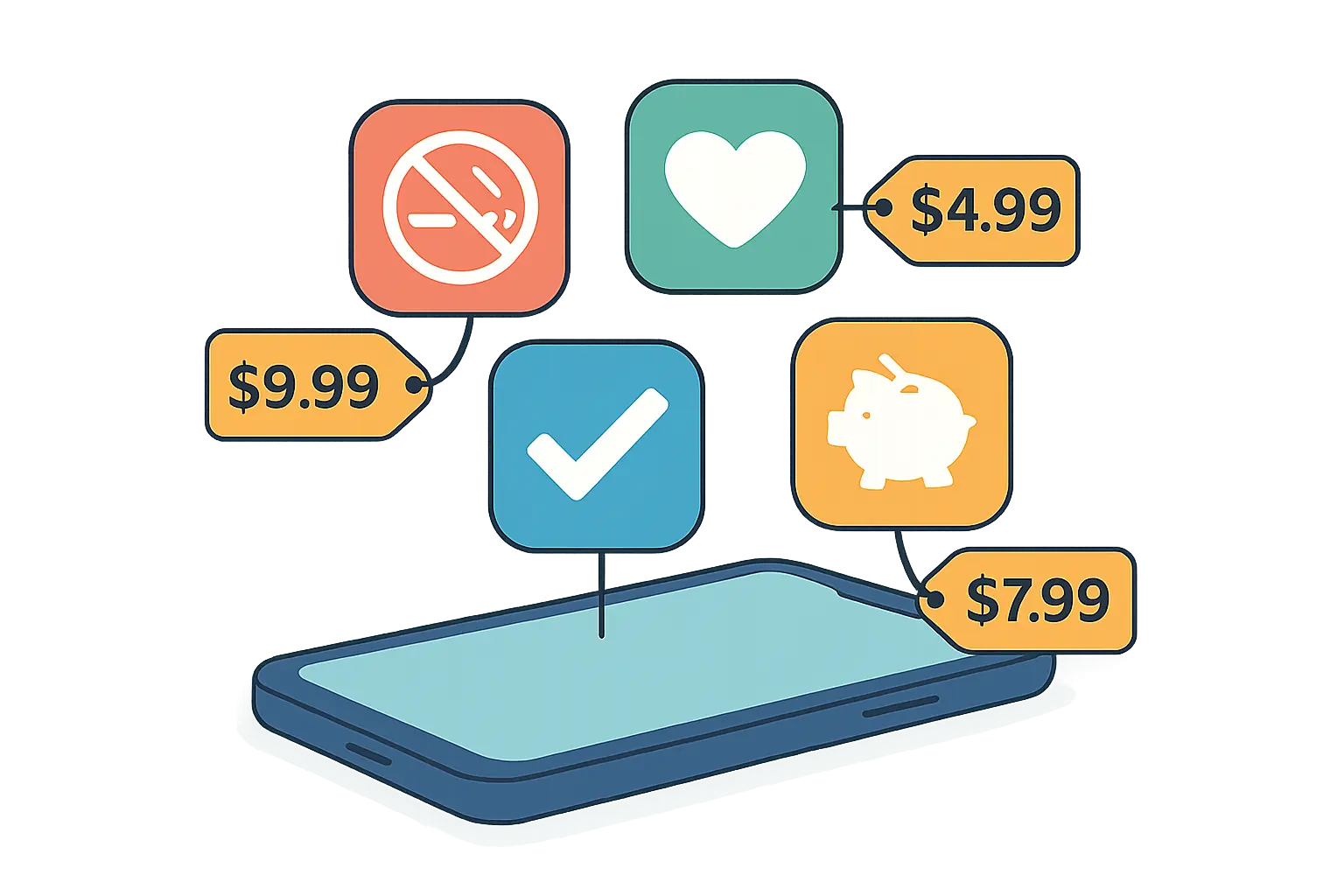
Before you tap “subscribe” on any quit smoking app, it’s worth knowing what you’re actually paying for. How much do quit smoking apps cost varies enormously — some charge nothing at all for full cessation tools, others run subscription tiers up to $20+ a month, and a few sell lifetime access for well over $100. This guide compares real, currently-listed prices from major apps’ own store listings so you can see what a subscription actually buys before committing.
The Short Answer: Free Tiers Do Most of the Work
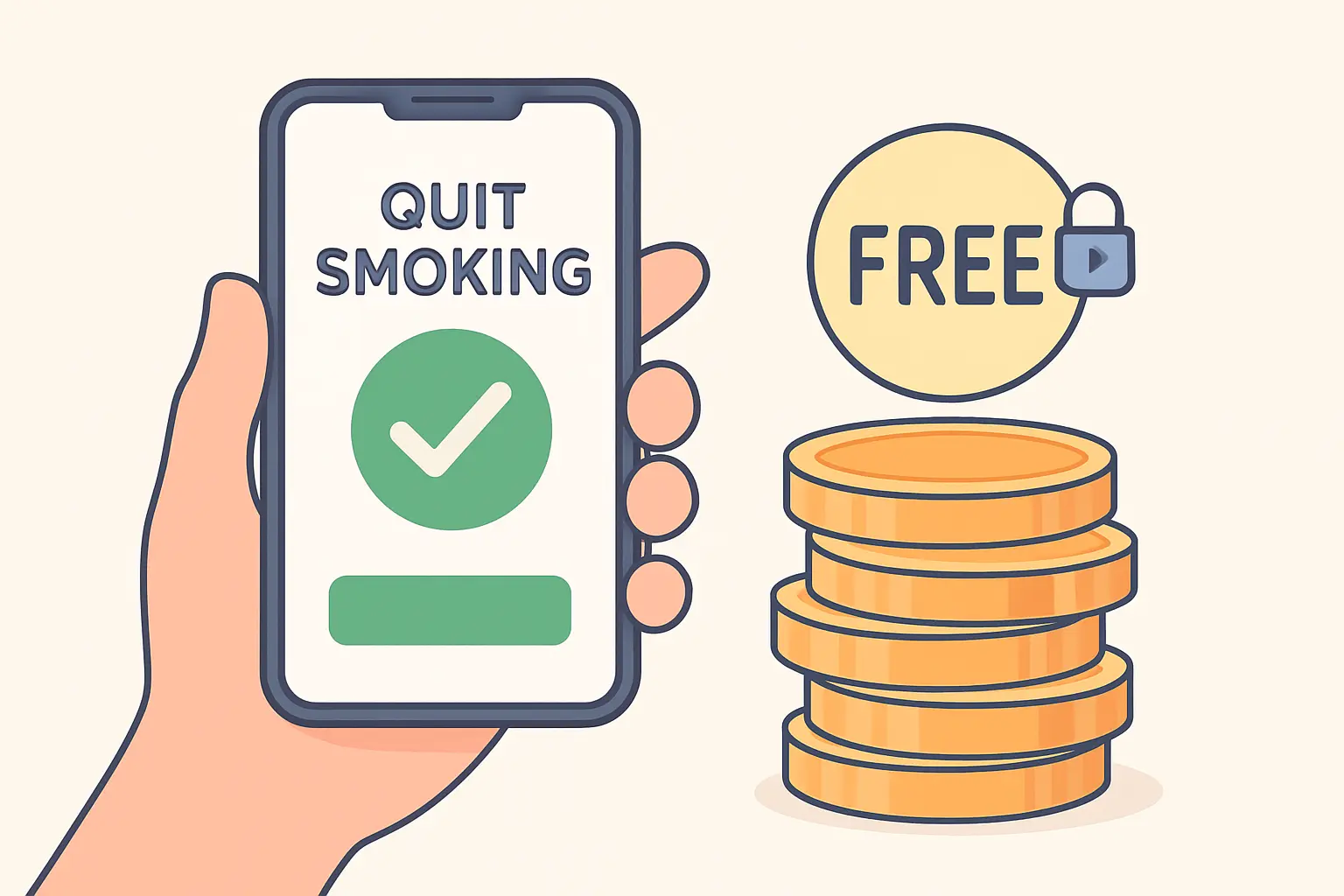
Every major quit smoking app on the market offers a functional free tier: tracking days smoke-free, cigarettes or money saved, and at least basic milestone information cost nothing on every app checked for this guide. Paid tiers typically add community features, advanced analytics, extra content libraries, or ad removal — useful, but not the core mechanism that research links to better quit outcomes (more on that below). iQuit is the exception that keeps its entire feature set free, including AI coaching, on both Google Play and the App Store.
What the Main Apps Charge in 2026
Pricing below comes directly from each app’s own US App Store listing, fetched this month:
| App | Free tier | Paid tiers listed |
|---|---|---|
| iQuit | Full app, including AI coach | Optional Premium (see below) |
| Smoke Free (23 Ltd) | Yes | $0.99–$209.99 across multiple one-time and tiered purchases, including a $29.99 “Complete” pack and a $49.99 “Money Back Guarantee” tier |
| QuitNow! (Fewlaps SL) | Yes | QuitNow PRO listed at $2.99 up to $34.99 (multiple duration/tier options) |
| Kwit | Yes | 1 week $6.49; 1 month ~$18–$21; 3 months ~$45–$49; 6 months $84.99; 12 months $127.99; lifetime $169.99 |
Two things stand out immediately. First, several apps list the same subscription at multiple price points on one listing — this usually reflects regional pricing, promotional trials, or duration variants shown together rather than one app charging ten different amounts for the same thing. Second, lifetime purchases (Kwit’s $169.99, Smoke Free’s higher one-time tiers) can end up cheaper than a year or two of monthly billing if you’re confident you’ll use the app long-term — but only if you would have paid monthly for that long anyway.
It’s also worth noticing what these prices don’t tell you: none of the listings above show what percentage of users actually convert to a paid tier, or what the free tier looks like once you’ve used the app for a few months. Some apps intentionally limit free-tier milestone history or craving-log depth after an initial period, which only becomes visible once you’re already invested in your data — worth checking a support page or recent reviews before committing, rather than judging entirely from the store listing’s feature list.
For a full feature-by-feature comparison beyond price, see the best quit smoking apps head-to-head comparison and, specifically against Smoke Free, iQuit vs Smoke Free. If you want a side-by-side of the free options specifically before considering any paid tier, the best free quit smoking apps and resources comparison covers that ground in more depth.
Free vs Paid: What Actually Changes Quit Rates
A Cochrane review of mobile phone-based smoking cessation interventions found that engagement-based support — mostly text messaging and app check-ins, the kind of feature that sits in every app’s free tier — increased long-term quit rates by roughly 70% compared with minimal support (risk ratio 1.71, 95% CI 1.47 to 1.99, pooled across studies with over 9,000 participants), though the review notes substantial variation between the individual trials (I² = 79%) and that the underlying studies were predominantly text-messaging based rather than full-featured apps. Critically, the evidence is about engaging with structured support regularly, not about which price tier you’re on. Paid features like advanced analytics dashboards, extended content libraries, or community forums may help some people stay engaged, but they aren’t themselves the mechanism the research credits — consistent daily interaction with tracking and craving tools is.
That’s a meaningful distinction if you’re deciding whether to pay: the free tier of almost any credible app already includes the features tied to the evidence base. A subscription buys convenience, extra content, or community — not, on current evidence, a proven jump in your odds of quitting. It’s also worth noting the review itself calls for more research into app-based (rather than purely text-based) interventions specifically, so treat any app’s marketing claim of a specific quit-rate percentage with some skepticism unless it cites a trial of that exact app.
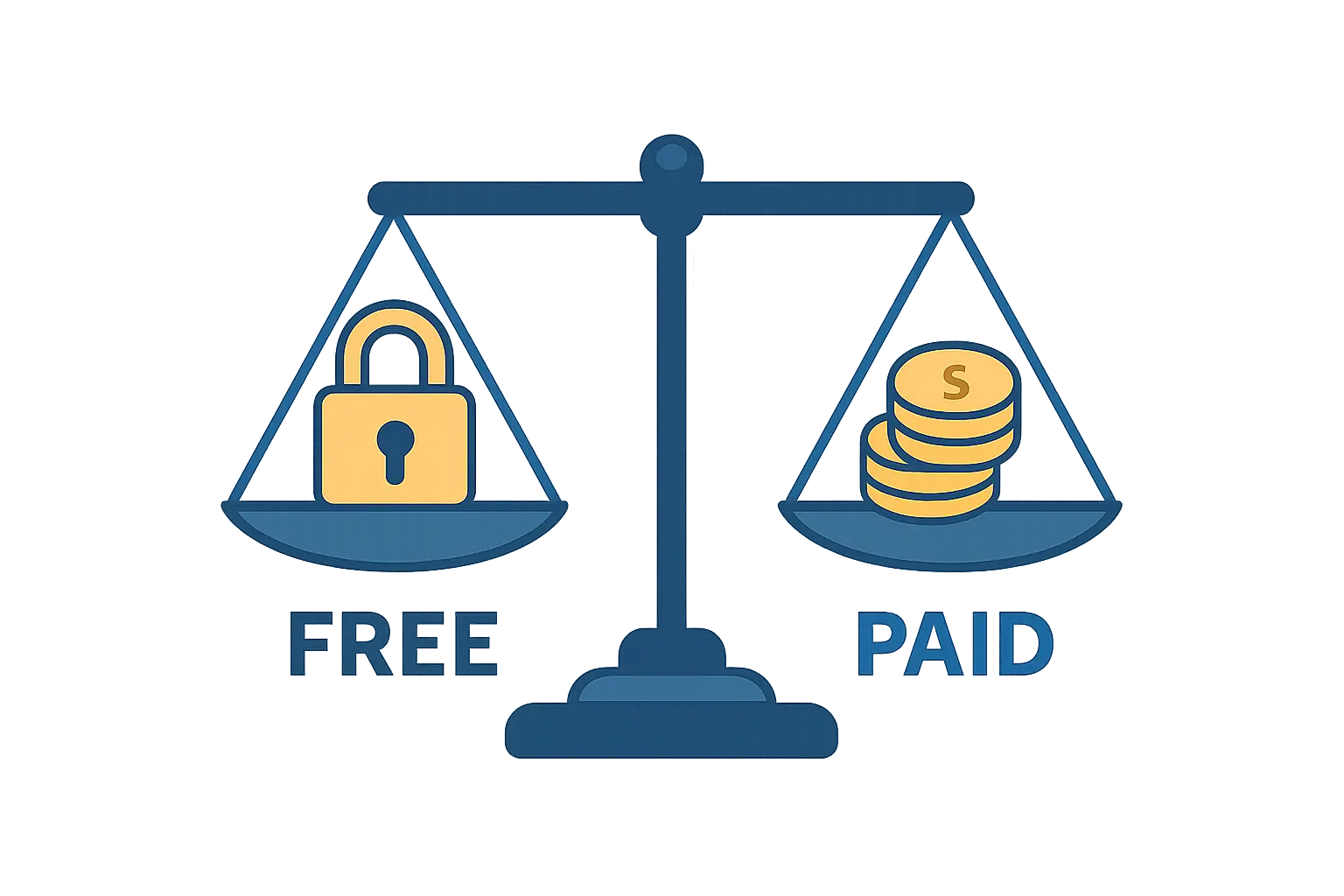
Subscription vs Lifetime Pricing
Doing the math matters here. Kwit’s 12-month subscription runs $127.99; its lifetime tier is $169.99 — less than 16 months of monthly-equivalent billing, so lifetime wins for anyone planning to use the app past that point. Smoke Free’s structure is less linear, with separate one-time purchases for different feature bundles rather than one clean subscription-vs-lifetime choice, so read exactly what each purchase unlocks before assuming “lifetime” covers everything the app offers. As a rule, monthly billing makes sense if you’re not sure you’ll stick with a specific app; lifetime or annual pricing only pays off if you’re already confident in that specific choice.
There’s a behavioral wrinkle worth naming too: a large upfront lifetime payment can work as a commitment device — some people quit more reliably once they’ve made a financial bet on themselves — but it can equally become a sunk-cost source of guilt if the app doesn’t suit you and you feel obligated to keep using something you paid a lot for. Neither effect is measured directly in the research on app pricing, so treat it as a personal judgment call about your own psychology rather than a universal recommendation either way.
Hidden Costs: Renewals, Trials, Store Differences
Free trials that convert to paid subscriptions automatically are the most common hidden cost across this category — canceling before the trial ends is the only way to avoid a charge, and app stores don’t always send a reminder before billing starts. Store differences also matter: the same app can be priced differently on the App Store versus Google Play, and regional pricing means a subscription can cost more or less depending on your storefront country. Finally, watch for apps that show several price points for what looks like the same tier on their store listing — always confirm exactly which duration and features you’re purchasing before confirming, since listings sometimes bundle multiple options under one product name.
Refund policies are another area worth checking before you pay, not after. Smoke Free’s listing includes a specific “Money Back Guarantee” purchase tier at $49.99, which implies its standard purchases may not be refundable by default — read the specific terms attached to whatever tier you’re buying rather than assuming standard app-store refund rules apply automatically. Both major app stores do offer their own general refund request processes, but approval isn’t guaranteed and can depend on how long ago the purchase was made.
What Free National Services Give You for Nothing
Government-run programs are worth checking before paying for any app. In the US, smokefree.gov offers the free quitSTART app (daily check-ins, custom trigger alerts, progress tracking, slip recovery support) and SmokefreeTXT, a free 6–8 week text-message support program — the only cost is standard carrier messaging rates, not a program fee. The UK’s NHS and other countries’ national quit services offer comparable free support; check the cheapest way to quit smoking for a fuller rundown of free national routes by country.
A Sensible Spending Order
A reasonable approach: start with a genuinely free app that covers tracking, craving support and milestones — iQuit keeps its full feature set free on both Google Play and the App Store, including the AI coach that some competitors reserve for paid tiers. Layer in a free government service like quitSTART or SmokefreeTXT if you want text-based check-ins alongside the app. Only consider a paid subscription elsewhere if you’ve used a free tier for several weeks and specifically want a feature it’s missing — community support, advanced analytics, or a structured program — rather than paying upfront on the assumption that a price tag means better odds of quitting. For context on how iQuit’s own optional Premium tier compares, is iQuit Premium worth it covers that honestly, and best quit smoking app 2026 weighs features against price across the category.
Frequently Asked Questions
Are quit smoking apps free?
Most major quit smoking apps offer a free tier covering tracking, milestones and basic craving tools. iQuit keeps its entire feature set free, including AI coaching, on both Google Play and the App Store. Other apps like Smoke Free, QuitNow! and Kwit offer free cores with optional paid upgrades.
What’s the cheapest paid quit smoking app subscription?
Based on current US App Store listings, QuitNow! PRO’s lowest listed price is $2.99, though its listing shows multiple tiers up to $34.99 depending on duration and promotion. Prices vary by storefront country and can change without notice, so check the current listing before comparing.
Does paying for a quit smoking app improve your chances of quitting?
Not on current evidence specifically tied to price. A Cochrane review found mobile phone-based support — mostly free-tier features like text check-ins and tracking — increased long-term quit rates by roughly 70% versus minimal support. Paid tiers add convenience and extra content but aren’t themselves the mechanism linked to better outcomes.
Is a lifetime purchase better than a monthly subscription?
It depends on how long you’ll use the app. Kwit’s lifetime tier ($169.99) breaks even against its 12-month subscription ($127.99) at under 16 months of use — worthwhile if you’re confident in that app long-term, riskier if you’re still deciding between apps.
Are there completely free government quit-smoking tools?
Yes. In the US, smokefree.gov offers the free quitSTART app and SmokefreeTXT text-message program at no program cost (only standard carrier text rates may apply). Many other countries run comparable free national cessation services.
What hidden costs should I watch for with quit smoking apps?
Free trials that auto-convert to paid subscriptions are the most common hidden cost — cancel before the trial ends if you don’t want to be charged. Prices can also differ between the App Store and Google Play and by storefront country, and some listings show multiple price points for what looks like one tier, so confirm exactly what you’re purchasing.
Get the Full Feature Set Without Paying Anything
iQuit keeps tracking, craving support, milestones and AI coaching free — no subscription, no paywalled essentials — free on Google Play and the App Store.
Download iQuit Free on Google Play
Download on the App Store