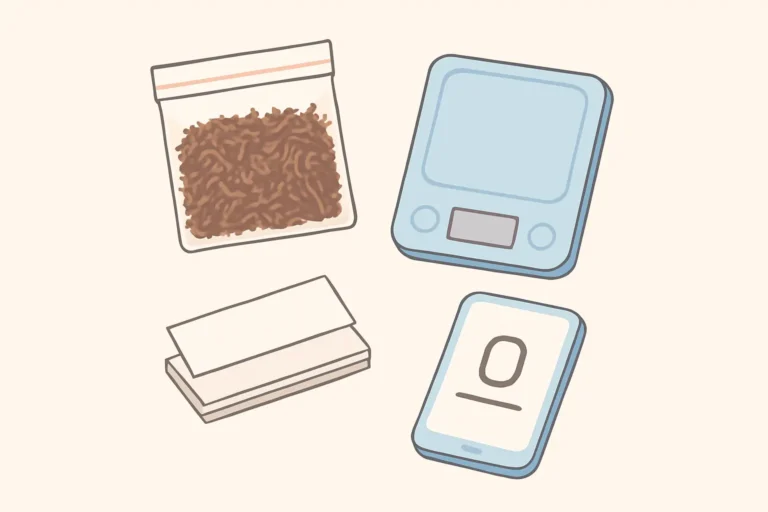
Most quit-smoking apps, including the “cigarettes per day” fields on plenty of trackers, are built around packs of 20 — which is a problem if you’re one of the many smokers who rolls their own. A quit smoking app for roll-ups needs to count grams and pouches, not packs, or every number it shows you is wrong from day one.
Why Roll-Up Smokers Get Bad Numbers From Quit Apps
A pack-a-day assumption doesn’t map onto rolling tobacco at all: there’s no standard “cigarette” size, so an app that only lets you log “packs smoked” either forces you to guess a conversion or quietly under-counts your actual tobacco use. The method guide to quitting rolling tobacco covers the quit process itself; this piece is specifically about getting the tracking numbers — cravings, cost, and progress — to actually reflect what you smoke.
The good news is that iQuit doesn’t require a pack size at all: you set your own daily cigarette-equivalent count and your own price, so the savings and health-milestone math run off numbers you define, not a default the app assumes.
Counting Roll-Ups, Not Packs
The simplest way to get an accurate baseline is to count roll-ups per day for a few days before you set up tracking, the same way you’d count factory cigarettes. If you already roll several at once and smoke from a tin or pouch throughout the day, count how many you actually smoke, not how many you roll — pre-rolled ones you don’t get to are not part of your habit.
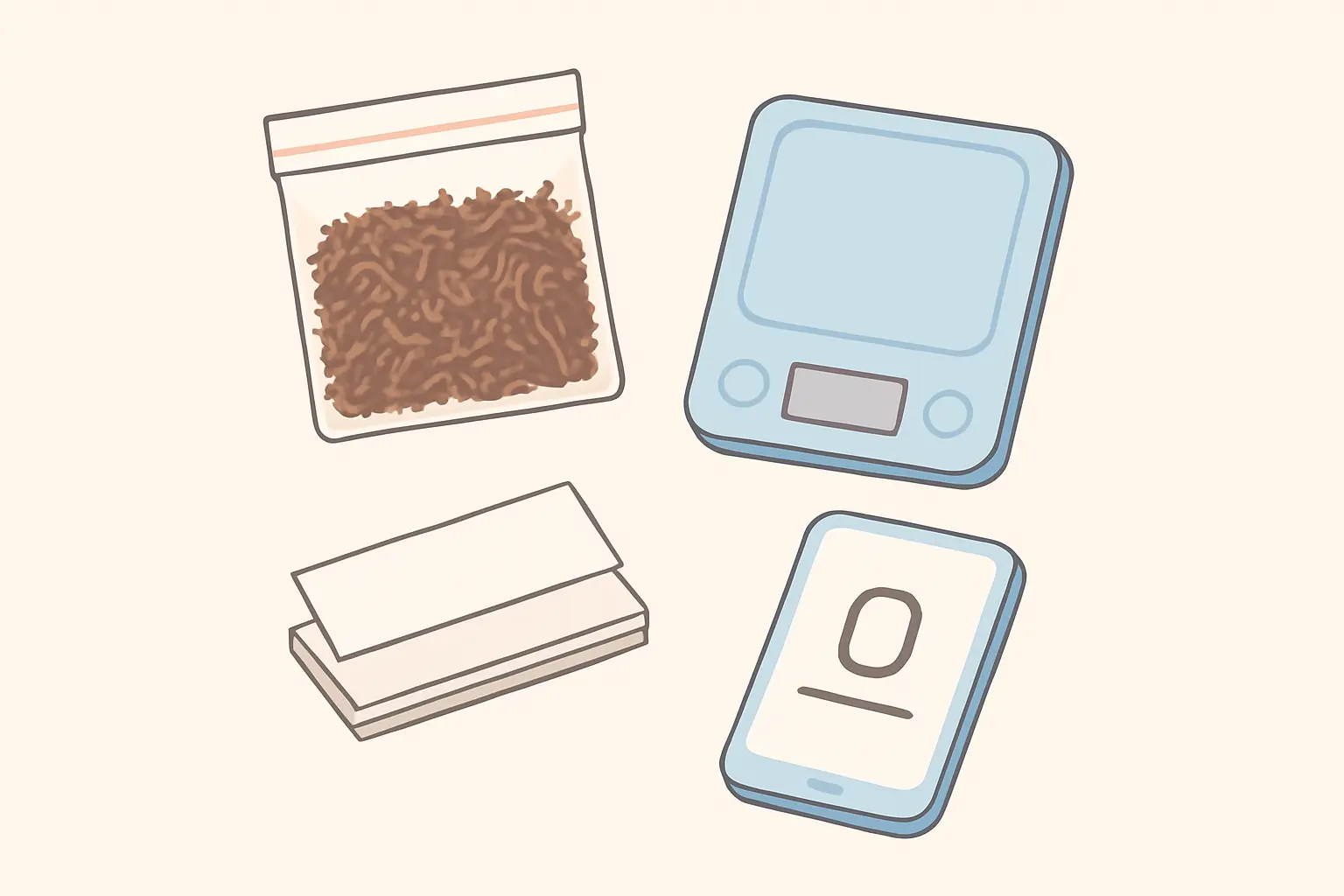
Weight is the more precise unit if you want a real number rather than an estimate: weigh out how much tobacco a single roll-up of yours actually uses (a kitchen scale accurate to 0.1g works). Most roll-up smokers use somewhere in the range of 0.3–0.7g of tobacco per cigarette depending on how tightly and how full they roll, but there’s no single official figure for this — it depends entirely on your own rolling habit, so weigh a few of your own rather than assuming a number.
If you smoke from a pouch you refill from a larger stock bag, or use a rolling machine that produces a more consistent size than hand-rolling, your grams-per-cigarette figure will be more stable — worth re-weighing occasionally if you switch rolling method, since a machine-rolled cigarette and a loosely hand-rolled one from the same tobacco can differ meaningfully in how much they actually use. The same logic applies if you roll for a pipe or use tobacco in any other non-cigarette format: this article and iQuit’s tracking are built around cigarette-style roll-ups specifically, not pipe or cigar tobacco, which have their own separate consumption patterns.
Working Out Cost From Pouch Size and Price
UK duty on hand-rolling tobacco is set per kilogram, not per cigarette, which is exactly why pack-based cost calculators don’t work for roll-ups. According to HMRC’s published tobacco duty rates, the duty rate on hand-rolling tobacco reaches £574.30 per kilogram from 1 October 2026. On its own, that’s £28.72 in duty alone on a standard 50g pouch — before VAT and the retailer’s own margin are added, which is why a 50g pouch typically retails for well above the duty figure alone.
| Input | Example |
|---|---|
| Pouch size | 50g |
| Your pouch price | enter your local price |
| Tobacco per roll-up (weighed) | e.g. 0.5g |
| Roll-ups per pouch | pouch grams ÷ grams per roll-up |
| Cost per roll-up | pouch price ÷ roll-ups per pouch |
Once you have a cost per roll-up, multiply by your daily count to get a daily figure, and enter that into iQuit’s savings tracker directly rather than trying to force a “packs per day” field to fit. For UK cigarette-price comparisons and the same duty-driven logic applied to factory cigarettes, see how much a pack of cigarettes costs, and if you want the weekly-spend version of this same math, the weekly cigarette spend calculator walks through it for factory cigarettes step by step — the same method applies once you have your per-roll-up cost.
How Much Nicotine a Roll-Up Delivers
Manufactured cigarettes carry a standardised tar and nicotine yield printed on the pack; loose tobacco has no equivalent per-cigarette figure, because how much nicotine you actually get depends on how much tobacco you use, how tightly you roll, whether you use a filter, and how you smoke it. This is worth being honest about: there is no single trustworthy “mg of nicotine per roll-up” number to quote, and anyone who gives you one without qualifying it by rolling style is guessing.
What’s well established instead is that roll-your-own is not a “lighter” or safer option than manufactured cigarettes. A study covered by Cancer Research UK measured two groups of cancer-causing chemicals — polycyclic aromatic hydrocarbons and tobacco-specific N-nitrosamines — in smokers of both cigarette types and found “people who smoked either ready-made or roll-your-own cigarettes had the same levels of both groups of chemicals,” even after accounting for puffing behaviour and nicotine exposure. The researchers’ conclusion was blunt: “roll-your-own cigarettes are just as dangerous as factory-made ones” and “there’s no safe cigarette.”
Setting Up Tracking in 5 Minutes
Once you have your numbers — roll-ups per day, grams per roll-up, cost per roll-up — setting up iQuit takes less time than rolling one:
- Enter your daily roll-up count as your “cigarettes per day” baseline (the app treats this as your unit, not literally a factory cigarette)
- Enter your calculated cost per roll-up as your price per cigarette, so the money-saved dashboard runs off your real number
- Log cravings as they happen, noting the trigger — rolling-specific triggers are worth their own tags (see below)
- Pick your quit method: cold turkey, gradual reduction (fewer roll-ups per day), or switching to NRT
The step-by-step guide to using a quit smoking app covers the rest of the initial setup if you haven’t used a tracker before, and the daily tracking guide explains why logging every day, not just when you remember, is what actually correlates with better outcomes — a rule that applies whether your unit is a pack or a pouch. iQuit is free to download on both Google Play and the App Store, so there’s no cost barrier to setting your real numbers up tonight; see the quit app pricing comparison if you’re weighing whether a paid tier from any app is worth it.
Cravings Specific to the Ritual of Rolling
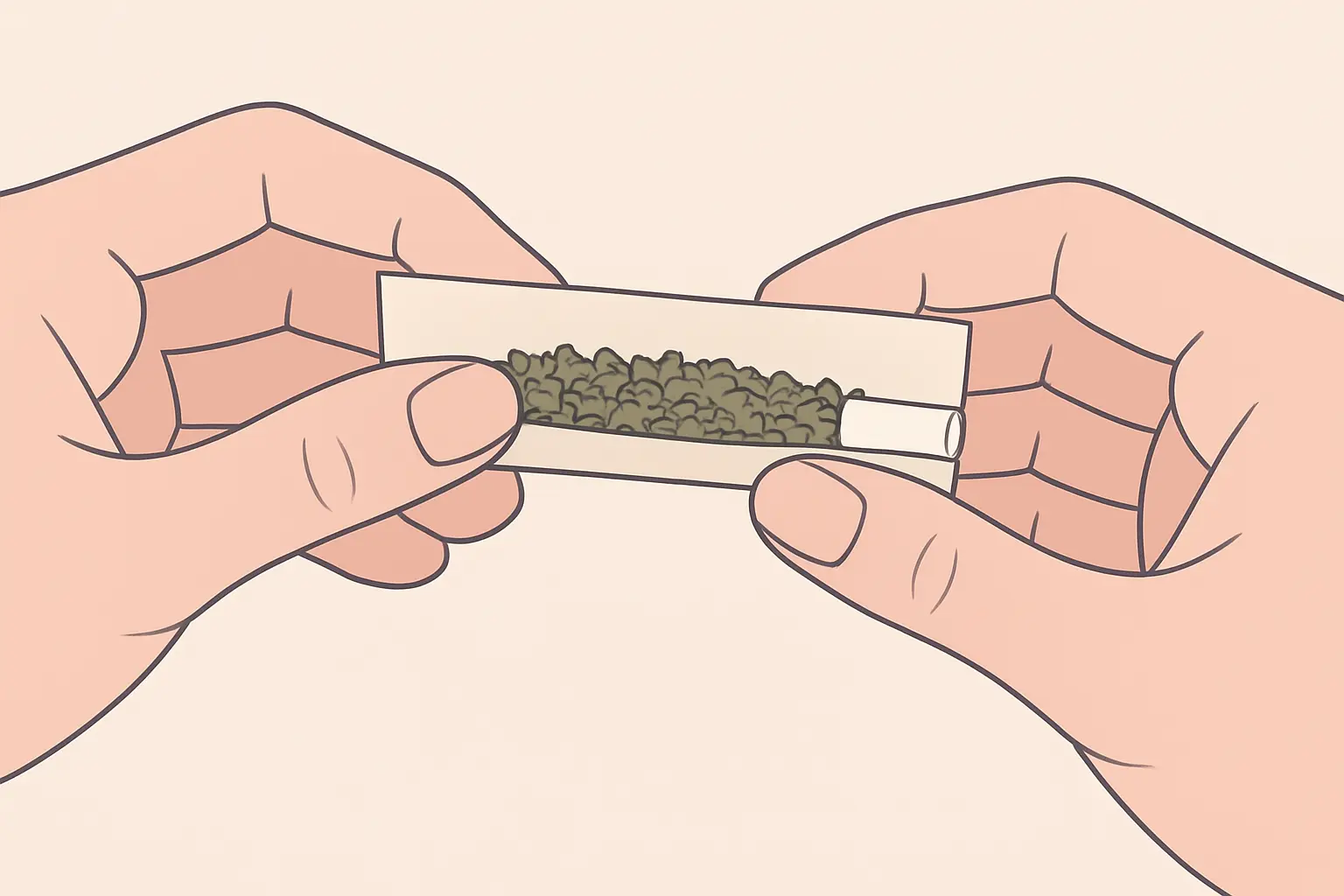
Rolling itself is part of the habit for a lot of roll-up smokers — the physical process of taking out the pouch, papers, and filter, and building the cigarette, can be as much a craving trigger as the nicotine hit that follows it. That’s different from a pack-and-lighter habit, where the “ritual” is much shorter. When you log a craving, note whether it was triggered by the actual urge for nicotine or by having a free moment where rolling has become the default thing to do with your hands — the second type often responds better to a substitute activity (fidgeting with something else, a short walk) than to nicotine replacement alone.
A practical trick for the first week or two: keep your rolling papers and pouch in a harder-to-reach place than usual (a bag in another room rather than a jacket pocket), so the “free moment, hands need something to do” trigger doesn’t automatically resolve into rolling before you’ve had a chance to notice the urge and log it instead. iQuit’s craving-logging flow is designed to be fast enough to use in that gap — a few taps to record the trigger and intensity, rather than a form that takes as long as rolling would have.
Switching From Rolling to Nothing vs to NRT
Because roll-your-own carries the same risk profile as manufactured cigarettes according to the Cancer Research UK-covered research above, the health case for quitting is identical either way — there’s no “step down” version of safety by switching brands or rolling style. Cold turkey works for some roll-up smokers precisely because removing the whole ritual (pouch, papers, rolling) at once avoids the trap of “just one loosely rolled one.” Others do better on nicotine replacement therapy, which addresses the chemical dependence while you separately retire the rolling ritual itself — worth discussing with a pharmacist or your GP if you’ve tried and struggled with cold turkey before. The nicotine dependence test is a reasonable starting point for deciding which route fits your level of dependence.

Frequently Asked Questions
Can I use a quit smoking app if I roll my own cigarettes?
Yes. iQuit lets you set your own daily cigarette-equivalent count and your own price rather than assuming a pack of 20, so you can enter your actual roll-up count and calculated cost per roll-up.
How much tobacco is in one roll-up?
There’s no single official figure — it depends on your rolling habit. Weighing a few of your own roll-ups on a kitchen scale accurate to 0.1g gives you a real number rather than a guessed average.
How much duty is on a pouch of rolling tobacco?
UK duty on hand-rolling tobacco is £574.30 per kilogram from 1 October 2026 (HMRC), which works out to about £28.72 in duty alone on a standard 50g pouch, before VAT and retailer margin.
Are roll-ups safer than factory-made cigarettes?
No. A study covered by Cancer Research UK found smokers of roll-your-own and ready-made cigarettes had comparable levels of cancer-causing chemicals, concluding roll-your-own cigarettes are just as dangerous as factory-made ones.
How much nicotine does a roll-up deliver compared to a factory cigarette?
There’s no standardised figure, unlike manufactured cigarettes which print tar and nicotine yields on the pack. Nicotine delivered depends on how much tobacco is used, how tightly it’s rolled, and whether a filter is used.
Should I quit cold turkey or use NRT if I roll my own?
Either can work. Cold turkey removes the whole rolling ritual at once, which some smokers find easier than a gradual step-down; nicotine replacement therapy addresses the chemical dependence separately. A nicotine dependence test can help decide which fits your situation, and a pharmacist or GP can advise on NRT options.
Is the craving for rolling different from the craving for nicotine?
They can be separate. Many roll-up smokers find the physical ritual of rolling is itself a trigger, distinct from the nicotine urge — logging which type of craving you’re having helps you choose between a substitute activity and nicotine replacement.
Set Up Your Roll-Up Baseline Tonight
iQuit lets you enter your own cigarette-equivalent count and price, so your savings and progress numbers reflect roll-ups, not a pack-of-20 assumption. Free on Google Play and the App Store.
Download iQuit Free on Google Play
Download on the App Store