

Working out how to quit rolling tobacco takes a different plan than quitting manufactured cigarettes, because roll-ups don’t come with a standard dose, a standard filter, or a “cigarettes per day” number that means the same thing from one smoker to the next. A workable plan for a roll-up smoker starts by converting grams to a cigarette-equivalent count, treats the rolling ritual itself as a separate habit from the nicotine, and drops the common belief that hand-rolled tobacco is somehow gentler than the manufactured kind.
Why Rolling Tobacco Needs Its Own Plan
Roll-your-own (RYO) tobacco has long been a common choice among smokers in the UK, Ireland, Australia, and New Zealand, and cost is usually the reason people give for switching to it. Tax treatment of rolling tobacco has historically differed from manufactured cigarettes in several of these markets, though duty policy has shifted repeatedly, so check current prices rather than assuming a fixed saving.
The bigger practical problem for quitting isn’t price, it’s measurement. A manufactured cigarette is a fixed, standardized dose; a hand-rolled one isn’t. How much tobacco goes into each roll-up varies enormously by person, rolling paper size, and how tightly it’s packed, and most roll-up smokers have never actually counted the grams they use in a day, only the number of times they roll. That makes standard “how many cigarettes a day” screening tools, and the NRT dosing built around them, a poor fit without a conversion step first.
There’s a real practical consequence to this measurement gap: a roll-up smoker who tells a pharmacist or a quit app “I smoke 10 a day” may in fact be taking in significantly more or less nicotine than a manufactured-cigarette smoker reporting the same number, depending entirely on how tightly and how often they pack each one. That mismatch is one reason NRT starting doses sometimes feel wrong for roll-up smokers who report their count without adjusting for it — and it’s precisely the gap the conversion step below is designed to close.
Converting Grams to Cigarette Equivalents
- Weigh your pouch before and after a normal day (1 day, 2 minutes). Note the pouch weight in the morning and again the next day to see your actual daily gram use, rather than relying on a rough guess.
- Use a working estimate of roughly 0.5–0.7 g of tobacco per roll-up (ongoing). This is a rule-of-thumb approximation for an averagely packed cigarette, not a measured standard; heavier rollers may use closer to 1 g. Divide your daily grams by your own typical roll-up weight to get a cigarette-equivalent count.
- Recalculate your per-pack cost and savings using that number (5 minutes). Standard cost-per-cigarette comparisons like those in what smokers spend per year assume manufactured-pack pricing, which understates or overstates what a roll-up smoker actually spends per gram — work it out from your own pouch price and gram count instead.
- Use the equivalent count, not the roll-up count, when discussing NRT with a pharmacist or GP (once, before starting NRT). Dosing guidance is calibrated to manufactured-cigarette equivalents, so an accurate conversion avoids under- or over-dosing.
| Pouch size | Approx. roll-ups (light packer, ~0.5g) | Approx. roll-ups (heavy packer, ~1g) |
|---|---|---|
| 12.5 g | ~25 | ~12 |
| 25 g | ~50 | ~25 |
| 30 g | ~60 | ~30 |
| 50 g | ~100 | ~50 |
These are working approximations, not lab-measured figures — the value of doing the calculation is having a personal, consistent number to track against, the way the complete step-by-step quit plan assumes for any smoker, roll-up or not. As a worked example: someone who weighs their pouch and finds they use about 15 grams a day, rolling at roughly 0.6 g each, is smoking the equivalent of about 25 cigarettes a day — a very different number, and a very different NRT starting point, than the “10 roll-ups” they might have reported without doing the math.
Separating the Rolling Ritual From the Nicotine
Rolling a cigarette is a multi-step physical ritual — opening the pouch, pinching tobacco, placing the filter, rolling, licking the paper — that takes noticeably longer and involves more hand engagement than lighting a manufactured cigarette. For many roll-up smokers, that ritual itself becomes as reinforcing as the nicotine, which means a quit plan focused only on nicotine replacement misses half the habit.
- Name your specific ritual steps (Day 1, 5 minutes). Write down what you actually do — the pinch, the roll, the lick, the light — since the replacement needs to occupy the same hands-and-mouth sequence, not just remove nicotine.
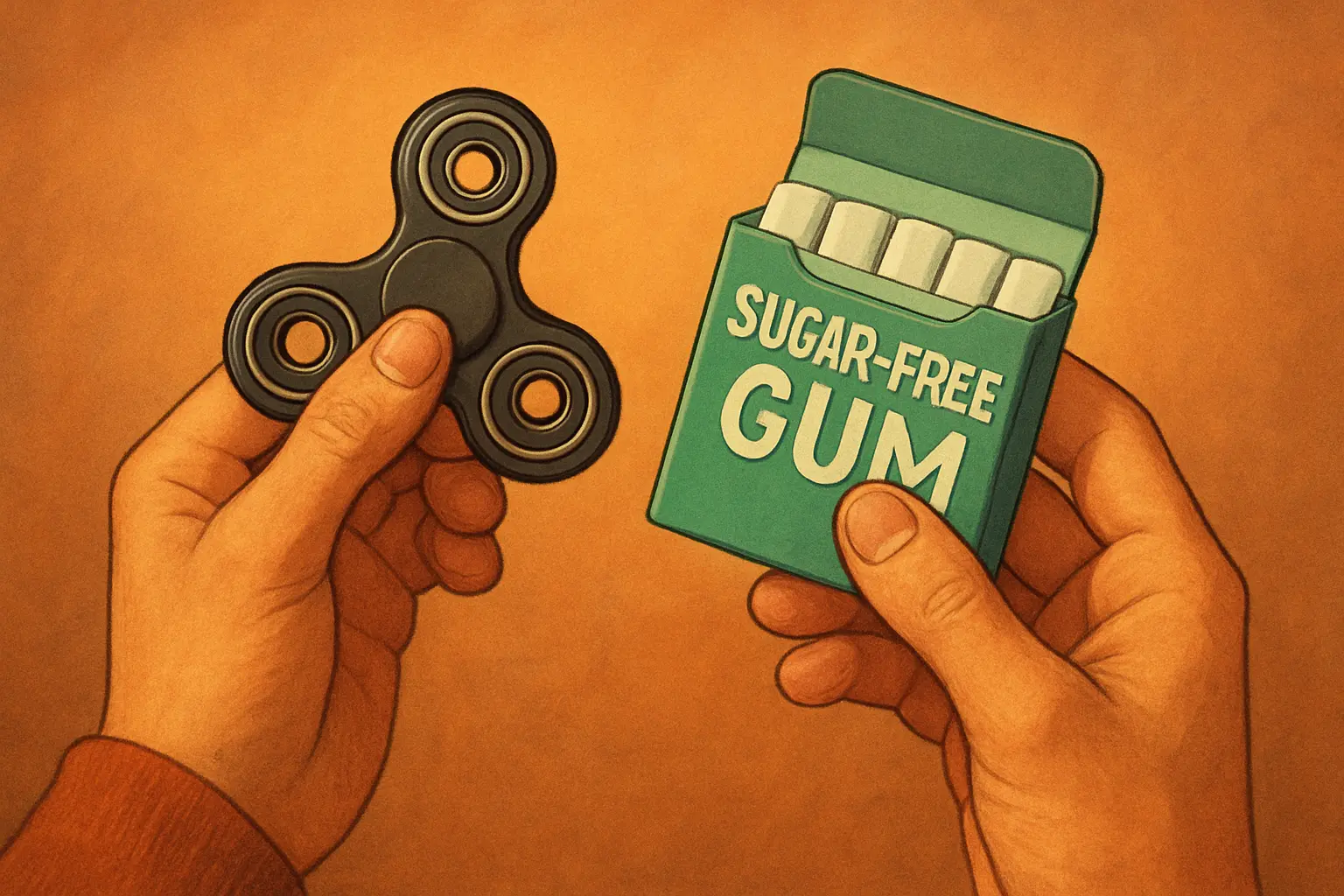
- Swap the physical motion first (from Day 1). Worry beads, a fidget tool, or repetitive tasks like knitting occupy the same finger dexterity that rolling used.
- Address the oral component separately (from Day 1). Sugar-free gum or a toothpick covers the lip-and-mouth motion of licking the paper and the hand-to-mouth action of smoking itself.
- Retire the physical objects, not just the tobacco (once you’re ready to stop). Papers, filters, and the rolling tray are strong visual cues on their own — clearing them out removes a trigger that an empty cigarette pack alone wouldn’t.
Breaking the hand-to-mouth ritual goes deeper into replacement options for the physical side of any smoking habit, roll-up or manufactured.
Killing the “Rollies Are More Natural” Myth
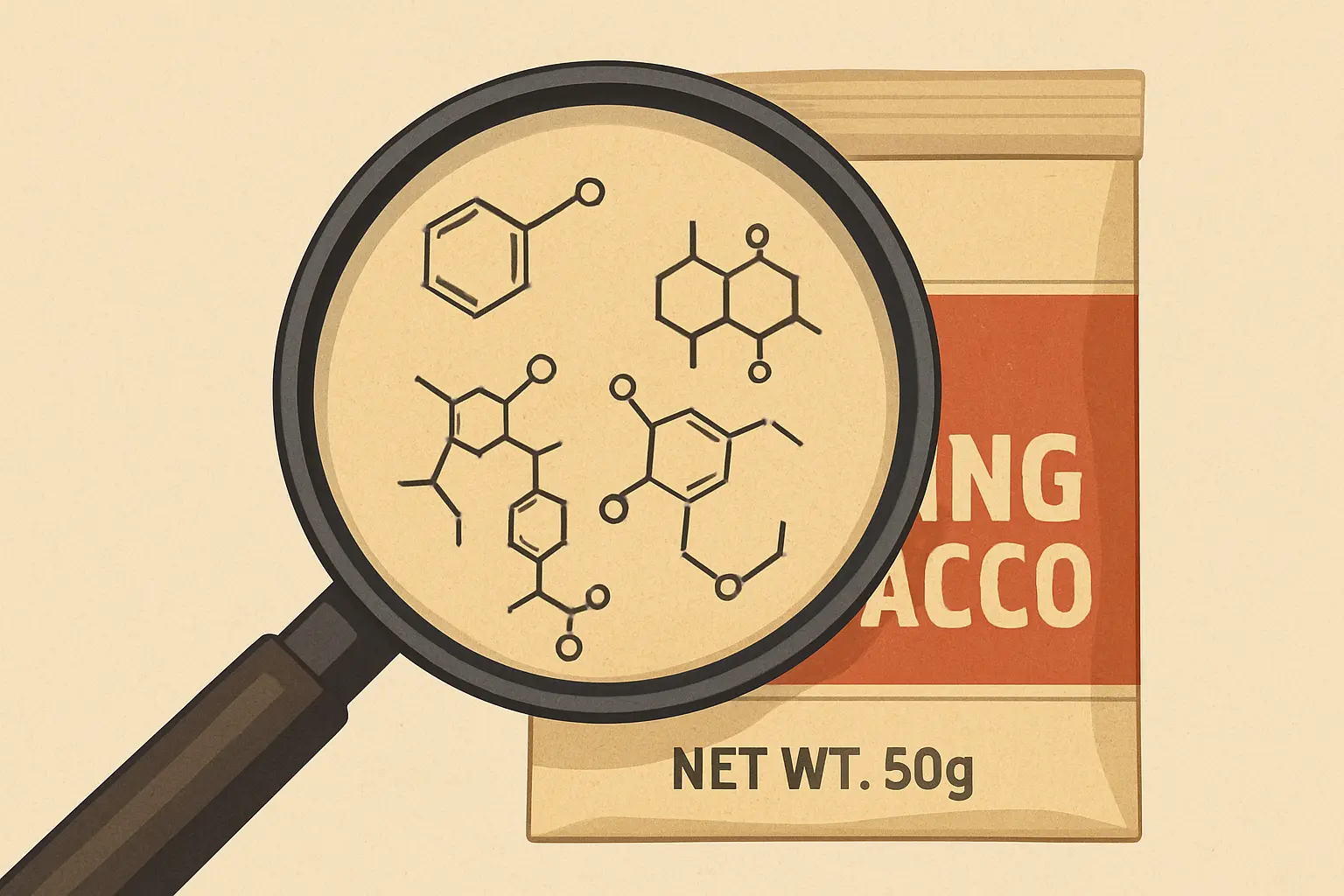
A persistent belief among roll-up smokers is that hand-rolled tobacco is somehow more natural, additive-free, or gentler than manufactured cigarettes. No public health body supports that reading. Cancer Research UK puts it flatly: all forms of tobacco cause cancer and there is no safe level of tobacco use — a list that covers cigarettes, cigars, pipes, shisha, and smokeless tobacco alike. The World Health Organization’s tobacco fact sheet takes the same line on tobacco products generally.
| Common belief | What the evidence shows |
|---|---|
| “Rolling tobacco has no additives” | Rolling tobacco is still a processed tobacco product, and it is not established as free of the additives and chemicals found in manufactured cigarettes |
| “It’s less harmful because it’s natural” | No credible health body rates hand-rolled tobacco as lower-risk; Cancer Research UK’s position is that all forms of tobacco cause cancer with no safe level of use |
| “Weaker filters mean less tar” | Filter quality in roll-ups varies with whatever tip you use, and smokers can compensate for a weaker draw by inhaling more deeply — there is no basis for assuming a reduction |
For the full picture of exactly what’s in tobacco smoke regardless of delivery method, see what is really in tobacco smoke, and for the nicotine side specifically, how much nicotine is in one cigarette gives the manufactured-cigarette baseline your own roll-up conversion above is built against.
NRT Dosing for Roll-Up Smokers
Once you have a cigarette-equivalent number from the conversion step above, use that figure — not your roll-up count — when choosing an NRT starting dose. A smoker rolling 15 thin, lightly packed cigarettes a day and one rolling 15 heavily packed ones can have meaningfully different nicotine intake, and NRT strength should reflect that difference. NICE guideline NG209 is the reference your pharmacist or GP will be working from for tobacco dependence treatment, which is why this is a detail worth raising with them directly rather than guessing. Choosing the right NRT option is useful background before that conversation.
A Two-Week Ritual-Replacement Schedule
- Days 1–3: Track without changing anything. Log every roll-up, its approximate weight, and the situation, building the baseline you’ll compare against.
- Days 4–7: Introduce the physical replacement. Start using your chosen hand-and-mouth substitute at every normal rolling trigger, even before cutting your count.
- Days 8–10: Begin the cigarette-equivalent taper, or set your quit date if going cold turkey. Use the conversion number from earlier to set a realistic declining target.
- Days 11–14: Retire the rolling equipment. Once you’re consistently using the replacement ritual instead of rolling, remove papers, filters, and the tray from the house.
Choosing Your Quit Method as an RYO Smoker
Nothing about being a roll-up smoker rules out any standard quit method — cold turkey, NRT, combination NRT, prescription medication, or a gradual reduction — but the conversion work above makes whichever one you choose actually accurate for your real intake. A quit app that lets you log a custom quit profile rather than assuming a standard manufactured-pack count is particularly useful here: iQuit’s craving log and multi-currency money tracker can be set up around your own converted cigarette-equivalent and gram cost rather than a generic pack price, so your progress numbers and savings actually reflect what you were smoking.
Gradual reduction tends to suit heavier roll-up smokers particularly well, since the pouch format makes small, deliberate cuts easier to control than cutting from a sealed pack — you can physically weigh out a slightly smaller pinch each week rather than guessing. Scheduled reduction works the same way: set specific times of day you’re allowed to roll, and let the gap between them widen the way a nicotine-pouch taper does. If Stoptober’s 28-day structure appeals as a start date, the Stoptober 2026 28-day plan works the same way once your own numbers are converted, and choosing the right patch strength is worth reading once you know your true cigarette-equivalent count.
Frequently Asked Questions
How much tobacco is in one roll-up cigarette?
It varies widely by rolling habit. A common rule of thumb is roughly 0.5 to 0.7 grams for an averagely packed roll-up, with heavier rollers using closer to 1 gram, but this is an approximation rather than a measured standard. Weighing your own pouch before and after a typical day gives a far more accurate personal figure.
Is rolling tobacco healthier or more natural than manufactured cigarettes?
No. Cancer Research UK states that all forms of tobacco cause cancer and there is no safe level of tobacco use, and no health body rates hand-rolled tobacco as lower-risk than manufactured cigarettes. Filter quality in roll-ups also varies with whatever tip you use, so there is no basis for assuming less exposure.
How many roll-up cigarettes come from a 50g pouch?
Using a working estimate of about 0.5 grams per roll-up, a 50g pouch yields roughly 100 cigarettes for a light packer, or around 50 for someone who packs heavier roll-ups closer to 1 gram each. Weighing your own pouch gives the most accurate personal number.
What NRT strength should a roll-up smoker use?
NRT dosing is calibrated to manufactured-cigarette equivalents, so convert your daily grams to a cigarette-equivalent count first, then use that figure, not your raw roll-up count, when discussing starting dose with a pharmacist or doctor working from NICE guideline NG209.
Why is quitting roll-ups different from quitting manufactured cigarettes?
Roll-ups lack a standardized dose, which makes “cigarettes per day” tracking and NRT dosing inaccurate without a gram-based conversion. Rolling also involves a longer, more hands-on physical ritual than lighting a manufactured cigarette, which functions as its own separate habit to address.
Can I use a quit app if I smoke roll-ups instead of packaged cigarettes?
Yes. A quit app with a customizable quit profile, rather than one that assumes a fixed manufactured-pack price and count, can be set up around your converted cigarette-equivalent and actual gram cost so your progress and savings tracking are accurate.
Track Your Real Numbers With iQuit
Set up a custom quit profile around your actual rolling tobacco cost and gram count, log cravings and triggers, and use SOS tools built for cigarettes and roll-ups alike — free to start.