If you are wondering how to quit smoking for Stoptober 2026, the short version is: pick 1 October as your quit day, spend the last weeks of September preparing your triggers and support, and use the 28-day campaign structure to carry you past the hardest early days. Stoptober is the UK and Ireland’s biggest annual stop-smoking push, and the reason it fixes on four weeks is simple — the NHS’s own guidance is that once you reach 28 days smoke-free, you are much more likely to quit for good.
What Is Stoptober 2026 and Why 28 Days Matters
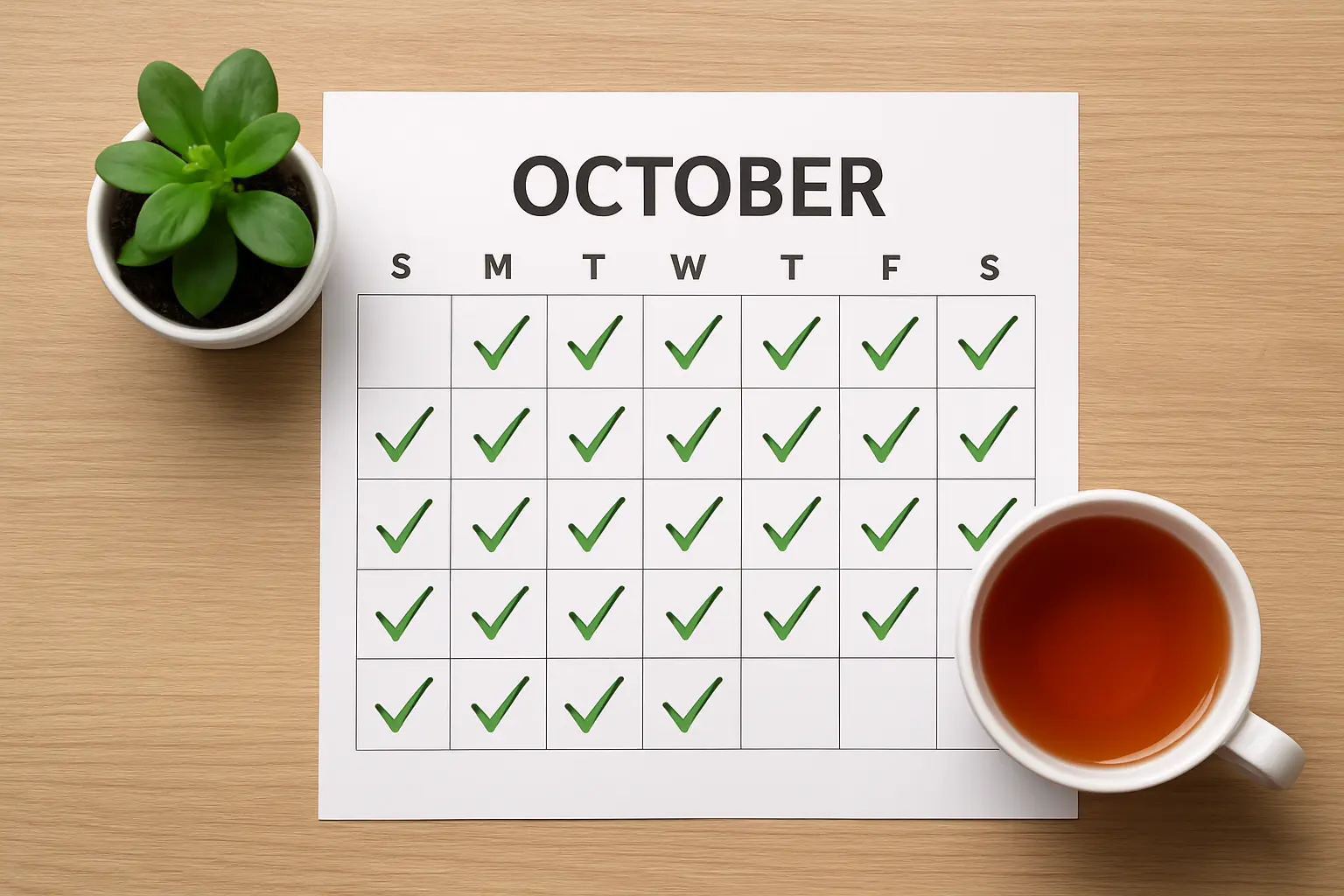
Stoptober is an annual campaign, run in England since 2012, that challenges smokers to stop for all 28 days of October. The date is fixed: it starts 1 October 2026 and runs through 28 October, with many people carrying the habit forward for the rest of the month. The four-week target is not arbitrary — reaching 28 days smoke-free is the milestone NHS Better Health singles out as the point where you become much more likely to quit for good, which is exactly what the campaign is built around.
The campaign matters for timing as much as motivation. Quitting alongside hundreds of thousands of other smokers on the same date means pharmacies, GP surgeries, and stop-smoking services are geared up and expecting a surge in demand, which typically means faster access to nicotine replacement therapy (NRT) and free local support during September and October than at other times of year.
The short video above walks through the kind of free, structured stop-smoking support available through public health services — useful context before you build your own plan below.
The September Prep Countdown
The smokers who make it through Stoptober rarely decide on 30 September. They spend the last two to three weeks of September getting ready. Each step below is a self-contained task you can tick off on its own.
- Choose your quit method (Week of 8 September, 10 minutes). Decide between cold turkey, NRT (patches, gum, lozenges), combination NRT, or a prescription medication like varenicline or bupropion. Combination NRT — a patch plus a faster-acting form like gum — has the strongest evidence base of the NRT options: a Cochrane review of stop-smoking treatments found that pairing a patch with a fast-acting form produces higher long-term quit rates than using one form alone, rated as high-certainty evidence.
- Order or collect your NRT (Week of 15 September, 15–30 minutes). If you’re using NRT, get it now so it’s in the house before your quit date, not something you’re queueing for on 1 October.
- Tell the people around you (ongoing from mid-September, 5 minutes each). Tell your household, close friends, and anyone you smoke with regularly. Accountability is one of the most consistently cited predictors of a successful quit attempt.
- Clear your triggers (weekend before 1 October, 30–60 minutes). Remove cigarettes, lighters, and ashtrays from your home and car. Wash smoke smell out of soft furnishings if you can — the smell itself is a cue.
- Set your quit date and write down your reasons (any day in September, 10 minutes). Fix 1 October in your calendar and write two or three concrete reasons you’re quitting — health, money, family — somewhere you’ll actually see them on Day 3.
For a more detailed walkthrough of picking and committing to the date itself, see how to set a quit date that actually sticks, and use a quit-day checklist for the 24 hours before you stop to make sure nothing is left undone on 30 September.
Choosing Your Quit Method
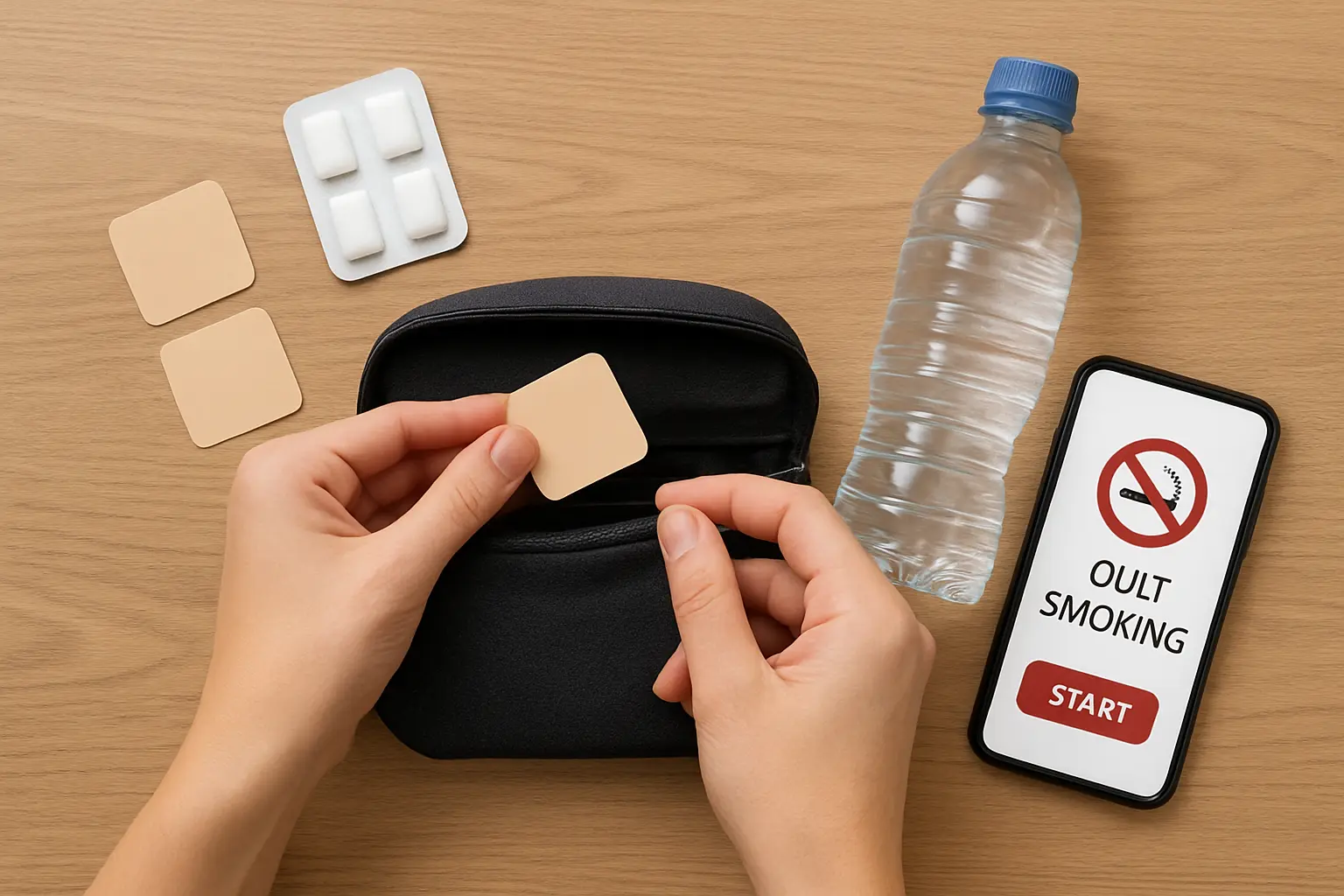
There isn’t one “correct” way to do Stoptober — the right method is the one that matches how dependent you are and how much structure you want.
| Method | Best for | What it involves |
|---|---|---|
| Cold turkey | Lighter smokers, high motivation, prefer no products | Stop completely on 1 October with no nicotine substitute |
| Single NRT (patch or gum) | Moderate dependence, want steady background relief | One product used consistently through the 28 days and beyond |
| Combination NRT | Heavier smokers, frequent breakthrough cravings | A patch for baseline nicotine plus gum or lozenges for spikes |
| Prescription medication | Previous failed attempts, want the strongest clinical option | Varenicline or bupropion, started via a GP a week or two before quit day |
| App-supported (any method above) | Anyone who wants daily structure and craving tools | Craving logging, SOS breathing tools, and progress tracking alongside your chosen method |
Whichever method you pick, an app can sit underneath it rather than compete with it — iQuit‘s free craving log and SOS tools (box breathing, 5-4-3-2-1 grounding, craving surfing, and a virtual cigarette you press and hold while an urge passes) are built to work alongside NRT or medication, not instead of them. If you’re still deciding, which quit method you should choose breaks the decision down further.
Week 1: Days 1–7 — Surviving the Withdrawal Peak
This is the week that decides most Stoptober attempts. Nicotine withdrawal symptoms typically peak around day two or three and stay intense through day five, and it’s within this first week that most relapses happen.
- Day 1–2: Remove and replace (ongoing, low effort). Lean hard on whatever NRT or method you chose. Keep water nearby — cravings and thirst can feel similar.
- Day 3: Plan for the floor, not the fight (5 minutes of prep the night before). Day 3 is consistently reported as the hardest single day of a quit attempt because withdrawal symptoms and irritability are near their peak. Expect it, and have your SOS breathing tool or a short walk ready rather than trying to white-knuckle through it.
- First weekend: change the routine, not just the cigarette (plan ahead, 1 evening). If weekends were built around smoking breaks, alcohol, or socializing with smokers, swap the setting for at least this first one — a walk, a film, an alcohol-free plan — until the association weakens.
- Day 5–7: log what triggers you (2 minutes per craving). Note the time of day and situation each time a craving hits. This data becomes useful fast — it’s exactly what predictive craving tools use to warn you before the next one lands.
Week 2: Days 8–14 — Building New Routines
By the second week, the sharpest physical withdrawal has usually eased, but habit cravings — the ones tied to coffee, driving, or stress — are still strong.
- Rebuild your hand-to-mouth habit (ongoing). Cinnamon sticks, sunflower seeds, or a fidget object can fill the physical gap a cigarette used to occupy.
- Reset one trigger routine per day (a few minutes each). Take a different route, drink coffee in a different spot, or restructure your smoke-break time at work.
- Check your mood, not just your cravings (evening, 2 minutes). Irritability and low mood are common in week two; a short mood journal entry can flag a pattern worth addressing before it becomes a reason to relapse.
Week 3: Days 15–21 — Beating Complacency
Counter-intuitively, week three is a known danger zone — not because withdrawal is worse, but because confidence rises faster than the habit actually fades, and “just one” feels safe again.
- Name the “just one” thought when it shows up (ongoing). A single cigarette after two weeks smoke-free commonly restarts full dependence within days for former daily smokers — treat the thought as a craving to ride out, not a decision to weigh.
- Revisit your written reasons from September (2 minutes). Read back the list you made before Day 1.
- Use a structured challenge to carry the second half (set up once). This is exactly the gap iQuit’s 7-Day Shield and 21-Day Habit Breaker challenges are built for — they map almost exactly onto the back half of the 28-day Stoptober structure.

Week 4: Days 22–28 — Locking In the Win
- Plan past 28 days now (10 minutes). Stoptober ends on 28 October, but your quit doesn’t — decide in advance whether you’ll keep using NRT, taper it, or stop cold at the four-week mark.
- Do the money math (5 minutes). Add up what 28 cigarette-free days actually saved. Seeing the number reinforces the habit change with something concrete.
- If you slip, restart the same day, not next month (immediate). A slip is a lapse, not a relapse, if you get straight back to smoke-free the same day — treat it as data about a trigger you now know to plan around, not proof the attempt failed.
Free NHS Stoptober Support (and How to Combine It With an App)
Stoptober comes with genuinely free public support: a dedicated app-based program, daily emails and text reminders, an online personal quit plan, and access to local stop-smoking advisors who can supply free or subsidized NRT during the campaign window. The NHS states it plainly on its local stop-smoking service pages: with expert help from a local service, you are three times more likely to quit for good.
None of that competes with a personal quit app — it stacks with one. Local services are strongest for professional advice and subsidized NRT; a craving-support app is strongest for the moment-to-moment urge that hits at 9pm on a Tuesday when no advisor is available. iQuit’s SOS tools, streak tracking, and predictive craving forecasts are designed to fill exactly that gap between scheduled support sessions. For the full evidence-based structure behind a quit attempt outside the Stoptober calendar dates, see the complete step-by-step quit plan, and if free tools are a priority, free quit-smoking apps and resources compared lays out the options side by side. If timing itself is your main question, why October is the best month to quit covers the seasonal case in more depth.
Frequently Asked Questions
When does Stoptober 2026 start and end?
Stoptober 2026 runs for the 28 days of October, starting 1 October and ending 28 October. Most people aim to carry the habit change through the rest of the month and beyond, but the campaign’s official challenge window is those four weeks (NHS Better Health, 2026).
Why is 28 days the target instead of 30?
Twenty-eight days is the campaign’s four-week challenge window rather than a calendar month, and it maps onto the milestone the NHS itself highlights: once you reach 28 days smoke-free, you are much more likely to quit for good. That milestone, not the length of October, is what the structure is built around (NHS Better Health, 2026).
What is the hardest day of Stoptober?
Day 3 is widely reported as the hardest single day, since nicotine withdrawal symptoms typically peak around day two to three before gradually easing over the following two weeks. Most relapses in any quit attempt happen within this first week.
Can I use NRT and an app together during Stoptober?
Yes. NRT addresses the physical nicotine dependence while an app addresses the habit, tracking, and moment-to-moment craving side. The NHS advises combining a stop-smoking aid with expert support, which it says makes you three times more likely to quit for good (NHS Better Health, 2026).
What happens if I slip up during the 28 days?
A single cigarette is a lapse, not a failed attempt, if you get back to smoke-free the same day. Note what triggered it and treat it as information about a situation to plan around next time, rather than a reason to abandon the attempt entirely.
Is free NRT available for Stoptober 2026?
Availability depends on your local health service and region, but many UK local authorities offer free or subsidized NRT through stop-smoking services during the Stoptober campaign window. Check your local council or GP surgery for what’s available where you live.
Why is week three a risky point in a 28-day quit?
By day 15–21, physical withdrawal has usually eased, which can create a false sense that “just one” cigarette is now safe. In practice, a single cigarette after two smoke-free weeks commonly restarts full dependence within days for former daily smokers, which is why structured challenges through this stretch help.
Do I need to quit exactly on 1 October to take part?
No. Starting exactly on 1 October gives you the full campaign momentum and matching support window, but the 28-day structure and step-by-step approach work the same way whichever date in the run-up to or during October you actually choose to start.
Carry Your Stoptober Attempt Past Day 28
iQuit’s craving log, SOS breathing tools, virtual cigarette, and predictive craving forecasts are built to support exactly this kind of structured, multi-week quit attempt — free to start, with streak shields for the days that don’t go perfectly.