You blow into a small handheld device at a stop-smoking appointment, and a number in “ppm” flashes up — but nobody explains what it means. A carbon monoxide breath test reading measures how much carbon monoxide (CO) is in your exhaled breath, a direct sign of how much toxic gas from tobacco smoke is currently in your bloodstream. Here is how to read the number instead of just nodding along.
What a CO breath test measures
Carbon monoxide is produced whenever tobacco burns, and it is present in the smoke you inhale directly and the sidestream smoke around you. Once absorbed, CO binds to hemoglobin in your red blood cells far more readily than oxygen does, so it is a reliable marker of very recent smoke exposure — not of long-term damage, just of what is in your blood right now. Exhaled-breath analysis is the simplest way to measure it: no needles, results in seconds.
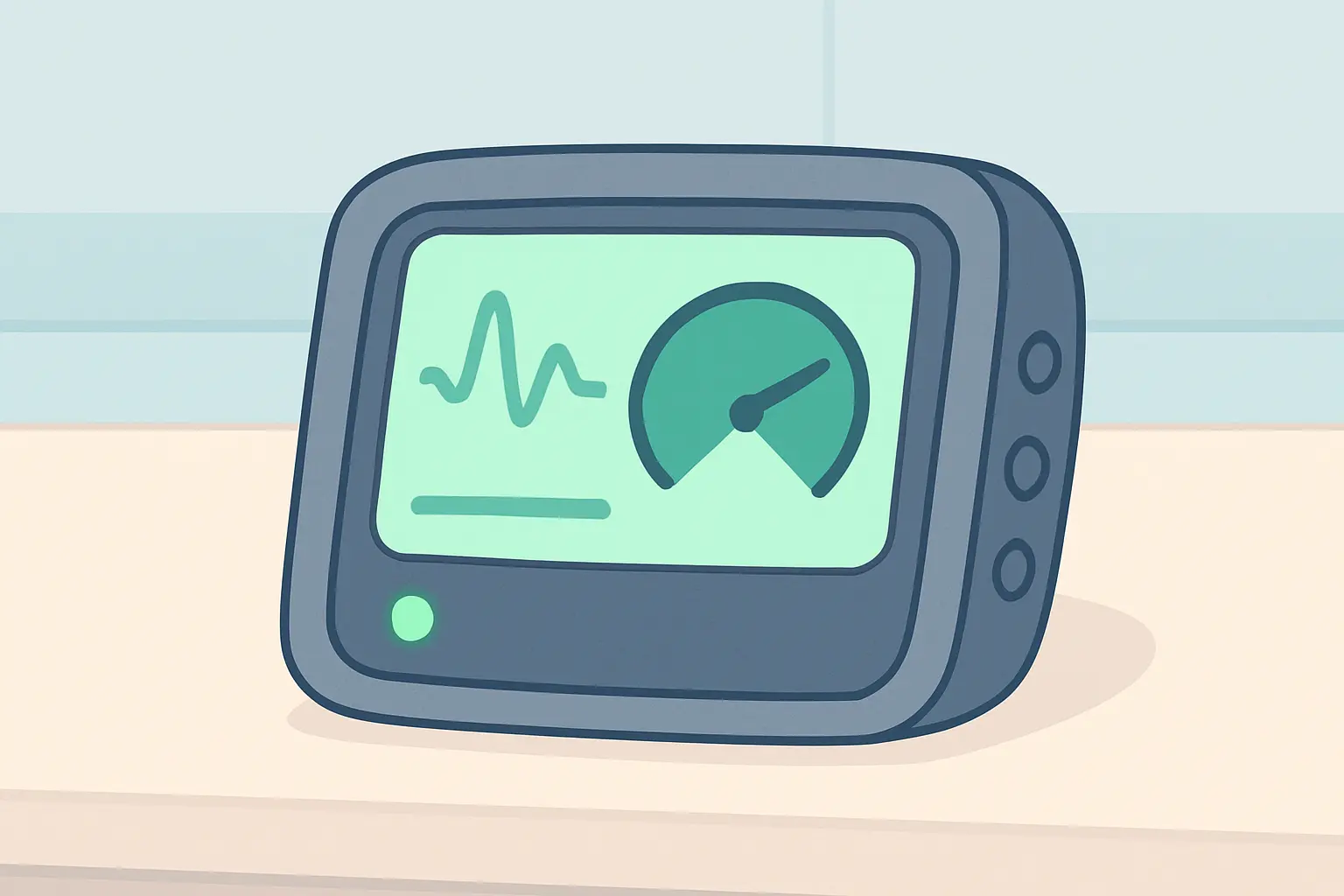
This is also why CO monitors have become a routine part of stop-smoking services rather than a specialist tool: the devices themselves are handheld, portable, and no more expensive or complicated to use than a home blood-pressure monitor. Each patient uses a single-use disposable mouthpiece, so the same device can be reused across a full clinic day without any risk of cross-infection between patients.
How the reading works
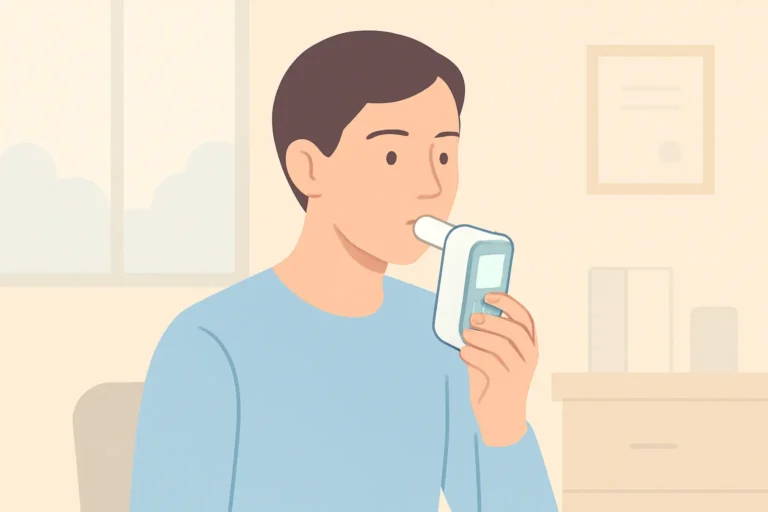
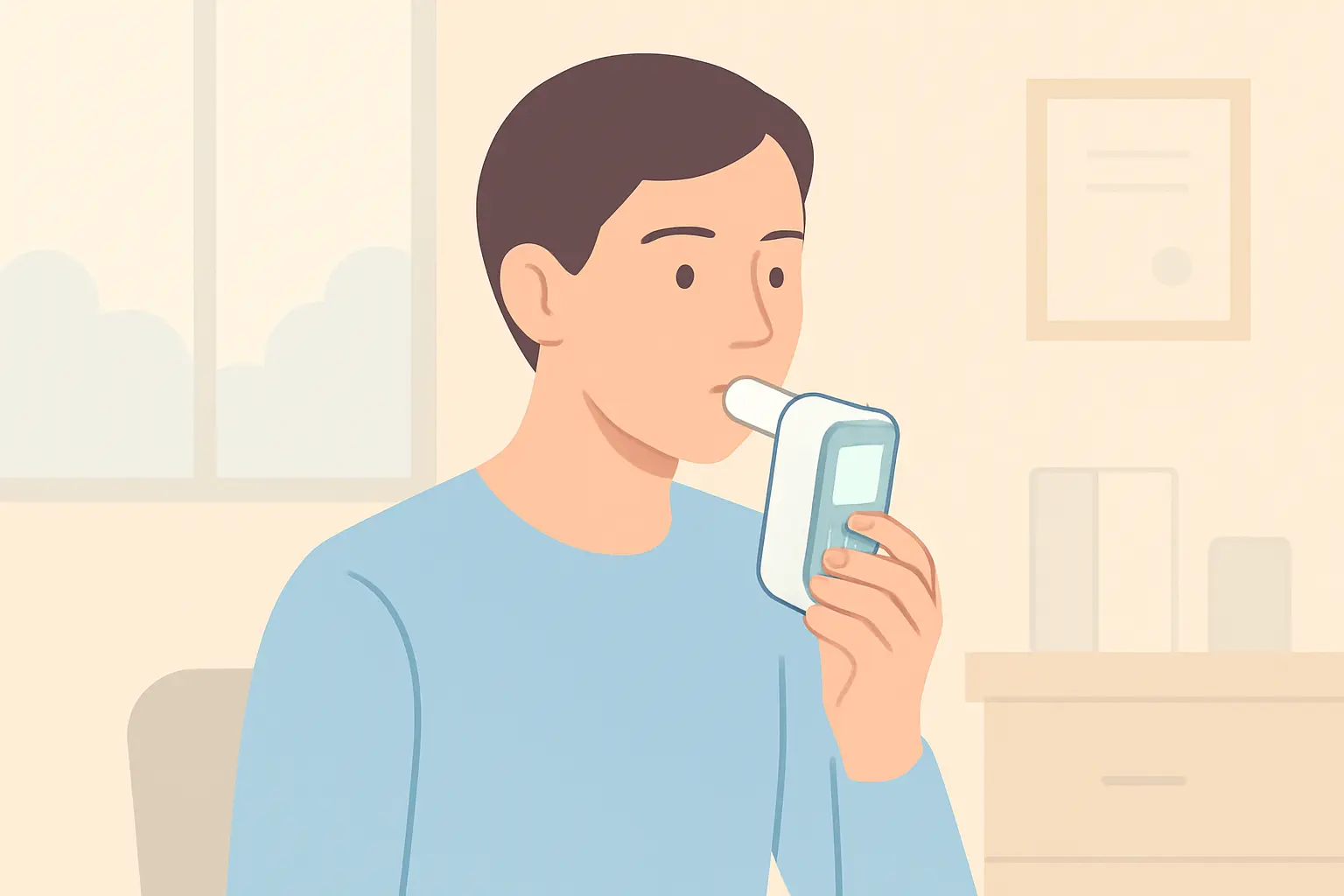
You inhale deeply, hold your breath for around 15 seconds, then exhale slowly into the monitor’s mouthpiece, aiming to empty your lungs completely. The device displays a reading in parts per million (ppm) of CO in that breath, and most clinic monitors also show a simple traffic-light color alongside the number: green for a non-smoker range, amber or red as the number climbs.
This short clip from an NHS stop-smoking service shows the test and what the colors mean in practice:
“Most monitors use a simple traffic light system to show you how much carbon monoxide is in your body. The majority of smokers will get a red light in their first session” (Yorkshire Smokefree, NHS).
What counts as a non-smoker reading
There is no single universal number, because different services use slightly different cut-offs for different purposes, but the published bands cluster tightly:
| Reading | What it generally means | Source |
|---|---|---|
| Below 5 ppm, stabilized | Treated as compliant with a smoking-cessation program | Public Health England |
| Above 5 ppm, in practice | Usually suggests some tobacco exposure | PCRS-UK (citing clinical experience) |
| Up to 9 ppm (11 ppm with COPD) | Generally the highest accepted non-smoker level | PCRS-UK |
| Below 10 ppm at 4 weeks | NICE’s own bar for a validated successful quit | NICE PH10, via PCRS-UK |
| 7 ppm (range 3-10 ppm) | Non-smoker cut-off used specifically in pregnancy services | NICE PH26, via PCRS-UK |
The takeaway: your service’s specific cut-off matters more than any single number you read online. Ask the person testing you which threshold their clinic uses, and treat everything above as “trending toward smoker,” not a hard pass/fail line.
Why your number can be high without smoking
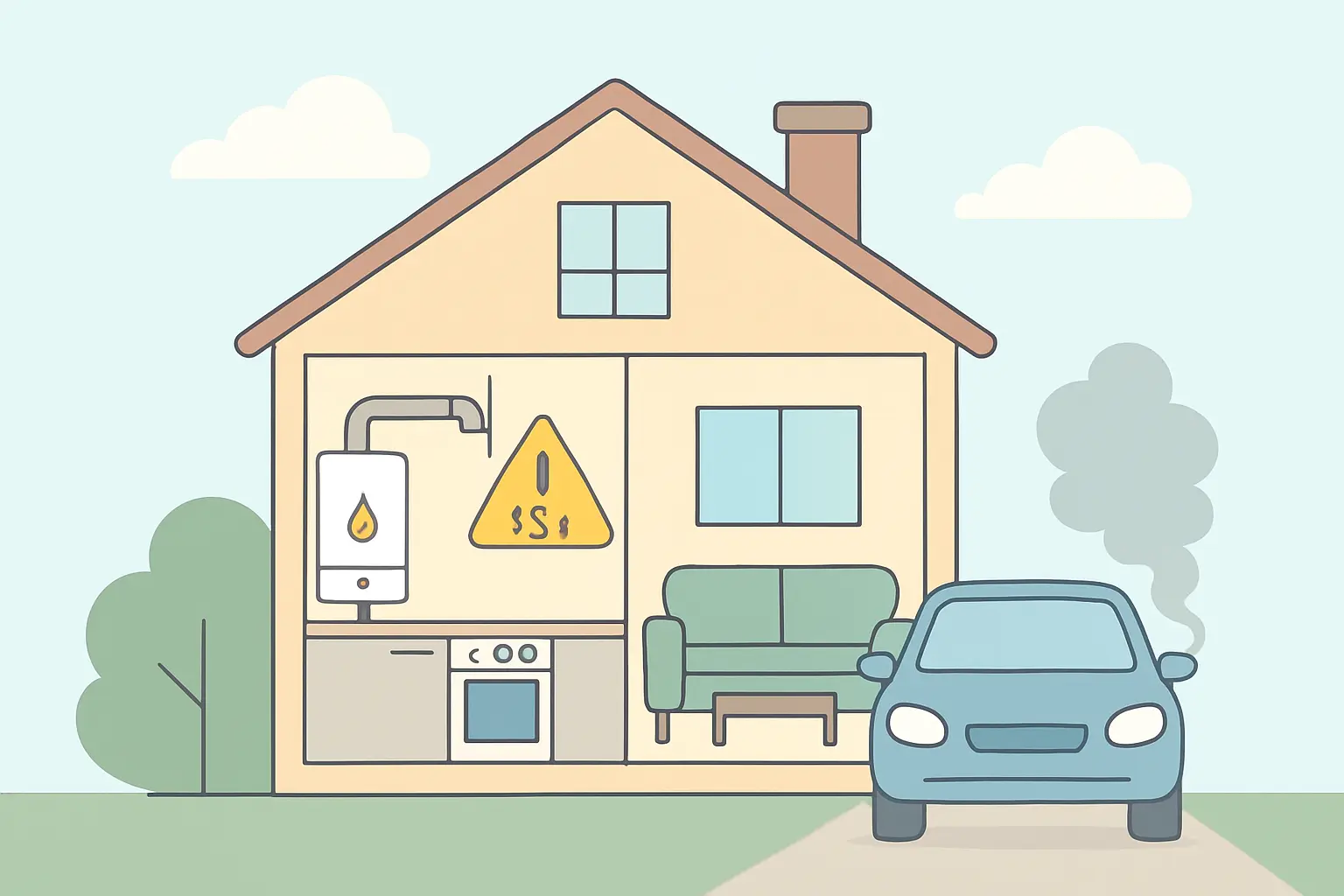
CO does not come only from cigarettes, and a raised reading in someone who says they have not smoked is a genuine clinical puzzle worth investigating rather than dismissing. Documented non-smoking causes of a raised reading include exposure to CO fumes from a faulty gas boiler, car exhaust, or paint stripper; lactose intolerance, where consuming dairy produces gases detected in the breath; passive smoking (though readings above 10 ppm are not normally caused by this alone); and unusually high ambient CO from weather conditions or air pollution (PCRS-UK).
Public Health England’s own protocol for stop-smoking advisers treats a stable reading above 5 ppm as a trigger to screen for these alternative sources directly, asking about gas, oil, or solid-fuel appliances at home, work exposure to fumes or exhaust, use of an oven for heating, recent double glazing that reduced ventilation, and flu-like symptoms in other household members — all signs of possible carbon monoxide poisoning rather than smoking (Public Health England). If any of that sounds familiar, it is worth raising with your service rather than assuming the machine is simply wrong.
The PHE protocol treats this seriously precisely because CO poisoning “is a mimic and is notorious for simulating other more common conditions including flu-like illnesses, migraine, food-poisoning, tension headaches and depression,” and it can occur in any type of home, not just older or poorly maintained ones (Public Health England). A stop-smoking adviser flagging your reading and asking about your boiler is not being nosy — a raised CO level genuinely can be an early warning sign of a household hazard that has nothing to do with cigarettes.
How fast the number falls after quitting
CO has a short half-life in the blood, and elimination continues even as the concentration drops, so it is usually undetectable by around 24 hours after the last cigarette (PCRS-UK). In practice, most stop-smoking services tell clients to expect a green, non-smoker-range reading within 24 to 48 hours of their last cigarette — making CO the very first toxin your body clears once you quit (Yorkshire Smokefree, NHS). Our full timeline of carbon monoxide and oxygen in the first 48 hours covers what that recovery actually feels like.
That speed is exactly why CO monitoring works so well as motivation early in a quit attempt: unlike lung function or cancer risk, which change over years, your CO reading can visibly drop to a green light within two days, giving you real, immediate proof the quit is working.
Why services use it, and what it is not
Stop-smoking services use CO monitors for two honest reasons. First, motivation: a visibly falling number is concrete proof of progress in a way that “you’ll feel better eventually” is not. Second, verification: smokers can be unreliable self-reporters, so a breath test can confirm someone genuinely has not smoked in the last 24 hours rather than relying on their word alone (PCRS-UK). NICE uses exactly this kind of biochemically validated reading, rather than self-report, as its bar for what counts as a successful quit at four weeks.
What it is not: a CO reading tells you nothing about tar exposure, cancer risk, or lung damage — those depend on years of cumulative exposure, not the last 24 hours. It also cannot distinguish tobacco from cannabis, shisha, or other combustible products, all of which raise CO in the same way. If your reasoning for testing is “am I doing lasting damage,” a CO monitor is the wrong tool; if it is “did I actually smoke recently,” it is exactly the right one. For the cumulative-damage question, our guide to what a lung age test means covers a completely different measurement, spirometry, that looks at years of accumulated damage rather than the last 24 hours. For the mechanics of what nicotine itself (separate from CO) does to your body, our guide on how long nicotine stays in your system covers a related but different clearance timeline.
It is worth being explicit about this distinction with yourself, too: a green CO reading in week one is genuinely good news about the last day, but it is not evidence that a decade of smoking has been undone. Both measurements matter, and neither substitutes for the other.
Getting tested
You do not need to buy your own monitor to get a reading. NHS stop-smoking services test for free at every appointment, typically the first thing that happens when you walk in, and will explain your specific number against their service’s threshold. If a low reading feels like an achievement worth discussing with your GP as part of a wider quit plan, our guide on how to talk to your doctor about quitting covers how to bring it up, and if you are wondering whether a low CO reading could ever affect employment or insurance questions, see our piece on whether employers or insurers test for nicotine — a different test, but a related concern for people newly smoke-free.
Logging your own readings over time — even informally, alongside your quit-day milestones — turns an abstract “I feel a bit better” into a number you can watch drop toward zero. Bring a note of your last few readings to each appointment if your service does not already track this for you; a downward trend is exactly the kind of concrete evidence that keeps people motivated through the harder weeks of a quit attempt, well before the longer-term health gains become noticeable.
Frequently Asked Questions
What is a good carbon monoxide breath test reading?
A reading stabilized below 5 ppm is treated by Public Health England’s protocol as compliant with a smoking-cessation program. Separately, 9 ppm is generally cited as the highest acceptable non-smoker level (up to 11 ppm with COPD), and NICE requires under 10 ppm at four weeks to validate a successful quit.
Can I have a high CO reading without smoking?
Yes. Documented non-smoking causes include exposure to a faulty gas boiler, car exhaust, or paint stripper, lactose intolerance, heavy passive smoke exposure (though rarely above 10 ppm from this alone), and unusually high ambient carbon monoxide from weather or air pollution, according to guidance published by PCRS-UK.
How long after quitting does a CO reading go green?
Most stop-smoking services report a green, non-smoker-range reading within 24 to 48 hours of your last cigarette. Carbon monoxide has a short half-life and is usually undetectable in the blood around 24 hours after smoking stops.
Does the reading vary between stop-smoking services?
Yes, slightly. Published cut-offs range from 3 to 10 ppm depending on context, with pregnancy services generally using the lowest, most cautious threshold (around 7 ppm) to avoid missing anyone who needs support to quit.
Does a CO monitor detect vaping or cannabis?
A CO monitor detects carbon monoxide from any combustion source, including cannabis or shisha, but standard nicotine vaping does not involve burning plant material in the same way and typically does not raise CO the way tobacco combustion does.
Does a low CO reading mean smoking has not damaged my lungs?
No. A CO reading only reflects very recent exposure, typically the last 24 hours. It says nothing about tar buildup, lung function, or cancer risk accumulated over years of smoking, which require separate measures entirely.
Where can I get a carbon monoxide breath test?
NHS stop-smoking services test for free at every appointment, usually as the first step. Some pharmacies and workplace health programs also offer testing as part of a structured quit program.
Track more than just your CO reading
iQuit logs your quit-day milestones, cravings, and health recovery timeline in one place — so a green CO reading is just one of many wins you can see.
Download iQuit Free on Google Play
Download on the App Store