You’ve probably heard someone say secondhand smoke is worse than smoking itself — maybe as a guilt trip, maybe as an excuse to keep smoking outdoors instead of quitting. The claim comes from a real fact about how tobacco smoke behaves, but stretched further than the evidence actually supports.
Where the “worse than smoking” claim comes from
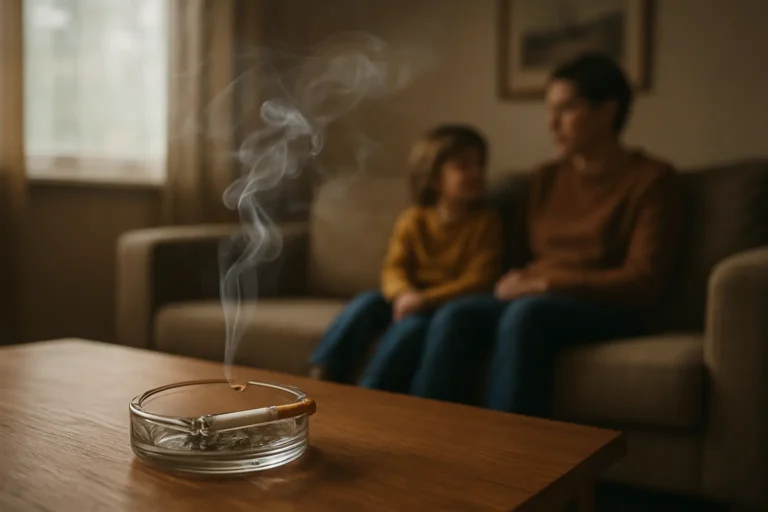
The claim isn’t invented out of nothing. The American Cancer Society (ACS) explains that tobacco smoke actually comes in two forms: “Mainstream smoke: The smoke exhaled by a person who smokes tobacco. Sidestream smoke: Smoke from the lighted end of a cigarette, pipe, or cigar, or smoke from tobacco burning in a hookah.” And critically: “Sidestream smoke has higher concentrations of nicotine and cancer-causing agents (carcinogens) than mainstream smoke.”
That single, accurate fact is where “secondhand smoke is worse than smoking” gets its foothold — sidestream smoke really is more concentrated at the source than what a smoker inhales through a filter. The leap that isn’t supported is treating “more concentrated at the source” as the same claim as “more harmful to breathe overall than being the person smoking a pack a day.” Those are different questions, and conflating them is the myth.
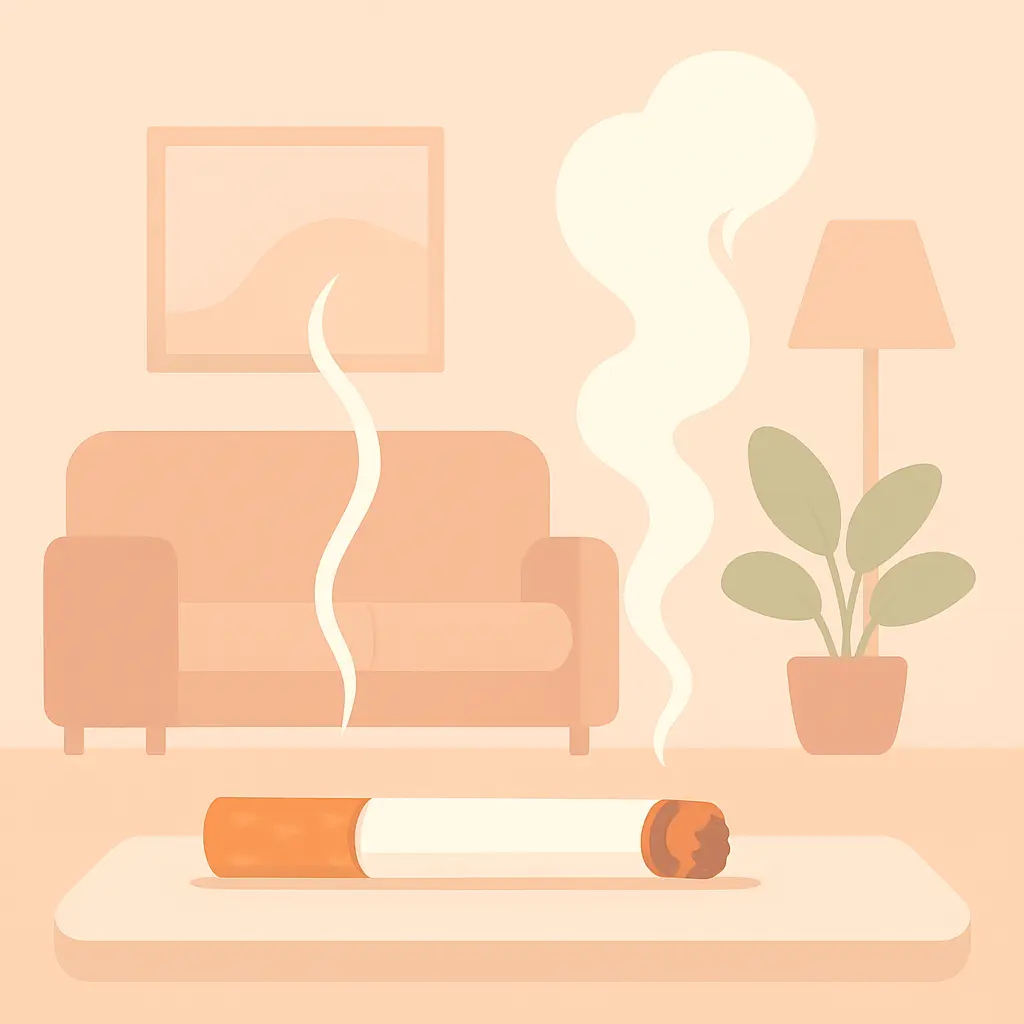
What sidestream smoke actually contains
Whatever form it takes, secondhand smoke is genuinely dangerous — this isn’t a myth that needs correcting downward. The ACS states that secondhand smoke “has more than 7,000 chemicals, including about 70 that can cause cancer.” The CDC gives the same figure: “There are more than 7,000 chemicals in commercial tobacco smoke, including hundreds of chemicals that are toxic and about 70 that can cause cancer.” If you want the full list of what’s actually in the smoke your household is exposed to, the complete breakdown of the roughly 7,000 chemicals in cigarette smoke covers it in more depth.
The CDC is direct about the bottom line: “There is no safe level of exposure to secondhand smoke. Even brief exposure can cause serious health problems.” The ACS agrees in its own words: “There’s no safe level of exposure for secondhand smoke.” This is the finding that actually matters for a household decision, and it doesn’t need an exaggerated “worse than smoking” framing to be taken seriously.
Why concentration and dose change the answer
Here’s the piece the “worse than smoking” claim skips over: concentration at the source and total dose received are not the same thing. A person who smokes a cigarette inhales the mainstream smoke directly and repeatedly, cigarette after cigarette, day after day, for years. A bystander in the same room breathes air where sidestream smoke has already mixed with the room’s air, been diluted by ventilation, and decreased in concentration with distance and time. The sidestream smoke is more concentrated the instant it leaves the cigarette’s tip — but what actually reaches a nonsmoker’s lungs across a lifetime of secondhand exposure is a different, generally lower total dose than what the smoker themselves receives directly.
That’s why public health bodies don’t say secondhand smoke is worse than smoking — they say it has no safe threshold, which is a stronger and more accurate claim for the purpose that matters: justifying smoke-free rules rather than “smoking outside is basically fine for everyone else.”
What secondhand exposure does to children and partners
Globally, the World Health Organization (WHO) reports that “second-hand smoke causes serious cardiovascular and respiratory diseases, including coronary heart disease and lung cancer, and kills more than 1.6 million people prematurely every year.” That’s a real, large, and entirely preventable death toll among people who never chose to smoke. WHO adds starkly: “There is no safe level of exposure to second-hand tobacco smoke.” The same fact sheet notes real progress too: “Over a third of the world’s population living in 79 countries are protected from second hand smoke by comprehensive national smoke-free laws” — meaning this is a problem policy can measurably shrink, not just an individual household decision.
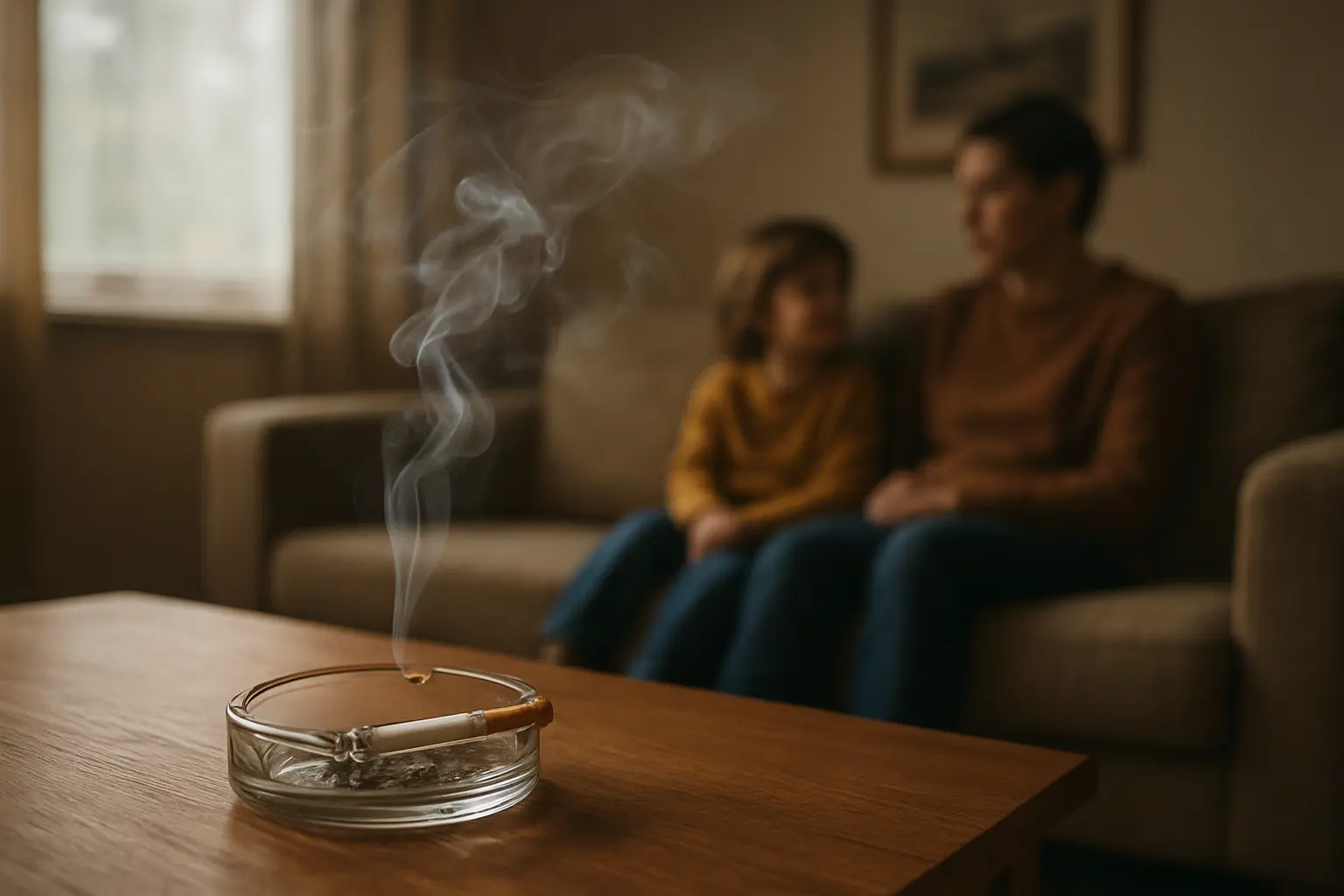
Children living with a smoker face this exposure daily, often for years, in the place they can least control: their own home. The ACS is direct about who bears the heaviest burden: “Young children are most affected by secondhand smoke and least able to avoid it.” Its list of documented effects in exposed children includes getting sick more often, more lung infections such as bronchitis and pneumonia, more coughing, wheezing, and shortness of breath, more ear infections, worsened or triggered asthma, and — in very young children — an increased risk of sudden infant death syndrome (SIDS).
Partners and other household members who don’t smoke absorb years of exposure the same way, simply by sharing living space, a car, or a bed with someone who does. For a fuller picture of what that exposure does specifically to kids, partners, and pets, the detailed research on secondhand smoke and family health covers the mechanisms in more depth than this article’s scope allows.
This short explainer from Roswell Park Comprehensive Cancer Center covers what secondhand smoke is and why there’s no safe amount of it.
Does smoking outside or by a window work?
Partially, and it’s genuinely better than smoking indoors — but it doesn’t fully solve the problem the way people hope. Smoke and its particles cling to clothing, hair, and skin, and someone who has just smoked outside still carries residue back into the house on their body. Cracked windows and extraction fans reduce indoor concentration but don’t eliminate drift, especially in smaller homes, apartments with shared ventilation, or cars.
The ACS specifically calls out cars as a priority: “Americans spend a great deal of time in cars,” and notes that “some states and cities even have laws that ban smoking in the car if you have passengers under a certain age or weight.” A car is a small, enclosed space with poor air exchange even with a window cracked, which makes “I only smoke with the window down” a much weaker protection than it feels like.
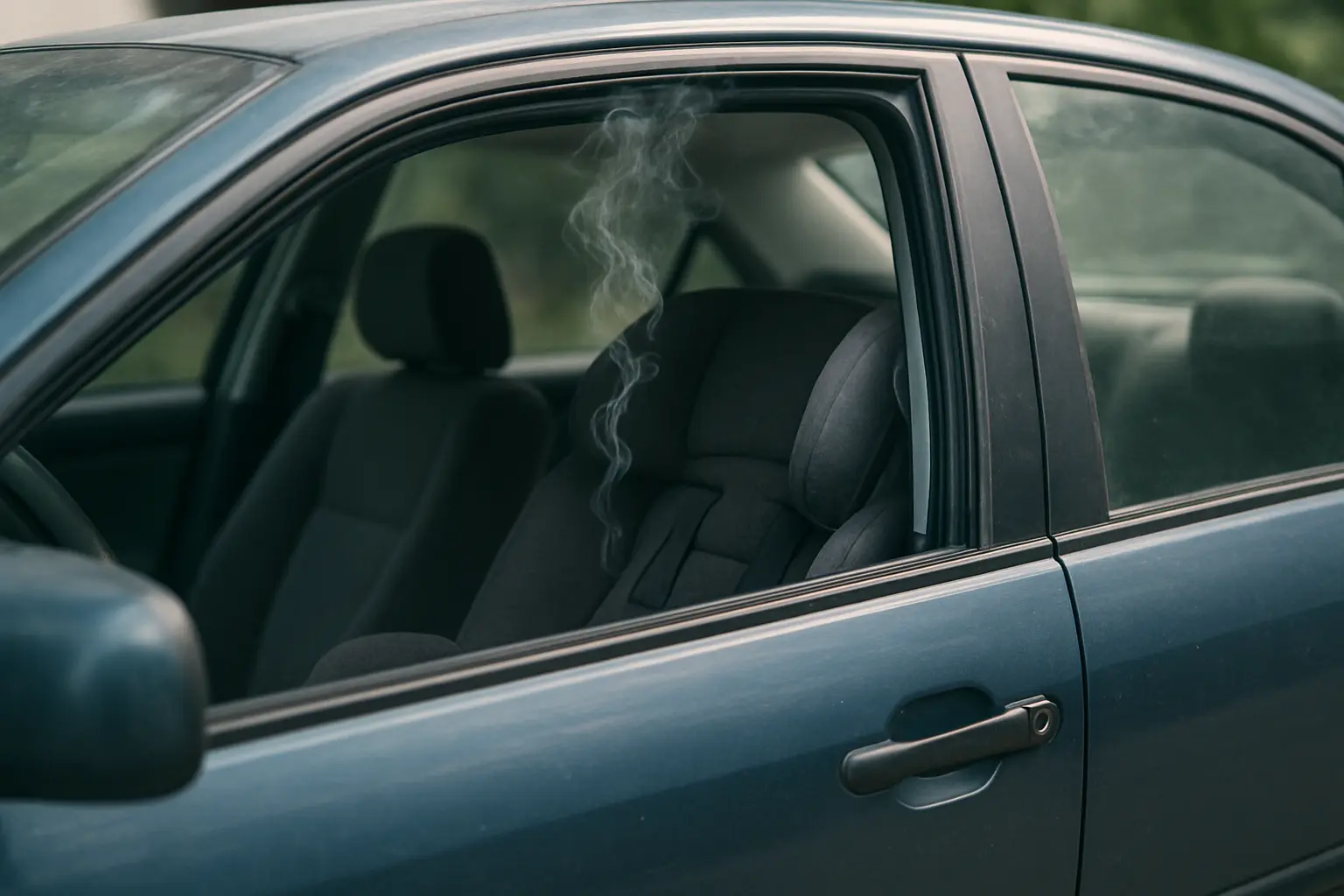
Thirdhand residue in cars and sofas
Beyond the smoke you can see and smell, there’s a residue that outlasts it. The ACS calls this thirdhand smoke: “Particles from secondhand smoke can settle onto surfaces and be absorbed. These particles can stay in household surfaces and dust for a long time after the smoke is gone.” This isn’t a trivial residue, either — the ACS notes that “some of the carcinogens that we know cause lung cancer have been found in dust samples taken from the homes of people who smoke,” and that “research has also shown that thirdhand smoke can damage human DNA in cell cultures and might increase lung cancer risk in lab animals.”
Sofas, carpets, curtains, and car interiors all absorb and hold onto this residue, which is part of why “I smoke on the balcony” doesn’t fully protect a household that still has years of accumulated thirdhand smoke in its furniture.
Making a home smoke-free without a fight
- Lead with the no-safe-level fact, not the “worse than smoking” framing. It’s the accurate claim, and it’s harder to argue against.
- Start with the car, not the whole house. It’s the smallest, easiest space to make smoke-free first, and the ACS specifically flags it as a priority.
- Frame it as protecting people, not policing smoking. “Not around the kids” lands differently than “you have to quit.”
- Offer the actual fix alongside the ask. A smoke-free-home rule is much easier to accept when there’s real support for quitting attached to it, not just a restriction.
If secondhand smoke exposure is part of your own reason to quit, the full guide to quitting for your family’s sake walks through how to turn that motivation into an actual plan, and the full list of cancers smoking causes puts your own risk in the same context as the risk you’re currently passing on to others. It’s also worth remembering that a smoke-free home benefits the person quitting just as directly as everyone else breathing the same air — what happens to your own carbon monoxide and oxygen levels in the earliest hours after quitting is its own encouraging story, running on a similar timeline to how fast secondhand exposure in the house drops to zero once nobody is lighting up.
Frequently Asked Questions
Is secondhand smoke worse than smoking?
Not exactly. Sidestream smoke (from the burning end of a cigarette) has higher concentrations of nicotine and carcinogens than mainstream smoke (what the smoker inhales), according to the American Cancer Society. But a bystander typically breathes a diluted mixture, not raw sidestream smoke, so the overall dose received is generally different from — not simply “worse than” — what a smoker inhales directly and repeatedly.
What’s the difference between sidestream and mainstream smoke?
Mainstream smoke is what a smoker exhales after inhaling. Sidestream smoke comes from the burning end of the cigarette, pipe, cigar, or hookah, and has higher concentrations of nicotine and carcinogens than mainstream smoke (American Cancer Society).
Is there a safe amount of secondhand smoke exposure?
No. Both the CDC and WHO state there is no safe level of exposure to secondhand smoke, and that even brief exposure can cause serious health problems (CDC; WHO).
How many people die from secondhand smoke each year?
The World Health Organization reports that secondhand smoke kills more than 1.6 million people prematurely every year worldwide, from diseases including coronary heart disease and lung cancer.
Does smoking near an open window protect other people?
Only partially. It reduces indoor concentration somewhat, but smoke and its particles cling to clothing and skin and are carried back indoors, and cracked windows don’t fully prevent drift, especially in smaller spaces like apartments and cars.
What is thirdhand smoke?
Thirdhand smoke is the residue left behind after visible smoke clears — particles that settle onto surfaces and stay in household dust and fabric. The American Cancer Society notes that known lung cancer carcinogens have been found in dust from the homes of people who smoke, and that thirdhand smoke has been shown to damage human DNA in cell cultures.
Is a car more dangerous than a house for secondhand smoke?
Cars are smaller and less ventilated than most homes, which the American Cancer Society flags as a specific priority for smoke-free rules; some jurisdictions ban smoking in cars carrying young passengers. Fetched sources for this article did not include a direct numeric comparison of car versus house exposure levels, so no specific multiplier is claimed here.
Protect the people you share air with
iQuit’s milestone tracker and craving tools help turn “protect my family” into a real, supported quit attempt — free on Google Play and the App Store.
Download iQuit Free on Google Play
Download on the App Store