What cancers does smoking cause? At least 12 different types, not just lung cancer — a list that includes several sites most smokers never connect to their habit at all, from the bladder to the cervix to the pancreas. Cigarette smoke reaches far beyond the lungs, and the data on exactly where it does damage is more specific, and more sourced, than most people realize.
What Cancers Does Smoking Cause? The Full CDC List
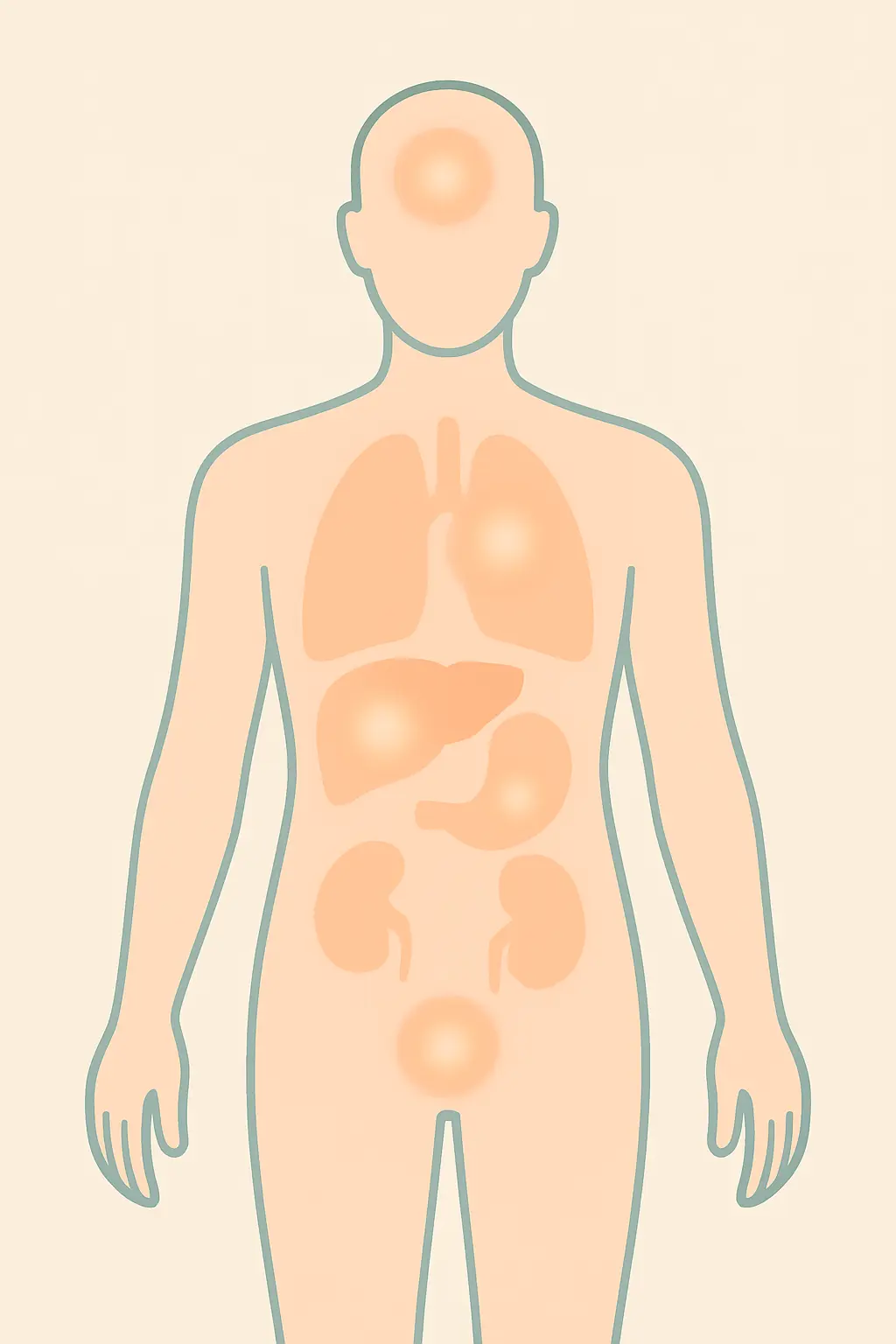
According to the CDC’s page on cigarettes and cancer, “smoking can cause cancer almost anywhere in your body” — and it names 12 specific sites:
| Cancer site | Note |
|---|---|
| Lung, bronchus, and trachea | The largest single share of smoking-caused cancer deaths |
| Bladder | Smoking is a leading cause |
| Mouth and throat | Includes oral cavity and pharynx |
| Larynx (voice box) | Among the most strongly linked sites |
| Esophagus | Risk compounds when combined with alcohol |
| Stomach | Causal link established |
| Colon and rectum | Causal link established |
| Liver | Causal link established |
| Pancreas | Causal link established |
| Kidney and renal pelvis | Causal link established |
| Cervix | Causal link established |
| Blood (acute myeloid leukemia) | A blood cancer, not a solid tumor |
| Prostate (mortality only) | CDC: men with prostate cancer who smoke “may be more likely to die from prostate cancer” |
That is 12 sites with an established causal link, plus prostate cancer — where smoking is tied to worse outcomes and higher mortality rather than a higher chance of developing the disease in the first place. For the aggregate burden across all of these sites combined, the smoking and cancer statistics for 2026 roundup covers the total picture; this page focuses on the per-site breakdown.
Columbia’s Herbert Irving Comprehensive Cancer Center walks through how tobacco raises risk across these different sites.
How Much Smoking Raises the Risk, Site by Site
A list of affected organs answers “where” but not “how much.” The CDC’s own mortality data puts numbers on it, and the multipliers are not subtle:
| Condition | Men | Women |
|---|---|---|
| Cancer of the trachea, lung, and bronchus | More than 23× the risk | More than 12× the risk |
| Bronchitis and emphysema | 17× the risk | 12× the risk |
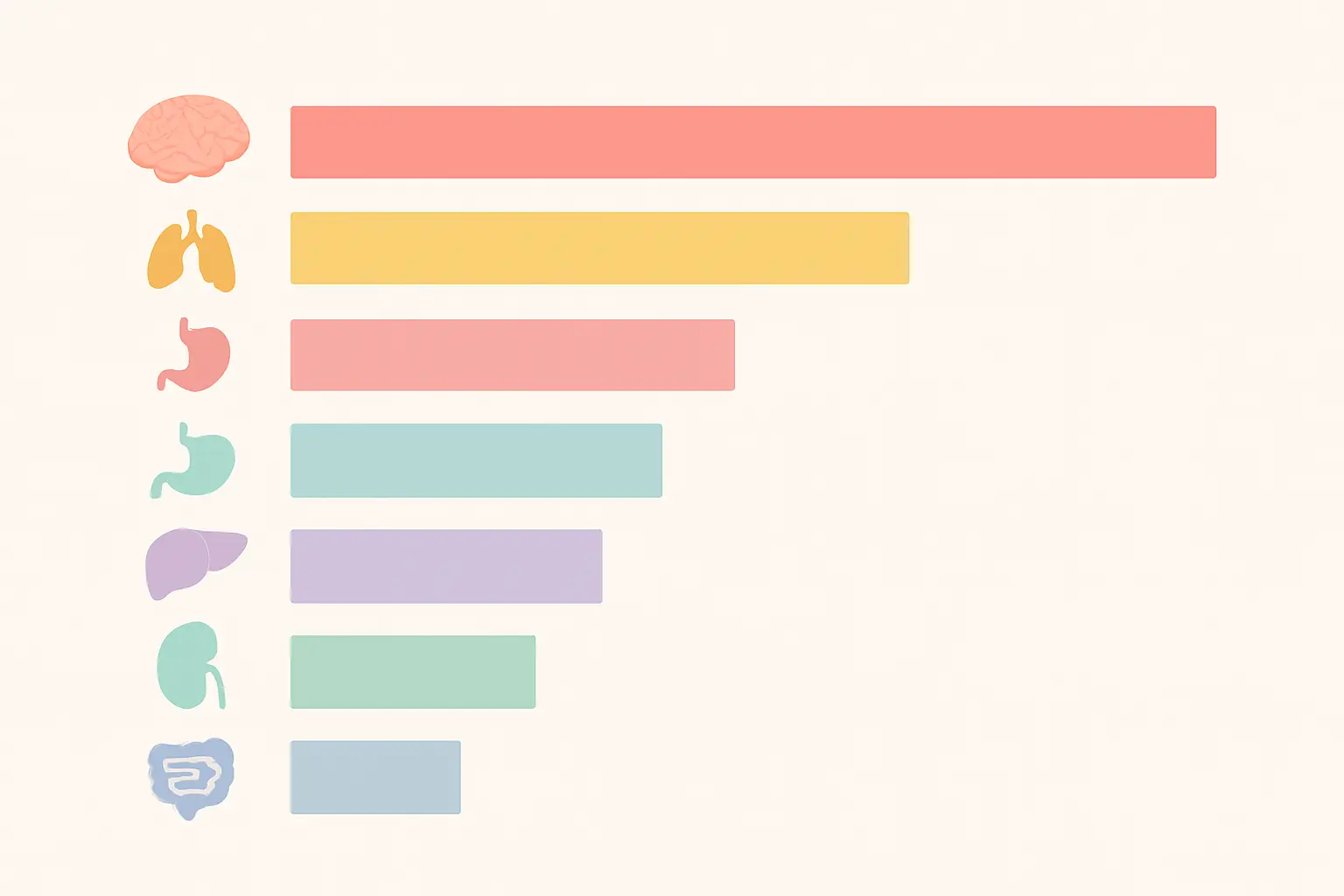
Those are risks of dying from the condition. For developing lung cancer in the first place, the CDC puts the increase at about 25 times that of people who don’t smoke. In absolute terms, the CDC attributes 163,700 US cancer deaths a year to smoking — 127,700 from cancer of the lung, bronchus and trachea, and 36,000 from other cancers combined.
One nuance worth holding onto: a large relative risk on a rare cancer can still mean fewer deaths than a smaller relative risk on a common one. Lung cancer manages to be both — strongly linked and common — which is why it dominates the totals. The rarer sites on the CDC’s list matter individually to the people who get them even though they never make the headline number.
Lung Cancer: The Biggest Single Risk
Lung cancer carries by far the largest relative risk increase of any site on the list. People who smoke increase their risk of developing lung cancer by about 25 times that of people who don’t smoke, according to the CDC, and the American Cancer Society reports that “about 80% of lung cancers (and about 80% of all lung cancer deaths) are due to smoking.” Cigarette smoke contains more than 7,000 chemicals, and the CDC states that at least 69 of them can cause cancer — part of why lung tissue exposed directly and repeatedly to smoke carries such an outsized risk compared with sites the smoke reaches more indirectly.
Cancers People Don’t Associate With Smoking
Ask most smokers which cancers their habit puts them at risk for, and lung cancer is usually the only answer. In practice, several of the cancers on the CDC’s list get almost no public attention relative to their real risk:
- Bladder cancer — smoking is a leading cause, because cancer-causing chemicals absorbed into the blood are filtered by the kidneys and concentrated in urine, where they sit in prolonged contact with the bladder lining.
- Kidney and renal pelvis cancer — same filtering mechanism as bladder cancer, different point along the same route.
- Pancreatic cancer — one of the hardest cancers to detect early and treat, with smoking as one of its few well-established modifiable risk factors.
- Cervical cancer — smoking is an established risk factor alongside HPV, the primary cause of most cervical cancer.
- Acute myeloid leukemia — a blood cancer, which surprises most people since it doesn’t involve an organ the smoke visibly touches.
The common thread is that cancer-causing chemicals from cigarette smoke don’t stay in the lungs — they enter the bloodstream and are processed, filtered, or excreted by organs throughout the body, which is exactly why the list of affected sites is so much longer than most people assume.
How Much of the Total Cancer Burden Is Smoking
At a population level, the CDC states that cigarette smoking causes about one out of every three cancer deaths in the United States. The American Cancer Society’s independent estimate is close: “smoking causes about 20% of all cancers and about 30% of all cancer deaths in the United States.” Both figures point to the same conclusion — smoking is the single largest modifiable cause of cancer in the country, ahead of any other individual risk factor, which is also why the overall smoking mortality data and cancer-specific figures track so closely together.
This is also the clearest possible case for why quitting is worth attempting more than once if a first try doesn’t stick. The quit smoking success rates by method data shows that most successful quitters needed several attempts before one held — and given that smoking causes roughly a third of all cancer deaths, each attempt is working against a real, quantified population-level risk, not an abstract health warning.
How Fast Risk Falls After Quitting
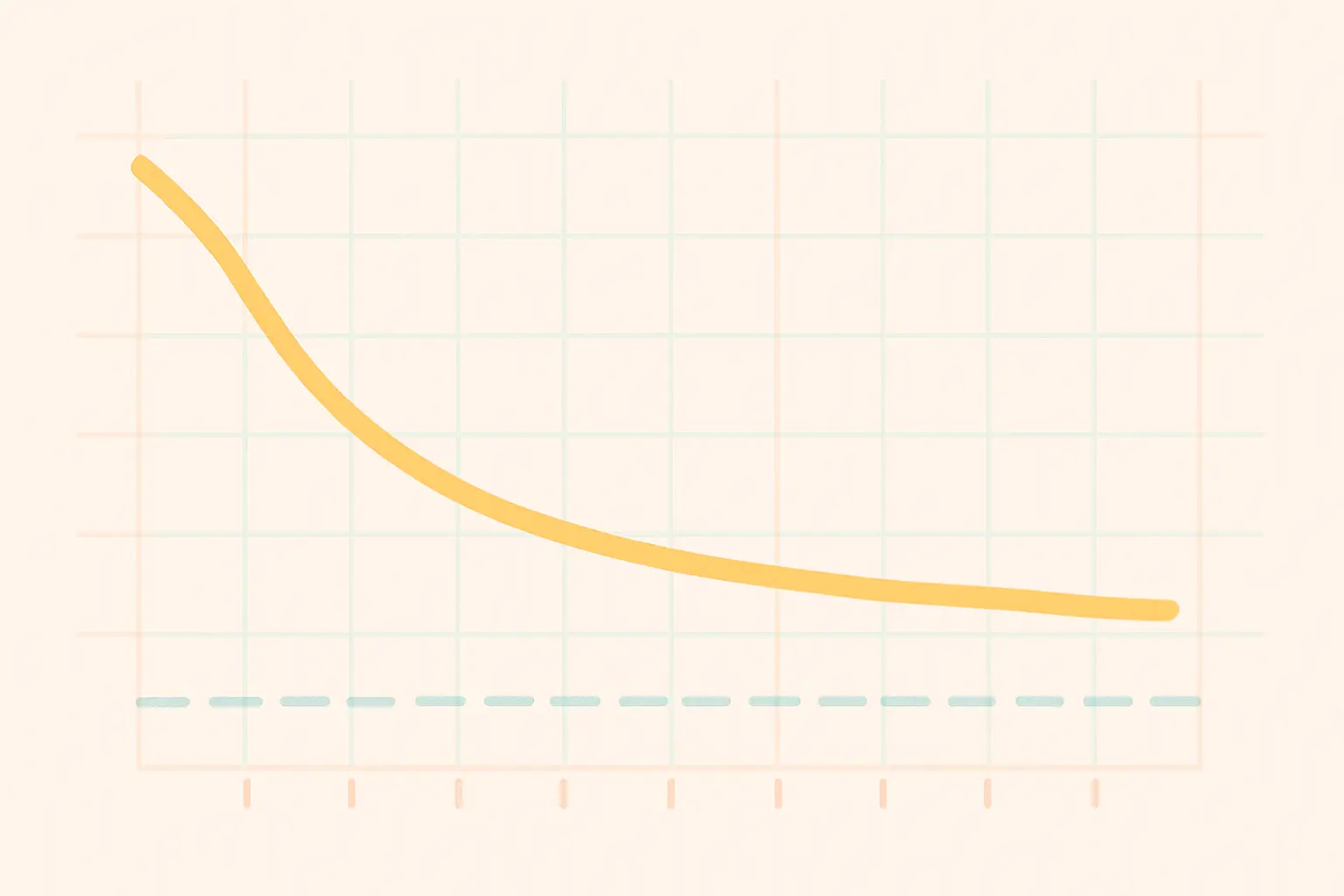
Every cancer type on this list carries lower risk the longer someone stays smoke-free, though the pace and the ceiling differ by site. For several cancers — lung cancer included — risk declines steadily over years without ever fully returning to a never-smoker’s baseline, especially for people who smoked heavily or for a long time before quitting. That does not diminish the value of quitting; it simply means the earlier the quit happens, the more of the excess risk never accumulates in the first place. The life expectancy after quitting by age data and the lung-healing timeline both cover the recovery side of this in more detail, and the disease risk calculator lets you see how your own risk profile changes if you quit today rather than next year.
Cancer risk is also one of the clearest illustrations of why even light, non-daily smoking is not risk-free — several of these cancer mechanisms respond to cumulative lifetime chemical exposure rather than a clean daily threshold, so “just a few a day” still adds to the same running total. The same logic applies in reverse for someone newly smoke-free: there is no single day when accumulated risk resets to zero, but every additional smoke-free year measurably reduces it further, which is part of why the smoking cessation statistics for 2026 track improving population health outcomes even among people who quit relatively late in life.
Lung Cancer Screening: Who Qualifies
Because lung cancer is both the most strongly linked and the deadliest of these cancers, it is the only one on the list with a formal screening program aimed specifically at people who smoke or used to. The US Preventive Services Task Force recommends annual screening with low-dose computed tomography (LDCT) for adults who meet all three of these criteria:
- Aged 50 to 80 years
- A 20 pack-year smoking history (for example, one pack a day for 20 years, or two packs a day for 10)
- Currently smoking, or quit within the past 15 years
The USPSTF gives this a grade B recommendation, and advises stopping screening once a person has not smoked for 15 years, or develops a health problem that substantially limits life expectancy or the ability to have curative lung surgery. Two practical implications follow. First, quitting does not immediately remove you from the screening window — the 15-year clock is precisely an acknowledgment that risk persists after the last cigarette. Second, if you smoke or recently quit and you are over 50, this is a specific, concrete thing to raise with a doctor rather than a general worry to carry around.
Secondhand Smoke and Cancer
Secondhand smoke causes lung cancer in people who have never smoked a cigarette themselves. The CDC reports that in the United States, more than 7,300 people die each year from lung cancer caused by secondhand smoke — a reminder that the cancer risk from smoking does not stop at the smoker. Set against the American Cancer Society’s finding that about 80% of lung cancer deaths are due to smoking, that leaves a comparatively small share of lung cancer attributable to causes unrelated to tobacco smoke in any form.
Frequently Asked Questions
What cancers does smoking cause?
The CDC names at least 12 cancer sites caused by cigarette smoking: bladder, blood (acute myeloid leukemia), cervix, colon and rectum, esophagus, kidney and renal pelvis, larynx, liver, lung/bronchus/trachea, mouth and throat, pancreas, and stomach. The CDC adds that men with prostate cancer who smoke may be more likely to die from it (CDC).
What percentage of cancer deaths are caused by smoking?
Cigarette smoking causes about one out of every three cancer deaths in the United States, according to the CDC. The American Cancer Society separately estimates smoking causes about 20% of all cancers and about 30% of all cancer deaths. In absolute terms the CDC attributes 163,700 US cancer deaths a year to smoking.
How much does smoking increase lung cancer risk?
People who smoke increase their risk of developing lung cancer by about 25 times that of people who don’t smoke, according to the CDC. About 80% of lung cancers, and about 80% of lung cancer deaths, are due to smoking, according to the American Cancer Society.
Which cancers do people not usually associate with smoking?
Bladder cancer, kidney cancer, pancreatic cancer, cervical cancer, and acute myeloid leukemia are all caused by smoking according to the CDC, even though public awareness tends to focus almost entirely on lung cancer. Chemicals from smoke enter the bloodstream and are filtered or processed by organs far from the lungs.
Who should get screened for lung cancer?
The US Preventive Services Task Force recommends annual low-dose CT screening for adults aged 50 to 80 with a 20 pack-year smoking history who currently smoke or quit within the past 15 years — a grade B recommendation. Screening should stop after 15 smoke-free years, or if a health problem substantially limits life expectancy (USPSTF).
How much more likely are smokers to die of lung cancer?
CDC data shows men who smoke increase their risk of dying from cancer of the trachea, lung and bronchus by more than 23 times, and women by more than 12 times, compared with people who have never smoked. For bronchitis and emphysema the multipliers are 17 times for men and 12 times for women (CDC).
Can secondhand smoke cause cancer too?
Yes. The CDC reports that in the United States, more than 7,300 people die each year from lung cancer caused by secondhand smoke — people who never smoked themselves. There is no established safe level of secondhand smoke exposure.
Does cancer risk fall after you quit smoking?
Yes, for every cancer type linked to smoking. Risk generally falls the longer someone stays smoke-free, though for several cancer types it does not fully return to a never-smoker’s baseline even after many years — which is why lung cancer screening guidelines keep former smokers in the eligible group for 15 years after their last cigarette.
See Your Own Cancer Risk Fall in Real Time
iQuit’s disease-risk insights cover 11 conditions, showing your personal risk reduction the moment you quit — alongside craving support built for the exact moment you need it. iQuit is free on Google Play and the App Store.