
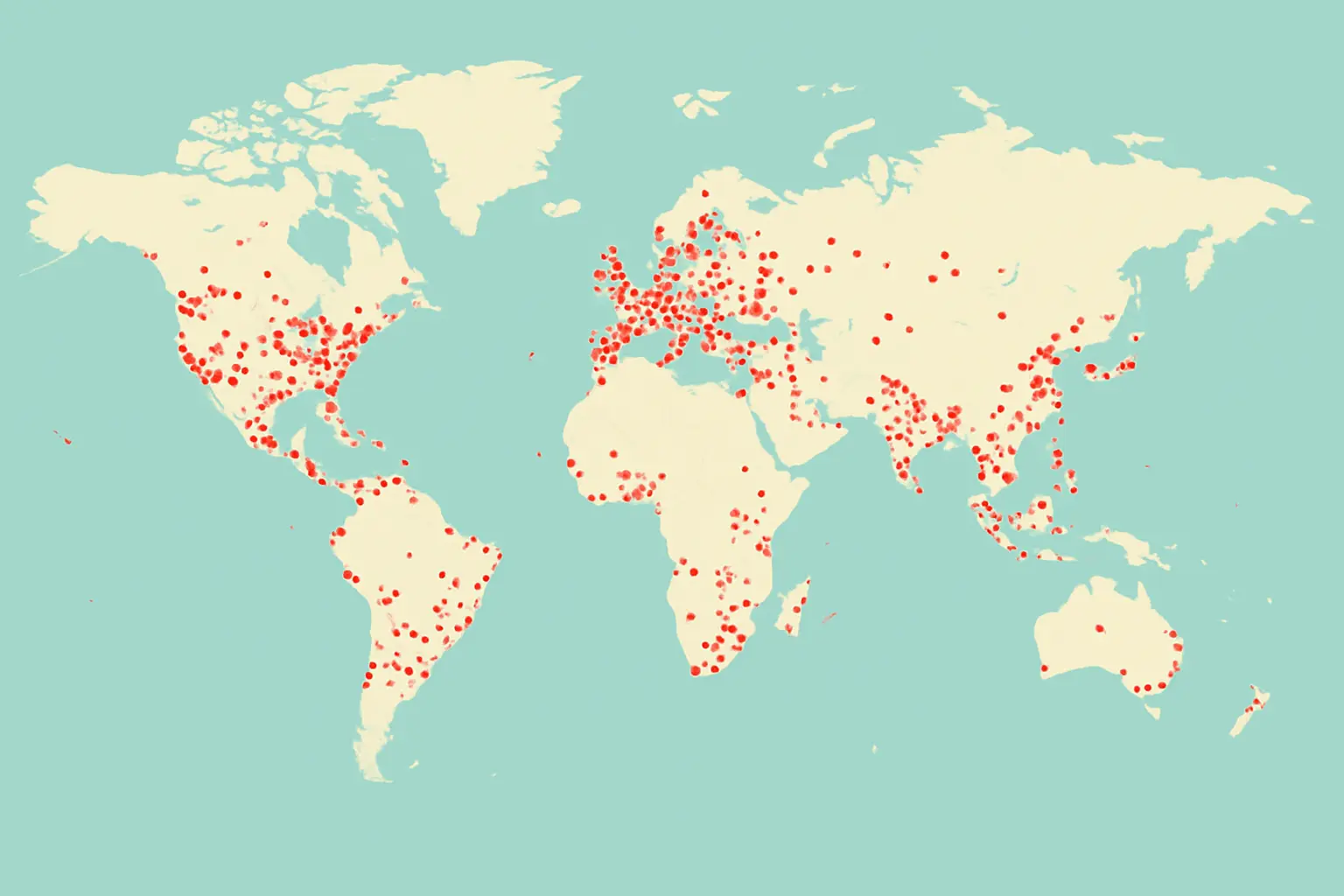
Roughly 7 million people die from smoking each year worldwide, according to the World Health Organization — and that headline total already includes the more than 1.6 million non-smokers killed by secondhand smoke. In the United States alone, tobacco kills more than 480,000 people annually. If you are trying to understand the real scale of harm behind a habit that feels ordinary in the moment, the sourced numbers below — from the World Health Organization, the CDC, and UK health bodies — put a precise size on it.
How Many People Die From Smoking Each Year, Worldwide
The World Health Organization’s tobacco fact sheet (updated 26 June 2026, drawing on Global Burden of Disease 2023 data) states that tobacco kills more than 7 million people each year, including over 1.6 million non-smokers who are exposed to second-hand smoke. The secondhand-smoke deaths are part of that 7 million total, not an addition to it. That works out to roughly one death every 4–5 seconds, around the clock, every day of the year.
No single country carries this burden evenly. Population size, historical smoking rates, and how recently a country adopted strong tobacco control policy all shape the national count. The smoking cessation statistics for 2026 show which countries have brought prevalence down fastest — and, generally, mortality follows prevalence with a lag of two to three decades, because most tobacco deaths occur in people who have smoked for many years.
The CDC’s own Tips From Former Smokers campaign puts a human face on the figures above.
US Deaths by Cause: Cancer, Cardiovascular Disease, and COPD
In the United States, the CDC attributes 480,317 deaths a year to cigarette smoking, including secondhand smoke exposure — split 278,544 among men and 201,773 among women. The CDC’s cause-of-death breakdown (annual averages for 2005–2009, published in the 2014 Surgeon General’s Report) shows the harm is concentrated in three disease groups:
| Cause of death | Annual deaths |
|---|---|
| Cancer (all types) | 163,700 (127,700 lung, bronchus and trachea; 36,000 other cancers) |
| Cardiovascular and metabolic disease | 160,000 (including 99,300 ischemic heart disease) |
| Respiratory disease | 113,100 (100,600 COPD; 12,500 pneumonia, influenza and tuberculosis) |
| Secondhand smoke (nonsmokers) | 41,284 (33,951 heart disease; 7,333 lung cancer) |

Lung cancer alone accounts for more smoking-attributable deaths than any other single condition — 127,700 a year, or more than a quarter of the entire US total — which is why the smoking and cancer statistics for 2026, the per-cancer-type breakdown in what cancers does smoking cause, and the heart-specific data in the smoking and heart attack risk statistics are among the most-searched follow-up questions after this one. The CDC also reports that life expectancy for smokers is at least 10 years shorter than for nonsmokers.
None of these three disease groups act alone. A smoker who develops COPD is also carrying elevated cardiovascular risk; someone recovering from a smoking-related heart event has, on average, still not cleared their elevated cancer risk. That is part of why the raw death count understates the true burden — behind every fatal case sits a much larger number of people living with reduced lung function, cardiovascular damage, and cancer risk that has not yet turned fatal, but that shortens both lifespan and healthy years.
UK, Canada, Australia, and Ireland
In England, NHS England’s most recent detailed analysis (cited by Action on Smoking and Health) estimates 74,600 deaths attributable to smoking in England in 2019 — a figure ASH pairs with a wider warning that around half of all lifelong smokers will die prematurely, and that people who smoke all their lives die on average 10 years younger than non-smokers.
ASH puts the global toll slightly differently from the WHO: around 7.5 million deaths a year, of which roughly 5.8 million come from direct tobacco use and around 1.7 million from secondhand smoke exposure. The gap between that and the WHO’s “more than 7 million” is a useful reminder that every one of these totals is a modeled estimate built from disease-specific risk data, not an exact head count — different modeling choices move the number by hundreds of thousands without the underlying harm changing at all.
Canada, Australia, and Ireland do not publish directly comparable annual counts in the same format, but each country’s national health agency tracks tobacco-attributable mortality in the tens of thousands per year for Canada and Australia, and in the thousands per year for the smaller population of Ireland — broadly consistent with the “roughly half of lifelong smokers” pattern documented in the UK and US data above. Readers in those countries should check their national statistics agency for the current official estimate rather than relying on a single cross-country figure, since methodologies differ.
Secondhand Smoke Deaths
The WHO estimates secondhand smoke kills more than 1.6 million people prematurely every year worldwide — people who never chose to smoke themselves. In the US, the CDC attributes an estimated 41,284 deaths a year among nonsmoking adults to secondhand exposure (7,333 from lung cancer, 33,951 from heart disease), plus roughly 400 deaths a year among infants. Secondhand smoke is one of the reasons quitting protects more than just the smoker — it removes a measurable, ongoing risk to everyone who shares a home, car, or workplace with them.
ASH notes the same mechanism at an individual level: exposure to other people’s smoke raises a non-smoker’s lung cancer risk by 20–30% and their coronary heart disease risk by 25–35%. There is no established safe level of exposure, which is why smoke-free home and car rules do more for the people around a smoker than any amount of opening a window.
What the Number Means for One Smoker
Population totals can feel abstract. The individual-level version of the same data is more concrete: the CDC reports that the overall rate of death from any cause among current smokers is about three times higher than among similar people who never smoked — a finding from Jha and colleagues in the New England Journal of Medicine (2013), which put the hazard ratio at 3.0 for women and 2.8 for men aged 25 to 79. Life expectancy is shortened by at least a decade on average, and — per ASH’s UK data — roughly one in two lifelong smokers dies prematurely. That is not a distant, small-print risk; it is closer to a coin flip, run silently over decades rather than announced at any single moment.
The reason this rarely feels real day-to-day is that the risk is backloaded. Most of a smoker’s added mortality risk accumulates in middle age and beyond, after years of cumulative exposure — which is exactly why the CDC’s quitting data (below) shows such a large protective effect for people who stop earlier rather than later. The 11-minutes-per-cigarette life-regained research translates the same underlying mortality data into a per-cigarette cost, and the life expectancy after quitting, by age breakdown shows how much of that risk reverses once you stop — and how the age you quit changes the size of the payoff.
How the Number Is Calculated
National tobacco-death estimates are not counted directly from death certificates, because a certificate rarely lists “smoking” as the cause — it lists lung cancer, a heart attack, or COPD. Instead, agencies like the CDC use an attributable-fraction method (in the US, this is formalized as the Smoking-Attributable Mortality, Morbidity, and Economic Costs, or SAMMEC, approach): they compare disease death rates between smokers and otherwise-similar never-smokers in large population studies, calculate what share of each disease’s deaths is statistically attributable to smoking, and apply that share to national mortality data.
This matters for how you should read any single headline number. A methodology change, an updated population survey, or a revised set of relative-risk estimates can move a national total up or down without the underlying disease burden actually changing overnight. It is also why global bodies like the WHO periodically revise their worldwide estimate as better country-level data becomes available — the “7 million” figure itself has been refined more than once as surveillance has improved in lower- and middle-income countries, which now carry a growing share of the global burden as tobacco use has declined fastest in wealthier nations. The WHO reports that around 80% of the world’s 1.3 billion tobacco users live in low- and middle-income countries, where the burden of tobacco-related illness and death is heaviest.
How Many Deaths Quitting Prevents, by Quit Age
The CDC’s clearest sourced figure here is stark: quitting smoking before the age of 40 reduces the risk of dying from smoking-related disease by about 90%, compared with continuing to smoke. Quitting later in life still adds back years of life expectancy, just fewer of them — the exact scale by decade of quitting is broken down in the life expectancy after quitting smoking by age guide. What matters for the mortality numbers above is simple: national death tolls are not fixed. They fall, decade over decade, as more people quit earlier — which is exactly what the declining rates in both the UK and US mortality data over the past ten years reflect. If you want a sense of how quickly your own quit-rate odds change by method, the quit smoking success rates by method data is the natural next read, and the state-by-state smoking rate breakdown shows where in the US those national numbers are falling fastest.
Frequently Asked Questions
How many people die from smoking each year worldwide?
More than 7 million people die from tobacco every year, according to the World Health Organization’s tobacco fact sheet (updated June 2026, using Global Burden of Disease 2023 data). That total already includes over 1.6 million non-smokers killed by secondhand smoke exposure — the secondhand deaths are counted within the 7 million, not on top of it (WHO, 2026).
How many Americans die from smoking each year?
480,317 people die each year in the United States from cigarette smoking and secondhand smoke exposure combined, according to the CDC — 278,544 men and 201,773 women. Cancer (163,700 deaths, including 127,700 from lung, bronchus and trachea cancer), cardiovascular and metabolic disease (160,000), and respiratory disease (113,100, including 100,600 from COPD) are the leading causes (CDC, 2005–2009 annual averages).
How many people die from smoking in the UK each year?
NHS England’s most recent detailed estimate, cited by Action on Smoking and Health, puts smoking-attributable deaths in England at 74,600 in 2019. ASH also notes that around half of all lifelong smokers die prematurely, and that people who smoke all their lives die on average 10 years younger than non-smokers (ASH, 2026).
What percentage of smokers die from smoking-related disease?
Around half of all lifelong smokers die prematurely, according to Action on Smoking and Health (ASH UK). Separately, the death rate from any cause among current smokers is about three times that of similar people who never smoked — a hazard ratio of 3.0 in women and 2.8 in men aged 25 to 79 (Jha et al., New England Journal of Medicine, 2013, cited by the CDC).
How many people die from secondhand smoke each year?
The WHO attributes more than 1.6 million premature deaths a year worldwide to secondhand smoke exposure. In the United States specifically, the CDC estimates 41,284 deaths a year among nonsmoking adults (7,333 from lung cancer and 33,951 from heart disease), plus roughly 400 deaths a year among infants exposed to secondhand smoke (CDC).
How is the number of smoking deaths calculated?
Health agencies rarely see “smoking” listed as a cause of death on a certificate. Instead, methods such as the CDC’s Smoking-Attributable Mortality, Morbidity, and Economic Costs (SAMMEC) approach compare death rates for specific diseases between smokers and similar never-smokers in large population studies, then apply the statistically attributable share to national mortality totals (CDC).
Why do the WHO and ASH give different global totals?
Because both are modeled estimates rather than counts. The WHO’s fact sheet reports more than 7 million tobacco deaths a year including over 1.6 million from secondhand smoke, while ASH cites around 7.5 million — roughly 5.8 million from direct use plus about 1.7 million from secondhand exposure. Different source datasets and modeling choices move the headline by several hundred thousand (WHO 2026; ASH 2026).
Does quitting smoking actually lower these death numbers?
Yes. The CDC reports that quitting smoking before the age of 40 reduces the risk of dying from smoking-related disease by about 90%. National mortality totals in both the UK and US have declined over the past decade as more people have quit at younger ages — the death count is a lagging reflection of past smoking rates, not a fixed number (CDC).
Put Your Own Risk on the Table
iQuit’s free disease-risk insights turn population statistics like these into your personal number — showing how your risk for 11 conditions falls the moment you quit, alongside real-time craving support and a 15-milestone health timeline. iQuit is free on Google Play and the App Store.