
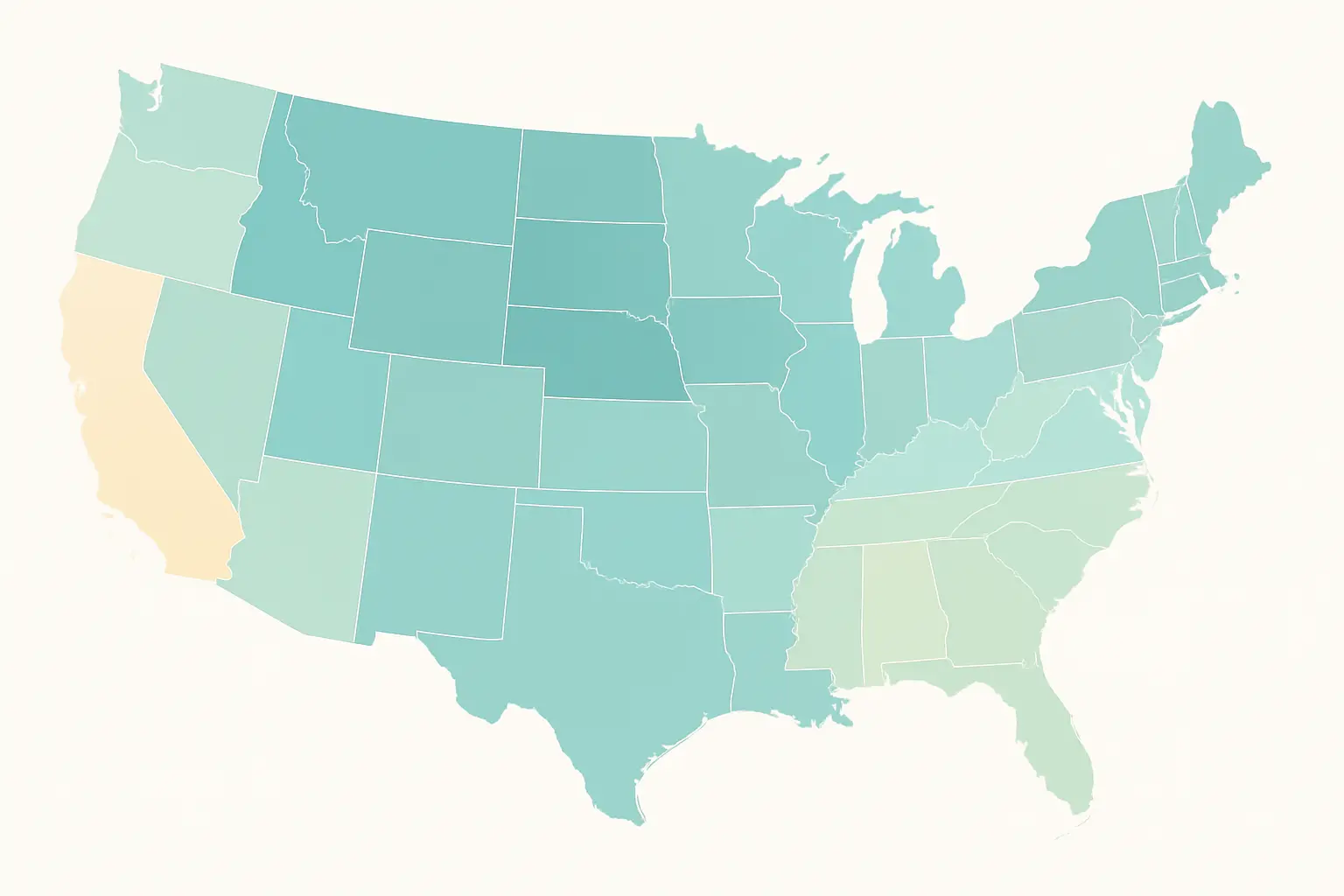
Smoking rates by state in 2026 still range from under 6% of adults to more than 20%, even though the national US smoking rate just hit a record low. The overall trend is unmistakably downward, but the gap between the best-performing states and the worst has barely narrowed — which means where you live still says a lot about how normal, and how hard to escape, smoking is likely to feel.
Smoking Rates by State: Highest and Lowest in 2026
The most current state-level figures come from the CDC’s 2024 Behavioral Risk Factor Surveillance System (BRFSS), compiled in the Campaign for Tobacco-Free Kids’ state cigarette tax and rank fact sheet. They show a gap of roughly 15 percentage points between the highest and lowest states — and, notably, a close relationship between a state’s smoking rate and what a pack costs there.
| State | Adult smoking rate | State tax | Avg. pack price |
|---|---|---|---|
| West Virginia (highest) | 20.8% | $1.20 | $9.19 |
| Kentucky | 17.2% | $1.10 | $9.01 |
| Tennessee | 17.0% (2023 data) | $0.62 | $9.21 |
| Arkansas | 16.5% | $1.15 | — |
| Louisiana | 15.0% | $1.08 | — |
| US average | 9.9% | $2.06 | $10.15 |
| Maryland | 7.8% (3rd lowest) | $5.00 | $13.47 |
| California | 7.6% (2nd lowest) | $2.87 | $11.78 |
| Utah (lowest) | 5.7% | $2.20 | $10.78 |
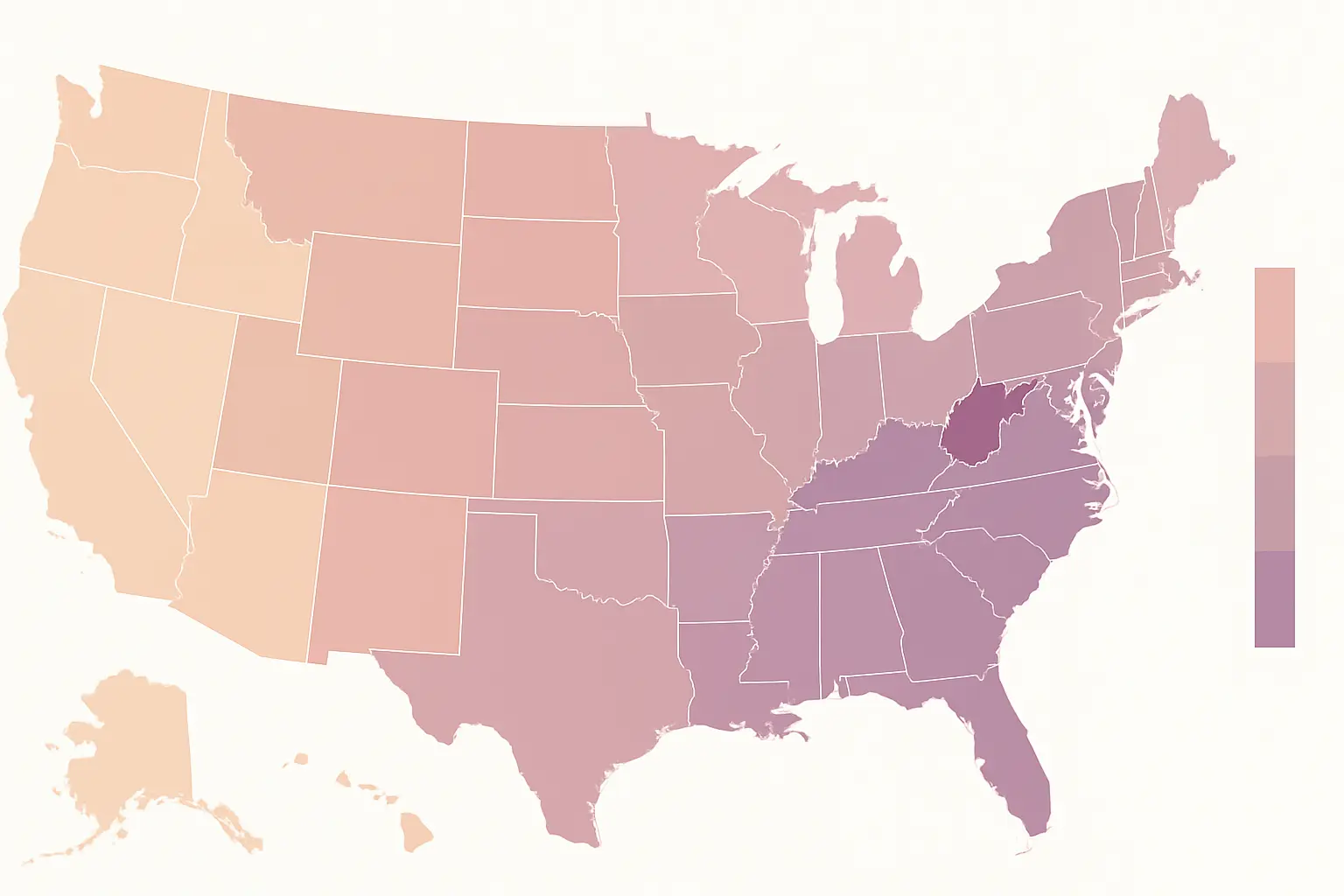
The American Lung Association’s tobacco trends brief publishes the same geography from 2022 BRFSS data, where rates ranged from 6.7% in Utah to 21.0% in West Virginia. Comparing the two years is instructive: the extremes have moved down only slightly, while the ranking has barely changed at all. The broad geographic pattern is consistent year over year — Appalachia and parts of the South show the highest rates, while Western and Northeastern states cluster toward the bottom. The smoking rates by age group data adds another lens on the same underlying picture, since age structure differs meaningfully by state too.
The National Trend: A Record Low
Nationally, the US adult cigarette smoking rate fell to 9.9% in 2024 — the first time it has been under 10% since the CDC’s National Health Interview Survey began — according to a Campaign for Tobacco-Free Kids analysis of the CDC data. Zoom out and the decline is dramatic: the adult smoking rate has fallen by 77% over the past six decades, from a high of 42.4% in 1965.
That is a genuine public health success, and it still leaves more than 25 million US adults smoking cigarettes today. The smoking cessation statistics for 2026 cover the national quit-rate side of this same trend in more depth, and the mortality data behind these numbers shows why every percentage point of decline matters at a population scale.
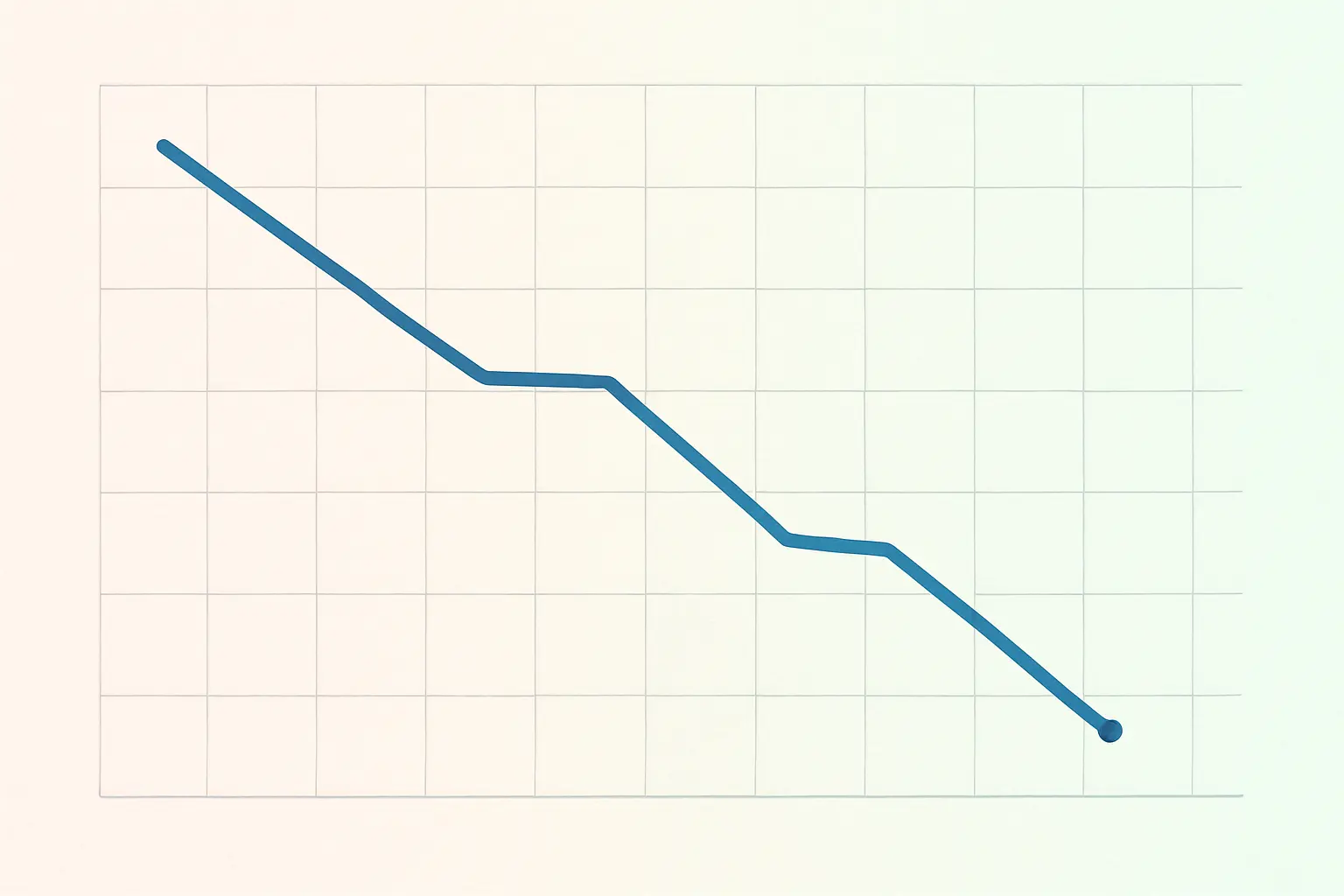
The federal Healthy People 2030 programme sets a target of 6.1% adult cigarette smoking, measured against a 2019 baseline of 14.2%. That target sits below even Utah’s current state-low rate of 5.7% for most of the country — which shows how far the majority of states still have to travel, and why the record-low national headline is a milestone rather than a finish line.
The Ten-Year Trend by Region
Every region of the country has seen its smoking rate fall over the past decade, but not at the same speed. Coastal and Western states that already had lower rates a decade ago have generally continued to pull away from the national average, while several Southern and Appalachian states have seen slower, flatter declines — meaning the gap between the best and worst states has not closed nearly as much as the falling national number might suggest. Youth and young-adult smoking has fallen fastest of all age groups nationally, a trend the teen and young adult smoking statistics cover in detail, and that generational shift is a large part of why some states are declining faster than others: a state with a younger population structure sees its overall rate fall faster as new adult smokers simply fail to replace older ones who quit or age out.
This unevenness is worth sitting with for a moment. A national headline of “record low” can mask the fact that an individual smoker in West Virginia is surrounded by roughly three and a half times as many other smokers as an otherwise-identical person living in Utah — which affects everything from workplace smoking culture to how many people around them are also trying to quit at the same time, for better or worse.
Why West Virginia and Kentucky Stay High
Persistently high smoking rates in Appalachian states are generally attributed to a cluster of overlapping factors rather than any single cause: lower state cigarette taxes than the national average, a long regional history tied to tobacco farming and coal-economy employment, higher poverty rates (which correlate strongly with smoking everywhere, not just in Appalachia), and dense, multigenerational smoking norms that are simply harder to shift than in a state where smoking is already rare and socially unusual.
The tax figures make the first factor concrete. West Virginia charges $1.20 per pack and Kentucky $1.10 — both well under the $2.06 national average — and Tennessee’s 62 cents is the 43rd lowest of 51 jurisdictions. All three have average pack prices around a dollar below the national average. The smoking demographics statistics breakdown shows the same socioeconomic gradient nationally: smoking concentrates wherever income, education, and healthcare access are lowest.
Why Utah Is the Outlier
Utah’s smoking rate is not just low — it is a national outlier, sitting nearly two percentage points below the next-lowest state. The most commonly cited explanation is Utah’s unusually large population of members of The Church of Jesus Christ of Latter-day Saints, whose health code discourages tobacco use, combined with consistently well-funded state tobacco control and cessation programs.
Utah is also the clearest evidence that price is not the only lever that matters. Its $2.20 state cigarette tax is only slightly above the national average, and its $10.78 average pack price is well below Maryland’s $13.47 — yet Utah’s smoking rate is lower than Maryland’s. Culture and community norms can move a state’s smoking rate at least as much as price or policy alone.
State Cigarette Tax vs Smoking Rate
Price is not the whole story, but it is a real part of it. The state-by-state pack price and tax data shows the pattern clearly: the four states with the highest smoking rates in the table above all charge under $1.25 in state excise tax, while Maryland and California — 3rd and 2nd lowest for smoking — charge $5.00 and $2.87. The relationship is not perfectly linear, since Utah’s low rate is driven more by cultural factors than tax alone, and Missouri’s rock-bottom 17-cent tax sits alongside a mid-table 14.7% smoking rate rather than the very highest.
What the data does support consistently is the direction of the effect: states that raise cigarette taxes see measurable drops in both consumption and prevalence over time, even if tax level alone doesn’t fully explain any single state’s ranking. The same price logic scales up to whole countries too, as the true cost of smoking per year by country data shows.
Adult Vaping by State
Vaping adds a second, related picture — and a much patchier data one. National surveys have shown adult e-cigarette use rising gradually over recent years while cigarette smoking has fallen, and the increase has been concentrated among younger adults rather than spread evenly across age groups. State-level adult vaping estimates are collected less consistently than cigarette smoking, so cross-state comparisons should be treated as indicative rather than precise.
The broad geographic pattern that does emerge is a familiar one: adult e-cigarette use tends to run higher in rural and non-metropolitan areas than in large metropolitan ones, and several Northeastern states that already report low cigarette smoking also report comparatively low adult vaping. Secondhand exposure follows the same geography: states with higher adult smoking rates also tend to report higher rates of child secondhand smoke exposure, a pattern covered in more depth in the secondhand smoke statistics for children.
Quitline and Coverage Differences by State
Every US state operates a free telephone quitline (reachable nationwide at 1-800-QUIT-NOW), but the depth of what is behind that number — counseling hours, free nicotine replacement therapy giveaways, and Medicaid cessation coverage — varies considerably by state budget and policy choices. States with the strongest funded tobacco control programs tend to also be the states seeing the fastest declines in smoking prevalence, which is not a coincidence: sustained investment, not a single policy lever, is what moves a state’s numbers over a decade rather than a single year.
The American Lung Association sets out what that support usually looks like in practice.
For an individual smoker, none of this state-level context changes the math of quitting itself — the health and financial payoff of stopping is essentially identical whether you live in West Virginia or Utah. What state data is genuinely useful for is knowing what you’re working against locally: a smoker in a high-prevalence state may need to more deliberately seek out cessation support, since it is less likely to simply be the cultural default around them, whereas a smoker in a low-prevalence state may find quitting easier partly because fewer people around them are smoking in the first place.
Frequently Asked Questions
What state has the highest smoking rate?
West Virginia has the highest adult smoking rate in the US at 20.8%, according to 2024 CDC BRFSS data compiled by the Campaign for Tobacco-Free Kids. Kentucky (17.2%), Tennessee (17.0%, from 2023 data), Arkansas (16.5%) and Louisiana (15.0%) round out the top five.
What state has the lowest smoking rate?
Utah has the lowest adult smoking rate in the US at 5.7%, according to 2024 CDC BRFSS data compiled by the Campaign for Tobacco-Free Kids, followed by California (7.6%) and Maryland (7.8%). Utah’s rate is close to the national Healthy People 2030 target of 6.1%.
What is the national smoking rate in the US in 2026?
The US adult cigarette smoking rate fell to a record low of 9.9% in 2024 — the first time it has been under 10% since the National Health Interview Survey began — down from a high of 42.4% in 1965, a decline of 77% over six decades (CDC, via the Campaign for Tobacco-Free Kids, 2026). More than 25 million US adults still smoke.
Why is smoking so much higher in West Virginia and Kentucky?
Public health researchers generally attribute persistently high smoking rates in Appalachian states to a combination of lower state cigarette taxes (West Virginia charges $1.20 a pack and Kentucky $1.10, against a $2.06 national average), historical ties to tobacco-growing and coal economies, higher poverty rates, and dense multigenerational smoking norms.
Why is Utah’s smoking rate so low?
Utah’s outlier-low smoking rate is widely attributed to its large population of members of The Church of Jesus Christ of Latter-day Saints, whose health code discourages tobacco use, combined with strong state tobacco control programs. Notably, Utah achieves this with a state cigarette tax of $2.20 — only slightly above the national average.
Do cheaper cigarettes mean more smokers?
The correlation is strong but not perfect. The states with the highest smoking rates all charge well below the $2.06 average state excise tax, and their average pack prices sit around a dollar under the $10.15 national average. But Utah’s low rate with a near-average tax shows that culture and cessation programs matter too (Campaign for Tobacco-Free Kids, 2026).
Does adult vaping vary by state too?
Yes, though state-level adult vaping data is collected less consistently than cigarette smoking data, so comparisons are indicative rather than precise. The broad pattern is that adult e-cigarette use runs higher in rural and non-metropolitan areas than in large metros, and several Northeastern states with low cigarette smoking also report comparatively low adult vaping.
Free Quitline Support, Plus 24/7 Coaching in Your Pocket
Wherever you live, your state’s free quitline is a real resource — and iQuit’s AI coach and craving tools cover the other 23 hours a day the phone line isn’t open, at no cost on the free tier. iQuit is free on Google Play and the App Store.