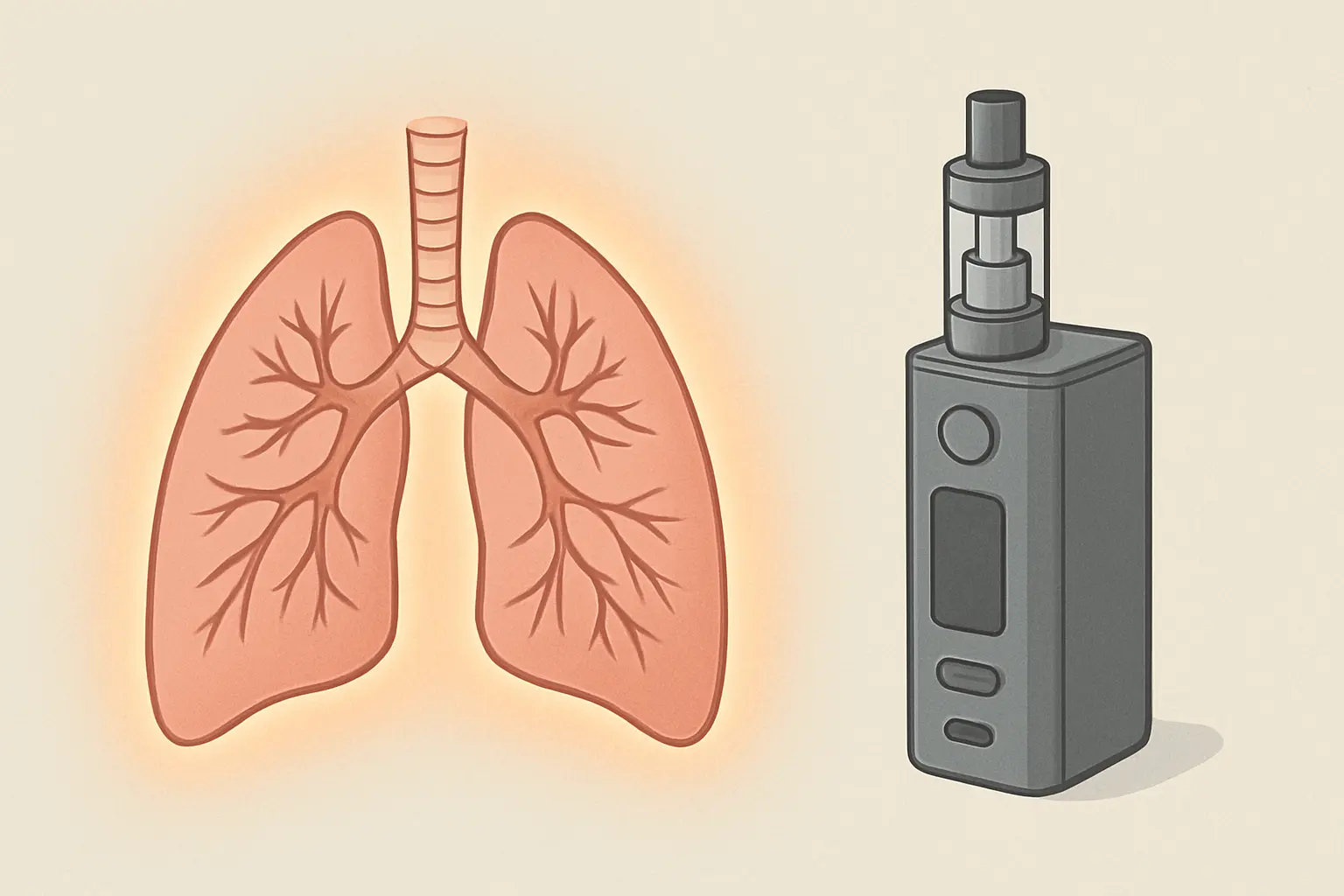
If you’re worried after seeing a scary headline, here’s the direct answer to how many people have died from vaping: the U.S. Centers for Disease Control and Prevention confirmed 68 deaths tied to a specific 2019–2020 outbreak called EVALI, out of 2,807 total hospitalized cases or deaths, before it stopped tracking the outbreak nationally in February 2020. There is no official, continuously updated “vaping death count” running today — and understanding why matters more than the number itself.
What EVALI was and what caused it
EVALI stands for e-cigarette or vaping product use-associated lung injury. It was a distinct outbreak of severe, sometimes fatal lung damage that emerged in the United States in mid-2019, separate from the general long-term health questions around vaping. According to CDC’s archived outbreak page, vitamin E acetate — an additive used to thicken THC oil in illicit vape cartridges — was identified as “strongly linked to the EVALI outbreak,” found in bronchoalveolar lavage (deep lung fluid) samples from 48 of 51 EVALI patients tested, but absent from a healthy comparison group. That is about as close to a smoking gun as outbreak investigations get.
The additive itself wasn’t found in legal, regulated e-liquid; it turned up almost exclusively in cartridges obtained through informal or illicit channels — friends, dealers, or unregulated online sellers — rather than licensed retailers. Vitamin E acetate is harmless when swallowed (it’s used in some foods and skin products), but inhaling it into the lungs is a different matter entirely: it’s thought to interfere with normal lung surfactant function and trigger the kind of acute inflammatory injury seen on EVALI patients’ chest scans.
The confirmed case and death counts
CDC’s final national tally, published as its last update on the outbreak, was explicit:
| Metric | Figure |
|---|---|
| Total hospitalized cases or deaths reported | 2,807 |
| Confirmed deaths | 68 |
| States and territories with reported cases | All 50 states, DC, Puerto Rico, U.S. Virgin Islands |
| States with confirmed deaths | 29 states plus DC |
An earlier, smaller CDC laboratory study — analyzing lung fluid from just 29 patients across 10 states between August and October 2019 to identify the cause — separately reported that “two of the patients died” within that specific 29-person research sample. That figure is sometimes confused with the national total; it is not the same number. The national, final death toll CDC confirmed for the whole outbreak was 68, not 2. When you see wildly different “vaping death” numbers in different articles, this kind of mismatch between a small lab sub-study and the full national count is often why.
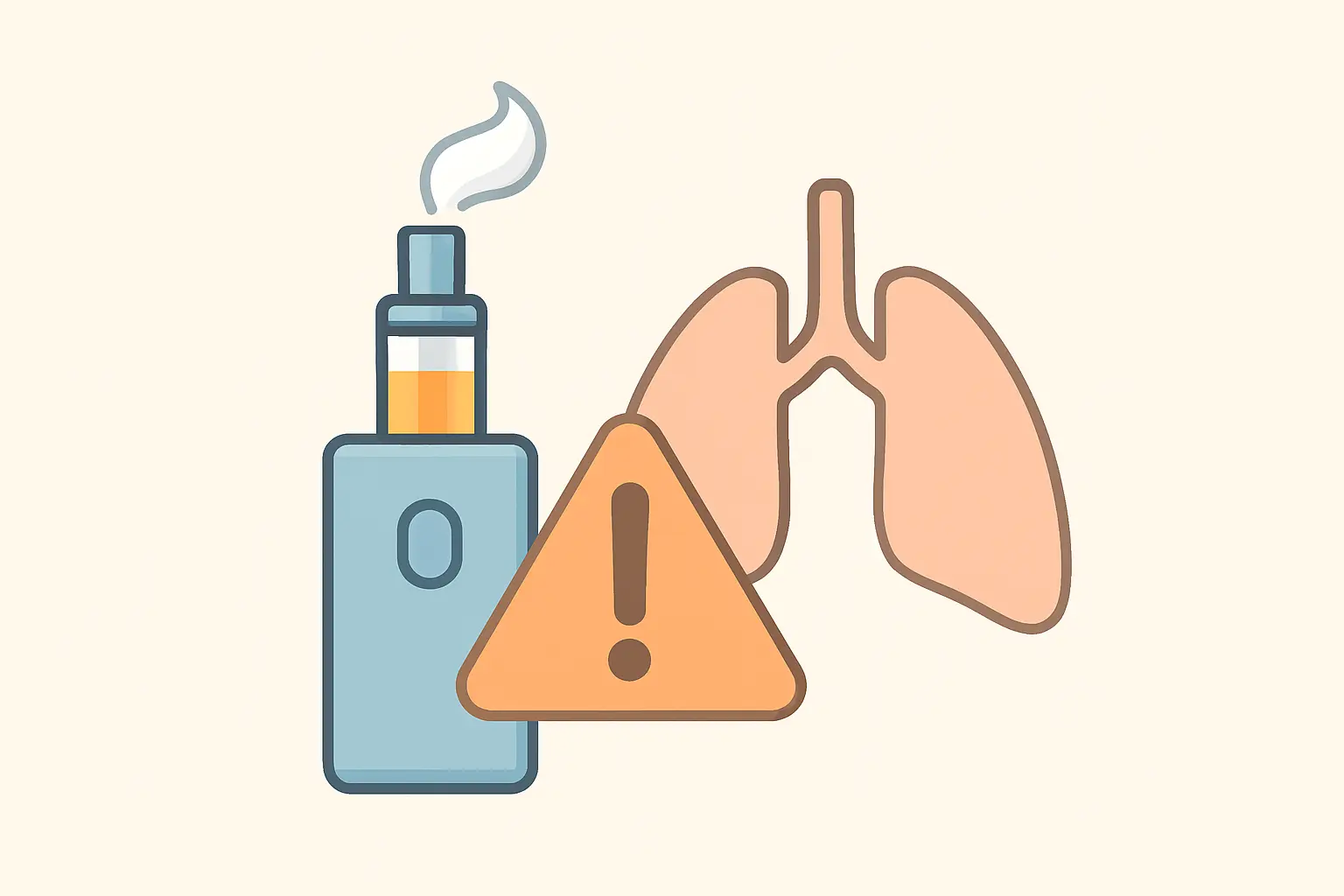
Mayo Clinic explains the toxic-chemical mechanism researchers identified behind vaping-associated lung injury.
Who was affected
The clearest demographic snapshot comes from CDC’s October 2019 laboratory sub-study of 29 EVALI patients whose lung fluid was analyzed in detail: 72% were male, with a median age of 23 (ranging from 16 to 67). That snapshot lines up with wider reporting at the time that EVALI disproportionately affected teenagers and young adults, the age group most likely to be using vape products obtained outside licensed retail channels. It’s worth being precise about scope here: those percentages describe the 29-person laboratory sample used to identify vitamin E acetate as the cause, not a formally published demographic breakdown of all 2,807 national cases, though CDC’s broader outbreak reporting at the time described a similar pattern of young, mostly male patients.
What happened after the cause was identified
Cases had already been declining sharply since a September 2019 peak by the time CDC published its final update, which noted “continued declines in new EVALI cases since September 2019.” CDC’s own framing was that the identification of vitamin E acetate as the primary cause — combined with public warnings, product reformulation pressure, and law enforcement action against illicit cartridge sellers — was what allowed it to close out national tracking in February 2020. In effect, once investigators traced the outbreak to a specific contaminant in a specific, mostly illegal supply chain, the crisis that had made headlines resolved faster than it began.
No U.S. federal agency has published an updated national EVALI case or death count since that February 2020 report. That’s a genuinely different situation from cigarette mortality, which is tracked continuously through routine vital-statistics systems rather than through an outbreak-response investigation that wound down once its job was done.
Nicotine vaping vs. illicit THC cartridges
This is the distinction that gets lost in most “vaping deaths” headlines. EVALI was concentrated in people using THC-containing vape products, and the CDC’s October 2019 report found that 86% of 867 EVALI patients analyzed had reported using THC-containing products in the three months before symptom onset — usually obtained informally, not from licensed dispensaries or vape shops. Legal, nicotine-only e-cigarettes sold through regulated retail channels were not the products driving the outbreak.
That doesn’t mean nicotine vapes are risk-free — they aren’t, and no major health authority claims otherwise. It means EVALI specifically, the acute lung-injury outbreak behind most “vaping deaths” headlines, was overwhelmingly a story about a contaminant in an unregulated product supply chain, not a general property of nicotine vaping devices. If you vape nicotine products, see our guide on the UK’s disposable vape ban for how regulation is now targeting the products themselves, and our look at whether nicotine-free 0mg vapes help you quit if you’re trying to step down.
What long-term studies can and can’t say yet
E-cigarettes have existed as a mass-market product for roughly two decades — nowhere near long enough to generate the multi-decade cohort data that underpins what we know about cigarette smoking’s cancer and cardiovascular risks. EVALI is well-characterized because it was an acute outbreak with a traceable cause; the slower, cumulative long-term effects of routine nicotine vaping are a separate and still-developing area of research. Any claim of “we now know vaping is safe” or “we now know vaping is as deadly as smoking” long-term is overstating what the evidence currently supports either way.
This is also why you’ll see EVALI cited so often in vaping debates: it’s one of the few vaping-related outcomes with a clear, closed, government-confirmed case count and cause. Most other vaping health questions — long-term lung function, cardiovascular effects, cancer risk over decades of use — don’t have an equivalent “final number” yet, and won’t for years, simply because the exposed population hasn’t been vaping long enough for those outcomes to fully play out and be studied.
Vaping deaths vs. smoking deaths in perspective
For scale, the World Health Organization states that “tobacco kills more than 7 million people each year, including over 1.6 million non-smokers who are exposed to second-hand smoke” — a continuous, well-established annual toll from combustible cigarettes worldwide. Our dedicated article on how many people die from smoking each year breaks that figure down further. EVALI’s entire confirmed toll, by contrast, was 68 deaths over roughly a year, tied to a specific contaminant that has since been identified and largely addressed through enforcement and public warning campaigns. The two numbers aren’t measuring the same kind of risk, and treating them as directly comparable — “vaping is basically as deadly as smoking” or “vaping killed almost nobody” — misreads both data sets. For the fuller data picture on vaping itself, see our vaping statistics roundup and our comparison of whether vaping is worse than smoking.
How to quit vaping if this worries you
If reading about EVALI has you rethinking vaping altogether — whether nicotine or THC — that instinct is reasonable even outside the specific outbreak, given how much is still unknown about long-term vaping risk. Quitting a vaping habit shares a lot with quitting cigarettes: cravings, routines built around the device, and a nicotine dependence cycle if you vape nicotine. Where it differs is the hand-to-mouth ritual and the flavor and sensory side of vaping, which can make cravings feel more automatic and situational than a cigarette habit.
The iQuit app supports either quit journey with craving logging that lets you record your specific vaping triggers, SOS breathing and grounding tools for the moments an urge to vape hits hard, a virtual cigarette feature for the hand-to-mouth habit itself, and a day counter that tracks your progress regardless of which product you’re quitting. It doesn’t diagnose or treat any EVALI-related symptoms — if you have breathing problems, chest pain, or think you may have been exposed to an illicit THC cartridge, that’s a reason to see a doctor, not just an app.
Frequently Asked Questions
How many people have died from vaping?
CDC confirmed 68 deaths linked to EVALI across 29 states and DC, out of 2,807 total hospitalized cases or deaths, as of February 18, 2020, when CDC stopped national data collection. There is no official running death count since then (CDC, archived EVALI update, 2020).
Is EVALI still happening in 2026?
CDC stopped collecting national EVALI case and death data in February 2020 after identifying vitamin E acetate as the primary cause and after cases declined sharply. No national case or death count has replaced it (CDC continues to watch emergency-department visit trends, not confirmed case counts), so there is no official 2026 EVALI case count (CDC archived pages, 2020).
What actually caused EVALI?
CDC identified vitamin E acetate, an additive found mainly in illicit, informally sourced THC-containing vape cartridges, as the primary cause. It was found in the lung fluid of 48 of 51 EVALI patients tested but not in a healthy comparison group (CDC, archived EVALI page, 2020).
Were EVALI deaths caused by nicotine vapes or THC vapes?
The large majority of EVALI patients had used THC-containing products, often from informal or illicit sources: 86% of 867 patients analyzed in an October 2019 CDC report. Legal, regulated nicotine-only vapes were not the primary driver identified (CDC MMWR, 2019).
Who was most affected by EVALI?
In CDC’s detailed 29-patient laboratory sub-study, 72% were male with a median age of 23 (range 16–67), consistent with wider reporting that EVALI disproportionately affected teenagers and young adults using informally sourced THC vape products (CDC MMWR, 2019).
How do vaping deaths compare to smoking deaths?
Tobacco smoking kills more than 7 million people a year worldwide, including secondhand smoke deaths, according to the World Health Organization. EVALI’s confirmed toll was 68 deaths total, over a period of months, from a specific contaminant now identified and largely addressed (WHO tobacco fact sheet; CDC EVALI data).
Are nicotine vapes safe long-term?
No health authority calls nicotine vaping safe long-term; it has not existed long enough for multi-decade outcome data to exist, unlike cigarettes. Public health agencies generally treat vaping as lower-risk than smoking for adult smokers who switch completely, while not recommending it for non-smokers.
Ready to stop vaping for good?
Whether it’s the EVALI headlines or just wanting your lungs back, iQuit gives you a free day counter, craving logging with your specific triggers, and SOS breathing and craving-surfing tools for the moment an urge to vape hits.
Download iQuit Free on Google Play
Download on the App Store