If you are tapering and wondering do nicotine free vapes help you quit, the honest answer separates two things people bundle together. A 0 mg vape can carry the ritual of vaping. It cannot carry the nicotine your body is asking for, and the strongest trial evidence available in 2026 shows it is the weaker arm every time it is tested head to head against a nicotine vape.
What a 0 mg vape actually is
A nicotine-free vape heats the same base liquid as any other vape, usually propylene glycol, vegetable glycerin and flavorings, but with no nicotine added. Everything else is meant to be identical: the draw, the vapor, the flavor, the fidget of reaching for a device.
What is missing is the part that treats withdrawal. The NHS describes an e-cigarette as a device for inhaling nicotine in a “vapour,” and its guidance is built around choosing the right strength of nicotine for how much you smoke. Strip the nicotine out and you have kept the delivery system and thrown away the medicine.
One regulatory point surprises people. In Great Britain the single-use vape ban that took effect on 1 June 2025 applies, in the government’s words, to “all vapes whether or not they contain nicotine.” Buying a disposable 0 mg device is not a loophole. If you want the wider picture, we cover the UK disposable vape ban separately.
What the 2026 evidence says
This is the part that settles the question. Cochrane runs a living systematic review of e-cigarettes for smoking cessation, updated as new trials land. The version published on 26 August 2026 pooled 80 randomized controlled trials covering 29,861 participants, with searches run to 1 January 2026.
Non-nicotine vapes appear in that review in one specific role: they are the placebo. Researchers hand one group a nicotine vape and the other an identical-looking 0 mg device, then count who is still not smoking six months later. Across seven trials and 1,918 participants, nicotine vapes probably produced more quitters, with a risk ratio of 1.34 (95% CI 1.05 to 1.69). Cochrane rates that moderate certainty and puts it at roughly two extra quitters per 100 people.
| Comparison | Result at 6+ months | Trials / participants | Certainty |
|---|---|---|---|
| Nicotine vape vs nicotine-free (0 mg) vape | RR 1.34 (1.05 to 1.69), about 2 more quitters per 100 | 7 / 1,918 | Moderate |
| Nicotine vape vs nicotine replacement therapy | RR 1.61 (1.23 to 2.12), about 4 more quitters per 100 | 11 / 4,114 | High |
| Nicotine vape vs behavioral support only or no support | RR 1.75 (1.39 to 2.20) | 11 / 7,214 | Low |
| Side effects, nicotine vs nicotine-free vape | RR 1.01 (0.95 to 1.08), little to no difference | 6 / 909 | Moderate |
The gap nobody fills
Notice what the table does not contain: a trial of 0 mg vaping against no vaping at all. Because non-nicotine devices are used as the control condition, the review tells us they are worse than nicotine vapes, but it never tests whether they beat quitting with nothing. So the fair summary is that 0 mg vaping has no positive evidence base of its own as a cessation aid, rather than that it has been proven useless.
The one trial that points the other way
Honesty cuts both ways. A double-blind randomized trial published in Current Oncology in 2022 followed 210 smokers across three arms: nicotine vape plus support, nicotine-free vape plus support, and support alone. The nicotine group cut cigarettes quickly and then went back to smoking more than the other two arms by one year. It is a single small study measuring reduction rather than verified abstinence, and the pooled Cochrane result runs the other way, but it is worth knowing about.
Regulators have not moved on any of this. The US Centers for Disease Control and Prevention states plainly that no e-cigarette has been approved by the FDA as a smoking cessation aid, nicotine or otherwise.
NHS services in England talk about vaping as a nicotine tool, not a flavor tool. This short explainer from an NHS trust walks through how a switch is meant to work.
The two jobs you are asking it to do
A cigarette does two separate things, and they come apart the moment you try to replace it. One is chemical: nicotine reaches the brain within seconds and quietens withdrawal. The other is behavioral: a repeated hand-to-mouth action attached to coffee, driving, stress and the end of a shift. Our explainer on how nicotine dependence actually forms goes into the first half in detail.
A 0 mg vape is a very good answer to the second job and no answer at all to the first. That is why the same device feels brilliant to one person and useless to another. If most of what you miss is something to do with your hands at 9pm, it can work. If what you feel at 9pm is irritability, poor concentration and a pull you cannot argue with, you are in withdrawal and a flavored cloud will not touch it.
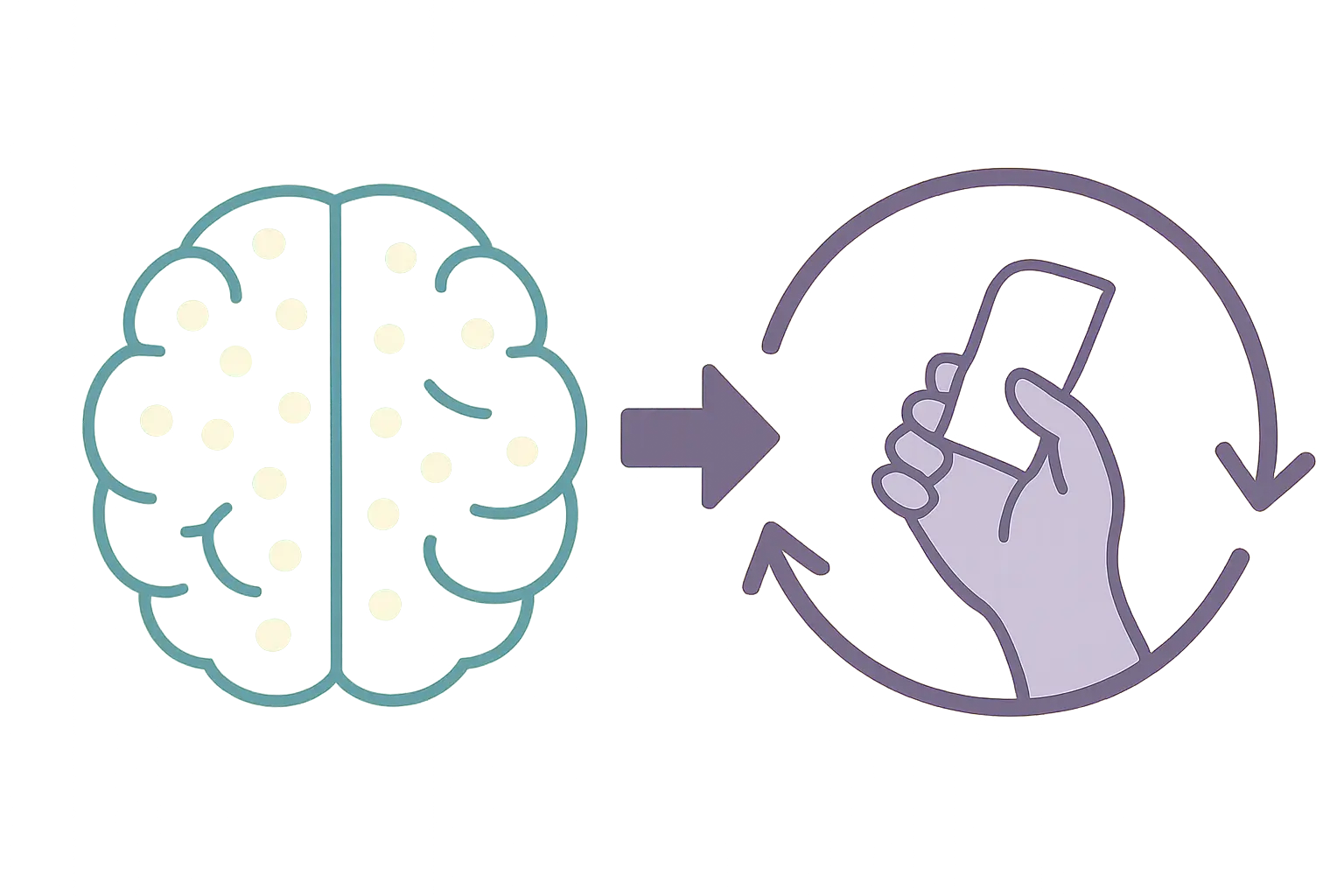
Telling the two apart is not guesswork. Log every craving with its trigger and intensity for a week and the pattern declares itself: clustered around specific cues and fading in minutes is ritual, spread through the day and building is withdrawal. iQuit’s craving log records both, so you can see which problem you are solving before you buy anything.
Who 0 mg genuinely suits
There is a narrow group for whom nicotine-free devices make sense, and a much larger group who reach for them too early.
- It can suit someone at the end of a taper, already down to the lowest nicotine strength they can tolerate, who wants a short dated bridge before stopping the device.
- It can suit a light or social smoker whose smoking was situational rather than clock-driven, where the pull really is the moment and not the molecule.
- It rarely suits anyone smoking within 30 minutes of waking, or above roughly half a pack a day. Those are markers of real dependence, and starting a quit attempt on 0 mg usually ends back at cigarettes.
- It does not suit anyone who has never smoked. Every authority quoted here agrees: non-smokers and under-18s should not vape at all.
If you are not sure which group you are in, our guide to picking a method that matches your dependence walks through the same decision without any product attached.
The risks still on the table
Removing nicotine removes the addictive ingredient. It does not turn the device into a glass of water, and two findings are worth knowing before you assume 0 mg means zero anything.
Labels are not always accurate. An analysis published in the Medical Journal of Australia in January 2019 tested ten e-liquids sold as nicotine-free. Nicotine turned up in six of them, at levels in three samples (1.3, 1.4 and 2.9 mg/mL) comparable with commercially sold low-dose nicotine liquids. The same analysis found 2-chlorophenol, classed as acutely toxic, in all ten. That was one small market survey seven years ago, and regulation has tightened since, but it is a reason to buy from a regulated retailer rather than a marketplace listing.
The base liquid is not inert. A 2025 systematic review in Biomedicines pulled together 21 studies on nicotine-free vaping and reported that aerosols can trigger inflammatory responses through the base ingredients themselves, the propylene glycol, glycerin and flavorings. Almost all of that work is laboratory and animal research, and the authors say human evidence is thin, so treat it as caution rather than alarm.
The comparison that matters most is still the right one. Every authority quoted here holds that vaping, with or without nicotine, is far less harmful than continuing to smoke. Nothing above is an argument for going back to cigarettes.
0 mg vapes versus NRT for a taper
If the goal is to come off nicotine, licensed nicotine replacement therapy is the option with regulatory approval behind it and a dose you can actually plan. A 0 mg vape is the option with the familiar ritual. They are not interchangeable.
| 0 mg vape | Licensed NRT | |
|---|---|---|
| Treats withdrawal | No nicotine, so no | Yes, that is its purpose |
| Keeps the hand-to-mouth ritual | Yes, closely | Inhalator comes closest; patches not at all |
| Approved as a quit aid | No, in any major market | Yes, licensed medicine |
| Dose you can plan and reduce | Nothing to reduce | Strengths set out on the label |
| Pharmacist can advise on it | Not a medicine | Yes |
In practice the two are often combined rather than chosen between: a patch for background coverage and a 0 mg device for the cue you have not broken yet. Our comparison of the licensed NRT options and the breakdown of which NRT format suits your craving pattern cover picking a starting strength. Rules differ by country, and readers down under should note how prescription vaping in Australia changes the options.
How to step down without stalling
The NHS publishes the step-down method it actually recommends, and 0 mg is not the center of it. Its guide to quitting vaping gives three levers: lower the nicotine strength in your e-liquid gradually, lengthen the gap between sessions, and create vape-free places and times that you slowly expand.

The most useful signal there is the stall warning: if you find yourself vaping more after a reduction, you cut too fast. Compensating by puffing harder or more often is how people spend six months on a taper that never ends. A workable rhythm looks like this.
- Drop one strength at a time and hold it for at least two weeks before the next cut.
- Count sessions, not days. If your daily count climbs after a reduction, step back up for a week and try again.
- Add time before you add flavor. Stretching the gap between sessions does more than swapping liquids.
- Set a date for the 0 mg stage before you start it. Two to four weeks is a bridge; six months is a new habit.
- Consider skipping the 0 mg stage. The NHS also describes a one-step option: ask a pharmacist about switching to an NRT product, noting that Nicorette QuickMist is currently the only NRT approved in the UK specifically for quitting vaping.
When to put the device down entirely
The NHS is clear that the endpoint of a vaping quit is no vaping at all. A 0 mg device makes that ending easy to postpone, because nothing forces the issue. There is no withdrawal to push through and no dose left to cut, so the habit can quietly become permanent.
Three signals say it is time. You reach for it without noticing. You have replaced the device twice since your last cigarette. Or the date you set for the bridge has passed and you renegotiated it. None of those mean the quit failed. They mean the device has finished its job and is now the job.
One caveat worth keeping in your head on a bad week: the NHS says that if you have used a vape to stop smoking, going back to vaping for a while is far better than going back to cigarettes.
Nicotine-free vape FAQ
Do nicotine free vapes help you quit smoking?
No health authority recommends them for that. In Cochrane’s 2026 living review, nicotine vapes probably beat nicotine-free vapes for quitting at six months or more, with a risk ratio of 1.34 across seven trials and 1,918 participants, rated moderate certainty. Nicotine-free devices appear in that evidence only as the placebo arm, so they have no positive evidence base of their own (Cochrane, 2026).
Is a 0 mg vape safer than a nicotine vape?
It removes the addictive ingredient, but Cochrane found little to no difference in side effects between nicotine and non-nicotine vapes across six trials, with a risk ratio of 1.01. The base liquid and flavorings are still inhaled either way. Both remain far less harmful than continuing to smoke, which is the comparison that matters most if you currently smoke (Cochrane, 2026).
Can a nicotine-free vape actually contain nicotine?
It has happened. An analysis in the Medical Journal of Australia in January 2019 tested ten liquids sold as nicotine-free and detected nicotine in six, at levels in three samples comparable with low-dose nicotine liquids. That was one small market survey and regulation has tightened since, but it is a good reason to buy from a regulated retailer rather than an online marketplace (Medical Journal of Australia, 2019).
Should I step down to 0 mg or go straight to nothing?
Either works, and the NHS describes both. Its guidance is to reduce e-liquid strength gradually, lengthen the gaps between sessions and expand vape-free times. It also describes a one-step option: ask a pharmacist about switching to a nicotine replacement product instead. If you use a 0 mg stage, set an end date for it before you start (NHS, 2026).
Are 0 mg disposable vapes still legal in the UK?
Single-use vapes have been banned from sale and supply in the UK since 1 June 2025, and the government guidance states the ban applies to all vapes whether or not they contain nicotine. Reusable devices with a rechargeable battery, a refillable tank or pod and a replaceable coil can still be sold, in 0 mg strengths included (GOV.UK, updated July 2025).
Is any vape approved as a stop-smoking medicine?
Not in the United States. The CDC states that no e-cigarette has been approved by the FDA as a smoking cessation aid, and the FDA notes that any product marketed to help people quit would be regulated as a drug rather than a tobacco product. Licensed nicotine replacement therapy does have that approval, which is part of why pharmacists can advise on dosing (CDC, 2025; FDA, 2026).
How long should a 0 mg stage last?
Treat it as a bridge with a date on it, typically two to four weeks, rather than an open-ended arrangement. Because there is no nicotine left to taper, nothing in the device itself will ever prompt you to stop. The NHS is explicit that anyone vaping to quit smoking should aim to stop vaping eventually (NHS, 2026).
What if I slip back to cigarettes during the taper?
Step the nicotine strength back up rather than abandoning the attempt, and treat the slip as information about which cue caught you. The NHS notes that if you have used a vape to stop smoking, returning to vaping for a while is much better than returning to smoking. Logging the trigger and intensity of the craving that preceded it makes the next attempt more targeted.
See which cravings are chemical and which are habit
iQuit logs every craving with its trigger and intensity, so a taper stops being guesswork. SOS breathing, grounding and craving timers are there for the moments a 0 mg puff was covering. The core app is free on Google Play and the App Store.
Download iQuit Free on Google Play
Download on the App Store