Prescription Vape (Australia) vs NRT: Which Works Better to Quit Smoking in 2026?
Australia’s regulatory landscape for nicotine vaping changed substantially in 2024, opening a pharmacy-access pathway for cessation-grade vapes without a prescription — for the first time. That puts Australian smokers in a genuinely new position: they can now choose between traditional nicotine replacement therapy (NRT) and regulated therapeutic vapes as their primary pharmacological quit aid. Both options have real evidence behind them. The question is which fits your situation, and what the latest data actually shows about their relative effectiveness.
This comparison draws on the TGA’s 2024 vaping reform framework, the 2023 Cochrane analysis of 150,000 smokers, and the RACGP’s September 2024 cessation guidelines. It is not medical advice — speak to your GP or pharmacist before changing your quit plan.
Comparison Table: Prescription Vape vs NRT in Australia (2026)
| Factor | Nicotine Vaping (therapeutic) | NRT (patches, gum, lozenges) |
|---|---|---|
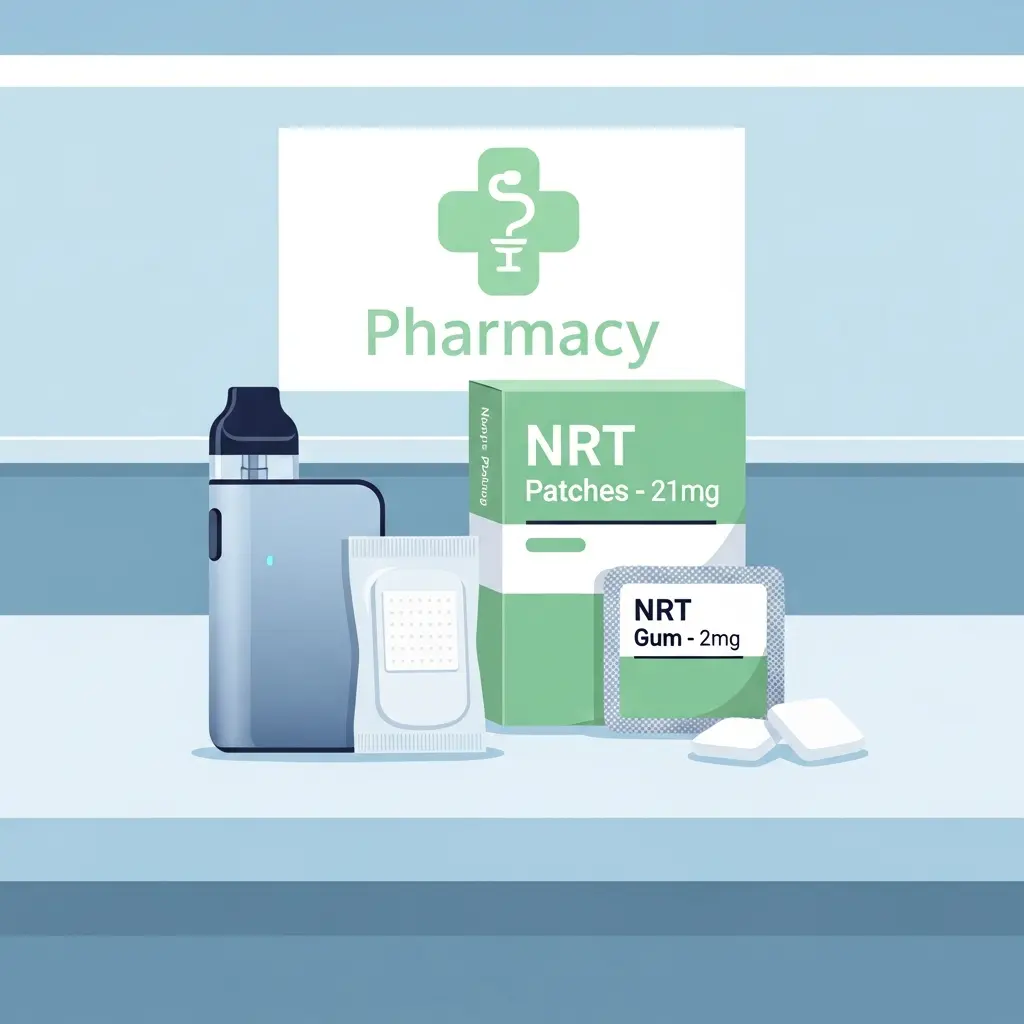
| Access pathway (Australia, 2026) | Pharmacy (≤20mg/mL); prescription for >20mg/mL | Over-the-counter (no prescription needed) |
| RACGP recommendation tier | Second-line (after first-line failure) | First-line (combination NRT preferred) |
| Cochrane evidence quality | High certainty (vs NRT alone) | High certainty (established) |
| Behavioural ritual replacement | Yes — mimics smoking hand-to-mouth act | No (patches, gum don’t mimic smoking) |
| Long-term safety data | Limited (<10 years of study) | Extensive (decades of data) |
| Dependency risk | Moderate — nicotine addiction continues | Low-moderate (structured dose step-down) |
| TGA-approved therapeutic products (2026) | None formally listed on ARTG | Multiple (nicotine patches, gum, lozenges, sprays) |
| Typical cost (Australia) | Variable; starter kits ~AUD 30–80 | ~AUD 30–80/month (patches); subsidised in some states |
Australia’s 2024–2026 Vaping Rules: What Changed
The Therapeutic Goods and Other Legislation Amendment (Vaping Reforms) Act 2024 created a unified national framework. The key access changes were:
- 1 July 2024: Act commenced; single national framework for importation, manufacture, supply, and advertising of all vapes.
- 1 October 2024: Pharmacists may supply nicotine vapes at concentrations of 20mg/mL or less to adults (18+) without a prescription, subject to state and territory law and specific consultation requirements.
- For >20mg/mL: A prescription from a medical or nurse practitioner remains required.
- 1 July 2025: Strengthened product standards — maximum nicotine concentration 50mg/mL, flavours restricted to mint, menthol, and tobacco only, child-attractive product names banned.
An important caveat: as of 2026, the TGA has not received an application to list any therapeutic vaping product on the Australian Register of Therapeutic Goods (ARTG). This means the TGA has not formally evaluated any vaping product for safety, quality, or effectiveness. Pharmacists dispense under the existing framework, but without the product-level evaluation that applies to listed NRT products.
NRT Evidence: What the Trials Show
NRT is the most extensively studied pharmacological cessation intervention in existence. Patches, gum, lozenges, sprays, and inhalers have decades of randomised controlled trial data supporting their use. The key finding from the evidence base is that combination NRT — typically a long-acting patch (for baseline coverage) plus a short-acting form (gum or lozenge, for acute cravings) — outperforms single-product NRT.
The Cochrane Tobacco Addiction Group’s 2023 meta-analysis, which covered over 150,000 participants, found that both NRT and nicotine e-cigarettes are effective cessation tools — with e-cigarettes showing a statistically significant advantage over NRT alone in the most recent evidence review. NRT’s advantages remain significant though: decades of safety data, formal TGA listing, OTC availability, and a structured dose-step-down model that actively reduces nicotine dependency over time rather than continuing it indefinitely.
Nicotine Vaping Evidence: Cochrane and RACGP Positions
The 2023 Cochrane review found with high certainty that nicotine e-cigarettes produce significantly higher quit rates than NRT alone. This is the strongest piece of evidence supporting vaping as a cessation tool and is why clinicians and regulators increasingly treat it as a legitimate option rather than a fringe choice.
However, the RACGP’s September 2024 guidelines are more conservative. The RACGP does not recommend vapes as a first-line cessation tool. Under these guidelines, vapes are reserved for adults who have already attempted cessation with first-line therapy — combination NRT, varenicline, or bupropion, plus behavioural support — and have not succeeded. The reasoning: NRT has a far more established safety profile; the long-term consequences of therapeutic vaping are not yet fully understood; and the risk of simply substituting one nicotine delivery method for another without achieving full cessation is meaningful.
For Australians who want to explore the vaping cessation pathway, the Australian Prescriber article on therapeutic vapes provides excellent clinical detail on patient selection and product choice.
Safety: “Substantially Less Harmful, Not Harmless”
This distinction matters enormously for informed decision-making. Both NHS England and the evidence base from Public Health England (now UK Health Security Agency) have consistently stated that nicotine vaping is substantially less harmful than smoking — the combustion products in cigarette smoke (tar, carbon monoxide, and thousands of toxicants) cause the vast majority of smoking-related disease. Replacing cigarettes with a nicotine vape eliminates the most dangerous element of smoking.
However, vaping is not harmless. Long-term respiratory effects are still being studied; nicotine addiction continues; some vaping products contain contaminants; and the risk of never achieving full nicotine independence is real. Framing vaping as “safe” would be inaccurate. The honest framing, consistently used by public health bodies, is substantially less harmful than continued smoking, but not without risk — particularly compared to quitting entirely using NRT with a structured step-down plan.
Who Should Choose Which Option
| Your situation | Recommended starting point |
|---|---|
| First quit attempt | Combination NRT + behavioural support (first-line per RACGP) |
| Failed multiple NRT attempts | Discuss varenicline or therapeutic vape with your GP or pharmacist |
| Strong hand-to-mouth habit / oral fixation | NRT inhaler or lozenge first; vape as second-line if needed |
| Pregnant or planning pregnancy | NRT only under medical supervision; vaping not recommended |
| Heavy smoker (20+ cigarettes/day) | Combination NRT or varenicline; discuss higher-dose NRT with GP |
Combining Pharmacological Help with Behavioural Support
Whether you choose NRT or a therapeutic vape, the evidence is consistent: adding structured behavioural support significantly improves quit outcomes. Behavioural support includes counselling, quitlines (such as Australia’s 13 QUIT), and digital tools. A quit-smoking app like iQuit provides always-on craving support, trigger tracking, and motivational coaching that no pharmacological product can match — because it is there in the specific moment a craving peaks.
For practical step-by-step guidance on building a quit plan that layers pharmacological and behavioural support together, see how to quit smoking: the step-by-step plan that actually works. For data on success rates across all methods, see quit smoking success rates by method: 60+ statistics.
FAQ
Can I buy a nicotine vape at an Australian pharmacy without a prescription?
From 1 October 2024, Australian pharmacists may supply nicotine vaping products at concentrations of 20mg/mL or less to adults (18+) without a prescription, subject to a pharmacist consultation and compliance with state and territory law. Products with nicotine concentrations above 20mg/mL still require a prescription from a medical or nurse practitioner. The TGA has not formally listed any therapeutic vaping product on the ARTG, meaning no product has been evaluated by the TGA for safety, quality, or effectiveness.
Is vaping better than NRT patches for quitting smoking?
The 2023 Cochrane review found high-certainty evidence that nicotine e-cigarettes produce higher quit rates than NRT alone. However, the RACGP recommends NRT (particularly combination NRT) as the first-line option for most Australians, with vaping reserved for those who have already tried first-line pharmacotherapy and failed. NRT has decades of safety data; long-term vaping effects are still being studied.
Is vaping safe as a quit-smoking tool?
Therapeutic nicotine vaping is substantially less harmful than smoking cigarettes, as the combustion products in tobacco smoke cause the vast majority of smoking-related disease. However, vaping is not harmless — long-term respiratory effects are being studied, nicotine addiction continues, and achieving complete nicotine independence is harder than with a structured NRT step-down plan. “Substantially less harmful than smoking, not harmless” is the accurate framing from public health bodies.
What flavours are allowed in Australian therapeutic vapes from July 2025?
From 1 July 2025, TGA product standards restrict flavours in therapeutic vaping products to mint, menthol, and tobacco only. Child-attractive product names and an expanded list of prohibited ingredients are also banned under the strengthened 2025 standards.
Should I use a quit-smoking app alongside NRT or a vape?
Yes. Pharmacological aids (NRT or therapeutic vaping) address nicotine withdrawal; a quit-smoking app provides the behavioural and motivational support layer. Using both together is significantly more effective than either approach alone. iQuit’s AI coaching is available 24/7 for craving management, trigger logging, and real-time support — complementing whatever pharmacological aid you choose.
Add behavioural support to your quit plan
Whether you choose NRT or a therapeutic vape, adding iQuit’s AI coaching gives you real-time craving support, trigger tracking, and health milestones — free to download.