Search how much does smoking cost the NHS and you’ll find wildly different numbers — some in the low billions, some over forty billion. That’s not sloppy reporting; it’s because “cost of smoking” articles are often measuring completely different things. Here’s the breakdown, with each figure’s actual scope stated plainly.
The headline figure and where it comes from
The most current, clearly-dated figure comes from Action on Smoking and Health (ASH), a UK public health charity that maintains the “Ready Reckoner,” a cost model built by the economics consultancy Landman Economics. ASH’s page on the economic impact of smoking, updated May 2026, states plainly: “Smoking costs society in England £44.8bn a year.” Within that total, ASH breaks out “£1.77bn in healthcare costs” — the figure closest to what most people mean by “cost to the NHS,” though it’s worth being precise: this is ASH’s own modelled estimate, not a line item published in NHS England’s own accounts.
That precision matters because headline-writers regularly round this up to “smoking costs the NHS billions” as if the whole £44.8bn were an NHS bill. It isn’t. The NHS-relevant slice is the £1.77bn healthcare component; the rest sits with employers, families, local authorities, and the wider economy.
ASH UK’s own webinar walks through how its cost-of-smoking model is built.
What the £44.8bn total actually includes
ASH’s Ready Reckoner methodology page is specific about scope: costs “include productivity, healthcare, social care (local authority paid-for and value of informal care by family and friends and unmet need) and fire costs, but not taxes or social security which are national level public finance impacts.” In other words, the £44.8bn figure isn’t a government spending total — it’s an economic model estimating the value of resources smoking consumes or destroys across the whole of society, including care provided informally by family members that never shows up in any invoice, and the value of care that people need but don’t receive (“unmet need”).
That last category is easy to overlook: it means the model tries to account not just for care that is delivered and paid for, but also for the cost of care that ought to happen but doesn’t, because a family member’s own capacity or a local authority’s own resources are stretched. Fire costs are included too — smoking materials remain a leading cause of accidental house fires in the UK, and the associated fire service and property-damage costs are folded into the total.
For a broader picture of smoking’s health burden underlying these costs, see our smoking-related healthcare costs statistics and our UK smoking statistics roundup.
Regional and local variation
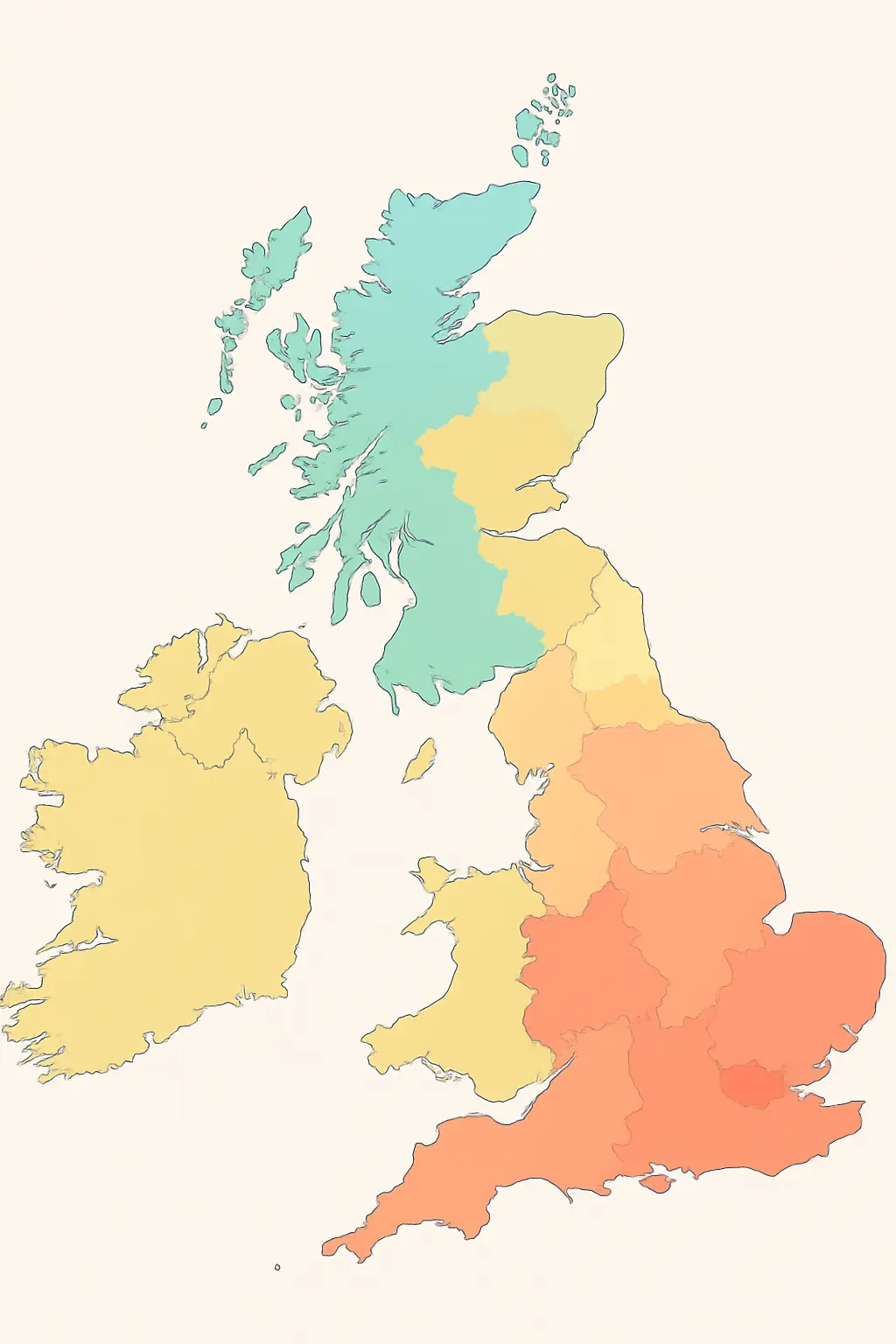
Rather than publishing a single flat national number, ASH’s Ready Reckoner tool breaks the £44.8bn total down to individual local authorities, combined authorities, regions, Integrated Care Boards (ICBs), and even parliamentary constituencies. The point of that granularity is practical: smoking prevalence varies substantially across the UK, so the resource burden on a given local NHS area or council tracks local smoking rates far more closely than any single national average does. A policymaker in a high-prevalence area is looking at a meaningfully different cost picture than one in a low-prevalence area, even though both contribute to the same £44.8bn headline.
The bigger cost: lost productivity
The single largest slice of ASH’s total isn’t healthcare at all — it’s lost productivity, estimated at £27.8bn, described as covering “early deaths, reduced employment, and lower earnings due to tobacco consumption.” That’s more than 15 times the healthcare component. Social care costs to the state and families add a further £14.8bn on top. This is the part of the “cost of smoking” conversation that rarely makes headlines, because it isn’t a bill anyone pays directly — it’s economic output that never materializes because someone died early, worked fewer years, or earned less while smoking. Unlike a hospital bill, there’s no single invoice for lost productivity; it shows up as a gap in GDP, tax receipts, and household income that economists estimate rather than observe directly.
Tobacco duty revenue vs. the cost
Governments also collect substantial tax revenue from tobacco sales, which complicates any “smoking is a net cost” framing. In a December 2023 press release, ASH quoted a tobacco tax take of £11.3bn against a £49.2bn total cost that year — meaning tax revenue covered under a quarter of the estimated cost, by that year’s model. Those two 2023 figures are a self-consistent pair; they should not be mixed with the newer 2026 healthcare figure above, since the underlying model has been updated since then.
ASH’s May 2026 update does give a more current version of this same comparison: it states that, in 2026, smoking is estimated to cost the public finances in England £16.9bn a year — more than double the £7.5bn raised through tobacco taxes over the same period. That £16.9bn public-finance figure isn’t the same scope as the £44.8bn societal total above; it isolates the impact specifically on government revenue and spending, separate from the productivity losses and care costs borne by employers, families, and the wider economy. Whichever framing you use, the pattern holds across both the 2023 and 2026 figures: tobacco tax revenue in England covers a minority of what smoking is estimated to cost, not the reverse. For current UK tobacco tax rates, see our cigarette tax by country breakdown, and for the industry side of the ledger, our look at tobacco industry revenue and profit.
England vs. the whole UK, and the wellbeing-adjusted total
The £44.8bn headline is specifically for England. ASH’s same May 2026 update states the total cost across the whole UK is higher, at £53.2bn a year, reflecting Scotland, Wales, and Northern Ireland’s own smoking-attributable healthcare, social care, and productivity costs on top of England’s share. Neither £44.8bn nor £53.2bn puts a monetary value on the human cost of premature death itself beyond the “lost productivity” line — both are resource-and-output estimates, not wellbeing estimates.
ASH separately publishes a wellbeing-adjusted version of the England total: £83.5bn, once the QALY (quality-adjusted life year) cost of early deaths from smoking is added to the £44.8bn baseline. A QALY is a standard health-economics unit that combines length of life with quality of life; costing early deaths in QALY terms puts a monetary value on years of healthy life lost, not just the economic output those years would otherwise have produced. That’s a fundamentally different kind of estimate from the other figures in this article — it isn’t a cost anyone pays or a resource anyone consumes, it’s an attempt to price the value of a life cut short — so treat £83.5bn as a distinct, wellbeing-based total rather than a bigger version of the same £44.8bn number.
Why there’s no single “cost per smoker” figure
You might expect to divide £1.77bn by the number of smokers in England for a tidy “cost per smoker” number. ASH doesn’t publish the Ready Reckoner that way, and neither did any source checked for this article — the tool instead breaks costs down by local authority, combined authority, region, and Integrated Care Board, which lets health planners see local variation rather than a single national average masking that variation. A national per-smoker average would also flatten real differences in how much healthcare an individual smoker actually uses, which depends heavily on how long and how heavily they’ve smoked, their age, and whether they already have a smoking-related condition. If you want the underlying prevalence numbers behind these costs, our UK smoking statistics article and our comparison of UK vaping prevalence cover current smoking and vaping rates directly.
What stop-smoking support costs and saves
NICE’s guideline on tobacco dependence (NG209), published November 2021, last updated February 2025, recommends that licensed stop-smoking pharmacotherapy and behavioral support be offered to people who smoke and want to quit. The logic connects directly to the cost figures above: every successful quit reduces a person’s future contribution to that £1.77bn healthcare estimate, plus their share of the much larger productivity and social care totals, over the years that follow. Stop-smoking support itself is comparatively inexpensive next to the downstream costs of continued smoking — a course of NRT or a set of behavioral support sessions costs a small fraction of treating a smoking-related condition years later, which is why NICE frames offering support as a standard part of care rather than an optional extra. For what dedicated NHS support actually looks like day to day, see our guide to NHS stop smoking services.
How these estimates are built
ASH’s figures come from the Cost Benefit and Public Finance (CBPF) Model of Smoking, commissioned by ASH and built by economist Howard Reed at Landman Economics; the version referenced in the May 2026 update is 4.2, updated in June 2026. Models like this combine health service utilization data, employment and earnings statistics, and social care usage patterns to estimate costs that wouldn’t otherwise show up as a single published government total. As with any economic model, the exact figure moves between updates as underlying data and assumptions are refreshed — which is why this article names the specific update date (May/June 2026) rather than presenting £1.77bn as a permanent, unchanging fact. If you’re citing this figure elsewhere, cite the model and its update date along with the number, for the same reason.
Frequently Asked Questions
How much does smoking cost the NHS each year?
ASH’s May 2026 Ready Reckoner estimates the healthcare cost of smoking in England at £1.77bn a year, within a wider £44.8bn total societal cost that also includes productivity losses and social care (ASH, Economic Impact of Smoking, updated May 2026).
Is £1.77bn an official NHS budget figure?
No. It is ASH’s own modelled estimate, built with Landman Economics using the Cost Benefit and Public Finance Model of Smoking, not a figure published in NHS England’s own accounts. It is the closest publicly available estimate to a smoking-specific NHS cost.
What does the total £44.8bn figure include?
ASH’s Ready Reckoner states costs include productivity, healthcare, social care (local authority paid-for care, informal family care, and unmet need) and fire costs, but explicitly excludes taxes and social security, which are treated as separate public finance impacts (ASH Ready Reckoner, 2026).
Does tobacco tax revenue cover the cost of smoking?
No. In ASH’s December 2023 press release, the tobacco tax take was £11.3bn against a £49.2bn total cost that year. ASH’s May 2026 update gives a more current comparison: smoking is estimated to cost the public finances in England £16.9bn a year, versus £7.5bn raised through tobacco taxes, more than double. Both the 2023 and 2026 figures show tax revenue covering a minority of the estimated cost (ASH, 2023 and May 2026).
How much does the NHS spend on stop-smoking support?
NICE’s guideline on tobacco dependence (NG209, last updated February 2025) recommends offering licensed stop-smoking pharmacotherapy and behavioural support to people who smoke, on the basis that cessation support is cost-effective against the downstream healthcare costs smoking generates.
Why do different articles give different NHS smoking cost figures?
Because different sources measure different things: total societal cost, healthcare-only cost, public finance cost including tax offsets, wellbeing-adjusted (QALY) cost, and cost per local authority all use different scopes and model years. Always check which of these an article’s headline number actually refers to.
Add your own savings to the total
Every quit attempt chips away at these national totals one person at a time. iQuit tracks your own money saved in your currency, days smoke-free, and cigarettes avoided, alongside SOS craving support for the moments quitting gets hard.
Download iQuit Free on Google Play
Download on the App Store