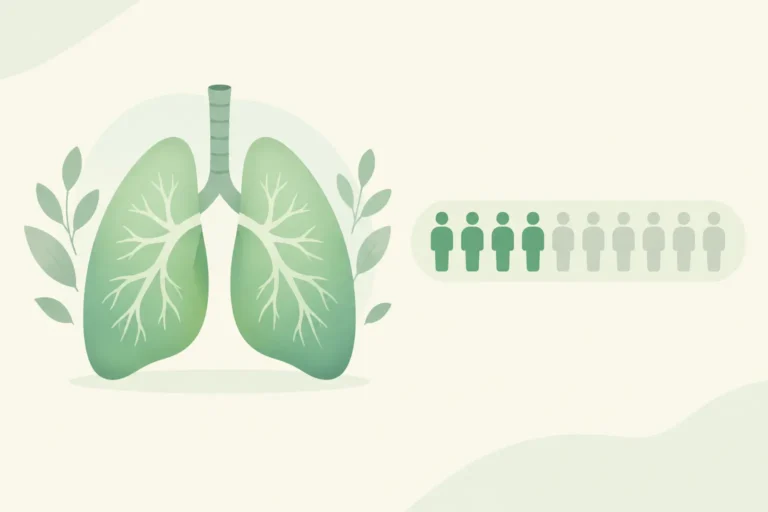
Britain’s disposable vape ban has been in force for almost a year, and the numbers are finally starting to show what changed and what didn’t. If you’re searching for vaping statistics UK 2026, here is the current picture straight from ASH’s own annual survey: how many adults vape, what happened to disposables after the ban, and how teen vaping compares.
Key figures at a glance
| Measure | Figure |
|---|---|
| Adults currently vaping | 10.3% (~5.5 million) |
| Adults who have ever tried vaping | 26% |
| Adults currently smoking | 11% (down from 13%, 2021-2025) |
| Current vapers who are ex-smokers | 60% |
| Disposable use among vapers, 2023 peak vs now | 31% -> 8% |
| 11-17 year-olds currently vaping | 6% (~370,000) |
How many UK adults vape
ASH’s 2026 Smokefree Great Britain survey (n=13,259) found that 10.3% of adults aged 18 and over currently vape — an estimated 5.5 million people. That is essentially flat versus 10.4% in 2025 and a slight dip from the recent high of 10.7% in 2024, confirming what ASH describes as a plateau after years of rapid growth: current vaping prevalence rose from just 1.7% in 2012 to 10.7% by 2024, growing especially fast between 2021 and 2024, before flattening out over the past two years. A quarter of all GB adults (26%) have tried vaping at some point, meaning most people who have ever tried a vape are not currently using one.
The shape of that growth curve matters as much as the current headline number. ASH’s year-by-year tracking shows current vaping climbing from 6.3% in 2020 to 7.1% in 2021, 8.3% in 2022, and 9.1% in 2023, before jumping to 10.7% in 2024 — the fastest single-year rise in the whole series — and then easing back slightly to 10.4% in 2025 and 10.3% in 2026. That 2024 spike lines up with the final year before the disposables ban, when disposable vapes were at their most widely available and heavily promoted; the subsequent flattening is consistent with, though not proof of, the ban and the broader plateau in interest working in the same direction.
Over the same period, smoking has kept falling: 11% of GB adults currently smoke, down from a plateau of 13% that held from 2021 to 2025 — the full cigarette-side picture is in our UK smoking statistics guide. Daily smoking has fallen even further, from 9.7% of adults in 2020 to 6.6% in 2026, while daily vaping has risen from 4.5% to 7.8% over the same stretch — two lines moving in opposite directions that ASH’s data ties together directly.
Ex-smokers vs never-smokers who vape
Vaping in Great Britain is still overwhelmingly concentrated among people with a smoking history. Among current smokers, 30% also vape; among ex-smokers, 19% vape; among people who have never smoked, just 1.5% vape. Looked at from the other direction, of the estimated 5.5 million current vapers, 60% (3.3 million) are ex-smokers, 32% (1.7 million) are current smokers using both products, and only 8% (400,000) have never smoked. That 8% never-smoker figure is the number to watch for anyone worried about vaping acting as a gateway into nicotine use for people who would otherwise have avoided it entirely — and at under 1 in 10 of all current vapers, it remains a small minority.
Vaping also varies by age and social group. It is lowest among adults 55 and over (6%) and highest among 25-34 year-olds (15%), and more common in more disadvantaged groups (12% among C2DE adults versus 9% among ABC1 adults) — a pattern ASH links to those same groups’ higher smoking rates. Trying vaping specifically has risen fastest among 18-24 year-olds, up from 32% in 2025 to 39% in 2026, even though current use in that age group has held flat at 11% since 2021.
Youth vaping in Great Britain
ASH’s companion youth survey (YouGov fieldwork, March-April 2026, 2,926 11-17 year-olds) found that 19% have ever tried vaping (about 1.1 million), a level that has held between 18% and 20% since 2023, while 6% currently vape (about 370,000) and just 2% vape daily (about 140,000). Prevalence rises sharply with age: 13% of 11-15 year-olds have ever vaped versus 32% of 16-17 year-olds, and current use follows the same pattern (4% versus 13%).
As with adults, youth vaping tracks smoking closely: 52% of 11-17 year-olds who currently smoke also vape, compared with just 9% of those who have never smoked (and only 1% of never-smoked teens currently vape). GB youth smoking itself had a concerning few years — ever-smoking rose from 14% in 2023 to 21% in 2025 — before falling back to 18% in 2026, with current smoking now at 4.8%. This tracks closely with the cigarette-side data in our teen smoking statistics guide.
Disposables before and after the ban
This is where 2026’s data tells a genuinely new story. For the policy details behind this shift, see our UK disposable vape ban explained. Disposable vape use among adult vapers peaked in 2023, when 31% mainly used a disposable device; that share has since fallen to just 8%. In the first ASH survey conducted after the ban took effect, vapers who had mainly used disposables immediately beforehand reported roughly even splits between stopping vaping entirely (30%), cutting down (13%), and carrying on unchanged (43%), with very few increasing (7%). Crucially, 70% said their smoking had not changed as a result of the ban, with only a small minority reporting more smoking (13%) — evidence against the fear that banning disposables would simply push ex-smokers back to cigarettes at scale.
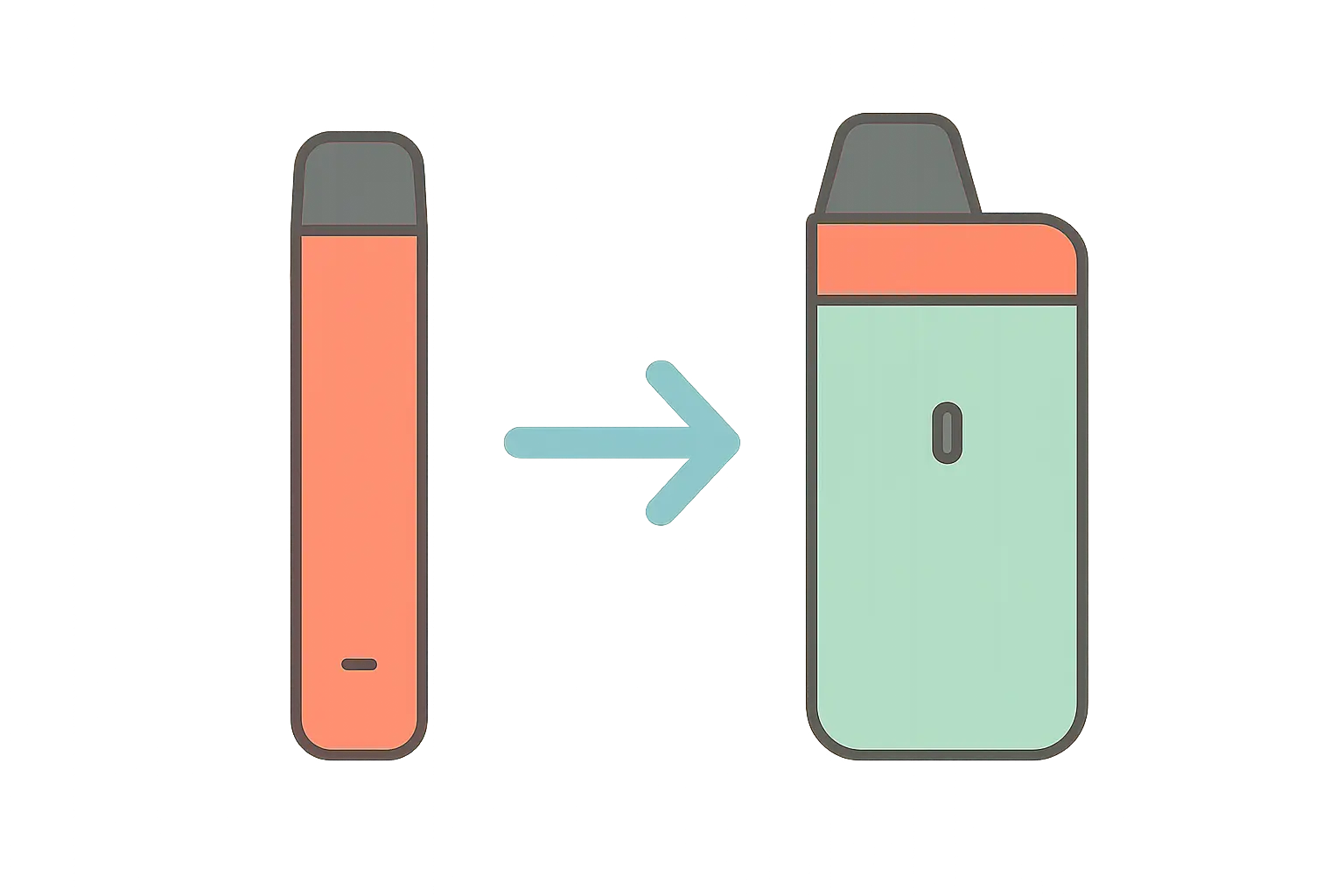
Not everyone who kept vaping went fully legitimate: while 51% of those who continued vaping after the ban switched to a reusable device, 30% said they could still get hold of disposable vapes and 24% admitted using disposables they had stockpiled before the ban took effect. The year before, in 2025, vapers had predicted they would mostly switch to reusables (78%), with a sizeable minority (22%) expecting to seek out illicit disposables — a prediction the 2026 data suggests was roughly in the right ballpark, if a little pessimistic about full compliance.
Device types people moved to
The clear post-ban winner is the reusable pod or tank device, now the default choice for the majority of former disposable users who kept vaping. That said, the survey also captured meaningful leakage around the edges of the ban: a combined 54% of continuing disposable-preferring vapers reported either still sourcing disposables commercially (30%) or using a pre-ban stockpile (24%), which is not the same population as the 51% who switched, since some vapers may have done more than one of these things in the three months surveyed. That nuance matters for anyone assessing how completely the ban has actually reshaped the UK vaping market versus how much has simply moved to informal channels.
Vaping and quitting: what the data shows
Put the adult numbers together and a consistent pattern emerges: 60% of current UK vapers are ex-smokers, smoking has kept falling even as vaping rose and then plateaued, and the disposable ban has not visibly pushed people back toward cigarettes at a population level (70% reported no change in smoking). None of this proves vaping caused any individual person’s quit — ASH’s survey captures associations and self-reported behavior change, not a controlled trial — but it is consistent with vaping functioning as an exit route from smoking for a majority of the adults who currently use it, while a persistent minority (32% of current vapers) continue to smoke and vape together rather than having fully switched. For the wider global picture on vaping and quit rates, see our vaping statistics 2026 guide, and for how the relative risks stack up, see is vaping worse than smoking.
A separate misconception the ASH data directly addresses is how smokers themselves rate vaping’s safety: 52% of adults who currently smoke believe vaping is as harmful as, or more harmful than, smoking itself — a view public health bodies consider inaccurate relative to continued cigarette smoking, though vaping is not risk-free. That misperception matters practically, because a smoker who wrongly believes switching offers no safety benefit has one less reason to try it as a route away from cigarettes.

Methodology
All adult figures come from ASH’s “Use of e-cigarettes (vapes) among adults in Great Britain” 2026 fact sheet, based on the ASH Smokefree GB survey (n=13,259, YouGov). Youth figures come from ASH’s companion “Use of vapes and other novel tobacco and nicotine products among young people in Great Britain” report, published July 2026 from the ASH Smokefree GB Youth Survey (n=2,926, fielded March-April 2026). Both surveys run annually, so the 2026 figures here are genuinely current, not older data relabeled — a contrast with statistics on some other topics where no true same-year figure exists. Post-ban behavior figures are self-reported three months after the disposables ban took effect and reflect stated behavior change, not independently verified sales or seizure data.
Frequently Asked Questions
How many people vape in the UK in 2026?
ASH’s 2026 survey found 10.3% of adults in Great Britain currently vape, an estimated 5.5 million people, essentially unchanged from 2025’s 10.4%.
Did the disposable vape ban work?
Disposable use among vapers fell from a 2023 peak of 31% to 8% after the ban, and most continuing vapers (51%) switched to reusable devices. However, 30% reported still accessing disposables and 24% used stockpiled ones, showing partial rather than complete compliance.
Did the ban push people back to smoking?
ASH’s data suggests not at scale: 70% of affected vapers said their smoking had not changed since the ban, with only 13% reporting increased smoking, 4% reporting decreased smoking, and 1% reporting they had stopped smoking altogether.
Are most UK vapers ex-smokers?
Yes. 60% of current adult vapers in Great Britain are ex-smokers, 32% still smoke as well, and only 8% have never smoked, according to ASH’s 2026 survey.
How common is vaping among UK teenagers?
ASH’s 2026 youth survey found 6% of 11-17 year-olds currently vape and 19% have ever tried it, both broadly stable since 2023 rather than continuing to rise.
Is vaping still growing in the UK?
No. Adult vaping prevalence has plateaued at around 10% since 2024 after rising quickly from 2012, and youth vaping has similarly held flat since 2023.
Do most vapers also smoke?
No. Most current vapers (60%) are ex-smokers who no longer smoke at all. Around 32% still smoke alongside vaping, meaning dual use is a meaningful minority rather than the norm.
Whichever you’re quitting, cigarettes or vaping, track it the same way
iQuit tracks your smoke-free (or vape-free) days, money saved, and cravings in one place, with breathing exercises, a virtual cigarette, and streak shields built for the moments willpower runs low. Free on Google Play and the App Store.
Download iQuit Free on Google Play
Download on the App Store