Smoking and Type 2 Diabetes Recovery: How Quitting Improves Blood Sugar Control (2026)
If you have type 2 diabetes and you smoke, you are fighting your blood sugar on two fronts simultaneously. Nicotine directly interferes with how your cells respond to insulin, pushing glucose higher with every cigarette. The good news — and it is genuinely good — is that your body begins reversing that damage the moment you quit. Understanding the quit smoking blood sugar recovery timeline gives you a realistic, science-backed picture of what lies ahead, so you can plan your care and celebrate each milestone with confidence.
This guide draws on peer-reviewed research, WHO guidance, NHS clinical advice, and CDC data to walk you through exactly what happens to your blood glucose and HbA1c after you stop smoking — including the counterintuitive short-term blip that trips many people up — and what steps you can take to keep your diabetes management on track while your body heals.
How Smoking Raises Blood Sugar
Nicotine does not simply add a little stress to your body — it actively rewires cellular chemistry in ways that directly undermine insulin function. When you inhale cigarette smoke, nicotine triggers the release of adrenaline and cortisol, both of which signal the liver to release stored glucose into the bloodstream. At the same time, these stress hormones suppress insulin secretion from the pancreas, meaning less insulin is available precisely when blood glucose is rising.
The deeper problem is insulin resistance. According to the NHS, nicotine changes the chemical processes inside cells so they no longer respond properly to insulin signals. In people with type 2 diabetes — who already face insulin resistance as a defining feature of their condition — smoking compounds that resistance significantly. The practical consequence is that smokers with type 2 diabetes frequently require larger insulin doses to achieve the same blood glucose targets as non-smoking peers.
Beyond nicotine, cigarette smoke generates widespread inflammation and oxidative stress. Inflammatory markers interfere with insulin signalling pathways, and the damage to small blood vessels (the same vessels that supply pancreatic beta cells) gradually impairs the body’s capacity to produce and release insulin at all. If you are ready to take action on quitting, our step-by-step plan for how to quit smoking with type 2 diabetes covers NRT choices, medication options, and what to tell your care team before your quit date.
The Blood Sugar Recovery Timeline After Quitting
Recovery is not a single event — it is a cascade of improvements that unfolds over hours, weeks, months, and years. Here is what the research shows at each stage.
| Time Since Quitting | What Happens | Relevance for Diabetes |
|---|---|---|
| 20 minutes | Heart rate and blood pressure begin to drop | Reduced cardiovascular strain; lower cortisol spike |
| 12 hours | Carbon monoxide clears; blood oxygen normalises | Cells receive more oxygen; metabolic function begins improving |
| 2–8 weeks | Circulation improves; nicotine-driven cortisol surges cease | Stress-hormone-driven glucose spikes reduce; insulin may begin working more effectively |
| 3–6 months | Lung function improves; inflammation markers fall | Lower systemic inflammation eases pressure on insulin signalling pathways |
| 1 year | Heart disease risk halved compared to continuing smokers | HbA1c may still be slightly elevated; enhanced diabetes monitoring recommended |
| 3 years | HbA1c returns to baseline (comparable to continuing smokers) | The temporary post-quit blip resolves; glycaemic control stabilises |
| 10+ years | Sustained improvement in HbA1c (−0.17% vs current smokers); HOMA-IR falling | Progressive insulin sensitivity gains; levels approach those of never-smokers |
| 20+ years | HbA1c improvement reaches −0.23% vs current smokers | Continued linear improvement; closest to never-smoker metabolic profile |
The progression from “smoker” to “metabolic recovery” is slow but steady and unmistakable. The landmark Fukuoka Diabetes Registry study, published in PLOS ONE (PMC4379103), tracked male patients with type 2 diabetes and found that HbA1c decreased linearly with every additional year of abstinence — a statistically significant trend (p < 0.001) that held even after adjusting for weight, medication changes, and disease duration.
The broader journey of physical recovery from smoking touches nearly every organ. Many of the same mechanisms that improve cardiovascular outcomes — reduced inflammation, better circulation, lower oxidative stress — are the same ones that underpin improved insulin sensitivity. You can see how these systems interweave when you look at the cardiovascular recovery timeline after quitting smoking, where circulation improvements in the early months create the foundation for metabolic gains later on. For a concrete milestone to work toward, our guide to the six-month smoke-free milestone shows exactly what physical markers improve in the first half year — including lung function, cardiovascular risk, and energy levels.
The HbA1c Blip: Why Numbers May Rise First
This is the part of the quit-smoking blood sugar recovery story that surprises almost everyone — including some healthcare providers. In the first one to three years after quitting, HbA1c commonly rises rather than falls. A major UK cohort study published in The Lancet Diabetes & Endocrinology tracked 10,692 smokers with type 2 diabetes from the THIN primary-care database and found that among the 3,131 people who quit and stayed quit for at least a year, HbA1c increased by an average of 0.21% (95% CI 0.17–0.25) within that first year. The effect persisted until around the three-year mark, at which point levels returned to baseline.
Crucially, the researchers confirmed this was not explained by weight gain. Many people assume that post-quit weight gain is the primary driver of rising blood sugar — and while weight management matters, the THIN study found that adjusting for weight change did not alter the HbA1c association. Something else is happening metabolically in the early months of cessation.
One leading explanation involves the acute removal of nicotine’s stimulatory effect on metabolism. Nicotine artificially suppresses appetite and raises the basal metabolic rate. When it is gone, appetite increases and metabolic rate dips — both changes that can push blood glucose upward in people whose glycaemic control was already finely calibrated around their smoking status. Another factor is the change in eating patterns, stress responses, and activity levels that often accompany early abstinence. Understanding exactly how nicotine built up that tolerance in your system — and why removal causes this rebound — is explained in our guide on how nicotine tolerance develops and why it makes quitting harder.
Your healthcare team may adjust your insulin dose or oral medication during this period. In parallel, the same lifestyle habits that support your quit attempt — regular physical activity, a lower-glycaemic diet, structured sleep — are powerful tools for keeping that HbA1c blip as small as possible.
Insulin Sensitivity Recovery: The Underlying Mechanism
Understanding what smoking actually does to insulin sensitivity at the cellular level helps make sense of the recovery timeline. Nicotine activates the sympathetic nervous system, raising catecholamine (adrenaline and noradrenaline) levels. These hormones directly oppose insulin action: they stimulate glycogen breakdown in the liver, suppress peripheral glucose uptake, and inhibit insulin secretion from pancreatic beta cells.
Over years of smoking, this chronic hormonal stress combines with oxidative damage to the insulin signalling cascade inside muscle and fat cells. Specifically, key proteins involved in insulin’s glucose-uptake signal — including IRS-1 and GLUT-4 transporters — become less responsive to insulin binding. The result is the classic picture of insulin resistance that, in type 2 diabetes, is already the central problem.
When you quit, catecholamine levels fall within days. Oxidative stress begins to reduce within weeks as antioxidant defences recover. But cellular repair of the insulin signalling proteins and the restoration of proper GLUT-4 expression takes considerably longer — measured in months and years, not days. This is why the improvements in HOMA-IR (a validated measure of insulin resistance) shown in the Fukuoka Registry study appeared as a gradual, dose-dependent improvement rather than an overnight fix.
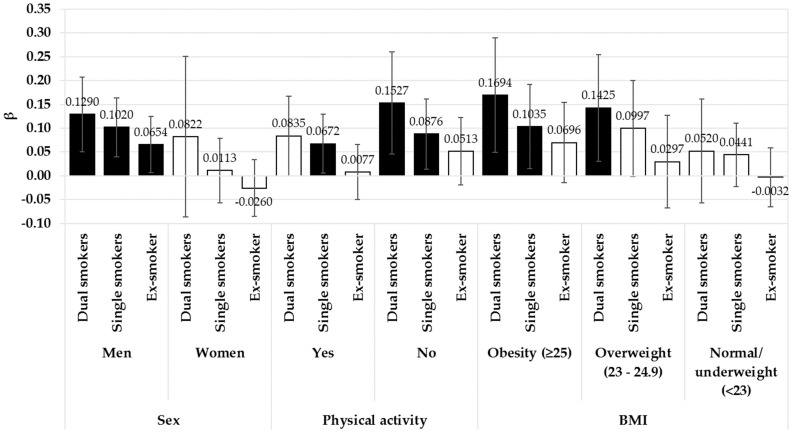
The meta-analysis published in Tobacco Induced Diseases (PMC5121966) compared cardiometabolic parameters across non-smokers, current smokers, and quitters with diabetes. It found that non-smokers had HbA1c levels 0.61% lower than current smokers (95% CI −0.88 to −0.33, p < 0.0001) — a clinically meaningful difference. Importantly, the narrative synthesis within that review confirmed a graded relationship: the longer someone had been smoke-free, the closer their metabolic profile moved toward never-smoker values.
Quitting smoking does not operate in isolation from the rest of your body’s healing process. The same improved circulation that allows your lungs to clear more effectively — explored in detail in our guide to lung recovery after quitting smoking — also delivers more oxygen and nutrients to insulin-sensitive tissues in your muscles and liver, supporting the cellular repair that underlies insulin sensitivity recovery.
Diabetes Complications That Improve When You Quit
Blood sugar control matters not just as a number on a lab report but because of what elevated glucose does to blood vessels, nerves, and organs over time. For people living with type 2 diabetes, quitting smoking protects against the very complications that make diabetes life-altering.
Cardiovascular Disease
Diabetes already doubles or triples cardiovascular risk. Smoking multiplies that risk further by damaging arterial walls, increasing clotting tendency, and raising LDL cholesterol while depressing protective HDL. The meta-analysis referenced above found that quitters showed meaningfully improved HDL cholesterol within months — a rapid gain that translates to lower cardiovascular risk. One year after quitting, heart disease risk falls to half that of continuing smokers, according to CDC guidance on diabetes and smoking.
Kidney Disease (Diabetic Nephropathy)
High blood glucose damages the delicate filtering structures in the kidneys. Smoking accelerates this damage by raising blood pressure and constricting the tiny vessels that supply the glomeruli. Quitting smoking reduces blood pressure, improves renal perfusion, and slows the progression of nephropathy — giving the kidneys a fighting chance to function longer.
Eye Disease (Diabetic Retinopathy)
The retina is supplied by a network of capillaries that are highly vulnerable to both chronic high glucose and the vasoconstriction caused by smoking. Quitting removes one of the two main drivers of retinal vessel damage. While existing retinopathy does not reverse completely, cessation is associated with slower progression and reduced risk of vision-threatening complications.
Neuropathy and Wound Healing
Peripheral nerve damage (neuropathy) and poor wound healing are among the most disabling complications of diabetes. Both worsen significantly with smoking due to impaired blood flow to the extremities. Quitting restores circulation to the hands and feet, reducing neuropathic pain and dramatically lowering the risk of non-healing wounds and amputation.
Immune Function
People with diabetes are already more susceptible to infections because high blood glucose impairs white blood cell function. Smoking compounds this by suppressing immune defences at the respiratory mucosa and systemically. Quitting allows immune function to recover — an underappreciated benefit that matters practically (fewer infections, faster recovery) and in terms of long-term metabolic control. You can explore the full scope of this recovery in our guide to immune system recovery after quitting smoking in 2026.
Managing Your Diabetes While Quitting
Because quitting smoking creates a genuine transition period for blood glucose regulation, a little strategic planning goes a long way. Here are evidence-supported steps to protect your glycaemic control while you work through the process.
1. Tell Your Diabetes Team Before Your Quit Date
Your GP, endocrinologist, or diabetes nurse can proactively review your medication doses and set tighter monitoring targets for the first six to twelve months post-cessation. If you use insulin, your required dose may increase temporarily before it decreases as insulin sensitivity recovers. Keeping your team informed prevents surprises on either end.
2. Increase Blood Glucose Monitoring Frequency
During the first weeks and months after quitting, more frequent self-monitoring of blood glucose gives you real-time data to spot trends and respond before they become problems. Even if you self-monitor once daily normally, consider testing twice daily until your readings stabilise.
3. Prioritise Physical Activity
Exercise is one of the most potent improvers of insulin sensitivity available. Even a 30-minute walk five days a week is associated with meaningful reductions in fasting glucose and HbA1c. Physical activity also manages post-quit weight changes — addressing one of the concerns that often accompanies smoking cessation. Our comprehensive guide to preventing weight gain after quitting smoking offers practical strategies that are particularly relevant for people with type 2 diabetes.
4. Follow a Low-Glycaemic Eating Pattern
Replacing cigarettes with high-sugar snacks is a common pattern in early cessation and one that can directly drive the HbA1c blip. Having low-glycaemic alternatives to hand — nuts, berries, hummus and vegetables, natural yoghurt — satisfies oral cravings without spiking glucose. A registered dietitian with diabetes expertise can help you build a practical eating plan.
5. Manage Stress Actively
Nicotine withdrawal triggers a cortisol response that raises blood sugar. Strategies like structured breathing exercises, mindfulness, and short walks interrupt the stress-glucose cycle. This is not about eliminating stress — it is about having a toolkit ready before cravings arrive.
6. Track Your Progress with an App
Seeing your smoke-free days count up alongside your blood glucose readings creates a feedback loop that reinforces both behaviours. The iQuit — Quit Smoking App pairs a craving tracker and health milestones tracker with an AI coach that personalises support in real time. Many users find that watching their “money saved” counter climb gives them extra motivation to protect their investment in better health.
Nicotine Replacement Therapy and Blood Sugar
A common concern for people with type 2 diabetes considering quitting is whether nicotine replacement therapy (NRT) — patches, gum, lozenges, inhalers — simply continues to raise blood sugar while delivering nicotine without the smoke. The evidence here is nuanced.
NRT does deliver a lower, more controlled dose of nicotine than cigarettes, which means the blood-glucose-raising effects are present but attenuated. However, the CDC advises that NRT can still affect blood sugar and recommends diabetics consult their healthcare team before starting any NRT product. The key practical message is: NRT is far safer for your blood glucose than continuing to smoke, but your medication doses may still need adjustment during the NRT phase.
Varenicline (Champix/Chantix) and bupropion are prescription medications that support cessation without delivering nicotine, removing the direct blood-glucose effect. Both are used in people with diabetes; your prescriber will weigh the appropriate choice against your individual circumstances.
Whatever cessation method you use, the long-term trajectory for your blood sugar is the same: improvement. The 10-year roadmap of health benefits after quitting smoking lays out the cumulative gains across every body system — and for people with type 2 diabetes, the metabolic benefits compound with every year of abstinence.
Frequently Asked Questions
Does quitting smoking lower blood sugar immediately?
Not immediately in the way most people expect. Within hours, the removal of nicotine-driven cortisol and adrenaline surges reduces stress-hormone-driven glucose spikes. However, HbA1c — the three-month average blood sugar measure — may actually rise slightly in the first one to three years, as documented in the UK THIN database cohort study. Long-term blood sugar control consistently improves with sustained abstinence, with HbA1c showing meaningful decreases compared to continuing smokers after ten or more years of not smoking.
Why does HbA1c go up after quitting smoking?
The temporary rise in HbA1c after quitting is not fully explained by weight gain. Research from the THIN database found the increase persisted even after controlling for changes in body weight, pointing to metabolic recalibration as nicotine’s artificial stimulatory effects are removed. The body’s insulin sensitivity and hormonal balance need time — often two to three years — to stabilise at a new, healthier set point. Enhanced monitoring and possibly medication adjustment during this window can help keep the blip as small as possible.
How much does smoking worsen insulin resistance in type 2 diabetes?
The meta-analysis published in Tobacco Induced Diseases found that non-smokers with diabetes had HbA1c levels 0.61% lower than smokers with diabetes — a clinically significant difference equivalent to a meaningful reduction in long-term complication risk. NHS guidance confirms that smoking reduces cellular insulin responsiveness by altering the chemical processes inside cells, which in turn forces many people with type 2 diabetes to require larger insulin doses to achieve target glucose levels.
Can people who already have type 2 diabetes benefit from quitting, or is the damage done?
Absolutely — the damage is not done. The Fukuoka Diabetes Registry showed that former smokers with type 2 diabetes continued improving their HbA1c and insulin resistance (HOMA-IR) in a linear, time-dependent manner for more than 20 years after quitting. The WHO and IDF jointly confirm that quitting “substantially improves the management” of existing type 2 diabetes and reduces the risk of cardiovascular, kidney, eye, and nerve complications. It is never too late to benefit.
Should I adjust my insulin or medication when I quit smoking?
This is a decision for your diabetes care team, not something to do unilaterally. Because quitting smoking changes your body’s insulin demand — first potentially increasing it, then decreasing it as insulin sensitivity recovers — your prescriber may proactively adjust your doses when you set a quit date. Increasing the frequency of home blood glucose monitoring after quitting is widely recommended so that any medication changes are based on real data rather than estimates.
Is nicotine replacement therapy safe for people with type 2 diabetes?
NRT products (patches, gum, lozenges, inhalers) are generally considered far safer than continued smoking for people with type 2 diabetes, but they do deliver nicotine, which can modestly affect blood sugar. The CDC recommends consulting your healthcare provider before starting NRT if you have diabetes. Nicotine-free cessation aids such as varenicline or bupropion avoid this concern entirely. Whichever method you choose, monitoring blood glucose more closely during the cessation period is advisable.
Take the Next Step with iQuit
Managing type 2 diabetes is already a daily commitment. Adding smoking cessation to that journey is one of the most powerful decisions you can make for your long-term blood sugar control, your heart, your kidneys, and your quality of life. You do not have to navigate it alone.
iQuit — Quit Smoking App provides an AI coach that adapts to your personal triggers and cravings, a milestone tracker that celebrates every smoke-free day, and a community of people who understand exactly what you are going through. The app’s money-saved counter is a tangible daily reminder that every cigarette you do not smoke is an investment in your health — and your wallet.
Download iQuit today and start building the smoke-free life that your blood sugar — and every other part of you — deserves.