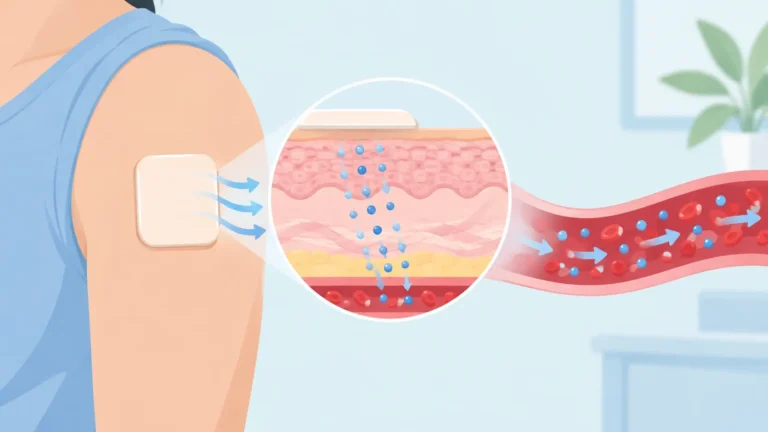

Quit Smoking Cold Turkey vs Nicotine Patches: Which Works Better in 2026?
The question of quit smoking cold turkey vs nicotine patches — which works better — is one of the most searched cessation questions in 2026, and the answer is more nuanced than either camp usually admits. Cold turkey advocates point to abrupt cessation studies that show higher short-term success rates. NRT advocates point to the consistent doubling of quit rates across 64,000+ participants in patch trials. Both are citing real data. Understanding why both are right — and under which circumstances each applies — is what this article is for.
We have reviewed the clinical evidence from randomized controlled trials and meta-analyses to give you a direct, evidence-based answer: not the one that sells products, and not the one that flatters willpower mythology.
For more on this topic, see our guide on varenicline vs nicotine patches which works better.
For more on this topic, see our guide on quit smoking cold turkey vs nicotine patches which works better.
For more on this topic, see our guide on quit smoking cold turkey vs nicotine patches which works better.
For more on this topic, see our guide on online quit smoking programme vs in-person support.
Cold Turkey vs. Nicotine Patches: Head-to-Head
| Factor | Cold Turkey | Nicotine Patches | Winner |
|---|---|---|---|
| 4-week abstinence rate | 49% (abrupt quit) | 27% (patch vs. 13% placebo) | Cold turkey (abrupt) |
| 6-month abstinence rate | 22% (abrupt quit) | 22% (patch); 9% (placebo) | Tie |
| Withdrawal severity | High (first 1–3 weeks) | Moderate (managed by patch) | Patches |
| Cost | Free | ~$30–$80 for full course (US) | Cold turkey |
| Prescription needed | No | No (OTC) | Tie |
| Best with behavioral support? | Yes — significantly | Yes — significantly | Both |
| Best combined strategy | Abrupt quit + nicotine patches + behavioral support app | Combination wins | |
Cold Turkey: What the Clinical Research Actually Shows
Cold turkey — stopping abruptly with no pharmacological aid — has a powerful body of evidence behind it when it is framed correctly. The key finding comes from a randomized study of approximately 700 participants that compared abrupt cessation (cold turkey) with gradual smoking reduction leading to a quit date. At the 4-week follow-up, the abrupt quit group achieved a 49% abstinence rate versus 39% for the gradual reduction group. At 6 months, the gap remained statistically significant: 22% versus 15%.
A subsequent meta-analysis confirmed the pattern, finding that the prolonged abstinence rate for gradual cessation was significantly lower than for abrupt cessation (relative risk = 0.77). In plain terms: if you are going to quit, setting a hard quit date and stopping completely is more effective than gradually cutting down toward a quit date.
Why Abrupt Quitting Works Better Than Gradual Reduction
The advantage of abrupt cessation appears to have two roots. First, psychological commitment: a hard quit date creates a clear before/after threshold that reinforces identity change (“I am a non-smoker from Tuesday”). Gradual reduction blurs this line and prolongs the period of daily wrestling with cigarettes. Second, neurological: maintaining some nicotine intake during a gradual taper keeps reward pathways active and craving triggers alive — you are always one cigarette away from a full relapse.
It is important to note that “cold turkey” in these studies does not necessarily mean without any support. It means without pharmacological aid at the point of quitting. Adding behavioral support — a quitline, counseling, or a quit smoking app — to cold turkey significantly improves outcomes beyond the 22% 6-month rate.
For a detailed account of the first 72 hours of cold turkey quitting — the hardest window — see our cold turkey survival guide with hour-by-hour strategies.
Nicotine Patches: What the Research Shows
The patch evidence base is among the most robust in all of smoking cessation research. A Cochrane meta-analysis of trials covering more than 64,000 participants found that nicotine patches roughly double quit rates compared to placebo: 27% abstinence versus 13% at end of treatment, and 22% versus 9% at six months. These numbers represent the combined odds of quitting with a patch vs. without one across tens of thousands of quit attempts.
Why Patches Are Not “Cheating”
A persistent myth holds that using patches is “cheating” or does not address the real problem of nicotine addiction. This is not supported by evidence. Nicotine addiction has two dimensions: physical dependence (managed by NRT) and behavioral/psychological habit (managed by behavioral support). Using a patch to ease the physical withdrawal is pharmacologically rational — it reduces the neurological discomfort that causes most early relapses, giving you the cognitive bandwidth to address the behavioral dimension. The goal is quitting smoking permanently, not proving willpower.
Patches also have the highest compliance rate of all NRT forms — once-daily application fits easily into any routine, and there is no technique to learn (unlike gum’s chew-and-park method).
The Real Comparison: Abrupt vs. Gradual, Not “Cold Turkey vs. Patches”
The most important insight from the research literature is that the critical variable is abrupt vs. gradual cessation — not whether pharmacological support is used or not. Both abrupt cold turkey and abrupt patch-assisted quitting outperform gradual reduction. The question of patches vs. no patches is secondary to the question of abrupt vs. gradual.
This reframes the entire debate: “cold turkey” is not really about the absence of patches — it is about the abruptness of the quit. You can quit abruptly using nicotine patches, and that is the approach with the highest evidence-based success rate of all.
Why the Best Answer Is Both: Abrupt Quit + Patches
The optimal strategy that emerges from the research is neither cold turkey nor patches alone — it is an abrupt quit on a defined date supported by nicotine patches (and ideally, combination NRT). Patches reduce the physical suffering of withdrawal, which reduces early relapse. The abrupt quit date maintains psychological commitment and neurological clarity. Behavioral support — a quit smoking app, quitline, or counseling — adds the third layer that most clinical studies show improves outcomes significantly beyond any pharmacological intervention alone.
Who Suits Cold Turkey and Who Suits Patches
| Profile | Recommended Approach | Why |
|---|---|---|
| Light smoker (<10/day), strong motivation | Abrupt cold turkey + app | Lower physical dependence; behavioral support sufficient |
| Moderate smoker (10–20/day) | Abrupt quit + 21mg patch + lozenge | Physical withdrawal will be significant; patch reduces relapse risk in weeks 1–3 |
| Heavy smoker (20+/day) | Abrupt quit + patch + 4mg gum + app + consider Rx medication | Highest physical dependence requires strongest support stack |
| Previous cold turkey failure | Abrupt quit + combination NRT + app | If cold turkey alone has failed before, add pharmacological support this time |
| Concerned about NRT cost | Abrupt cold turkey + free quit app | Free approach is still effective, especially with strong behavioral support |
The Third Factor: Why Behavioral Support Matters as Much as Method
Research consistently shows that adding behavioral support to any cessation method — cold turkey, patches, or both — produces meaningfully better outcomes than the pharmacological approach alone. Behavioral support addresses the triggers, habits, and psychological associations that drive relapse long after physical withdrawal is complete. The nicotine craving peaks and passes in 20 minutes. The habit of reaching for a cigarette with morning coffee can persist for months.
A quit smoking app provides this behavioral layer in a format that is always available. Understanding why nicotine addiction is so hard to break at the neurological level can also help you approach your quit with realistic expectations and a strategy that matches the actual challenge.
For those interested in the full scope of what is happening in your body during the quitting process, our guide on what happens when you quit smoking, organ by organ provides a motivating biology-level view of your recovery.
You can also explore free quit smoking resources and tools for 2026 to build a complete support stack at zero cost.
Frequently Asked Questions
Is cold turkey the most effective way to quit smoking?
Abrupt cessation (the principle behind cold turkey) is more effective than gradual reduction. A randomized trial found 22% of abrupt quitters were still abstinent at 6 months versus 15% of gradual quitters. However, adding nicotine patches to an abrupt quit produces even better outcomes than cold turkey alone, and adding behavioral support further improves those rates.
What percentage of people successfully quit cold turkey?
Unaided cold turkey has a 6-month success rate of approximately 3–7% across population studies, though clinical trial rates (which involve more support) reach 22% for abrupt quitters. The low population-level rate reflects that most cold turkey attempts involve no behavioral support, which dramatically reduces success compared to supported abrupt cessation.
Do nicotine patches really work?
Yes. Cochrane meta-analysis of trials covering more than 64,000 participants found nicotine patches roughly double quit rates compared to placebo — 27% vs. 13% abstinence at end of treatment, 22% vs. 9% at six months. They are one of the most robustly evidenced cessation tools available without a prescription.
Should I start the nicotine patch before my quit date?
Some studies show that starting patch use 1–2 weeks before your quit date (pre-loading) can reduce smoking in the run-up and ease the quit day transition. The standard protocol, however, begins patch use on quit day itself. Both approaches are supported by evidence — discuss with your pharmacist which suits your situation.
Can you fail at cold turkey and then use patches?
Absolutely — this is a common and sensible progression. Most successful quitters make multiple attempts before succeeding permanently. If cold turkey alone has not worked for you, adding nicotine patches to your next attempt is a rational escalation of support. Studies confirm that each additional quit attempt with more support improves the probability of success.
How long do nicotine patch withdrawal symptoms last?
With nicotine patches, acute physical withdrawal symptoms are typically managed within the first week. Psychological cravings triggered by situations and habits can persist for 4–12 weeks or longer, which is why behavioral support remains important throughout the full NRT course. The patch taper (21mg → 14mg → 7mg over 8–10 weeks) progressively reduces physical dependence while your brain rewires.
What is better: nicotine patches or nicotine gum?
Individual success rates are similar for patches and gum, but patches have higher compliance due to once-daily application. Gum provides faster, on-demand nicotine delivery for craving spikes. The best approach is to use both together (combination NRT): patch for steady baseline coverage and gum or lozenge for acute craving peaks. This combination outperforms either product alone by 15–36%.
Add Behavioral Support to Any Quit Method — Try iQuit Free
Whether you are quitting cold turkey, using patches, or combining both, iQuit provides the behavioral layer that doubles your success rate. Personalized AI coaching, trigger tracking, and craving support tools — free to download.