
Staying Motivated to Quit With Depression: When Quitting Feels Impossible (2026)
If you are living with depression and trying to quit smoking, you are carrying two of the heaviest burdens a person can carry at the same time. The low energy and hopelessness that come with depression can make any behaviour change feel pointless before you even start. And because smoking has almost certainly become part of how you cope — a few minutes of something that feels like relief in a difficult day — the idea of removing it can feel not just daunting but frightening.
You are not imagining the difficulty. Quitting smoking with depression genuinely is harder than quitting without it. But here is what the research also tells us, clearly and consistently: people who quit smoking experience long-term improvements in mood, anxiety, and quality of life that are comparable in size to the effects of taking antidepressants. Smoking feels like it helps. It does not — and understanding why makes a meaningful difference to how you approach your quit.
Important note: This article provides general information and motivational support for people managing depression while quitting smoking. It is not medical advice. If you are taking antidepressants or other psychiatric medication, never adjust or stop your medication without speaking to your doctor first. If you are experiencing severe depression or thoughts of self-harm, please contact your GP, a mental health crisis line, or the NHS mental health support page immediately.
Why Smoking Feels Like Relief (But Is Not)
The belief that smoking relieves depression and anxiety is one of the most persistent myths in cessation, and it is entirely understandable why people hold it. Nicotine reaches the brain within seconds of inhalation and triggers a brief release of dopamine — the same neurotransmitter that depression depletes. In a brain that is running low on dopamine, that spike genuinely does feel like relief.
But here is the mechanism that closes the trap: chronic nicotine exposure actually suppresses the brain’s natural dopamine production over time. The brain adapts to the external nicotine supply by reducing its own output. This means that between cigarettes, the smoker’s baseline mood is lower than it would be without smoking — making the next cigarette feel even more necessary. You are not relieving depression with cigarettes; you are deepening the trough between each hit.
Research on nicotine addiction and the anxiety cycle explains this in detail — how the relief is real but temporary, and how the dependency creates the very state it appears to remedy.
The Research: Quitting Improves Mental Health Long-Term
The most important piece of evidence for anyone quitting smoking with depression is a systematic review and meta-analysis published in the BMJ (Taylor et al., 2014), which pooled data from multiple studies and found that smoking cessation was consistently associated with:
- Reduced depression
- Reduced anxiety
- Reduced stress
- Improved positive affect and quality of life
Crucially, these improvements held across studies that included participants with diagnosed psychiatric conditions — not just the general population. The effect sizes were comparable in magnitude to antidepressant treatment. A follow-up Cochrane Review (2021) confirmed the finding: smoking cessation is associated with better mental health outcomes, not worse, over time.
What this means practically is that your depression is not a reason to keep smoking — it is actually a reason the benefits of quitting may be particularly significant for you. The long-term trajectory after quitting points upward in mood, even if the path through withdrawal is temporarily rocky.
There is also recent research specifically showing that messages framing cessation as beneficial to mental health — rather than only physical health — increase motivation to quit among people with anxiety and depression. Knowing that quitting is expected to help your mood, not just your lungs, is itself motivating information.

Withdrawal, Mood Dips, and What Is Temporary
The first two weeks after quitting are genuinely difficult, and it is important to be honest about this rather than minimise it. Nicotine withdrawal commonly includes low mood, irritability, difficulty concentrating, anxiety, and disturbed sleep — all of which overlap with depression symptoms. For someone already managing depression, this period can feel like a significant worsening.
It is not a permanent worsening. It is withdrawal. The distinction matters enormously for your motivation:
- Withdrawal symptoms are most intense at 48 to 72 hours after your last cigarette.
- They substantially ease within two to four weeks for most people.
- The mood improvement associated with long-term cessation typically begins to emerge from around one month onward.
Think of it as walking through a narrow valley to reach higher ground. The valley is genuinely uncomfortable. But it is finite, and you can prepare for it.
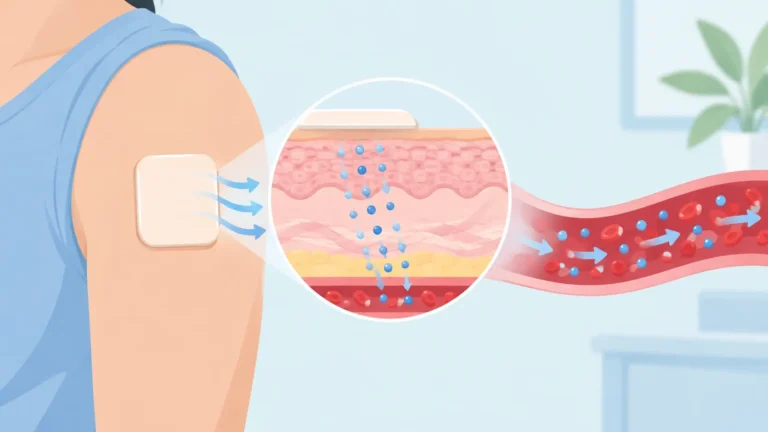
Nicotine replacement therapy (NRT) — patches, gum, lozenges — reduces the intensity of the valley by maintaining some nicotine in the bloodstream and stepping it down gradually. For people with depression, discussing NRT options with a GP before your quit date is particularly worthwhile. In some cases, varenicline (Champix/Chantix) or bupropion — both prescription medications — can be appropriate; your doctor will review the considerations given your mental health history.
Working With Your GP or Mental Health Team
If you are already seeing a GP, psychiatrist, or mental health worker, tell them you are planning to quit smoking. This is important for several reasons:
- Medication interactions. Smoking affects how the body processes certain medications, including some antidepressants (particularly clozapine, olanzapine, and other drugs metabolised via the CYP1A2 pathway). When you stop smoking, the metabolism of these drugs can change, potentially affecting their effective dose. Your prescriber may need to monitor your levels and adjust your dose. This is not a reason to avoid quitting — it is a reason to do it with professional oversight.
- Personalised NRT and cessation support. Your GP can refer you to a stop-smoking service — available free on the NHS — where you will work with a specialist who understands the intersection of mental health and cessation. This is more effective than quitting alone.
- Monitoring during the quit. Having a scheduled check-in during the first month is simply good practice if you have depression. It gives you a safety net if the withdrawal period is harder than expected.
Remember: quitting smoking and managing depression are complementary goals, not competing ones. Your mental health team will almost certainly want to support your quit attempt.
Motivation Strategies That Work With Depression
Standard quit-smoking motivation advice sometimes assumes a baseline level of energy and optimism that depression can make very hard to access. Here are strategies specifically adapted for low-mood states:
Tiny commitments, not grand ones
Depression thrives on all-or-nothing thinking: “I’ll never manage to quit, so why try.” Counter this with micro-commitments. Your only goal is not to smoke in the next hour. Then the next. A week without cigarettes is made of 168 hourly decisions, and you only ever need to make one at a time. Our full guide to quit smoking motivation explores the psychology of incremental commitment in depth.
Write down what you know rather than what you feel
Depression distorts how things feel but not what you know. Keep a note on your phone with two or three evidence-based facts: “Quitting will improve my mood in four to six weeks.” “The craving will peak and pass in five minutes.” “Each day smoke-free, my body is recovering.” On the days when motivation has entirely abandoned you, reading facts you already accepted when you were calmer can bridge the gap.
Use community and accountability
Isolation worsens both depression and quit attempts. Having even one other person — a friend, a support group member, a GP — who knows you are quitting and checks in periodically provides accountability that does not rely on your internal motivation. Our guide to online quit smoking support groups lists several free communities where you can find people in similar situations.
Celebrate smoke-free days as self-care
With depression, self-care can feel performative or even irritating. Try framing each smoke-free day differently: not as an achievement you need to feel proud of, but as a small act of neutrality — you did not harm yourself today. That framing removes the performance pressure while still acknowledging the reality of what you did.
Coping Without Cigarettes on Hard Days
The days when depression is heaviest are also the days when the urge to smoke is strongest. Having a concrete coping toolkit ready for these days is not pessimistic — it is realistic and compassionate.
- Craving surfing. The mindfulness-based technique of observing a craving without acting on it has strong evidence behind it. You do not fight the craving; you watch it, name it, and let it pass. Our guide to the craving surfing technique walks through the practice step by step.
- Physical movement. Even a five-minute walk releases endorphins that both blunt a craving and provide a small mood lift. Depression makes this feel impossible; starting very small (two minutes, to the end of the street) is better than the paralysis of planning a full workout.
- Breathing exercises. Slow, deliberate breathing activates the parasympathetic nervous system — the same calming response that smoking briefly triggered. Practising the 4-7-8 technique when a craving hits provides real physiological relief.
- The iQuit AI coach. On the days when you cannot talk to anyone and do not have the energy to strategise, having an AI coach available at any hour that will gently walk you through a craving moment without judgment is a genuinely useful resource. It does not require motivation to access — just the action of opening the app.
When to Slow Down and Be Gentle With Yourself
If your depression significantly worsens during a quit attempt — not the temporary discomfort of withdrawal, but a genuine deterioration in your mental health — it is appropriate to pause and speak to your GP before continuing. This is not failure. Quitting smoking is a long-term project, and it can be rescheduled. Your mental health cannot wait.
Signs that you should seek medical support rather than pushing through alone:
- Thoughts of self-harm or suicide
- Complete inability to function at home or work over multiple days
- A significant change in how your antidepressants are affecting you
- Panic attacks or severe anxiety that are new since quitting
Seeking help in these moments is not giving up on quitting — it is making sure you are in a stable enough position to try again and succeed.
Frequently Asked Questions
Does quitting smoking make depression worse?
Temporarily, withdrawal can overlap with depression symptoms — low mood, irritability, difficulty concentrating. This peaks at 48 to 72 hours and substantially resolves within two to four weeks. Long-term, a BMJ meta-analysis found that cessation consistently improves depression, anxiety, and mood with an effect size comparable to antidepressants. The short-term dip is real; the long-term trajectory is positive.
Should I wait until my depression is under control before quitting smoking?
Not necessarily. The research does not support the idea that there is a perfect mental health baseline for quitting. In fact, for many people with depression, quitting smoking is part of what helps stabilise their mental health. The key is doing it with professional support — your GP or mental health team — rather than alone.
Can I take antidepressants and quit smoking at the same time?
Yes, and in most cases your GP will actively support this. The important thing is to inform your prescriber before you quit, because stopping smoking can change the way certain antidepressants are metabolised in the body. Your doctor may wish to monitor your medication levels and adjust your dose if necessary. Never stop or adjust antidepressants without medical guidance.
What if I relapse because of a depressive episode?
A relapse during a depressive episode is an extremely common experience and is not a character flaw. It is information: the depressive episode was a high-risk window, and your quit plan needs extra support for those moments. When the episode lifts, recommit to your quit date. The most effective response to a relapse is to treat it as data and plan accordingly, not to use it as evidence that you cannot succeed.
What NHS support is available for quitting smoking with depression?
The NHS offers free stop-smoking services staffed by trained specialists. These services can provide NRT, behavioural support, and referrals for people with mental health conditions. Your GP can make this referral, or you can self-refer via the NHS website. Research shows that NHS stop-smoking services significantly improve quit rates compared with going it alone.