Smoking and Bone Density: How Cigarettes Destroy Your Skeleton and What Happens When You Quit (2026)
Most people know smoking damages lungs and hearts. Far fewer realise it is systematically dismantling their skeleton at the same time. Smoking and bone density have a direct, dose-dependent relationship: the more you smoke and the longer you smoke, the lower your bone mineral density becomes — and the closer you get to a fracture that can change your life forever. Research published in the Journal of Women’s Health found that women with a smoking history of 30 or more pack-years were twice as likely to have osteoporosis as women who had never smoked.
This is not a distant risk reserved for the elderly. Bone loss from smoking begins in your 20s and compounds silently for decades. By the time a fragility fracture announces the damage, years of structural deterioration have already occurred. Understanding the smoking–bone density connection — and, crucially, what reverses it — gives you one more powerful reason to quit.
How Smoking Damages Bones: 5 Mechanisms
Your skeleton is not static. Every year roughly 10% of your bone tissue is broken down and replaced in a process called remodelling. Smoking interferes with this cycle at multiple points simultaneously, creating a net deficit that accumulates over time.
1. Impaired Calcium Absorption
Calcium is the primary mineral responsible for bone hardness. Smoking reduces the gut’s ability to absorb dietary calcium, meaning less raw material reaches your bones regardless of how much dairy or supplement you consume. Studies show this deficit is measurable even in young adult smokers, long before symptoms appear.
2. Suppressed Osteoblast Activity
Osteoblasts are the specialised cells that build new bone. Nicotine directly inhibits osteoblast proliferation and differentiation. A 2019 review in PMC confirmed that nicotine slows the production of bone-forming cells, creating an imbalance where bone breakdown (by osteoclasts) outpaces formation — the hallmark of osteoporosis.
3. Reduced Oestrogen and Testosterone
Both sex hormones protect bone density. Smoking accelerates the metabolism of oestrogen in women, effectively lowering circulating levels. This is one reason female smokers approach menopause with significantly less skeletal reserve, compounding the rapid bone loss that naturally occurs after menopause. In men, tobacco use reduces testosterone, with parallel consequences for bone maintenance.
4. Restricted Blood Flow to Bone Tissue
Nicotine causes vasoconstriction — narrowing of blood vessels. Bone tissue depends on consistent blood supply for oxygen, nutrients, and the delivery of bone-building cells. Chronically reduced bone perfusion starves the remodelling process, slowing repair and increasing the risk that micro-damage from everyday loading accumulates into stress fractures.
5. Elevated Cortisol
Smokers have chronically elevated cortisol (the stress hormone) compared to non-smokers. Sustained high cortisol is independently associated with bone loss because it suppresses osteoblast activity and reduces intestinal calcium absorption — compounding the effects of nicotine directly.
Fracture and Osteoporosis Statistics
The numbers are striking. The American Academy of Orthopaedic Surgeons (AAOS) reports that elderly smokers are 30–40% more likely to break a hip than non-smokers. Hip fractures are among the most clinically serious injuries an older adult can sustain: around 20% of hip fracture patients die within one year, and half of survivors never regain their previous level of independence.
| Risk Factor | Smokers vs Non-Smokers | Source |
|---|---|---|
| Hip fracture risk (elderly) | 30–40% higher | AAOS |
| Osteoporosis (women, 30+ pack-years) | 2× more prevalent | Journal of Women’s Health |
| Overuse injury (bursitis, tendinitis) | 1.5× more likely | AAOS |
| Rotator cuff tear size | Nearly 2× larger | AAOS |
| Fracture rate (vaping users) | 46% higher vs non-vapers | AAOS (2021 study) |
Beyond fractures, a 2025 Frontiers in Endocrinology cohort study found smoking was significantly associated with osteoporosis in a nationally representative US sample even after controlling for confounders including age, BMI, and physical activity level. The dose-response relationship was clear: lifetime pack-years were a stronger predictor of low bone mass than current smoking status alone.
Who Is Most at Risk?
While all smokers lose bone faster than non-smokers, certain groups face compounded risk:
- Post-menopausal women who smoke: Oestrogen decline at menopause plus smoking-induced oestrogen suppression creates a double deficit. The combination can accelerate bone loss to 3–5% per year in the first post-menopausal decade for smokers, versus the typical 1–2%.
- Long-duration heavy smokers: The pack-year calculation matters. A 30 pack-year history (one pack/day for 30 years, or two packs for 15) confers roughly double the osteoporosis prevalence of never-smokers among women in population studies.
- Smokers with low dietary calcium or vitamin D: Smoking magnifies the deficit of an already calcium-poor diet. Those who avoid dairy and have limited sun exposure are at particular risk.
- Smokers on corticosteroids: Drugs like prednisone, commonly prescribed for respiratory conditions that smokers disproportionately develop, independently cause bone loss. Combined with smoking, the skeletal toll is severe.
- Male smokers over 50: Though men start with higher baseline density, long-term male smokers show significantly lower lumbar spine and femoral neck BMD compared to age-matched non-smokers.
How Smoking Slows Fracture Healing
Even after a fracture occurs, smoking continues to cause harm. The AAOS documents that smokers experience longer healing times for broken bones, and surgical outcomes — including spinal fusion, joint replacement, and rotator cuff repair — are significantly worse in smokers than non-smokers.
The mechanisms overlap with bone loss itself: impaired blood flow delivers fewer healing cells to the fracture site; suppressed osteoblast activity slows callus formation; and raised cortisol interferes with the inflammatory cascade that normally initiates repair. For orthopaedic surgeons, active smoking is a recognised risk factor that influences surgical timing and pre-operative planning. Many spine surgeons now require a defined smoke-free period before elective fusion procedures for this reason.
What Happens to Your Bones When You Quit
The good news embedded in all this research is that quitting smoking stops the accelerated bone loss — and, over time, allows partial recovery. Understanding the quit smoking benefits timeline helps set realistic expectations for skeletal recovery.
Months 1–6 After Quitting
Within the first few months of cessation, osteoblast suppression eases as nicotine clears the system. Blood flow to bone tissue improves as vascular tone normalises. Calcium absorption from the gut begins to recover, meaning more dietary calcium actually reaches your skeleton. These changes are not yet visible on a DEXA scan but represent the turning point in the bone-loss trajectory.
Years 1–5 After Quitting
A comprehensive review found that former smokers show measurable improvements in bone mineral density at key fracture sites (lumbar spine, femoral neck) within 1–5 years of quitting, particularly when combined with adequate calcium and vitamin D intake. The rate of recovery depends on age at cessation, duration of smoking, and dietary factors.
Long-Term Recovery
Studies show that former smokers who quit before the age of 50 can substantially recover their bone density deficit relative to never-smokers. Those who quit later in life see slower recovery but still benefit from halting the accelerated loss. The fracture risk reduction after cessation follows a similar pattern to the nicotine withdrawal timeline: progressive improvement over months and years.
Importantly, long-term ex-smokers who have been smoke-free for 10 or more years have hip fracture rates approaching those of never-smokers in several large cohort studies. Quitting at any age produces measurable skeletal benefit.
How to Protect Your Bones While Quitting
Quitting smoking is the single most important step you can take for your long-term bone health. But several evidence-based strategies accelerate recovery and maximise protection during and after cessation.
Nutrition
- Calcium: Aim for 1,000–1,200 mg per day from food (dairy, fortified plant milks, canned salmon with bones, leafy greens) or supplements if dietary intake is insufficient.
- Vitamin D: Essential for calcium absorption. Most adults need 600–800 IU daily; those with limited sun exposure may need 1,000–2,000 IU. A blood test can confirm your level.
- Protein: Adequate protein (0.8 g/kg body weight minimum) supports bone matrix maintenance. Lean meat, legumes, eggs, and dairy all contribute.
- Limit alcohol: Alcohol independently reduces calcium absorption and oestrogen levels. Combined with smoking, it compounds skeletal harm.
Exercise
Weight-bearing exercise is the most effective non-pharmacological stimulus for bone formation. Walking, jogging, dancing, and resistance training all create the mechanical loading that triggers osteoblast activity. The WHO recommends 150 minutes of moderate-intensity physical activity per week — a target that also supports general cessation health. If you are newly quit and using exercise as a craving management tool, you are simultaneously building bone.
Fall Prevention
For older adults with existing bone density loss, fall prevention is as important as density itself. Balance training (yoga, tai chi), home hazard assessment, adequate lighting, and vision correction all reduce the chance of the fall that turns low bone density into a devastating fracture.
NRT and Bone Health
Nicotine replacement therapies (patches, gum, lozenges) provide nicotine without the toxic combustion chemicals in cigarettes, but nicotine itself does have osteoblast-suppressing effects. For bone health, the goal is not just to switch to NRT long-term but to use NRT as a bridge to complete nicotine abstinence. Current evidence suggests that even prolonged NRT use causes less bone damage than continued smoking, because you eliminate carbon monoxide, the direct vascular toxins, and the hormone-disrupting compounds in tobacco smoke.
If you are looking for practical quitting support, the step-by-step quit plan on this site walks through NRT selection, quit date setting, and week-by-week strategies. The best free quit smoking apps can also provide daily tracking that reinforces your progress.
DEXA Scan
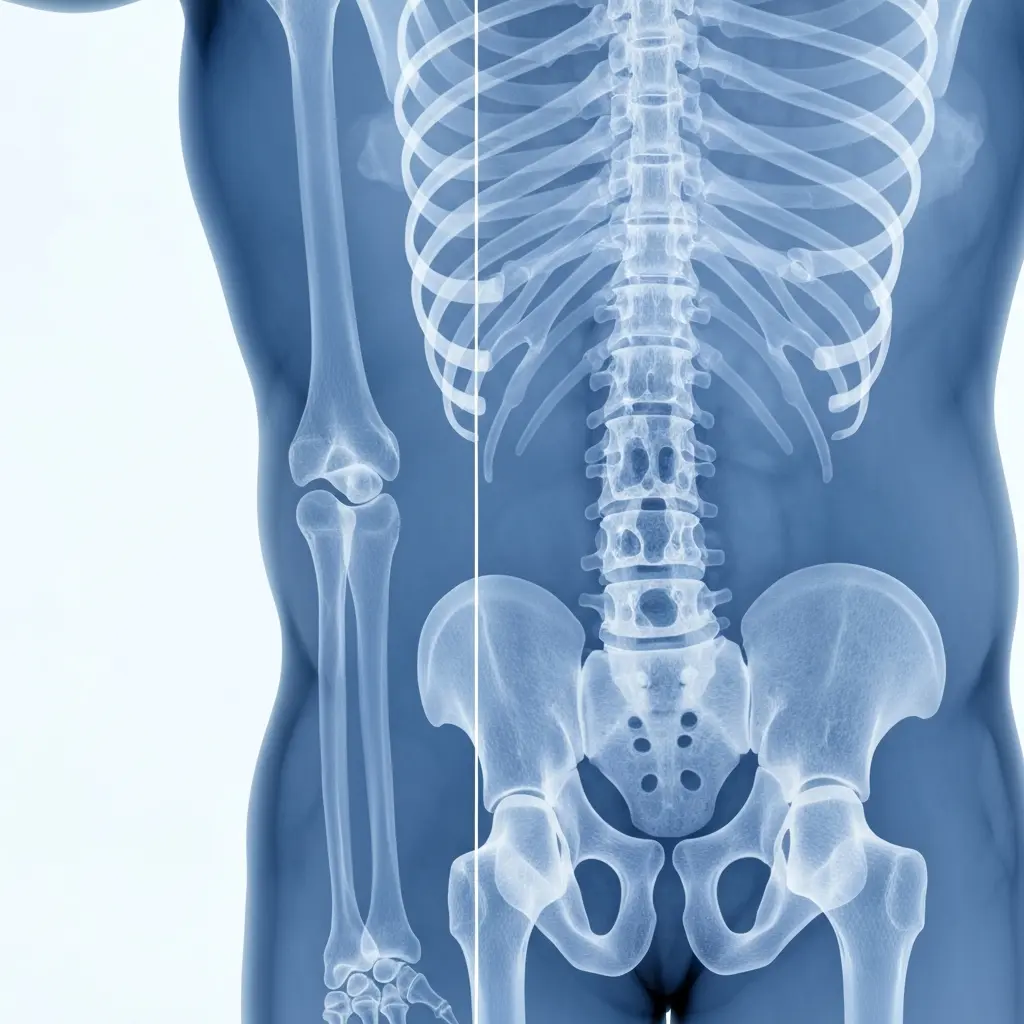
If you have smoked heavily for more than 10 years, ask your doctor about a DEXA (dual-energy X-ray absorptiometry) scan to establish your current bone mineral density. This provides a baseline T-score so you can track improvement as you quit and make targeted decisions about calcium supplementation or medication if density is already low.
Frequently Asked Questions
Does smoking cause osteoporosis?
Yes. Smoking is a well-established risk factor for osteoporosis. It impairs calcium absorption, suppresses bone-forming osteoblast cells, reduces oestrogen and testosterone, and restricts blood flow to bone tissue. Women with 30 or more pack-years of smoking history are twice as likely to have osteoporosis as women who have never smoked, according to research published in the Journal of Women’s Health.
How much does smoking affect bone density?
The effect is dose-dependent. Smokers consistently show lower bone mineral density at the spine, hip, and wrist compared to non-smokers of the same age. Elderly smokers are 30–40% more likely to suffer a hip fracture than non-smokers. The heavier and longer someone smokes, the greater the bone density deficit.
Does bone density improve after quitting smoking?
Yes, measurably. After cessation, calcium absorption normalises, osteoblast activity resumes at its baseline rate, and bone density gradually improves over 1–5 years. The recovery is greater in people who quit earlier in life and who support cessation with calcium, vitamin D, and weight-bearing exercise. Long-term ex-smokers (10+ years quit) approach never-smoker fracture rates.
Why do smokers heal from fractures more slowly?
Nicotine constricts blood vessels, reducing blood flow to the fracture site and delivering fewer bone-repair cells. Suppressed osteoblast activity slows callus formation — the scaffold new bone grows on. Elevated cortisol also interferes with the inflammatory cascade that initiates healing. This is why orthopaedic surgeons often require a smoke-free period before elective bone procedures.
Is vaping as bad for bone density as smoking?
Possibly. A 2021 study documented by the AAOS found that vaping users had a 46% higher fracture rate than non-vapers. Nicotine — present in most vaping products — retains osteoblast-suppressing properties. Users of both cigarettes and e-cigarettes face the greatest skeletal risk. Current evidence does not support vaping as a bone-safe alternative to smoking.
What supplements help smokers protect their bones?
Calcium (1,000–1,200 mg/day) and vitamin D (600–2,000 IU/day depending on sun exposure and blood levels) are the most evidence-backed supplements for bone protection during and after smoking cessation. Magnesium, vitamin K2, and protein intake also support bone health. Always confirm supplement needs with a GP, particularly if you are on other medications.
Ready to Stop the Bone Damage?
Every cigarette you don’t smoke is one less assault on your skeleton. The iQuitNow app gives you a personalised quit plan, daily health milestones, and real-time savings tracking — so you can see your bones (and your bank account) recovering in real time.
Also see: What happens to your body when you quit smoking and 27 evidence-based health benefits of quitting.
Watch: How Cigarettes Affect Your Body
TED-Ed: How cigarettes affect your body — including your skeletal system.