
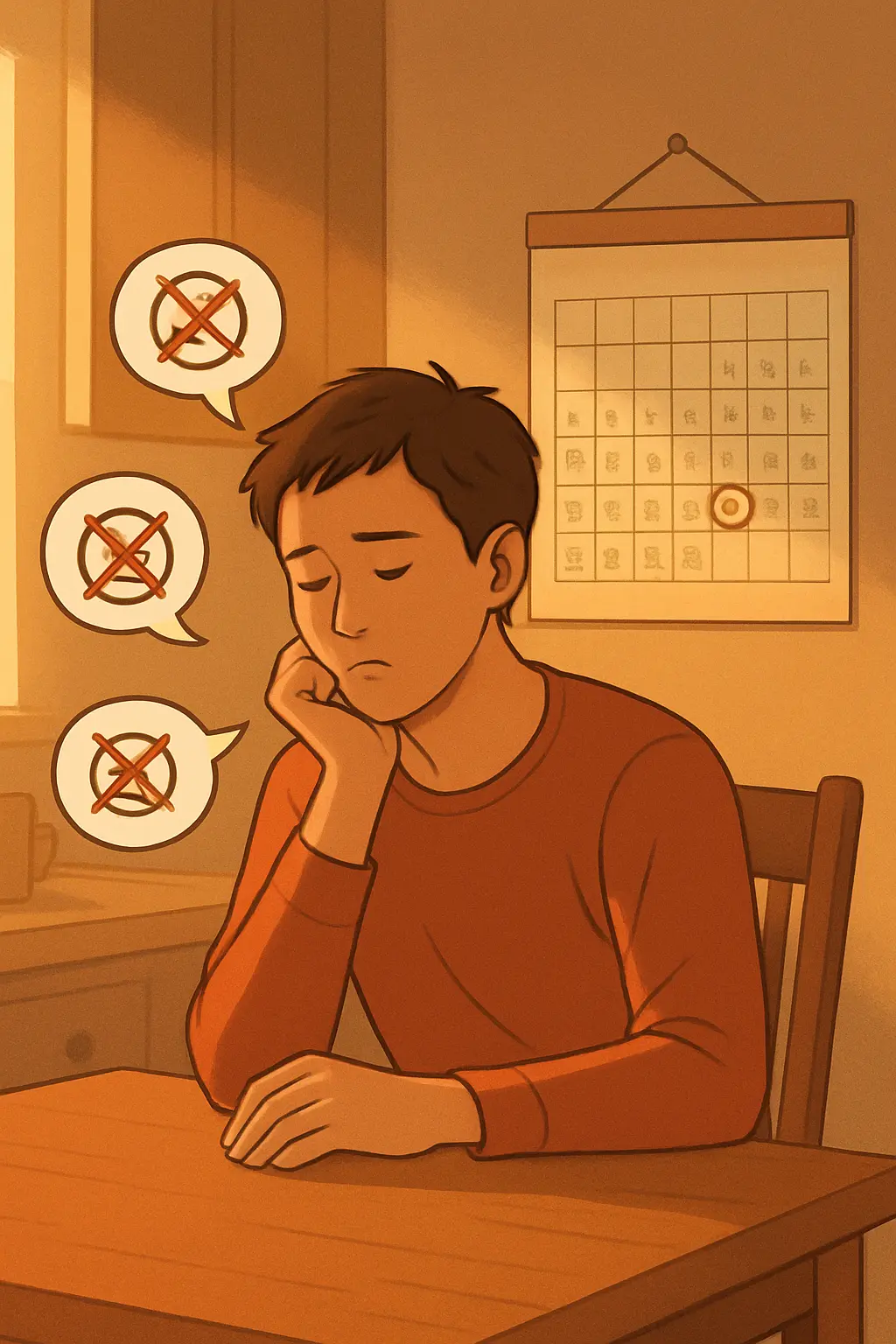
Two weeks before a quit date, something predictable happens. The decision that felt solid starts producing reasons to move it. Work is about to get busy. There is a birthday. You could cut down first and stop properly in November. This is talking yourself out of quitting smoking, and it is not a character flaw. It is a dependent brain negotiating for the next cigarette using arguments that sound like planning. This guide names the six bargains that do most of the damage, sets each one against what the research actually shows, and gives you a single counter you can use today.
Why the Fortnight Before Is the Danger Zone
Cravings are a problem you meet after your last cigarette. Self-negotiation is a problem you meet before it, and it is far better disguised. A craving feels like a craving. A reason to postpone feels like good judgment.
The mechanism is straightforward. Once a date exists, every cigarette before it becomes one of the last ones, and a brain used to nicotine looks for a way to keep the supply open. It does not produce the thought I want to smoke forever. It produces the thought this is the wrong month. Our explainer on why your brain argues back when you try to quit covers what is happening underneath.
So the counters below are not motivational. Motivation is not the missing piece if you already booked a date. What you need is a prepared answer, so the argument does not run unopposed at eleven at night.
| The bargain | What the evidence shows | Your counter |
|---|---|---|
| Now is a bad time | Stress tends to fall after quitting, not rise (Cochrane, 2021) | Name the calmer month out loud, then check whether it exists |
| I will cut down first | Abrupt quitting beat gradual reduction at 4 weeks and 6 months (Annals of Internal Medicine, 2016) | Keep the date, use the two weeks for preparation instead |
| I actually enjoy it | Most of the relief is withdrawal easing, not pleasure (NHS) | Separate the break from the cigarette and keep the break |
| I will just gain weight | Average gain about 4 to 5 kg at 12 months, with wide variation (BMJ, 2012) | Plan the first 12 weeks, which is when most gain happens |
| I have failed before | Successful quitters often needed many attempts (BMJ Open, 2016) | Treat the last attempt as data and change one variable |
| I will start Monday | Attempts started immediately did better than planned ones (BMJ, 2006) | Move the date forward rather than back |
Before the bargains themselves, this short Mayo Clinic explainer covers why the pull is so strong in the first place.
Bargain 1: Now Is a Bad Time
This is the most reasonable-sounding of the six, because it is usually true in a narrow sense. There is a deadline, a move, a difficult month. Quitting on top of that looks like bad planning.
Two things undercut it. The first is arithmetic: list the months of the past two years and mark the calm ones, and most people find nothing to mark. Busy is the baseline. The second is that the premise is backwards. The Cochrane review of smoking cessation and mental health, covering studies to January 2020, found that people who stopped did better on depression, anxiety and stress outcomes than people who kept smoking, not worse.
The NHS explains why the everyday experience feels different. Nicotine gives a short burst of calm, then leaves your system and triggers irritability and anxiety, which the next cigarette relieves. As the NHS puts it, many smokers mistake withdrawal symptoms for everyday stress (NHS Better Health). The stressful month is not being made bearable by smoking. It is being punctuated by withdrawal you have learned to read as stress.
Counter: say the sentence in full. Not now is a bad time, but I am moving my quit date to March, because March will be calmer. If you cannot finish the sentence with a real month and a real reason, it is not a plan.
Bargain 2: I Will Cut Down First Instead
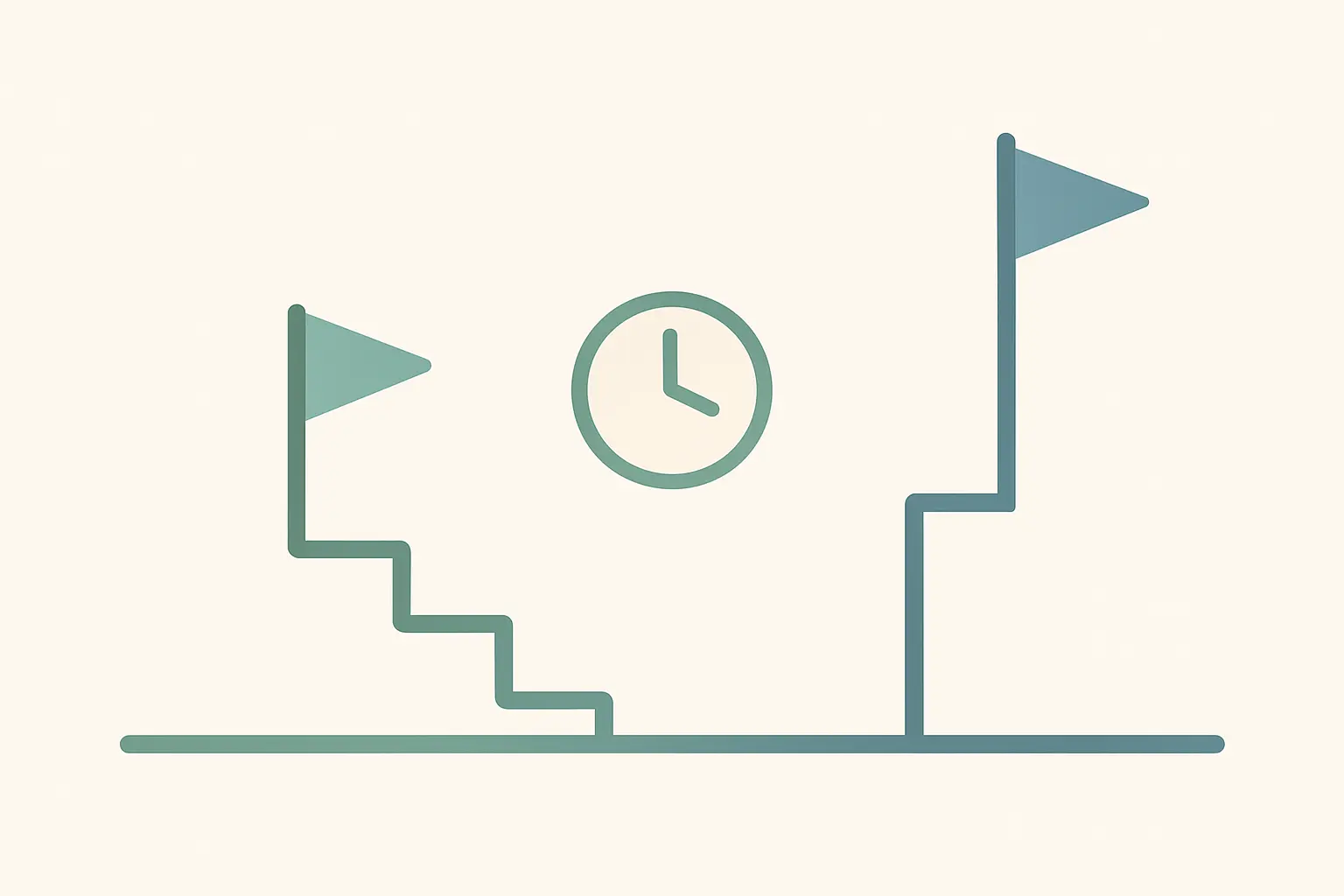
This one is dangerous precisely because it is not obviously an excuse. Cutting down looks like progress. It lets you feel you are doing something without doing the hard part.
It has been tested directly. A randomized controlled trial published in the Annals of Internal Medicine in 2016 assigned 697 adult smokers in English primary care to either stop abruptly or reduce their smoking by 75 percent over the two weeks before quit day. Both groups got nurse support and nicotine replacement before and after the date. At four weeks, 39.2 percent of the gradual group were abstinent against 49.0 percent of the abrupt group. At six months the figures were 15.5 percent and 22.0 percent (Lindson-Hawley et al., Annals of Internal Medicine, 2016).
The detail that matters most in the run-up: even participants who said they preferred gradual cessation did better when assigned to quit abruptly. A 2026 analysis in Drug and Alcohol Dependence, covering 27,390 adults in England who reported a past-year quit attempt in the Smoking Toolkit Study, points the same way in the real world, across social groups.
Counter: keep the date and spend the two weeks on preparation rather than reduction. Order nicotine replacement, book a stop smoking appointment, and plan your first three days. Our guide to preparing properly in the two weeks before lays out what to do with the time.
Bargain 3: I Actually Enjoy It
Take this one seriously, because dismissing it is why a lot of quit advice bounces off. You are not imagining the pleasure. The first cigarette of the day, the one after a meal, the one with coffee outside on a cold morning: those are real experiences and pretending otherwise is not honest.
What is worth separating is what you enjoy from what delivers it. Most cigarettes in a pack are not pleasure at all. They resolve a discomfort the previous one created, which is why the tenth of the day rarely registers as enjoyable and the first always does. The first is ending eight hours of withdrawal.
The parts that are genuinely good are mostly not the nicotine. Stepping outside, five minutes that belong to nobody else, standing with people you like: all of those survive quitting. The chemistry is the only part that does not, and it is the part charging you.
Counter: keep the ritual, drop the cigarette. For two weeks before your date, go outside at the same times without smoking once a day, so you learn what the break feels like on its own. If it still feels good, you have your answer about what you were enjoying. When you need something for your hands and mouth in that gap, iQuit’s virtual cigarette and craving timer are built for exactly that stretch of minutes.
Bargain 4: I Will Just Gain Weight
This one deserves an honest answer rather than a reassuring one, because people told weight gain is a myth stop trusting the rest of the advice. It is real and it has been measured. A meta-analysis of 62 studies in the BMJ found that people who quit without medication gained on average 1.12 kg after one month, 2.85 kg after three months and 4.67 kg after twelve (Aubin et al., BMJ, 2012). That is the average. The spread underneath it is the useful part.
| Outcome at 12 months | Share of quitters |
|---|---|
| Lost weight | 16% |
| Gained less than 5 kg | 37% |
| Gained 5 to 10 kg | 34% |
| Gained more than 10 kg | 13% |
Roughly half gained under 5 kg or lost weight, and most of the gain happens early, which is where your effort belongs.
Counter: plan the first twelve weeks, not the first year. Decide now what you will eat when you want something in your mouth at 3pm, and put one walk a day in your calendar. Deciding in advance is the whole intervention.
Bargain 5: I Have Failed Before
If you have quit five times already, this argument carries real weight. It feels like evidence.
It is evidence of something, but not of what you think. Researchers following 1,277 people in the Ontario Tobacco Survey calculated the attempts needed before success under four sets of assumptions. Depending on the method, the average ranged from about 6 to roughly 30, and the authors argued earlier estimates were too low because they counted only people who eventually succeeded (Chaiton et al., BMJ Open, 2016). Read that as a workload estimate, not a verdict.
There is also a practical move hidden here. Attempts that go wrong the same way every time are not really repeated attempts; they are the same attempt run again. Change one variable. If the last three were unsupported, add nicotine replacement. If cravings beat you at a specific hour, plan that hour. The research on structured support against willpower alone is worth reading before attempt number six.
Counter: write down what ended the last attempt in one sentence, then write what you are changing this time. If you cannot name the change, you have found your first task.
Bargain 6: I Will Start Monday
This is the last bargain and the cheapest, because it costs nothing to agree to. Monday, the first of the month, after the holiday, after Stoptober starts. Each move is small. The pattern is not.
The interesting evidence here runs against the intuition that preparation is everything. A national household survey in England of 918 smokers and 996 ex-smokers found that 48.6 percent said their most recent quit attempt began the moment they decided, with no advance planning. Those unplanned attempts were more likely to produce at least six months of abstinence than planned ones (West and Sohal, BMJ, 2006).
That does not mean planning is bad or that you should abandon a date you have prepared for. It means the protective value of a future date is smaller than it feels, and acting on a decision while it is still warm has value of its own. A date three weeks out is not safer than a date this Thursday. If yours sits near the start of October, read the timing argument properly rather than using it as a delay: here is why October works as a quit month.
Counter: when you catch yourself moving the date, move it forward instead. Any new reason to delay that appears after the date is set gets treated as a craving, not as information.
Locking the Date So the Argument Stops
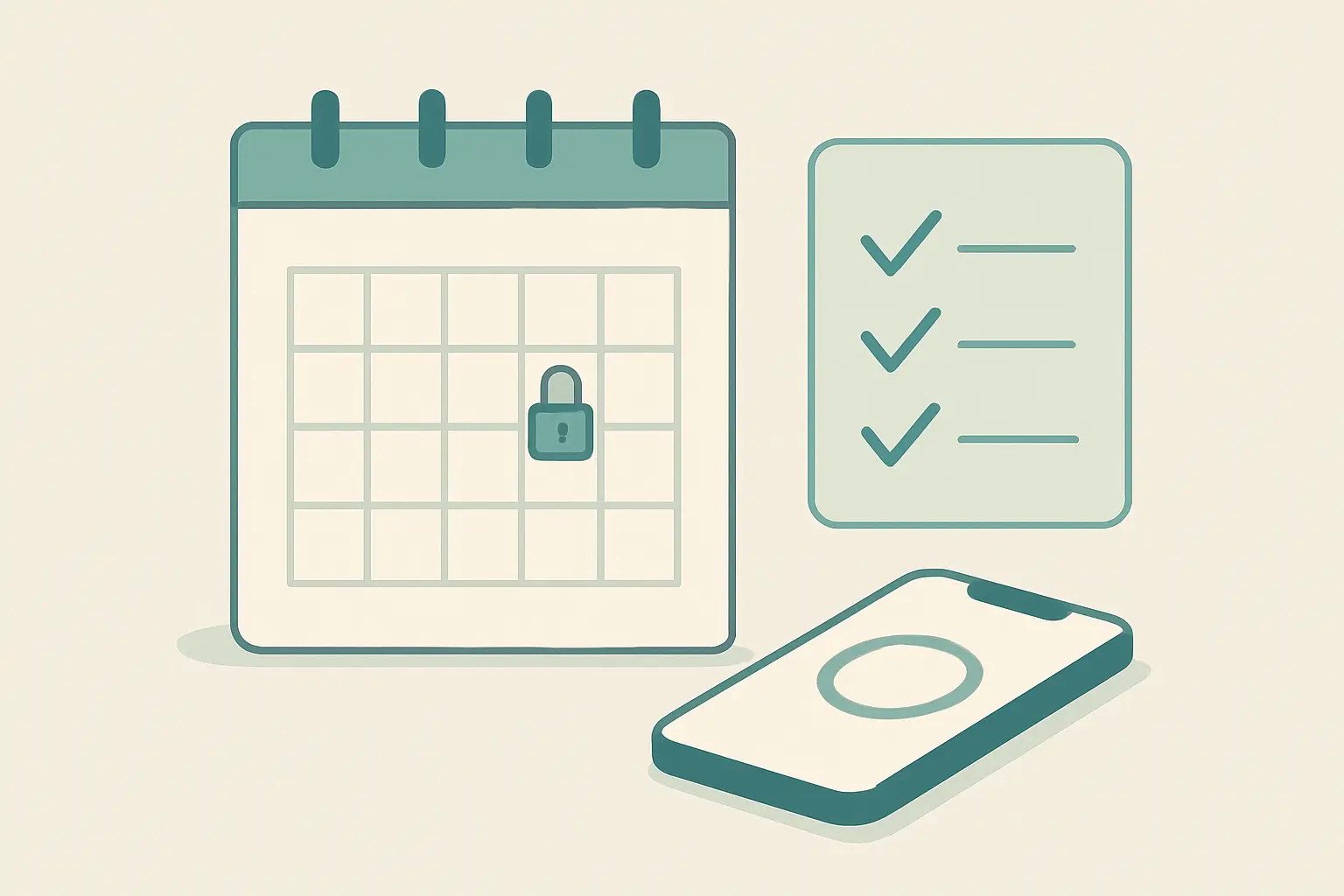
The goal is not to win each argument on the night. It is to make the date expensive to move. Five steps, all of which fit in an evening.
- Write the date and the reason on the same piece of paper. Write the reason while you still believe it. You will read it later when you do not.
- Tell one person who will ask you about it. Not an announcement. One person, one sentence, with the date in it.
- Get your support in place before the date, not on it. Nicotine replacement, a stop smoking service appointment or a prescription medicine, ordered or booked now.
- Decide your first three days in advance. What you do at your usual smoking times, who you tell, what you do at the hardest hour.
- Agree the one rule with yourself. The date does not move for any reason that arrives after it is set.
If you have not set a date yet, do that part properly rather than picking a day at random: our step-by-step guide to setting a quit date that actually sticks walks through choosing one you will keep. For the evenings when the argument gets loud, a few lines of motivation that holds up under pressure can be enough to get you past midnight.
One last thing, plainly. Negotiating with yourself is not a warning sign; it happens to almost everyone who sets a date. The people who get through it are the ones who had the answer ready.
Frequently Asked Questions
Why do I always talk myself out of quitting smoking?
Because nicotine dependence produces reasons, not just urges. As a quit date gets close, the brain generates plausible-sounding arguments for delay, which feel like judgment rather than craving. Recognizing the pattern is most of the fix: treat any new reason to postpone that appears after the date is set as a craving in a different costume.
Is it better to cut down first or stop on one day?
A randomized trial of 697 smokers found abrupt stopping produced more abstinence than cutting down first: 49.0% versus 39.2% at four weeks and 22.0% versus 15.5% at six months, with both groups receiving support and nicotine replacement. Cutting down is not useless, but it is not the safer option it feels like (Lindson-Hawley et al., Annals of Internal Medicine, 2016).
Should I postpone quitting if this is a stressful month?
Usually not, unless you can name a specific calmer month and say why. The NHS explains that much of what feels like everyday stress between cigarettes is nicotine withdrawal, and a Cochrane review found no evidence that stopping worsens stress, anxiety or depression over time (NHS Better Health; Taylor et al., Cochrane, 2021).
How much weight will I gain if I quit smoking?
A BMJ meta-analysis of 62 studies found untreated quitters gained an average of 4.67 kg after twelve months, mostly in the first three. The variation was wide: 16% lost weight, 37% gained under 5 kg, 34% gained 5 to 10 kg and 13% gained more than 10 kg. Planning the first twelve weeks is where the difference is made (Aubin et al., BMJ, 2012).
I have failed many times. Is it worth trying again?
Repeat attempts are the normal route, not the exception. A study following 1,277 people who tried to quit estimated an average of roughly 6 to 30 attempts before success, depending on the method of calculation, and concluded earlier estimates were too low. The useful step is to change one variable rather than repeat the same attempt (Chaiton et al., BMJ Open, 2016).
What should I do in the two weeks before my quit date?
Get your support in place rather than reducing your smoking. Order nicotine replacement or book a stop smoking appointment, tell one person the date, write down your reason while you still feel it, and plan what you will do at your usual smoking times on days one to three. The NHS notes that expert support and stop smoking products meaningfully improve your chances (NHS Better Health).
What if I smoke on my quit date anyway?
The NHS distinguishes a lapse, meaning one cigarette or a single puff, from a relapse, meaning a return to regular smoking. A lapse is something to shrug off and carry on from. If you are smoking regularly again, the NHS advice is to set a new quit date, ideally within the next two weeks, rather than waiting for motivation to return (NHS Better Health).
Put Your Quit Date Somewhere It Cannot Be Renegotiated
When the arguments start, iQuit gives you SOS craving tools with breathing exercises, a craving timer and the virtual cigarette, craving logging that shows which triggers keep catching you, streak shields and slip recovery, and an AI coach that adapts to your progress. The dashboard tracks days smoke-free, cigarettes avoided and money saved from the first hour. Free on Google Play and the App Store.