Varenicline vs Cytisine vs NRT on the NHS: Which Free Stop-Smoking Option Wins in 2026?
The UK’s NHS stop-smoking toolkit changed significantly at the end of 2024. Varenicline — widely regarded as the most effective single medication for quitting — returned to NHS prescriptions in November 2024 after a three-year absence caused by carcinogen contamination concerns. Cytisine, a plant-derived partial nicotine agonist, became licensed and available from January 2024. Combined with established NRT options, UK smokers now have access to the most effective stop-smoking pharmacotherapy menu in history — and much of it is available free or at low cost through NHS Stop Smoking Services.
This comparison draws on NHS England’s November 2024 announcement, the Cochrane analysis of 150,000+ smokers, and the 2024 MAIC comparison of cytisinicline and varenicline published in the Journal of Health Economics and Outcomes Research. It is educational, not medical advice.
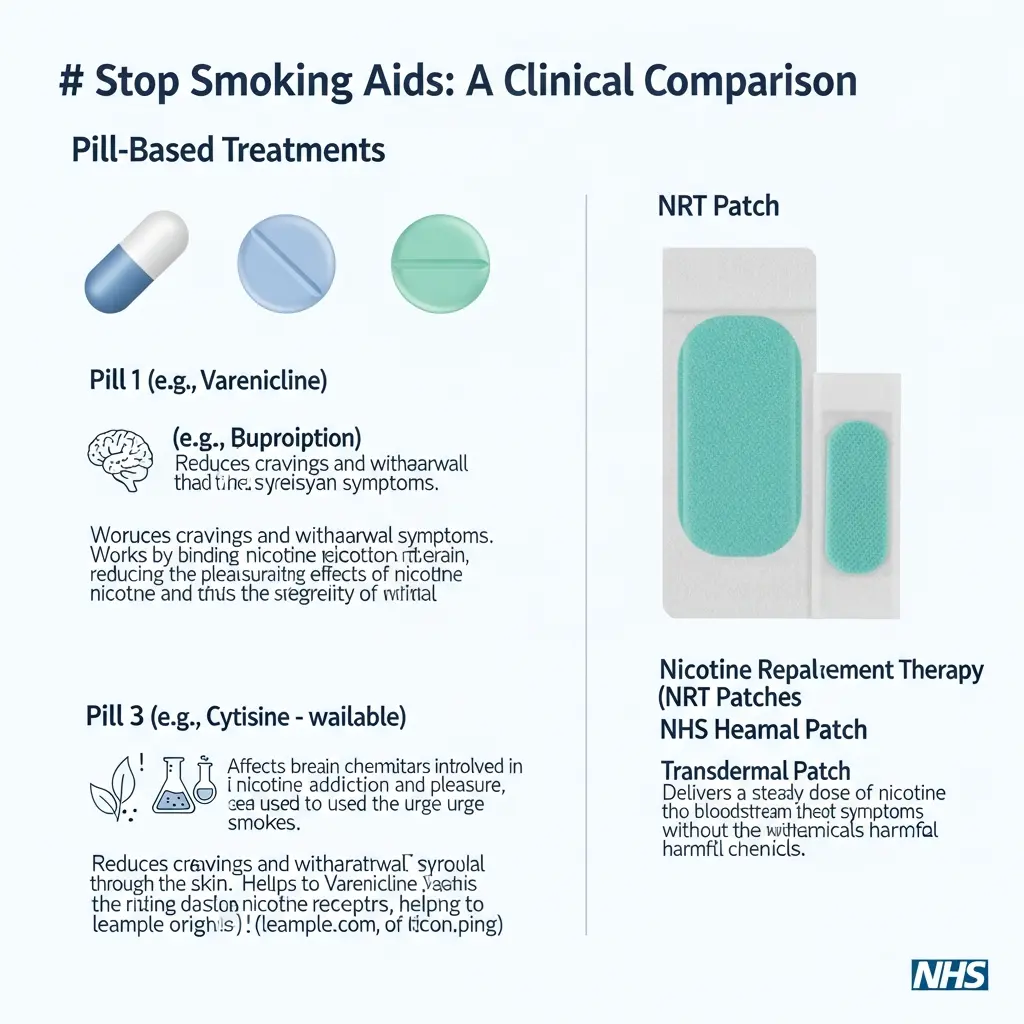
Comparison Table: Varenicline vs Cytisine vs NRT (NHS, 2026)
| Factor | Varenicline | Cytisine | NRT (combination) |
|---|---|---|---|
| NHS availability (2026) | Yes (since Nov 2024) | Yes (since Jan 2024) | Yes (long-established) |
| 6-month abstinence rate (with support) | ~25% (1 in 4) | ~14% (comparable to varenicline) | ~14% (combination NRT) |
| Mechanism | Partial nAChR agonist (blocks nicotine reward) | Partial nAChR agonist (plant-derived) | Nicotine replacement (reduces withdrawal) |
| Treatment duration | 12 weeks (extendable to 24) | 25 days (shorter course) | 8–12 weeks (step-down) |
| Cost (private, UK) | NHS prescription charge (£9.90/item) | ~£115 per course (Tabex brand) | ~£20–60/month OTC; free via stop smoking services |
| Main side effects | Nausea, insomnia, vivid dreams | Nausea, dry mouth (generally mild) | Skin irritation (patches), hiccups (gum) |
| Prescription required | Yes | Yes (NHS); Tabex OTC in some countries | No (OTC or via stop smoking services) |
| Evidence strength | Highest of all medications | Strong; slightly fewer trials than varenicline | Extensive (decades of RCT data) |
Varenicline on the NHS in 2026
Varenicline (formerly branded as Champix in the UK; now available as a generic through Teva Pharmaceuticals) was introduced in August 2024 and formally rolled out across NHS stop smoking services in November 2024. It was withdrawn in October 2021 after Pfizer found unacceptable levels of the probable human carcinogen N-nitroso-varenicline. The generic version from Teva is nitrosamine-compliant, meaning that specific contamination concern is resolved.
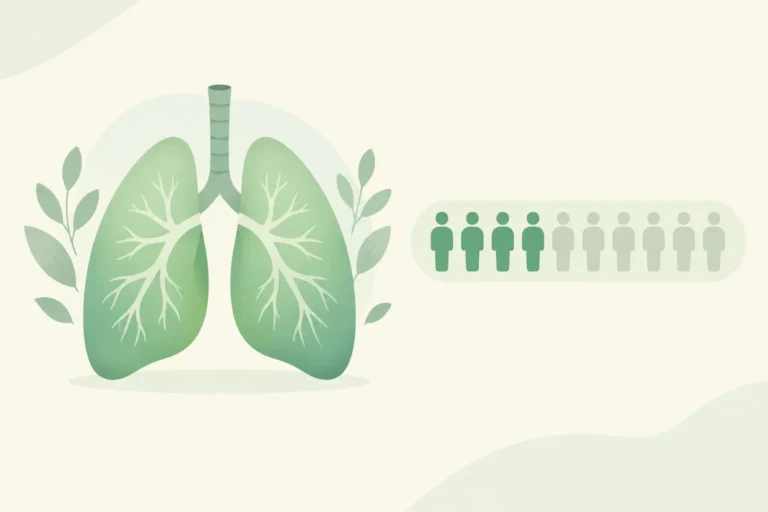
The NHS England announcement estimated that varenicline could help more than 85,000 people stop smoking each year and prevent up to 9,500 smoking-related deaths over five years. When used alongside behavioural support, around 1 in 4 people achieve abstinence at six months — roughly double the rate of unassisted quit attempts (approximately 1 in 20).
Varenicline works by binding to the same nicotinic acetylcholine receptors (nAChRs) that nicotine targets. As a partial agonist, it simultaneously reduces withdrawal cravings and blocks the reward signal if a person does smoke — a dual mechanism that makes it uniquely effective. It is available by GP prescription or through self-referral to NHS stop smoking services via the NHS Better Health website.
Cytisine: The Newer Contender
Cytisine is a plant-derived alkaloid extracted from laburnum seeds that has been used as a cessation aid in Eastern Europe for decades. It was licensed in the UK from January 2024 under the brand name Tabex. Like varenicline, it is a partial agonist at the same nicotinic receptors — the two drugs share a mechanism of action, which explains their comparable effectiveness.
The key advantage of cytisine over varenicline is cost: a full 25-day course costs approximately £115, compared to the standard NHS prescription charge for varenicline. This makes cytisine particularly relevant for patients who do not qualify for free NHS prescriptions or who want a shorter treatment course. Economic analysis has found cytisine to be more cost-effective than varenicline, with similar or slightly lower mean lifetime costs and comparable quality-adjusted life years gained.
However, cytisine’s clinical uptake on the NHS has been limited. UCL analysis published in 2025 found that only 0.7% of people accessing NHS stop-smoking services in England were prescribed cytisine in 2024 — a strikingly low uptake for a drug with strong evidence, likely reflecting prescriber familiarity and awareness gaps. As awareness grows in 2026, this share is expected to increase.
NRT: The Established First-Line Backbone
NRT — nicotine patches, gum, lozenges, nasal spray, and inhalers — remains the most widely used cessation pharmacotherapy in the UK and globally. It requires no prescription, is available free through NHS stop smoking services, and has an unmatched safety and tolerability profile built from decades of use.
The critical evidence point for NRT is that combination therapy — a long-acting patch for steady background coverage plus a short-acting form for acute cravings — significantly outperforms single-product NRT. On its own, single-product NRT produces 6-month abstinence in roughly 14 out of 100 users in structured service settings — comparable to cytisine. For a detailed look at how NRT compares to other pharmacological and behavioural options, see quit smoking success rates by method: 60+ statistics.
Head-to-Head: What the Evidence Shows
The most authoritative comparison comes from the 2023 Cochrane meta-analysis covering over 150,000 smokers. The key findings:
- Varenicline produces the highest quit rates of any single medication — significantly higher than NRT alone and modestly higher than cytisine, though the cytisine difference does not reach statistical significance in the most recent head-to-head analyses.
- Cytisine is comparably effective to varenicline in most analyses. The 2024 matching-adjusted indirect comparison (MAIC) found that when adjusted for study population differences, varenicline and cytisinicline show broadly similar cessation outcomes.
- Combination NRT approaches the efficacy of single medications when used correctly — particularly when the short-acting form is used pre-emptively before high-risk situations rather than reactively after a craving has peaked.
- Combination therapy (e.g., varenicline plus NRT, or medication plus behavioural support) consistently produces the best outcomes across all evidence reviewed.
The Cochrane analysis also notes that for every 100 people trying to quit, approximately 14 are likely to succeed using varenicline or cytisine in any given quit attempt, compared to roughly 6 in 100 who quit without any aids. These figures illustrate the meaningful but not dramatic effect of pharmacotherapy — it roughly doubles your odds, not guarantees success.
Side Effects: What to Expect
All three options are well-tolerated by most people, but side-effect profiles differ:
- Varenicline: Nausea is the most commonly reported side effect, particularly in the first two weeks. Insomnia and unusually vivid dreams are also common. These typically diminish after the first weeks. Older concerns about neuropsychiatric side effects (depression, suicidal ideation) were investigated thoroughly; post-market surveillance studies have not confirmed a significant independent causal link above background rates for smokers. If you are starting varenicline and want the full week-by-week picture of what to expect and exactly how long a course typically lasts, see our dedicated guide on varenicline side effects and how long you take it.
- Cytisine: Generally well-tolerated; nausea and dry mouth are reported. Side-effect burden appears lower than varenicline in head-to-head comparisons, which some researchers attribute to the shorter course duration.
- NRT: Highly variable by formulation. Patches cause skin irritation in a minority. Gum can cause hiccups and jaw soreness. The nasal spray causes nasal irritation in most users initially. None of these are serious, and all resolve on stopping use.
How to Access Each Option on the NHS
The simplest access route for all three options is through NHS Stop Smoking Services. Self-refer via the NHS Better Health: Quit Smoking portal or speak to your GP or pharmacist. Services offer a combination of pharmacotherapy and behavioural support — and research consistently shows this combination outperforms either approach alone.
For daily behavioural reinforcement between appointments, a quit app provides the always-on support layer that healthcare services cannot. iQuit’s AI coach supports craving management in real time — the moments when clinical support is not available. See how an AI quit-smoking coach works and how it complements pharmacotherapy. For a broader comparison of app options, see the best quit-smoking apps of 2026.
FAQ
Is varenicline available on the NHS again in 2026?
Yes. Generic varenicline (manufactured by Teva Pharmaceuticals) was introduced into the UK in August 2024 and rolled out across NHS stop smoking services in November 2024. It is available by GP prescription or through NHS Stop Smoking Services. The previous contamination concern (N-nitroso-varenicline) applies to the original Pfizer Champix formulation; the new generic is nitrosamine-compliant.
What is the difference between varenicline and cytisine?
Both varenicline and cytisine are partial agonists at nicotinic acetylcholine receptors — they share the same basic mechanism of reducing cravings while blocking nicotine’s reward effect. Cytisine is plant-derived, has a shorter treatment course (25 days vs 12 weeks), and is generally cheaper. Varenicline has a larger trial evidence base. Both produce comparable quit rates in head-to-head analyses.
Is NRT as effective as varenicline?
NRT is effective but produces lower 6-month abstinence rates than varenicline in most direct comparisons. The Cochrane meta-analysis found that both varenicline and cytisine produce approximately 14 quit successes per 100 users, compared to roughly 6 per 100 for no treatment. Combination NRT (patch plus short-acting form) can approach medication-level effectiveness for some smokers, particularly when used correctly and consistently.
Can I get varenicline free on the NHS?
Varenicline is available on NHS prescription at the standard prescription charge (£9.90 per item in England as of 2026, or free for those who qualify for exemptions). It is offered through GPs and NHS Stop Smoking Services. Some services provide it free as part of a structured stop-smoking programme — self-refer via the NHS Better Health website to find your local service.
Should I use a quit-smoking app alongside medication?
Yes — medication addresses physiological nicotine dependence; behavioural support addresses habits, triggers, and motivation. Using both together is significantly more effective than either alone. iQuit provides real-time AI coaching, craving logs, and health milestone tracking that complement whatever pharmacological aid your GP prescribes.
Add daily behavioural support to your NHS quit plan
iQuit’s AI coaching gives you 24/7 craving support, trigger tracking, and a health-recovery timeline — working alongside whatever medication your GP recommends. Free to download.