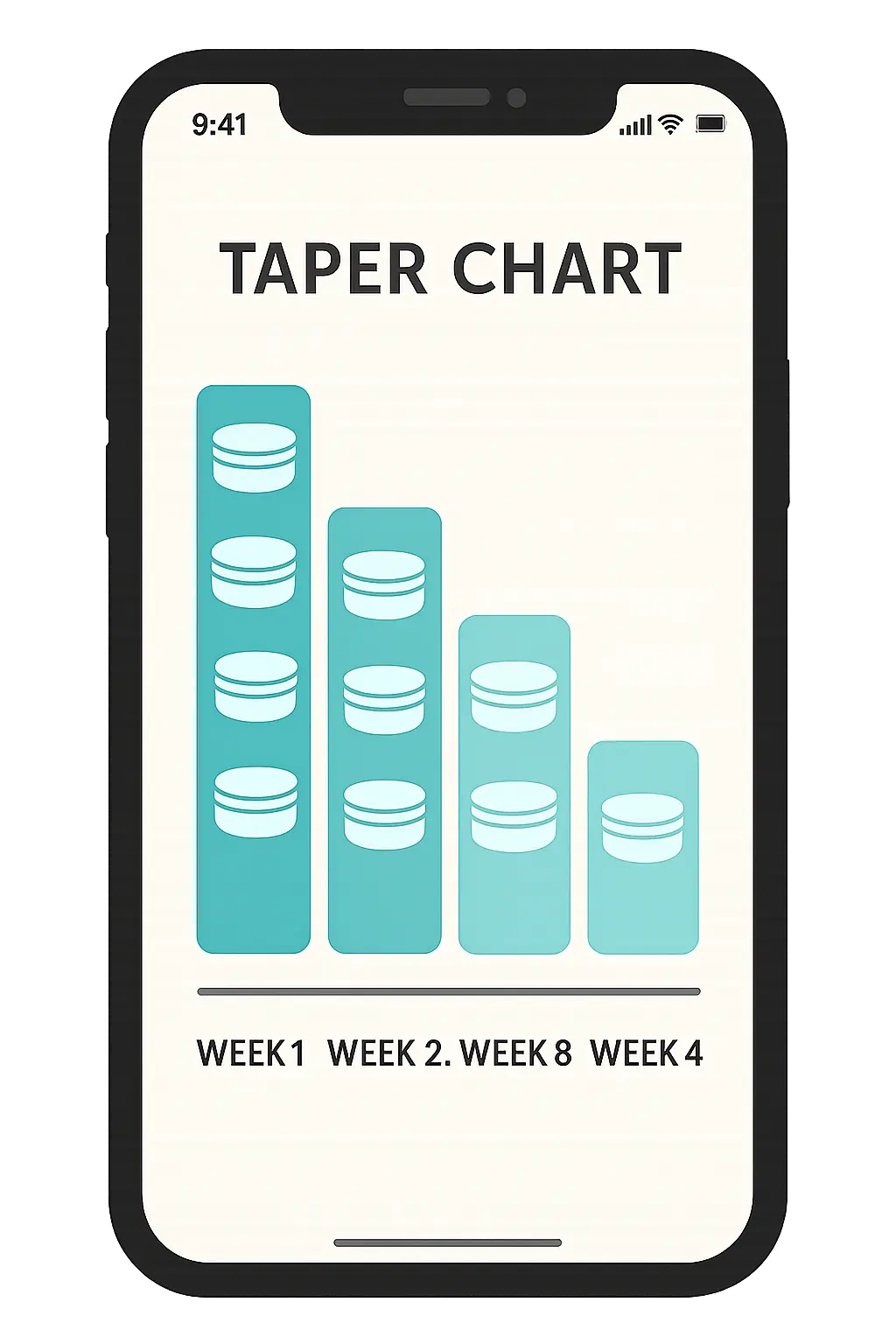
If you’ve already decided to stop using ZYN or another nicotine pouch, the next question is practical: how do you actually track a taper when there’s no cigarette count or pack to anchor it? An app to quit Zyn needs to log cans and pouches, not cigarettes — a different unit entirely, and one most general quit-smoking trackers weren’t built around. This guide covers what to log, how to structure a taper, and what the first two weeks typically look like.
Why Pouch Users Need Different Tracking Than Smokers
Cigarette trackers count sticks and packs; pouch use doesn’t map onto that unit at all. ZYN’s own product line comes in 3mg and 6mg standard strengths and 9mg/11mg “Ultra” strengths, with standard cans holding 15 pouches and Ultra cans holding 20 — so “one can a day” means very different nicotine intake depending on which product you’re using. A tracker built for cigarettes has no field for pouch strength or can size, which means the numbers it produces (like “cigarettes avoided”) don’t translate to a pouch user’s actual habit. Tracking cans, mg, and timing directly avoids that mismatch entirely.
What to Log: Cans per Week, mg per Pouch, Time of First Pouch
Three numbers matter more than a raw daily pouch count:
- Cans per week — a more stable number than daily pouch count, since pouch use tends to cluster (several in a short window, then none for hours).
- mg per pouch — 3mg, 6mg, 9mg or 11mg strength directly determines your actual nicotine intake; switching strength without tracking it can hide whether a taper is really working.
- Time of your first pouch of the day — a widely used proxy (borrowed from cigarette dependence research) for how strong morning withdrawal is; a first pouch within 5 minutes of waking generally signals a stronger dependence than one taken an hour or more in.
Logging all three, rather than just a daily count, is what lets a taper plan actually respond to your real pattern instead of an average that hides which parts of the day are hardest.
A worked comparison shows why the raw daily count can mislead: someone using four 3mg pouches a day (12mg total) is taking in noticeably less nicotine than someone using two 11mg Ultra pouches a day (22mg total), even though the second person’s daily pouch count looks lower. If a tracker only shows “pouches per day,” both people would look similarly committed to their taper even though their actual nicotine intake differs by nearly double — which is exactly the kind of gap that mg-level logging catches and a simple count misses.
Setting a Taper in the App
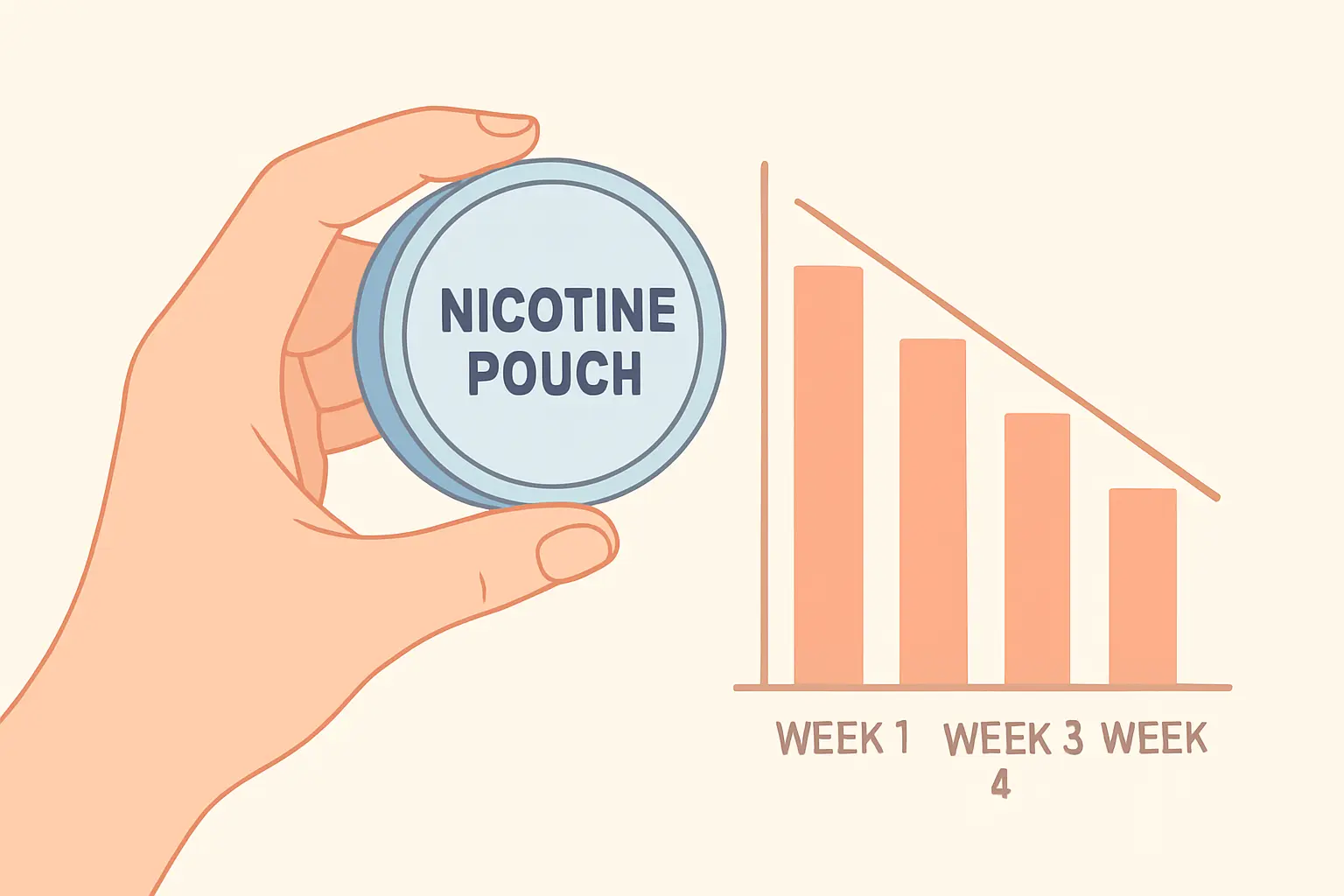
A practical starting taper cuts your weekly can count by roughly a quarter each week rather than attempting to stop outright — scheduled reduction is one of the quit methods iQuit supports directly. Using a starting habit of one can a day (7 cans/week) as an example:
| Week | Cans/week | Cost/week |
|---|---|---|
| 1 | 7 | $43.75 |
| 2 | 5 | $31.25 |
| 3 | 4 | $25.00 |
| 4 | 2 | $12.50 |
This is one illustrative pattern, not a clinical protocol — some people taper faster, others need smaller steps or longer to hold each stage, and strength reduction (dropping from 6mg to 3mg pouches) can be layered in alongside or instead of a can-count taper. iQuit’s craving logging with triggers and intensity, plus streak shields and slip recovery, supports adjusting the pace without treating a slower week as a failure.
Two variables are worth adjusting independently rather than assuming they move together: can count and pouch strength. Someone who cuts their can count in half but simultaneously switches from 3mg to 6mg pouches may end up with a similar total nicotine intake despite the taper “looking” like progress on a simple count. A taper that logs both variables side by side makes this trade-off visible immediately, rather than only showing up as a plateau in cravings a few weeks in with no obvious explanation.
Handling the Strongest Pouch of the Day
Most pouch users have one point in the day — often the first pouch, or one tied to a specific routine like a commute or a work break — that feels non-negotiable. Rather than cutting that one first, taper the pouches around it: reduce the total can count by skipping or delaying the easier, more habitual pouches while leaving the hardest one in place until later in the taper. iQuit’s SOS craving tools (breathing exercises, grounding techniques, a craving timer) are built for exactly this moment — most cravings peak and pass within a few minutes even without a pouch.
Logging exactly when the hardest craving hits, not just that it happened, also reveals patterns most people don’t notice in the moment — a specific meeting time, a particular drive, or a routine break that has become tied to the habit through repetition rather than nicotine need alone. Once that link is visible in a week or two of logged data, it becomes easier to plan around it deliberately (a short walk instead of the usual break, for example) rather than being surprised by the same craving at the same time every day.
Cost Tracking per Can
ZYN’s manufacturer suggested retail price is about $5.64 per can, according to retail pricing coverage, but real prices vary sharply by state due to nicotine pouch excise taxes: a state-by-state pricing breakdown puts Illinois around $9.92/can and Washington near $12.05/can (both driven by high state excise rates), while states with no pouch-specific tax — Delaware, Montana, New Hampshire, Oregon — sit close to the $5.64 MSRP. A national average of roughly $5.50–$6.25/can (standard 3–6mg strengths) is a reasonable default if you don’t know your local price, but checking your own receipt is more accurate given how wide that state-by-state range is. Logging your actual can price lets a money-saved tracker reflect what you’re really paying rather than a generic figure that could be off by more than double in a high-tax state.
The excise-tax gap is worth understanding, not just noting: some states tax nicotine pouches as a percentage of the wholesale or selling price (Washington’s 95% excise is the highest currently observed), while others apply a flat per-ounce rate or simply general sales tax with no pouch-specific levy at all. That structural difference — percentage-of-price versus flat-rate versus no tax — is why the price gap between states can exceed double the MSRP rather than varying by a modest amount, and why a taper’s cost savings compound faster in high-tax states than the national-average figures above suggest.
Cravings Once the Oral Habit Goes
Nicotine pouches don’t just deliver nicotine — they occupy your mouth for 20-60 minutes at a time, so quitting removes an oral habit alongside the chemical one. Sugar-free gum, toothpicks, or seeds are common low-effort substitutes for the physical placement habit specifically, separate from nicotine craving itself. Research on pouches as a cessation tool is still developing and mixed, as this university cancer-center video explains:
That distinction matters for pouch users trying to quit pouches themselves, not switch to them from cigarettes: the oral-habit substitute and the nicotine-craving substitute are two separate problems worth logging and addressing separately, rather than assuming one fix (like gum) solves both automatically.
What the First Two Weeks Look Like
Physical withdrawal from nicotine typically peaks within the first 3 days and substantially eases within 2 weeks, though the exact timeline varies by person and by how quickly the taper is structured. The most common pattern reported by pouch users cutting down: the first few days feel manageable if the taper starts gradually, days 3-5 often bring the sharpest cravings as the body adjusts to a lower baseline, and by the end of week two the specific triggers (rather than constant background craving) become the main thing to manage. Logging daily — even just a quick note on can count and mood — makes it much easier to see this pattern in your own data rather than judging a single hard day as the whole trend.
For the full step-by-step method behind a ZYN taper plan, see how to quit nicotine pouches: a Zyn taper plan, and for the current data on pouch use and quit attempts, nicotine pouch statistics 2026. If your habit also includes hookah or shisha alongside pouches, a quit app for hookah and shisha smokers covers that separately, and are Zyn and Velo a safe way to quit smoking covers the safety question for smokers considering pouches as a switch rather than quitting them outright. For setting up any of this tracking in the app itself, how to use a quit smoking app step by step walks through the basics.
Frequently Asked Questions
Is there an app specifically for quitting Zyn or nicotine pouches?
Not many apps are pouch-specific, but a general quit-smoking app like iQuit supports pouch tracking if you log cans, mg strength and cost yourself rather than relying on a cigarette-based counter. Craving logging, streak shields and scheduled reduction all apply directly to a pouch taper.
How much does a can of ZYN cost?
ZYN’s manufacturer suggested retail price is about $5.64 per can, but real prices vary widely by state due to nicotine pouch excise taxes — from close to MSRP in states with no pouch tax, up to roughly $9.92 in Illinois and $12.05 in Washington. Check your own receipt for an accurate figure.
What should I track to taper off nicotine pouches?
Cans per week, mg strength per pouch, and the time of your first pouch each day. These three numbers show whether a taper is genuinely reducing nicotine intake, since daily pouch count alone can hide a switch to a stronger strength or a cluster of use in a short window.
How many pouches are in a can of ZYN?
Standard ZYN cans hold 15 pouches; ZYN Ultra cans hold 20 pouches at higher 9mg and 11mg strengths. Some competitor brands pack 20 pouches per can even at standard strengths, so comparing “per can” cost across brands can be misleading without checking pouch count.
Do nicotine pouches help you quit smoking?
Evidence is mixed and still developing — university research has noted pouches may not reliably reduce cravings the way approved nicotine replacement therapy does. If you’re using pouches as a switch from cigarettes, that’s a different goal than quitting pouches themselves, which is what this guide addresses.
What replaces the oral habit when you stop using pouches?
Sugar-free gum, toothpicks or seeds are common substitutes for the physical mouth-occupying habit specifically, which is separate from the nicotine craving itself. Addressing both — the oral habit and the chemical craving — separately tends to work better than assuming one fix solves both.
Track Your Own Pouch Taper, Not a Generic Cigarette Count
iQuit’s craving logging, streak shields and money-saved dashboard adapt to your own numbers — cans, strength, and price — free on Google Play and the App Store.
Download iQuit Free on Google Play
Download on the App Store