
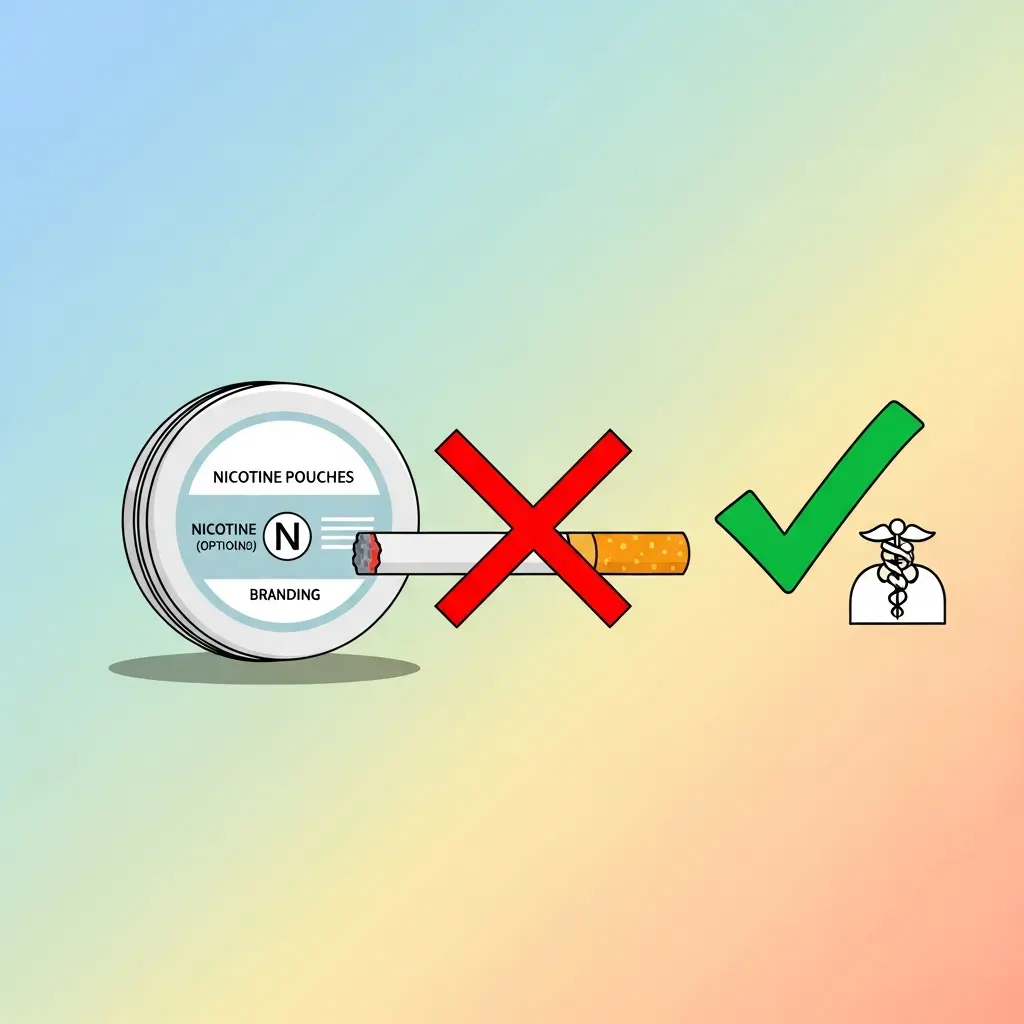
Nicotine Pouches Explained: Are Zyn and Velo a Safe Way to Quit Smoking? (2026)
Walk into any convenience store in 2026 and you will find a growing shelf of small white tins labelled Zyn, Velo, On!, and Rogue — tobacco-free oral nicotine pouches that have grown rapidly in popularity as alternatives to cigarettes. Their clean appearance, lack of smoke and smell, and discreet use have made them attractive to smokers looking for a different way to manage nicotine intake. The question millions of smokers are asking is whether nicotine pouches like Zyn are a safe way to quit smoking — and the honest, evidence-based answer is more nuanced than the marketing suggests.
The short version: nicotine pouches are not approved cessation aids, the clinical evidence for their effectiveness at helping people quit smoking is limited, and they maintain nicotine dependence. That does not mean they have no place in a harm-reduction conversation — but it does mean they should not be confused with the proven methods that have decades of controlled-trial data behind them. This guide sets out exactly what Zyn and Velo are, what the 2026 evidence shows, and what the genuinely evidence-based options look like.
What Are Nicotine Pouches? Zyn and Velo Explained
Nicotine pouches are small, pre-portioned sachets — roughly the size of a stamp — containing synthetic nicotine or nicotine derived from tobacco leaves, mixed with plant-based fibres, flavourings, pH adjusters, and sweeteners. They contain no tobacco leaf. The user places a pouch between the upper lip and the gum, where it sits for typically 20–30 minutes, releasing nicotine through the oral mucosa directly into the bloodstream.
Zyn (manufactured by Swedish Match, now owned by Philip Morris International) is the market leader in the US, available in 3 mg and 6 mg nicotine strengths and multiple flavours including mint, citrus, and cinnamon. Velo (manufactured by British American Tobacco) competes across similar formats in both the US and European markets, though as of 2025 it had not yet received US FDA marketing authorisation and was navigating the review process.
Nicotine pouches differ from related products in important ways:
- vs cigarettes: No combustion, no tobacco combustion products, no carbon monoxide, no tar.
- vs snus: No tobacco leaf — just the nicotine extracted from it (or synthetic nicotine). Traditional Scandinavian snus contains tobacco leaf and is considered a different product category by regulators.
- vs nicotine gum or lozenges (approved NRT): Not approved as therapeutic cessation aids. Delivered by the same oral-mucosal route as nicotine gum, but without the NDA (New Drug Application) pathway and clinical trial requirements that NRT products went through.
How Nicotine Pouches Work
The mechanism is straightforward: nicotine diffuses from the pouch through the mucous membrane of the inner cheek and gum into the bloodstream. Absorption is relatively rapid — peak plasma nicotine levels are reached within 15–30 minutes, broadly comparable to nicotine gum.
Nicotine then acts on nicotinic acetylcholine receptors in the brain, triggering dopamine release in the nucleus accumbens and producing the familiar satisfaction, alertness, and craving relief that smokers associate with a cigarette. The delivery method is different; the neurochemical outcome — and the maintenance of dependence — is the same.
This is an important point: switching from cigarettes to nicotine pouches does not end nicotine dependence. It substitutes one nicotine delivery method for another. For smokers whose goal is complete freedom from nicotine, pouches are not a path to that goal — they are a different delivery system for the same addiction. If you have already made that switch and are now ready to come off pouches too, our Zyn taper plan for quitting nicotine pouches sets out a structured, week-by-week way to do it.
FDA Status: What the 2025 Authorisation Actually Means
On January 16, 2025, the FDA authorised the marketing of 20 Zyn nicotine pouch products following a four-year application review. This was a significant regulatory milestone — but it is essential to understand what this authorisation does and does not mean.
What it does NOT mean: Zyn is not approved as a smoking cessation therapy. It has not gone through the clinical trial process required of approved cessation medications. The authorisation does not endorse it as a safe product, nor does it recommend its use by people who do not currently smoke or use tobacco.
The FDA explicitly stated that “adults who do not currently use tobacco products should not start using nicotine pouches.” The authorisation was granted under the Modified Risk Tobacco Product pathway, which evaluates relative risk compared with other tobacco products — not absolute safety, and not therapeutic cessation effectiveness.
Regarding Velo: as of 2025, Velo was still navigating the FDA review process and had not received equivalent US marketing authorisation. It is available in various European markets under different regulatory frameworks.
Clinical Evidence for Quitting Smoking: What the Research Shows
The clinical evidence base for nicotine pouches as a smoking cessation tool is thin compared with established NRT or pharmacotherapy options. Two major 2025 reviews summarise the current state:
Addiction systematic review (2025)
A systematic review published in Addiction in 2025 examined seven randomised trials involving 269 adult participants. Key findings:
- Nicotine pouches were rated more favourably for satisfaction than nicotine gum or placebo, but consistently less favourably than cigarettes.
- The review noted that robust long-term cessation outcome data was lacking across the included trials.
- The authors concluded that evidence regarding clinical impact on cessation remained limited.
Cochrane review (2025)
A 2025 Cochrane review of oral nicotine pouches for cessation found only two studies that reported smoking abstinence outcomes at four weeks or longer. The review found insufficient evidence to draw firm conclusions about cessation effectiveness and called for more high-quality randomised trials with long-term follow-up.
By contrast, approved NRT, varenicline, and bupropion each have dozens of large-scale randomised controlled trials with multi-year follow-up data. The evidence gap between nicotine pouches and approved cessation therapies is substantial. For a full comparison of quit methods by evidence strength, see the quit smoking success rates by method.
Harm Reduction Context: Lower Risk vs No Risk
Harm reduction is a legitimate public health framework. For smokers who have repeatedly attempted to quit and have not succeeded using approved methods, switching to a less harmful nicotine product represents a meaningful health improvement — even if it is not cessation.
The FDA’s own reasoning in authorising Zyn acknowledges this: for a committed adult smoker who fully switches to nicotine pouches, the elimination of combustion-related toxicants represents a real health benefit, even though nicotine dependence continues. The absence of tar, carbon monoxide, and the 70+ known carcinogens in cigarette smoke is not trivial.
However, harm reduction is distinct from cessation therapy, and several important caveats apply:
- Complete switching is rare in practice. Many users who adopt nicotine pouches continue to smoke cigarettes alongside them — often referred to as “dual use.” Dual use does not deliver the health benefits of complete switching.
- Long-term safety data is limited. Nicotine pouches have been in widespread use for a relatively short time. The long-term oral mucosal and systemic effects of daily pouch use over years are not yet fully characterised.
- Nicotine dependence continues. Users who switch from cigarettes to nicotine pouches remain nicotine dependent. Ending that dependence requires a cessation approach, not a product switch.
Truth Initiative: What is Zyn and what are oral nicotine pouches?
Youth use among 10th–12th graders doubled from 1.3% (2023) to 2.6% (2024). Monthly sales rose 207% between January 2023 and April 2025. Nicotine pouches are now the second most-used tobacco product among US middle and high schoolers after e-cigarettes.
For a fuller breakdown of usage growth, youth uptake, and sales data across pouch brands, see our 2026 nicotine pouch (Zyn) statistics roundup.
Known and Potential Health Risks
While nicotine pouches avoid the combustion-related harms of cigarettes, they are not without health considerations:
- Nicotine dependence: Pouches deliver sufficient nicotine to maintain and reinforce addiction.
- Oral effects: Regular pouch use has been associated with gum irritation, gingival recession, and soreness at the placement site in some users, though clinical data on long-term oral mucosal effects is still accumulating.
- Cardiovascular effects of nicotine: Nicotine itself — regardless of delivery route — raises heart rate and blood pressure acutely. People with cardiovascular disease should discuss any nicotine product use with their doctor.
- Appeal to youth: The Truth Initiative and CDC have noted that flavoured nicotine pouch products appeal to young people, raising concerns about initiating nicotine dependence in never-smokers.
- Unknown long-term effects: The Cochrane review specifically flagged the lack of long-term safety data as a limitation of current evidence.
Proven Cessation Methods: What Works
If your goal is to quit smoking — and especially if your goal is to end nicotine dependence entirely — the evidence base firmly points toward established cessation methods rather than nicotine pouches.
Nicotine Replacement Therapy (NRT)
NRT products — patches, gum, lozenges, nasal spray, and inhaler — have been through the full pharmaceutical approval process. They are regulated as medicines, dosed and labelled for cessation, and backed by extensive clinical trial data. Combination NRT (a slow-release patch plus a fast-acting form for cravings) is the most effective NRT approach. See the best NRT options compared for a full breakdown.
Varenicline (Chantix/Champix)
Varenicline is the most effective single pharmacotherapy for smoking cessation. It works as a partial agonist at nicotinic receptors — reducing cravings and blocking the reward from smoking simultaneously. The EAGLES trial confirmed its safety in people with stable psychiatric conditions.
Bupropion (Zyban)
Bupropion is an antidepressant that also reduces nicotine cravings. It is second-line to varenicline in most guidelines but more effective than NRT alone in some populations. Note contraindications for people with seizure history or eating disorders.
Behavioural support and digital coaching
Any pharmacotherapy combined with counselling or digital coaching produces better outcomes than pharmacotherapy alone. Quit lines, face-to-face counselling, and app-based support all add benefit. The evidence on vaping for cessation and the NRT form comparison give further detail on specific options.
The iQuit app provides evidence-based AI coaching and craving support around the clock — supplementing proven cessation methods with personalised tracking of your health milestones, money saved, and cigarette-free days. Understanding the nicotine withdrawal timeline alongside active support can meaningfully improve your chances of sustained abstinence.
Frequently Asked Questions
Are nicotine pouches an approved way to quit smoking?
No. Nicotine pouches such as Zyn and Velo are not approved by the FDA as smoking cessation aids. Zyn received FDA marketing authorisation in January 2025 as a tobacco product — not as a therapeutic quit-smoking treatment. People who want to quit should use proven methods: nicotine replacement therapy, varenicline, bupropion, or combination approaches with behavioural support.
What is Zyn and how is it different from snus?
Zyn is a tobacco-free oral nicotine pouch — a small sachet placed between the upper lip and gum that delivers nicotine through the oral mucosa. Unlike snus, it contains no tobacco leaf. Unlike cigarettes, it produces no combustion or smoke. It does, however, deliver nicotine — a highly addictive substance — and continued use maintains nicotine dependence.
Is Zyn safer than smoking?
The FDA’s 2025 authorisation of Zyn noted that the products pose lower risks of cancer and other serious conditions compared with cigarettes. However, ‘lower risk than cigarettes’ does not mean ‘safe.’ Nicotine pouches still deliver a highly addictive substance, and long-term health data is limited. They are not a safe alternative to quitting nicotine altogether.
What does the clinical evidence say about nicotine pouches for quitting smoking?
A 2025 systematic review in Addiction examined seven randomised trials (269 participants total) and found limited long-term cessation outcome data. The Cochrane review (2025) found only two studies reporting abstinence at four weeks or longer and concluded that more robust evidence is needed. The evidence base is far smaller and weaker than for NRT, varenicline, or bupropion.
Can I use nicotine pouches as a bridge to quitting?
Some harm-reduction frameworks consider complete switching from cigarettes to a lower-risk nicotine product a meaningful step for people unable to quit nicotine entirely. However, this is distinct from cessation. If your goal is to quit nicotine altogether, using proven cessation methods — NRT, varenicline, or bupropion with behavioural support — offers much stronger evidence for achieving abstinence.
What are the proven methods for quitting smoking?
The methods with the strongest clinical evidence are: varenicline (most effective single pharmacotherapy), combination NRT (patch plus fast-acting form), bupropion, and behavioural support combined with any of the above. Quit lines, face-to-face counselling, and digital coaching apps add further benefit on top of pharmacotherapy.