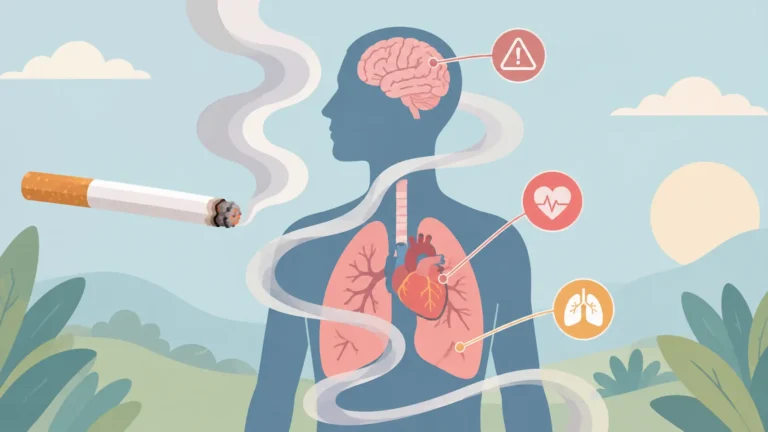
Does nicotine cause anxiety? It seems like it should be a simple question, but there are two loud answers online. One says cigarettes calm you down. The other says nicotine causes all of your anxiety. Neither matches what the research can actually support, and the gap between them matters if you are trying to decide whether to quit or how to feel about the anxiety you have now.
This article separates what is shown from what is only assumed: why a cigarette can feel calming, what population studies have found, and what happens to anxiety when people stop smoking. It is general information. If you have an anxiety disorder or take medicine for your mental health, speak with a clinician before making changes.
Does nicotine cause anxiety? The short answer
Not in a simple cause-and-effect way that the research can prove. Most of the long-term evidence is about smoking rather than nicotine alone, and it is observational, which limits what it can show about cause. What can be said with reasonable confidence is this: anxiety is a recognized withdrawal symptom, smoking is linked to some anxiety disorders, and quitting tends to be followed by an improvement rather than a worsening of anxiety.
That is a less satisfying answer than “cigarettes calm you down” or “nicotine ruins your nerves,” but it is the accurate one, and it is still useful.
Why a cigarette feels calming
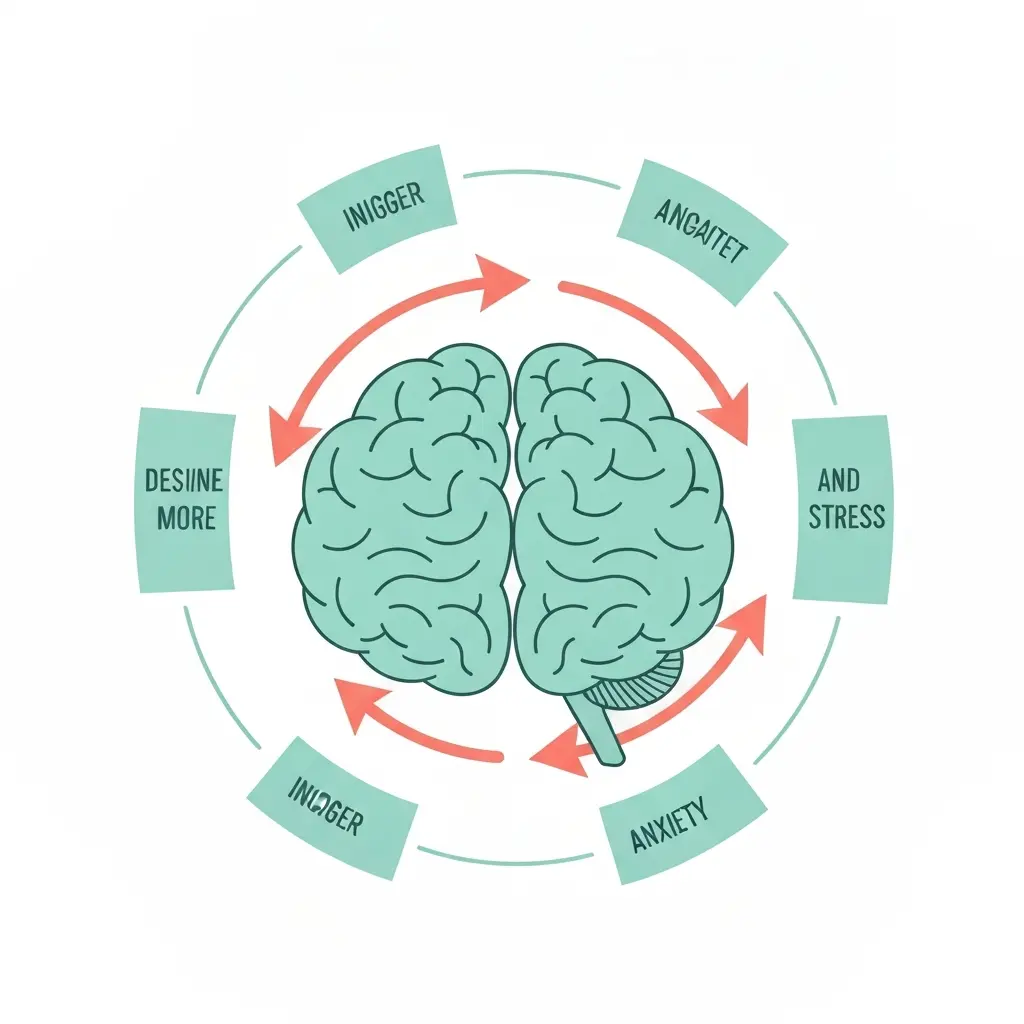
Many people who smoke say a cigarette helps when they are stressed, and the relief they feel is real. What is misleading is the explanation. The NHS explains that cravings make people who smoke feel irritable and anxious, and that those feelings are temporarily relieved by lighting up. It adds that smoking actually increases anxiety and tension, and that the effects of smoking itself are likely to have caused the anxiety in the first place.
The CDC lists feeling anxious, sad or depressed among common withdrawal symptoms. Put simply, part of the anxiety between cigarettes can be the need for the next one. The cigarette eases a discomfort that nicotine dependence helped create, which is why the calm feels genuine and why it wears off.

What population studies show
A 2012 systematic review in BMC Medicine by Moylan and colleagues examined 47 population-based studies that used formal diagnostic criteria. It found that the evidence most consistently supported smoking and nicotine dependence as increasing the risk of panic disorder and generalized anxiety disorder. The reviewers also found that the literature on anxiety disorders leading to smoking was inconsistent, and they described the prospective evidence overall as limited and heterogeneous.
In other words, both directions may be true for different people. Some people with anxiety may be more likely to start or keep smoking. Some people who smoke may be more likely to develop certain anxiety disorders. The review could not settle how much of each is happening, and it did not test nicotine in isolation. It is also possible for something else, such as a difficult life situation, to push up both smoking and anxiety at once, which is one reason correlation cannot settle the question. Treat any confident claim about nicotine and anxiety with some caution.
What happens to anxiety after quitting
In the short term, anxiety can rise. A research review by Hughes (2007) found that anxiety is one of the withdrawal symptoms that peak within the first week and last two to four weeks. That is the period most likely to make someone conclude that smoking was keeping them calm.
Over the longer term, the picture changes. A 2014 meta-analysis in the BMJ by Taylor and colleagues included 26 studies with follow-up between seven weeks and nine years. Anxiety decreased in people who quit compared with those who kept smoking (standardised mean difference -0.37, 95% CI -0.70 to -0.03). The authors reported that the effect sizes were equal to or larger than those of antidepressant treatment for mood and anxiety disorders, and that the improvement seemed as large for people with psychiatric disorders as for those without.
A 2021 Cochrane review of 102 studies found the same direction for anxiety symptoms (standardised mean difference -0.28, 95% CI -0.43 to -0.13, 15 studies, 3,141 participants), but rated the certainty of that estimate as low. It concluded that mental health does not worsen as a result of quitting.

What the research cannot tell you
The studies above share a limitation. People were not randomly assigned to keep smoking or quit, so differences might partly reflect who manages to stop. The Cochrane review specifically noted a serious risk of bias from changes over time that studies could not fully adjust for.
The research is also mostly about smoking, not nicotine by itself. It cannot tell you precisely how nicotine from a vape or a pouch affects anxiety, or how your own history of anxiety will respond. Anxiety has many causes, and quitting will not necessarily resolve an anxiety disorder that has other roots.
What to do if anxiety is part of your smoking
If anxiety is a big part of why you smoke, it is worth planning for it rather than hoping it will not show up.
- Expect a temporary rise. Knowing the first weeks may feel harder makes it easier not to read that as a sign that quitting is a mistake.
- Have a few non-cigarette tools ready. Our article on grounding exercises for smoking anxiety covers some simple ones, and our guide to quitting while managing stress and anxiety takes a broader look at planning.
- Talk to a clinician first if you take mental health medicine. The NHS advises people who take antipsychotics or antidepressants to talk to their GP or psychiatrist before stopping smoking, because doses may need monitoring.
- Do not stop prescribed medicine on your own to make room for quitting.
- Get help for anxiety in its own right. If you have panic attacks or anxiety that disrupts daily life, ask about treatment regardless of your smoking.
If you want an app to support the process, our article on quit smoking apps for anxiety explains what to look for. And for the wider picture on mood and quitting, see our guide to smoking and mental health.
If you have thoughts of harming yourself, seek help immediately. In the US you can call or text 988 at any time.
Frequently Asked Questions
Does nicotine cause anxiety?
It has not been proven that nicotine alone causes anxiety. Population studies suggest smoking and nicotine dependence may raise the risk of panic disorder and generalized anxiety disorder, although results are inconsistent. Withdrawal between cigarettes also causes anxious feelings that smoking temporarily relieves.
Why does a cigarette feel calming if it does not reduce anxiety?
The NHS explains that cravings make people who smoke feel irritable and anxious and that those feelings are temporarily relieved by lighting up. What feels like calm is largely the easing of withdrawal, which is why the relief does not last.
Will my anxiety get worse if I quit smoking?
It may rise for a few weeks because anxiety is a withdrawal symptom. Over the longer term, a 2021 Cochrane review found that anxiety symptoms improved in people who quit compared with those who continued, on low-certainty evidence. Ask a clinician about support if your anxiety is severe.
Is nicotine replacement therapy safe if I have anxiety?
Many people with anxiety use stop-smoking medicines, but the right choice depends on your health and other medicines. The NHS advises people taking antidepressants or antipsychotics to talk to their GP or psychiatrist before stopping smoking, so ask before you start.
Does nicotine in vapes or pouches cause anxiety too?
Direct evidence is limited, and most long-term studies looked at smoking rather than nicotine alone. Withdrawal still applies, because any source of nicotine can create dependence, and a clinician can advise if anxiety is a concern.
Give anxious moments somewhere else to go
iQuit is free on Google Play and the App Store. Log cravings with their triggers and intensity to see which ones are tied to anxiety, and open SOS craving support (breathing exercises, grounding and craving timers) when an anxious moment turns into an urge to smoke.