
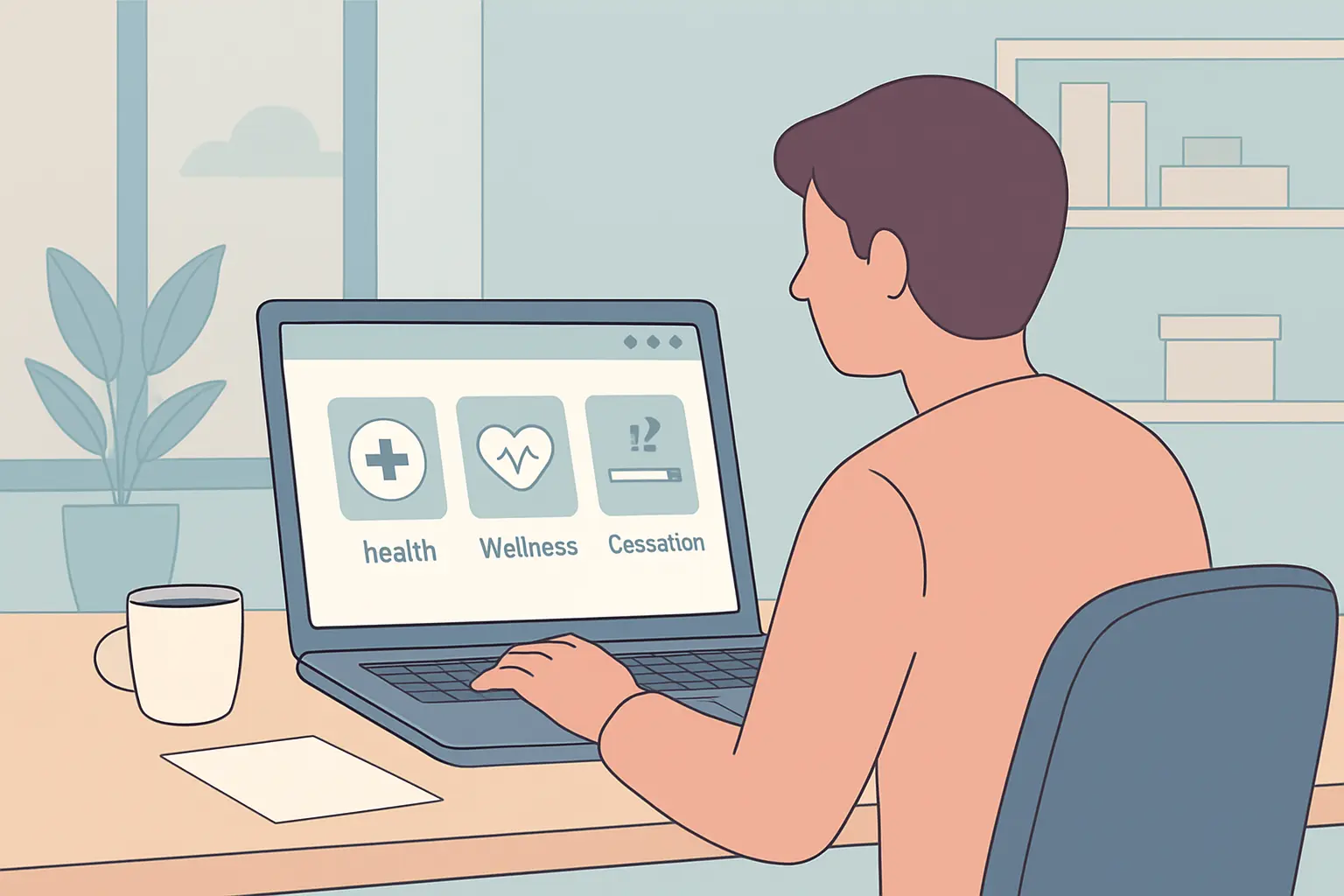
An employer quit smoking program is often sitting unused in a benefits portal most employees have never opened. Between wellness-program cessation support, health-plan coverage, and vendor programs bundled into your insurance, there’s frequently a free or heavily subsidized route to quitting available at work — and a separate set of rules about tobacco surcharges that’s worth understanding either way.
What Employers Typically Cover
The CDC’s occupational health institute, NIOSH, recommends that employers “offer and promote comprehensive tobacco cessation support to all tobacco-using workers and, where feasible, to their dependents,” and to “provide employer-sponsored cessation programs at no cost or subsidize cessation programs for lower-wage workers to enhance the likelihood of their participation.” That’s a recommendation, not a mandate, so what’s actually offered varies enormously by employer and by health plan. Common forms include cessation coaching (phone or app-based), subsidized or fully covered nicotine replacement therapy, and access to a dedicated vendor program bundled into the health plan.
Employers have a direct financial reason to offer this: tobacco use drives a measurable share of employer healthcare spending, covered in more detail in the smoking-related healthcare costs guide. That cost pressure is part of why cessation benefits and tobacco surcharges often exist side by side at the same employer — the surcharge offsets some of the higher expected cost, while the cessation program is the offered way to avoid needing the surcharge at all.
It’s worth separating two related but different things: your health plan’s baseline coverage of cessation medications and counseling (a health-insurance question, covered in the guide to whether insurance covers quit-smoking aids) versus a separate employer wellness program layered on top of that plan. You may have one without the other, or both — checking your plan’s own coverage is a separate step from checking whether your employer additionally runs a wellness program.
Where to Look in Your Benefits Portal
Cessation benefits are rarely advertised as a standalone item — they’re usually buried under “preventive care,” “wellness program,” or listed inside your medical plan’s summary of benefits under a line like “tobacco cessation counseling” or “smoking cessation medications.” Search your benefits portal for those exact terms, and separately check whether your employer runs a distinct wellness-program page (often a different login or vendor site entirely from your core benefits portal) — cessation support is frequently housed there instead of in the medical plan summary.
A practical checklist for a first pass through your benefits portal: search “tobacco,” “smoking,” and “nicotine” in whatever search box the portal has; open your medical plan’s Summary of Benefits and Coverage document and check the preventive-services section specifically; check whether a separate wellness-program vendor login exists (often set up during open enrollment and easy to forget about); and ask your HR or benefits contact directly whether a tobacco cessation benefit exists even if you can’t find it — some benefits are technically available but never surfaced in the self-service portal.
Vendor Programmes You May Be Enrolled In Already
Employers and health plans often contract a third-party vendor to run cessation support rather than building it themselves, which means you may already have access to a program without realizing it. Truth Initiative’s EX Program is one example — it describes itself as a partner “for employers and health plans to end smoking, vaping, and nicotine use,” delivered through live coaching, an online community, and free quit medication, and is only accessible if your employer or health plan has contracted it. Pelago (formerly Quit Genius) works the same way: its own site markets to employers (“reduce your healthcare spend, boost workforce productivity”) and health plans, with a members-only “Am I Covered” page confirming access runs through your organization, not a direct signup.
Neither of these is something you can typically just sign up for on your own — check with HR or your benefits portal for whether either (or a similar vendor) is already part of your plan before assuming you’d need to pay out of pocket for equivalent support.
Premium Differentials and Surcharges for Tobacco Use
Some employers charge tobacco users more for health coverage rather than (or alongside) offering cessation support. The US Department of Labor’s Employee Benefits Security Administration sets the federal ceiling on this: a wellness program’s total reward or penalty tied to a health factor generally “must not exceed 30 percent (or 50 percent for programs designed to prevent or reduce tobacco use) of the cost of employee-only coverage under the plan.” Critically, that same guidance requires that the program “provides a reasonable alternative standard, without physician verification that the individual met the standard, to all individuals who do not meet the otherwise applicable standard (those who use tobacco products)” — for example, a discount for attending an educational class or trying a nicotine patch instead of testing tobacco-free.
In plain terms: if your plan charges a tobacco surcharge, federal rules require your employer to also offer you a way to avoid or offset it that doesn’t depend on already being tobacco-free — usually by participating in a cessation program rather than passing a nicotine test. Plan materials describing the surcharge are required to disclose that alternative; if yours don’t mention one, ask HR directly rather than assuming there isn’t one. For the separate question of whether and how employers test for nicotine in the first place, see do employers and insurers test for nicotine.

Privacy: What Your Employer Can and Cannot See
The reasonable-alternative-standard rule above specifically avoids requiring physician verification for the tobacco-related alternative, which limits how much clinical detail your employer needs about your smoking status to administer a surcharge fairly. In practice, most employer wellness programs rely on self-reported tobacco-use status (an attestation) rather than lab testing, precisely because testing raises its own legal and cost complications — covered in more depth in the nicotine-testing article linked above. If you’re using a cessation program bundled through your employer’s vendor, that vendor’s own privacy policy (not your employer’s HR department) governs what happens to your individual coaching or craving data — worth checking before you assume your day-to-day quit progress is visible to your manager.
This is a genuine legal area with real variation by state and by plan type, and the details of what a specific employer can require or disclose depend on the exact program design — a self-insured employer plan, a fully-insured plan, and a state or local government employer can all be governed by slightly different rules. Nothing here is individualized legal advice; if a specific surcharge, attestation requirement, or data-sharing practice at your workplace concerns you, that’s a question for your HR department, your plan’s summary plan description, or an employment attorney, not a general guide like this one.
What to Do if There Is No Programme
If your employer genuinely offers nothing — no wellness cessation benefit, no vendor program, no covered NRT — you’re not locked out of low-cost options. The cheapest way to quit smoking guide covers free national resources, low-cost NRT routes, and what genuinely requires spending versus what doesn’t, independent of what your workplace provides. It’s also worth asking HR directly whether a program exists even if it isn’t advertised — some employers have cessation benefits buried in an Employee Assistance Program (EAP) that’s marketed for mental health support rather than smoking specifically.
Smaller employers are less likely to have a dedicated wellness-program vendor at all — the NIOSH recommendation cited above is a best-practice guideline, not something small businesses are resourced to implement the way a large self-insured employer might be. If you work for a smaller organization, your best bet is usually your health plan’s own preventive-benefits coverage (the insurance question, not the employer wellness-program question) plus free national and state cessation resources, rather than expecting a bespoke workplace program to exist.
Combining a Work Programme With an App
A workplace cessation program and a personal tracking app aren’t competing options — they cover different things. A vendor program like the EX Program or Pelago typically provides coaching, medication access, and structured check-ins; iQuit provides day-to-day craving logging, a money-saved dashboard, and an always-available AI coach for the moments between formal coaching sessions. Using both means your workplace program handles medication and structured support while the app handles the daily tracking that keeps you accountable outside scheduled coaching calls. If you’re quitting while working from home and your usual office triggers (commute, coworker smoke breaks) aren’t part of your day, the guide to quitting while working from home covers building a routine around whatever your actual daily structure is — and if your workplace does offer a stop-smoking service alongside your app, using a quit app with a stop-smoking service covers how the two fit together without duplicating effort.

Frequently Asked Questions
Does my employer have to offer a quit smoking program?
No. CDC/NIOSH recommends employers offer comprehensive tobacco cessation support, but it isn’t a federal mandate for all employers. Check your benefits portal or ask HR directly to find out what your specific employer and health plan actually provide.
How much can my employer charge me extra for smoking?
Federal wellness-program rules (DOL/EBSA) cap tobacco-related premium surcharges at 50% of the cost of employee-only coverage, and require the plan to offer a reasonable alternative standard — such as a cessation class or trying NRT — for anyone who doesn’t meet a tobacco-free standard.
What are the EX Program and Pelago?
Both are third-party cessation vendors that employers and health plans contract to provide coaching, medication access, and structured support. Neither is typically available to sign up for independently — access runs through your employer’s or health plan’s contract with them.
Can my employer see my individual smoking or craving data?
Most employer wellness programs rely on self-reported tobacco-use status rather than clinical testing. If you use a vendor cessation program through work, that vendor’s own privacy policy governs your individual coaching data, not your employer’s HR department directly.
What if there’s no cessation program where I work?
Ask HR directly, since some benefits (like an Employee Assistance Program) cover cessation without advertising it as a smoking-specific benefit. If there’s genuinely nothing available, free national resources and low-cost NRT routes exist independent of any employer program.
Should I use a work program and a quit app at the same time?
Yes — they cover different needs. A workplace vendor program typically provides coaching and medication access, while an app like iQuit provides daily craving tracking and support between scheduled coaching sessions.
Track Your Quit Alongside Any Programme
Whether or not your employer offers cessation support, iQuit tracks your cravings, streaks, and money saved day to day — with no enrolment and no HR paperwork required. Free on Google Play and the App Store.
Download iQuit Free on Google Play
Download on the App Store