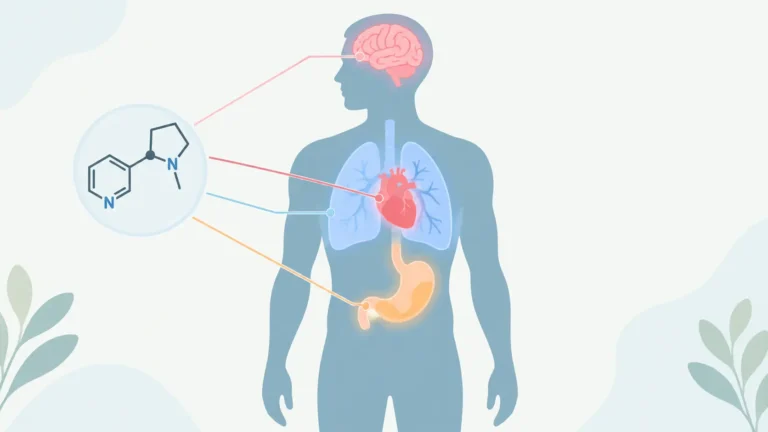
If you are feeling guilty about smoking, you are far from alone, and the feeling itself is not the problem. The problem is that guilt can quietly turn into shame, and shame makes it harder to ask for help. This guide explains the difference, looks at what the research does and does not show, and turns the feeling into a short, kind plan you can start today.
Why guilt about smoking is so common
Most people who smoke know the risks. They also know how much they care about their health, their families and their future. When behavior and values pull in opposite directions, guilt is the result. You might feel it when you step outside for a cigarette, when you hide a pack from a partner or when a child asks about it.
The NHS describes the feeling well in its guidance on getting back on track after a relapse. It says you might feel like you have failed or let your loved ones down, then adds: relapsing is not the end, just a setback that many people face on the journey to quitting for good (see the NHS page on relapse). The same applies before you quit. Feeling bad does not make you a bad person.
If part of you does not want to quit yet, that is also common, and we have a guide for it: how to quit smoking when you do not really want to. If fear is part of the picture, our piece on the seven fears that keep people smoking may help.
Guilt versus shame
These two feelings often get lumped together, but they behave differently.
- Guilt says: I did something I do not want to do. It points at a behavior, which you can change.
- Shame says: I am a failure. It points at your whole self, which feels impossible to change, so it tends to make people hide, withdraw or avoid the subject.
That is a plain-language distinction, not a clinical definition, but it is useful. A quit plan is about behavior. Guilt can fuel it. Shame gets in the way by making you reluctant to tell anyone, to look at your slips or to ask for help. The goal of this guide is to keep the first and loosen the second.
What the evidence says, and does not say
It is tempting to claim that shame always backfires, or that guilt always motivates. The research is not that tidy, so here is an honest summary of what we found.
- Stigma and quit intentions. A US survey of 1,528 current cigarette smokers, published in Substance Abuse, found that smokers who reported greater feelings of stigmatization about their smoking were more likely to report recent quit attempts and a stronger intention to quit. The authors read this as feelings of stigma being related to greater motivation to stop smoking. It is a cross-sectional snapshot. It does not show that shame helps people succeed or stay quit.
- Self-compassion. A 2026 study in the Journal of Health Psychology of 331 adults, including 164 current smokers, found that self-compassion was indirectly associated with nicotine dependence through negative affect and health self-efficacy. The authors suggest that strengthening self-regulation resources may be relevant for smoking cessation efforts. Again, this is an association in one study, not a trial of a treatment.
- Relapse and learning. A 2022 review on relapse argues that moving on too quickly from failure misses opportunities to learn critical lessons that may promote successful change in the future, and that debriefing a setback can help.
The honest takeaway is modest. Guilt can get people moving, nothing here shows that harsh self-criticism helps them finish, and there are good reasons to think that learning from a slip works better than punishing yourself for it. For a broader view of what helps, see our guide to quit smoking motivation and staying strong.
Using guilt as a signal
Instead of asking why am I like this?, ask what is this feeling pointing at? Often it points at a value. You want to breathe easier, protect people you love or stop hiding. That is valuable information, and it deserves a plan rather than a punishment.
Smokefree.gov says many people smoke when they have intense emotions, and it lists anxious, stressed, bored, down, lonely and angry among the emotional triggers (see Smokefree.gov on smoking triggers). Guilt and shame can themselves be triggers: you feel bad, you smoke to cope, then you feel worse. Spotting that loop is the first step to breaking it. Smokefree.gov suggests talking about your emotions, taking slow, deep breaths and exercising.
This short video from the New York State Quitline reminds viewers that it takes most smokers multiple attempts and that the key is to learn from the experience and keep trying.
Self-compassion in practice
Self-compassion is not letting yourself off the hook. It is talking to yourself the way you would talk to a friend in the same position. Here is a simple exercise you can do in two minutes:
- Name the feeling out loud or on paper: I feel guilty about smoking.
- Remind yourself it is common: Many people feel this way.
- Ask what a kind friend would say, and say it to yourself.
- Choose one action that fits your values, however small.
| Shame thought | Plan thought |
|---|---|
| I have no willpower. | The NHS says relapses can happen because of stress, tough situations or trying to quit with just willpower. I need a plan and support, not more willpower. |
| I let everyone down. | I can tell one person I am working on it and ask for help. |
| I have failed again. | Smokefree.gov says most people need multiple quit attempts. This one gives me new information. |
| I cannot tell anyone. | Talking to a friend, family member or adviser is a recognized way to deal with emotional triggers. |
| There is no point. | Reaching 28 days smoke free makes me 5 times more likely to quit for good, according to the NHS. One day at a time counts. |
If negative self-talk is what keeps you from trying, our guide on talking yourself out of quitting smoking covers the common traps.
Your first small step
Pick one of these. Not all of them. One.
- Name your top trigger. Write down the situation or feeling that most often comes before a cigarette. The NHS suggests thinking about whether it was stress, other smokers or a specific emotion.
- Tell one person. Choose someone kind and say I am working on cutting down or quitting and I could use support.
- Look up your local Stop Smoking Service. The NHS says free expert help can boost your chances of quitting by 3 times.
- Set a date. A date within the next two weeks gives you time to plan without letting it drift.
- Start tracking. Seeing your cigarettes, cravings and money in one place turns a vague feeling into something concrete.

If you have already slipped
The NHS draws a helpful line. If you have had just one puff or a single cigarette, that is a lapse, not a relapse, so shrug it off and keep going. If you are back to smoking regularly, take stock and set a new quit date, ideally within the next two weeks to give yourself time to plan (see the NHS guidance). Its closing message is: You are not a failure. Be proud you’re trying again!
Smokefree.gov says setbacks are a normal part of the quitting process and that most people need multiple quit attempts to quit for good. When you slip, learn from it: what triggered it, what would have helped, what will you try next time? Our full guide to quitting again after a relapse walks through a restart.
Getting support
Shame thrives in secrecy, so support is the antidote. The NHS says that with professional help you are 3 times more likely to quit for good, and that advisers at your local Stop Smoking Service are trained to deliver advice, support and encouragement. Smokefree.gov says talking about your emotions with a friend or family member can help.
One more note, offered with care. If guilt, shame or low mood feels heavy, constant or hard to manage, please speak with a doctor or another health professional. They can help with more than quitting. The NHS Every Mind Matters site has self-help tools for stress, low mood and anxiety. Our guide to quitting smoking and depression explains how mood and smoking interact, and our article on prayer and faith-based support for quitting covers another source of comfort for people who want it.
Where iQuit fits
iQuit is a free app on Google Play and the App Store. If a slip has left you feeling like you are back at zero, its streak shields and slip recovery are designed around the idea that a slip is data, not defeat. The dashboard shows days smoke-free, cigarettes avoided and money saved, you can log cravings with their triggers, and SOS tools offer breathing exercises, grounding and craving surfing. You can quit cold turkey or gradually. iQuit is not therapy, does not diagnose or treat any condition, and does not replace medical advice.
Frequently Asked Questions
Why do I feel so guilty about smoking?
Guilt is common because smoking clashes with what many people want for their health and their families. The NHS says people who have a setback may feel like they have failed or let their loved ones down. That feeling is normal, and it says more about how much you care than about your character.
Does guilt or shame help people quit smoking?
The evidence is mixed. A US survey of 1,528 current smokers found that people with more self-stigma were more likely to report recent quit attempts and stronger intentions to quit. That is a snapshot, not proof that shame helps people succeed, and it does not show that shame helps them stay quit. Guilt can prompt action, but a plan and support are what carry it through.
Is self-compassion useful when quitting smoking?
It may be. A 2026 study of 331 adults, including 164 current smokers, found that self-compassion was indirectly associated with nicotine dependence through negative affect and health self-efficacy. The authors suggest strengthening self-regulation resources may be relevant for cessation. It is an association in a single study, so treat it as a promising idea rather than a proven treatment.
What should I do if I feel ashamed after a slip?
Treat it as information. The NHS says a single cigarette is a lapse, not a relapse, so shrug it off and keep going, and if you are back to regular smoking, take stock and set a new quit date. Think about what triggered it, write down a plan, and tell someone who will not judge.
Are most people able to quit on the first try?
No. Smokefree.gov says most people need multiple quit attempts to quit for good, and that setbacks are a normal part of the quitting process. The NHS says relapsing is part of the process for most people. Needing more than one try is common and does not mean you are weak.
Can talking to someone really help with guilt?
Yes. Smokefree.gov lists talking about your emotions with a friend or family member as one way to deal with emotional smoking triggers. The NHS says that with professional help from a Stop Smoking Service you are 3 times more likely to quit for good, and advisers are trained to give advice, support and encouragement.
When should I seek help for feelings of guilt or shame?
If guilt, shame or low mood feels heavy, constant or hard to cope with, speak to a doctor or another health professional. The NHS Every Mind Matters site has self-help tools and information about low mood and anxiety. If you ever feel unable to keep yourself safe, seek urgent help right away.
How can iQuit help if I feel ashamed?
iQuit is free on Google Play and the App Store. Its streak shields and slip recovery treat a slip as data, not defeat, so you do not have to start from a blank, shameful zero. It also logs cravings with triggers and has SOS tools. It is not therapy and does not treat any condition.
Start with one kind step
Name one trigger, tell one person and let iQuit track the days. No shame resets. iQuit is free on Google Play and the App Store.