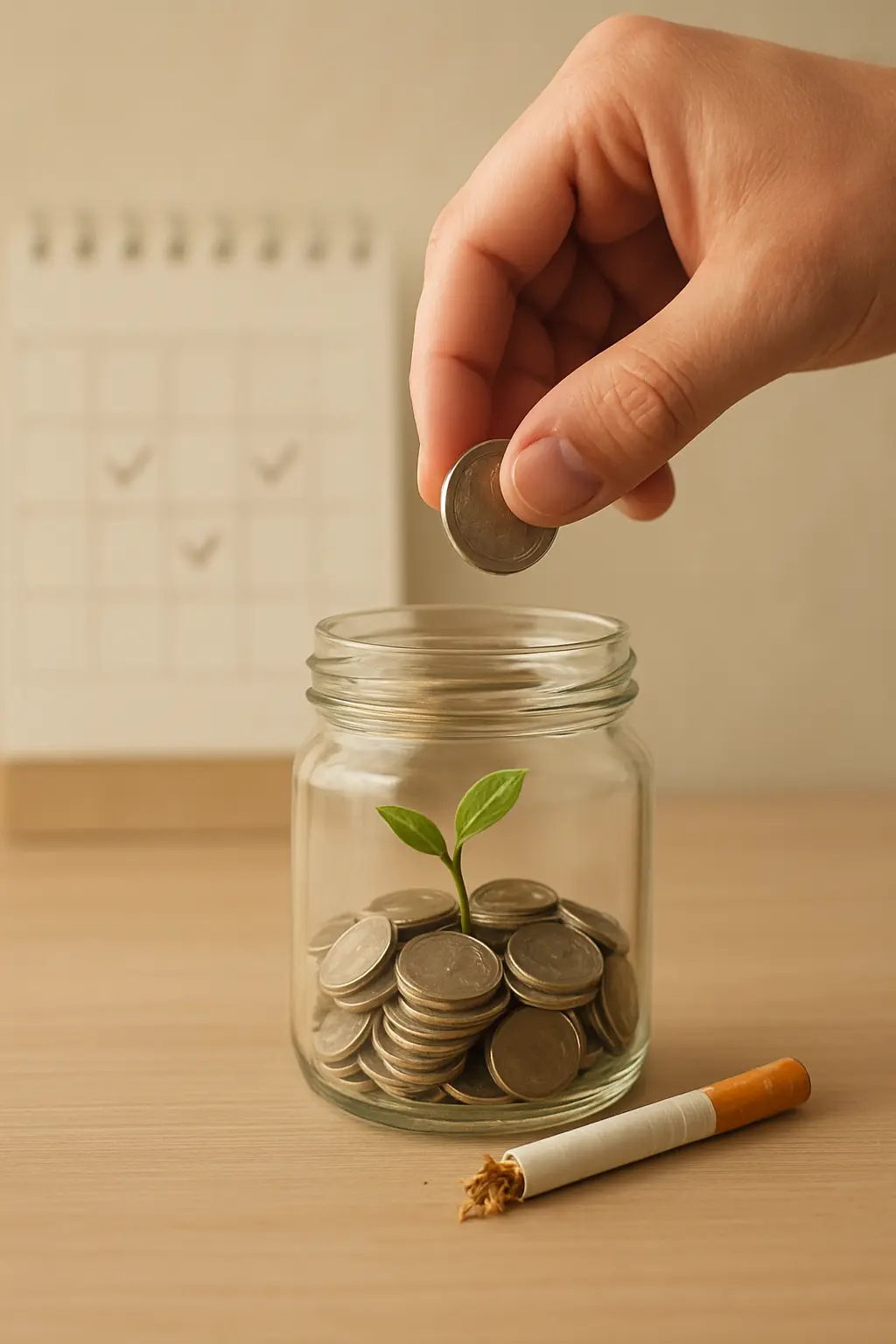
Putting money on the line sounds like a gimmick, but it is one of the best-studied motivation tools in smoking research. Financial incentives to quit smoking come in two main forms: someone pays you when you stay smoke-free, or you put down your own money and get it back only if you succeed. Both have been tested in randomized trials. This guide explains what the evidence found, which version suits you, and how to set up a fair bet on yourself without turning it into gambling.
Does Paying People to Quit Smoking Work?
Short answer: yes, more reliably than most people expect. Smoking gives you a reward in seconds, while the benefits of quitting arrive slowly and quietly. An incentive puts a clear, near-term payoff on the smoke-free side of that trade.
That is why researchers keep testing it. Trials have used cash, shopping vouchers and “self-deposits,” where people pay into an account and earn their own money back. Most schemes check abstinence with a breath or urine test, so the reward goes to people who have actually stopped.
It is worth being clear about what incentives are not. They do not replace medication, nicotine replacement or behavioral support. They are a motivation layer on top. If motivation is not your main problem and fear is, start with our guide for people who are scared to quit smoking. For a wider toolkit, see our motivation strategies.
What the Cochrane Review Found
The strongest summary comes from Cochrane, which pools randomized trials. Its 2025 update included 48 studies in general populations with more than 21,900 participants, set in community settings, clinics, workplaces and outpatient drug clinics (Notley et al., Cochrane, 2025).
The main results are easier to read in a table.
| Question | What the review found |
|---|---|
| Do incentives raise quit rates at six months or more? | Yes. Risk ratio 1.52 across 39 studies and 18,303 people, rated high-certainty evidence |
| Does the effect disappear when payments stop? | No clear sign of that. Excluding trials still paying at follow-up, the risk ratio was 1.46 |
| Do bigger payments work better? | No clear difference. Totals ranged from zero for self-deposits to between USD 45 and USD 1,185 |
| Do incentives help during pregnancy? | Yes. Risk ratio 2.13 across 13 trials, high certainty, with follow-up up to 48 weeks after birth |
A risk ratio of 1.52 means people offered incentives were about one and a half times as likely to be smoke-free as people in the comparison groups. That is not a guarantee, and many people in both groups still smoked. It is a meaningful boost from something that does not involve a pill.
The detail about amounts matters for anyone planning a do-it-yourself version. The review found no clear link between the size of the payment and the result. The structure seems to matter more than the sum.
Rewards vs Deposit Contracts
A reward scheme pays you for success and costs you nothing if you fail. A deposit contract asks you to put in your own money first. You get it back, sometimes with a bonus, only if you pass a test.
The clearest head-to-head test is a US trial of 2,538 employees of a pharmacy company and their friends and family. Reward programs offered about $800. Deposit programs asked for a refundable $150 deposit plus up to $650 in rewards (Halpern et al., NEJM, 2015).
- Uptake: 90.0% of people offered a reward program accepted it, compared with 13.7% offered a deposit program.
- Results overall: every incentive program beat usual care, with six-month abstinence between 9.4% and 16.0% versus 6.0%.
- Rewards vs deposits: because far more people joined, reward programs produced higher abstinence overall, 15.7% versus 10.2%.
- For the committed few: among people who would have accepted either type, the deposit version was estimated to raise six-month abstinence by 13.2 percentage points more than rewards.
A separate study tested a pure commitment contract. Smokers could open a savings account, deposit money for six months and then take a urine test for nicotine. Pass, and the money came back. Fail, and it went to charity. Only 11% of those offered took it up, but people offered the account were 3 percentage points more likely to pass the six-month test, and the effect held in surprise tests at 12 months (Giné, Karlan and Zinman, American Economic Journal, 2010).
The pattern is consistent. Putting your own money at risk is unpopular, but for people willing to do it, it can be powerful.
Workplace and Pregnancy Incentive Schemes
You may not need to fund an incentive yourself. Two settings have the most organized schemes.
Employer programs
An earlier NEJM trial gave 878 employees of a multinational US company either information about quit programs or information plus money: $100 for finishing a program, $250 for confirmed quitting within six months, and $400 for staying quit another six months. At 9 or 12 months, 14.7% of the incentive group had quit versus 5.0% of the information-only group. At 15 or 18 months the figures were 9.4% versus 3.6% (Volpp et al., NEJM, 2009).
If your employer runs a wellness program, ask human resources whether it includes a tobacco cessation reward or free quit support. Some programs do, and few people ask.
Pregnancy schemes in the UK
England’s clinical guideline body, NICE, recommends offering voucher incentives to pregnant women and pregnant people who smoke, on top of nicotine replacement and behavioral support. Vouchers should be given only when abstinence is confirmed, for example with a carbon monoxide breath reading under 4 ppm, and staggered until at least the end of pregnancy. NICE notes that incentives totaling around £400 have been shown to work, and that people who relapse should not be excluded from trying again (NICE NG209).
If you are pregnant, ask your midwife about local stop smoking support at your booking appointment. Our guide on safe ways to quit while pregnant covers treatment options.
In this short video, The BMJ looks at financial incentives for pregnant women who smoke.
How to Set Up Your Own Money Bet

A do-it-yourself commitment contract borrows the design of the trials above. The goal is a promise you cannot easily wriggle out of, not a wager. Do not use betting apps or gambling sites; they are built to keep you playing, and you do not need them.
- Pick a realistic stake. Choose an amount that would sting to lose but would not hurt your household. The Cochrane review found that bigger sums were not clearly more effective.
- Choose a referee. Give the money to someone you trust who will not simply hand it back. A partner who wants you to quit can be too soft.
- Decide where lost money goes. The commitment-contract study sent forfeited money to charity. Some people pick a cause they dislike, which adds bite. Keep it legal and kind.
- Split it into stages. Trials often paid out in steps. Try returning a portion at one week, four weeks and three months.
- Agree how you will prove it. Trials used breath or urine tests. At home, honesty with a referee is usually enough, but decide in advance what counts as a slip.
- Write it down. Date, stake, milestones, referee and rules on one page, signed by both of you.
If losing your own money feels too harsh, flip it into a reward version. Ask a relative to promise a gift at 30 and 90 days, or pay yourself from a separate account.
Turning Cigarette Money Into a Savings Goal
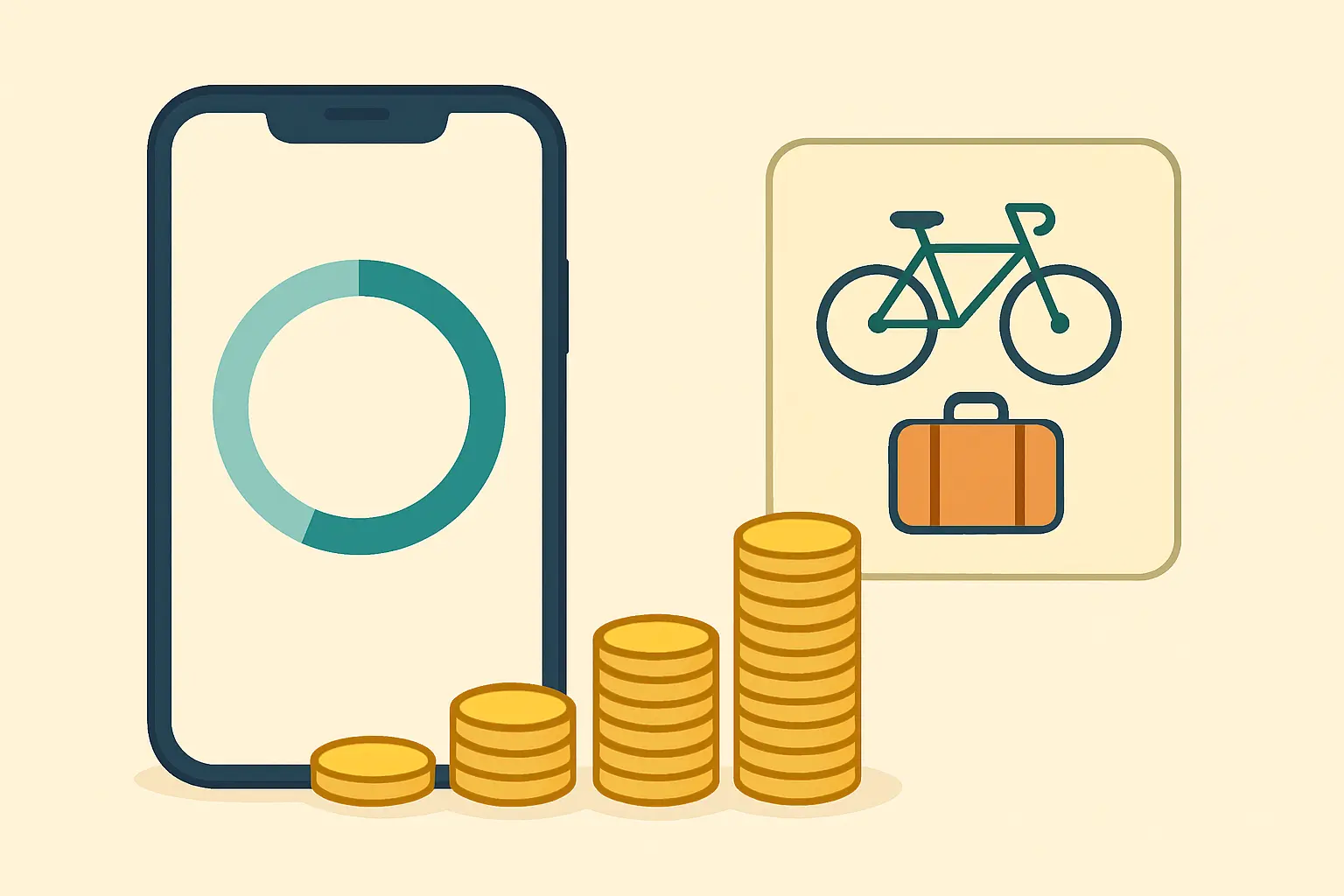
You already have a built-in incentive: the money you stop spending on cigarettes. It is your own reward scheme, paid daily. The trick is to make it visible and give it a destination, because money that quietly stays in your account does not feel like a prize.
Start by working out how much you save at your current pack price, then compare it with the true yearly cost of smoking in your country. If you are weighing a switch to vaping on cost grounds, our breakdown of whether vaping is cheaper than smoking runs the numbers.
Then pick one concrete target, such as a weekend away, a new bike or clearing a card balance, and move the daily cigarette money into a separate pot. iQuit’s dashboard shows money saved in your own currency and lets you set savings goals, so you can watch the target fill up day by day. If you like structure, iQuit challenges add daily prompts for the first weeks, when a payoff feels furthest away.
When Incentives Backfire
Money is a strong motivator, which is exactly why it needs guardrails. These are the most common ways a self-made scheme goes wrong.
- The stake is too high. If losing it would cause real hardship, fear of losing it can turn a slip into hiding and shame. Keep it affordable.
- One slip ends everything. Many people need several quit attempts before success. Build in a rule for a restart, as NICE does for pregnancy schemes, so a lapse does not end the game.
- The referee is too soft. If the money always comes back no matter what, it stops working. Choose someone who will stick to the agreement.
- The deadline is the finish line. The Cochrane review found benefits continued after payments stopped, but that is not automatic. Plan what keeps you going after the last payout, such as a longer savings goal.
- It becomes gambling. Betting against the odds, chasing losses or using gambling platforms moves you from commitment into a new risky habit. If gambling is already a problem for you, skip money stakes and use rewards instead.
Used well, an incentive is a scaffold. It holds the structure up while new habits set, and then you take it down.
Money and Motivation FAQ
Do financial incentives to quit smoking really work?
Yes. A 2025 Cochrane review of randomized trials found high-certainty evidence that incentives improve quit rates at six months or longer, with people about 1.5 times as likely to be smoke-free. The benefit continued even after the incentives ended in the studies that measured it (Notley et al., Cochrane, 2025).
What is a deposit contract for quitting smoking?
A deposit contract means you put your own money aside and get it back only if you stay smoke-free by an agreed date. In one study, forfeited money went to charity. Few people choose this option, but those who do may benefit more than from rewards alone (Giné, Karlan and Zinman, 2010).
Are rewards or deposits better for quitting smoking?
In a trial of 2,538 people, 90% accepted reward programs but only 13.7% accepted deposit programs, so rewards produced more quitters overall. Among people willing to accept either, deposits were estimated to work better. Choose rewards if a stake would put you off, deposits if you want extra pressure (Halpern et al., NEJM, 2015).
How much money does an incentive need to be?
Less than you might think. Trials ranged from zero extra money for self-deposits to over USD 1,000, and the Cochrane review found no clear difference in effect between low and high totals. Pick an amount that feels meaningful to you but would not cause hardship if you lost it (Notley et al., Cochrane, 2025).
Can pregnant women get paid to stop smoking in the UK?
NICE recommends that stop smoking services offer voucher incentives to pregnant people who smoke, alongside nicotine replacement and behavioral support, with vouchers given for confirmed abstinence. Availability depends on local services, so ask your midwife at your booking appointment. NICE notes that incentives totaling around £400 have been shown to work (NICE NG209).
Is betting on quitting smoking the same as gambling?
It should not be. A commitment contract is a promise with your own money held by a referee and returned when you succeed. Gambling sites and betting apps are designed around chance and repeat play. Keep your stake affordable, avoid gambling platforms, and use a reward-only plan if gambling has been a problem for you.
Does the motivation disappear once the money stops?
Not necessarily. When the Cochrane review excluded trials that were still paying people at the final check, incentives still improved quit rates, suggesting the effect lasts beyond the payments. Planning a longer savings goal helps keep a reason in view after your last milestone (Notley et al., Cochrane, 2025).
Watch Your Quit Pay You Back
iQuit tracks money saved in your currency, lets you set savings goals, and shows days smoke-free and cigarettes avoided on one dashboard. Pair it with craving logging and SOS tools for the hard moments. Free on Google Play and the App Store.