You have been smoke-free for a few weeks, and there is a wedding on Saturday. Or a birthday, or a leaving do that will run past midnight. Working out how to get through a wedding without smoking is not the same problem as getting through a normal Tuesday. Everything that used to come with a cigarette is in one room: drinks, waiting around, a group heading outside, and the one person who still keeps a spare pack. This is an hour-by-hour plan for the whole event, with the alcohol part handled honestly rather than skipped.
Why Weddings and Parties Break Quit Attempts
A big social evening stacks several triggers on top of each other at once. The NHS lists them separately in its guide to smoking triggers: being with other smokers in social settings, being offered a cigarette, drinking alcohol, seeing other people smoke, smelling cigarette smoke, and socializing with friends or family (NHS Better Health). A wedding delivers all six in the same four hours.
Timing makes it worse. The NHS says cravings are hardest in the first 28 days while your body adjusts, which is exactly the window most people are in when the invitation lands. It is not that you are doing badly. It is that the event is genuinely harder than your ordinary week.
The answer is not to stay home. Missing the people you care about to protect a quit is a trade that tends to get resented, and resentment is its own relapse risk. The answer is to arrive with decisions already made, which is what the rest of this guide is for.
This short CDC video covers the general craving-management toolkit that the specific tactics below are built on.
Before You Go: The Three-Minute Prep
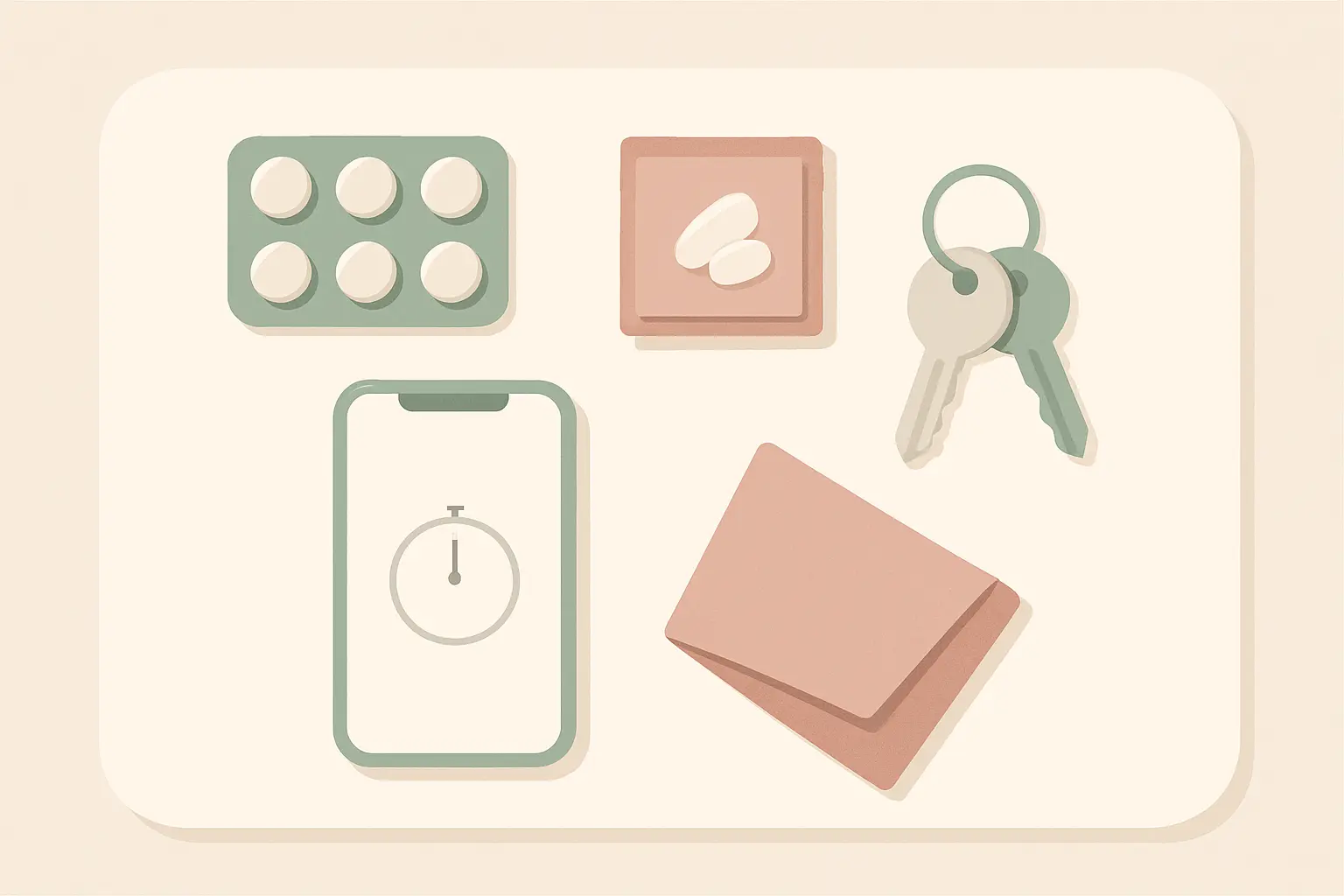
Everything that will actually help you happens before you leave the house.
- Eat something first. Arriving hungry means drinking faster on an empty stomach, which is the single change that makes the rest of the evening harder.
- Put nicotine replacement in your pocket. Gum, lozenges or a spray, in a pocket you can reach without going to find a bag. If you are on patches, put a fresh one on before you dress.
- Decide your drink now. Not a rule about the whole night. Just what the first two are, and what you switch to after that.
- Decide the smoking-area question now. Whether you go out with the group or stay in. Deciding at 11pm with four drinks in you is not deciding.
- Tell one person. Whoever you will be standing next to most. One sentence: I stopped smoking, do not let me bum one.
If you are going to your own wedding rather than someone else’s, the timing questions are different and worth planning further ahead. Our guide to quitting smoking before your wedding covers that version.
Drinks, and the Alcohol Problem
Alcohol is the part most articles gloss over, so here is what the research actually found.
In a controlled laboratory study, 100 heavy drinkers who smoked 10 to 30 cigarettes a day were tested on three separate days after a placebo drink, a low dose of alcohol and a high dose. They were paid to hold out as long as they could before smoking. After the high dose they gave in 6.36 minutes earlier than after placebo, a statistically significant difference. After the low dose they gave in 3.35 minutes earlier, which did not reach statistical significance. The effect was partly explained by alcohol increasing the strength of the urge itself (Kahler et al., Psychopharmacology, 2014).
Two things follow from that, and neither is do not drink. First, the risk is dose-related rather than all-or-nothing, so pacing genuinely changes your odds. Second, the mechanism is urge intensity, not weakness, which means the countermeasure is to blunt the urge rather than to try harder.
| Choice | Why it helps |
|---|---|
| Eat before and during | Food slows alcohol absorption, and the risk in that study tracked the dose |
| Alternate with water or a soft drink | Keeps your hands busy and your pace down without announcing anything |
| Choose a long drink over shots | Shots reach the high-dose end of that range fastest |
| Use nicotine replacement before you feel you need it | Works on the urge itself rather than on your resolve |
| Decide your last drink in advance | Alcohol and tiredness both peak in the late stretch |
Observational research points the same way outside the lab. A study that tracked young people three times a day through a quit attempt found the first lapse back to smoking was strongly associated with drinking (Van Zundert et al., Drug and Alcohol Dependence, 2012). None of this means a dry evening. It means knowing which hour is the risky one.
When Everyone Goes Outside
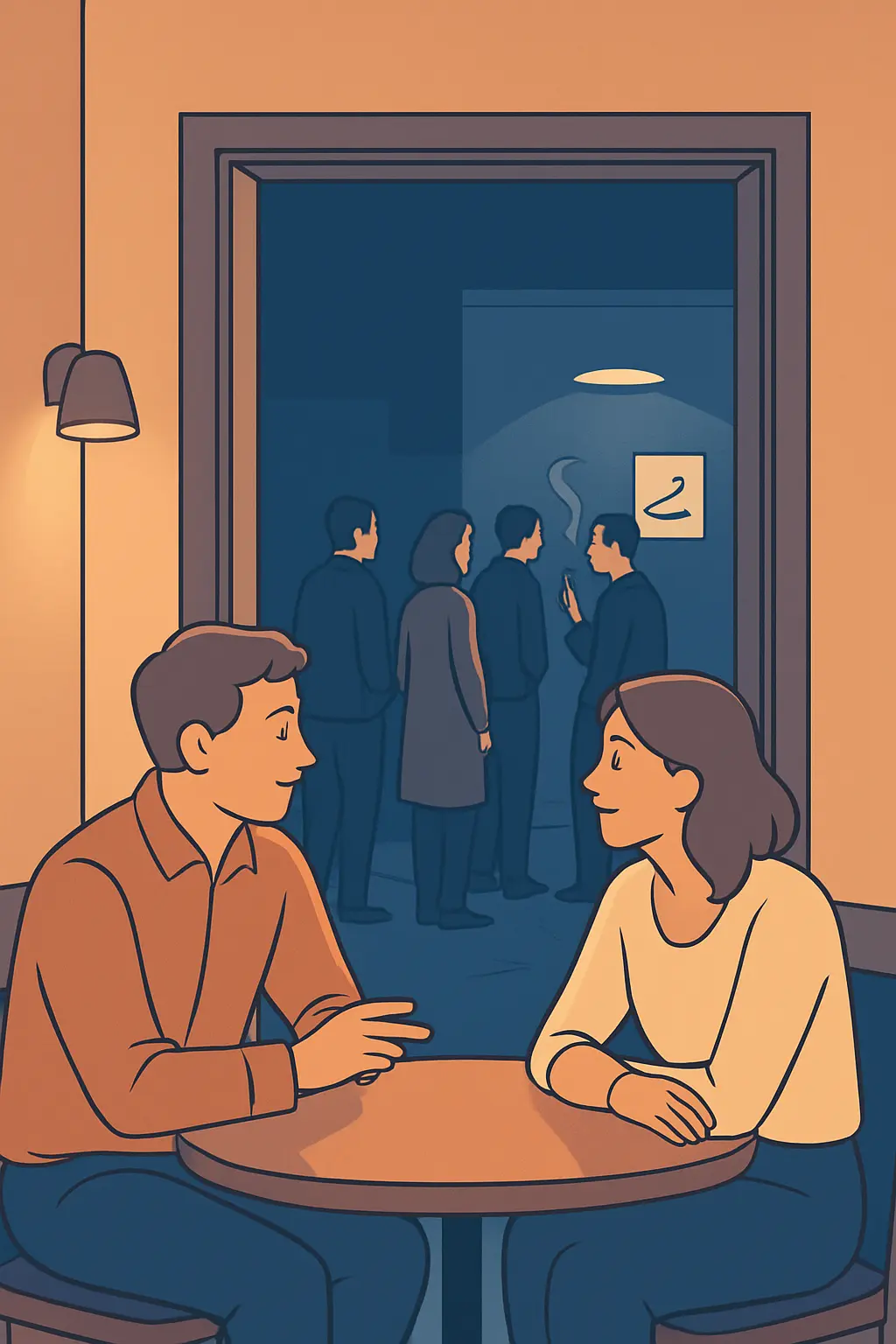
This is the moment the evening turns. Four people stand up, and the pull is not really the cigarette. It is the conversation you are about to be left out of.
You have three workable options, and the right one depends on how long you have been quit.
- Go out and hold something. Works if you are past the first month and confident. Take a drink, stand upwind, and keep your hands occupied. Do not stand in the middle of the group.
- Go out but leave first. Go for the conversation, then go back in before the second round of lighters. The pull is strongest at the end, when everyone is finishing.
- Stay in and start something. Get a drink, find someone at a table, ask them a real question. The group comes back in five minutes and you have lost nothing.
In the first few weeks, option three is the honest choice, and it is not hiding. If somebody notices, saying so plainly is easier than inventing a reason. Our guide to saying no when someone offers you a cigarette has short lines that work when you are put on the spot.
What to Hold and What to Say
A large part of the discomfort at a party is physical. Your hands have nothing to do and you are standing in a place where they always had something.
Hold a drink with a straw or a lemon in it. Carry your phone in the other hand. Keep gum or a lozenge going during the stretches you know are risky, not only when the craving has already arrived. If you feel the urge climb while someone is talking to you, breathe out slowly for longer than you breathe in, four counts in and six out, while you keep listening. It is invisible and it takes the edge off. Our short guide to grounding exercises that work in minutes has a few more you can run without leaving a conversation.
For what to say, keep it to one clause and move on. I stopped, actually. Not tonight, thanks. I am three weeks in, do not tempt me. Long explanations invite debate; short ones end the topic. If somebody keeps pushing, the trick is to change subject rather than argue, because the pusher is usually a smoker with mixed feelings about their own habit.
When a craving arrives anyway, iQuit’s SOS tools are designed for exactly this: a craving timer to run down while you stand there, breathing exercises, and the virtual cigarette to press and hold until the wave passes. The craving timer and breathing exercises are designed to be used in the moment, without leaving the room.
The Speeches and Standing-Around Stretch
Weddings have long passive stretches: the gap between the ceremony and the meal, the speeches, the wait for the dancing to start. These are harder than the busy parts, because there is nothing to do and you are sitting still.
Plan them as deliberately as you plan the drinks. Sit next to someone you actually want to talk to. Take a walk around the venue between courses so the restlessness has somewhere to go. Volunteer for something small: carry the cake, help move the chairs, take photos for the couple. Being useful is the most effective distraction at any event, and nobody ever questions it.
If you are the one who usually managed stress with a cigarette, the speeches can bring back the old association fast, especially if you are speaking. Get your nicotine replacement in before you stand up, not after you sit down.
Past Midnight
The late stretch is where good evenings turn. You are tired, you have had more to drink than you planned, the crowd has thinned to the smokers, and the reasons you quit feel a long way away.
Three things help more than anything else at that point.
- Know your exit time before you arrive. Not a hard rule, but a default. The unplanned hour after the one you meant to leave is when your defences are lowest.
- Eat something before the last drink. Late food is unglamorous and it works.
- Leave with someone. Sharing a taxi removes the last quiet, unsupervised twenty minutes, which is where a late pack tends to get bought.
If you are white-knuckling it, going home is a legitimate move rather than a defeat. You did the wedding. You do not also have to do the afterparty.
If You Slip, What the Next Morning Looks Like
Say it happens. You had one outside at half past midnight. What you do on Sunday matters far more than what you did on Saturday.
The NHS draws a clear line between a lapse and a relapse. One cigarette or a single puff is a lapse: shrug it off and carry on. Going back to smoking regularly is a relapse, and even then the advice is to set a new quit date rather than write the attempt off (NHS Better Health).
The honest caveat is that the NHS also warns that even one cigarette can pull you back into the cycle of cravings and withdrawal, so a lapse is not free. Treat Sunday as day one of the same quit, not the start of a new one. Do not throw the rest of the week after it, and do not buy a pack to finish.
Then use it. Write down what actually happened: which hour, how many drinks, who you were standing with, whether you had your nicotine replacement on you. That is a plan for the next wedding. People who quit with some form of structured support tend to do better than people relying on resolve alone, which is worth reading about in our summary of what the research says about apps versus willpower, and doing it with other people beats doing it privately for most readers, as our comparison of quitting alone against quitting with a community sets out.
One more thing worth keeping in view on a hard night: the NHS says that once you reach 28 days smoke-free you are five times more likely to stay quit for good. A single Saturday is a small thing to hold out through for that. If you need something to read in the taxi, a few lines of motivation that holds up when you are wavering do the job.
Frequently Asked Questions
Should I skip the wedding if I have just quit smoking?
No. Missing things you care about tends to breed resentment toward the quit itself, which is its own relapse risk. Go, but go prepared: eat first, carry nicotine replacement, decide your drinks and your answer to the smoking-area question before you arrive, and tell one person you are not smoking.
Does drinking alcohol really make you more likely to smoke?
Yes, and the effect is dose-related. In a controlled study of 100 heavy drinkers who smoked daily, participants gave in to smoking 6.36 minutes sooner after a high dose of alcohol than after a placebo drink, a significant difference; the smaller effect after a low dose was not statistically significant. Alcohol appears to work by increasing the strength of the urge (Kahler et al., Psychopharmacology, 2014).
Do I have to stop drinking to stay smoke-free?
Not necessarily. Because the risk rises with dose rather than switching on at the first drink, pacing changes your odds meaningfully. Eat before and during, alternate with a soft drink, prefer long drinks to shots, and decide your last drink in advance. If you have had several failed attempts that all ended on a night out, a temporary dry spell during the first month is worth considering.
What do I do when everyone goes outside to smoke?
Decide before you arrive. In your first month, stay inside and start a conversation at a table; the group returns in five minutes. Later on you can go out, stand upwind with a drink in your hand, and head back in before the second round of lighters, which is when the pull is strongest.
How long does a craving at a party actually last?
An individual craving is short, usually passing within minutes, even though it feels permanent while it is happening. The NHS notes cravings are hardest in the first 28 days and ease after that. Slow breathing, a lozenge or gum, and moving to a different part of the room will usually carry you past a single wave (NHS Better Health).
What should I say when someone offers me a cigarette?
Keep it to one clause and change the subject. Something like I stopped, actually, or not tonight, thanks. Long explanations invite a debate you do not want at a party. Telling one person early in the evening also means you have someone who will not offer and who can cover for you.
I smoked one at the wedding. Is my quit over?
No. The NHS calls a single cigarette or puff a lapse rather than a relapse, and advises shrugging it off and continuing. It also warns that one cigarette can restart the craving cycle, so do not treat it as free. Note what happened, which hour and how many drinks, and carry on with the same quit the next morning (NHS Better Health).
Take the Craving Tools to the Party With You
iQuit puts SOS support in your pocket for exactly this evening: breathing exercises, grounding, a craving timer to run down while you stand there and the virtual cigarette to hold. Log the craving with its trigger and intensity so the next wedding is easier to plan, and the dashboard shows days smoke-free, cigarettes avoided and money saved. Free on Google Play and the App Store.