
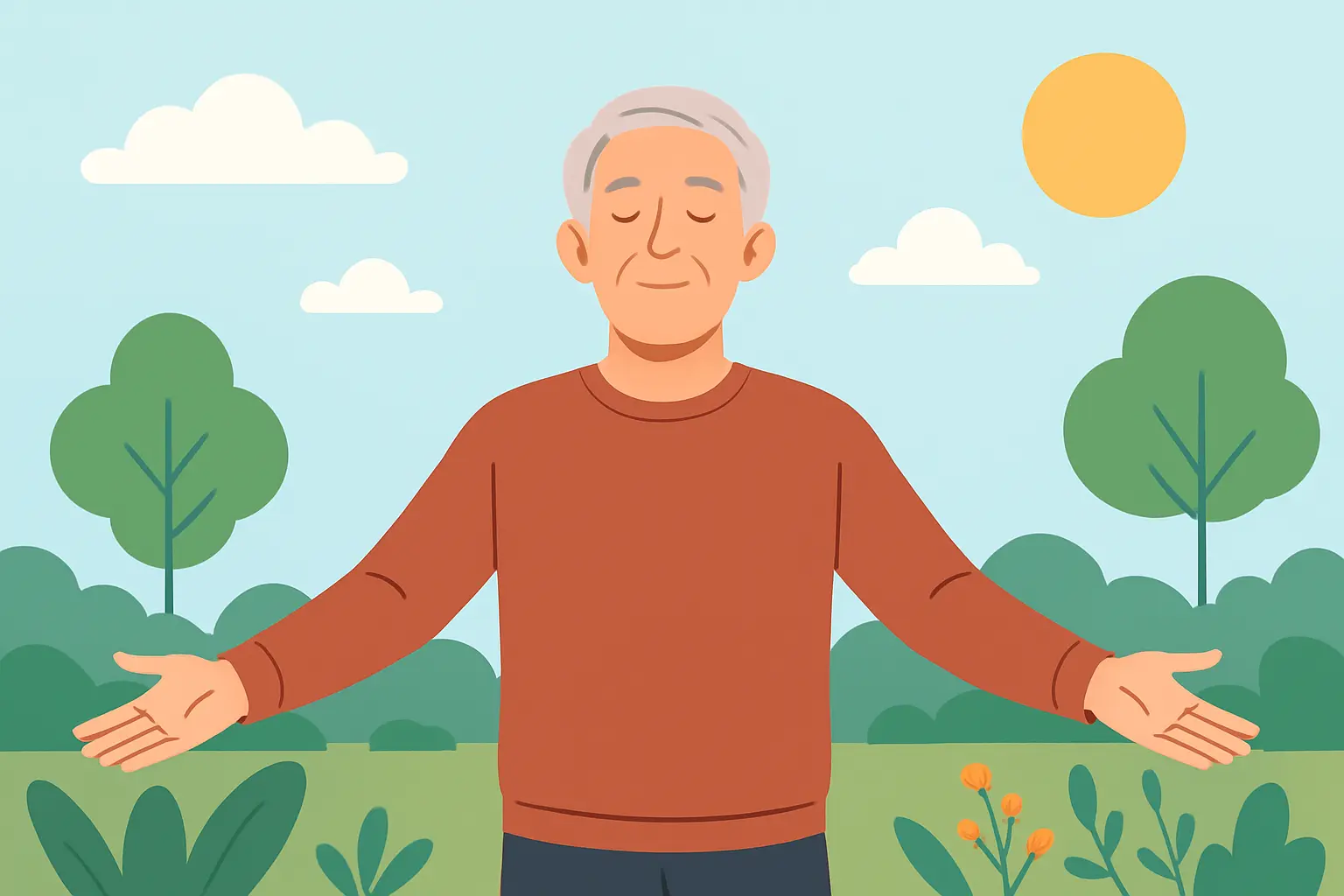
It is a question worth asking honestly: does quitting still matter after 60, or 30, or 40 years of smoking? Learning how to quit smoking at 60 and older starts with the answer, which research keeps confirming is yes — the body keeps repairing itself at any age, and the plan just needs a few adjustments for medicines, other conditions, and decades of habit.
What Quitting at 60+ Actually Gains You
The most common reason people over 60 don’t attempt to quit is a belief that the damage is already done. Research on this specific question says otherwise. A study covered by the American Cancer Society found that “people who quit at age 65 have about a 1 in 4 chance of gaining another year of life,” and that even at 75, “people who quit… have a more than 1 in 10 chance” of the same. Those are population odds, not guarantees for any one person — but they show the benefit does not vanish the way many assume.
The gains are not only about lifespan. Breathing capacity, exercise tolerance, sleep quality, circulation and immune function can all improve within weeks to months of quitting, at any age you start. The general NHS health-benefits timeline — pulse returning toward normal within 20 minutes, oxygen levels recovering within 8 hours, carbon monoxide matching a non-smoker’s within 48 hours, heart attack risk roughly halving within a year — applies whether you are 35 or 75, because it describes how your body responds to the absence of smoke, not how many years you have already smoked (NHS Better Health).
There is also a quieter benefit that matters more the longer you have smoked: independence. Breathlessness on stairs, a persistent morning cough, and reduced stamina for grandchildren, gardening or travel are often assumed to be “just age,” when smoking is doing at least part of that work. Reversing even a portion of that is a meaningfully different day-to-day life, not just a number on a chart.
A real story from Ochsner Health of a long-term smoker who quit later in life.
Talk to Your GP First: Interactions and Dose Changes
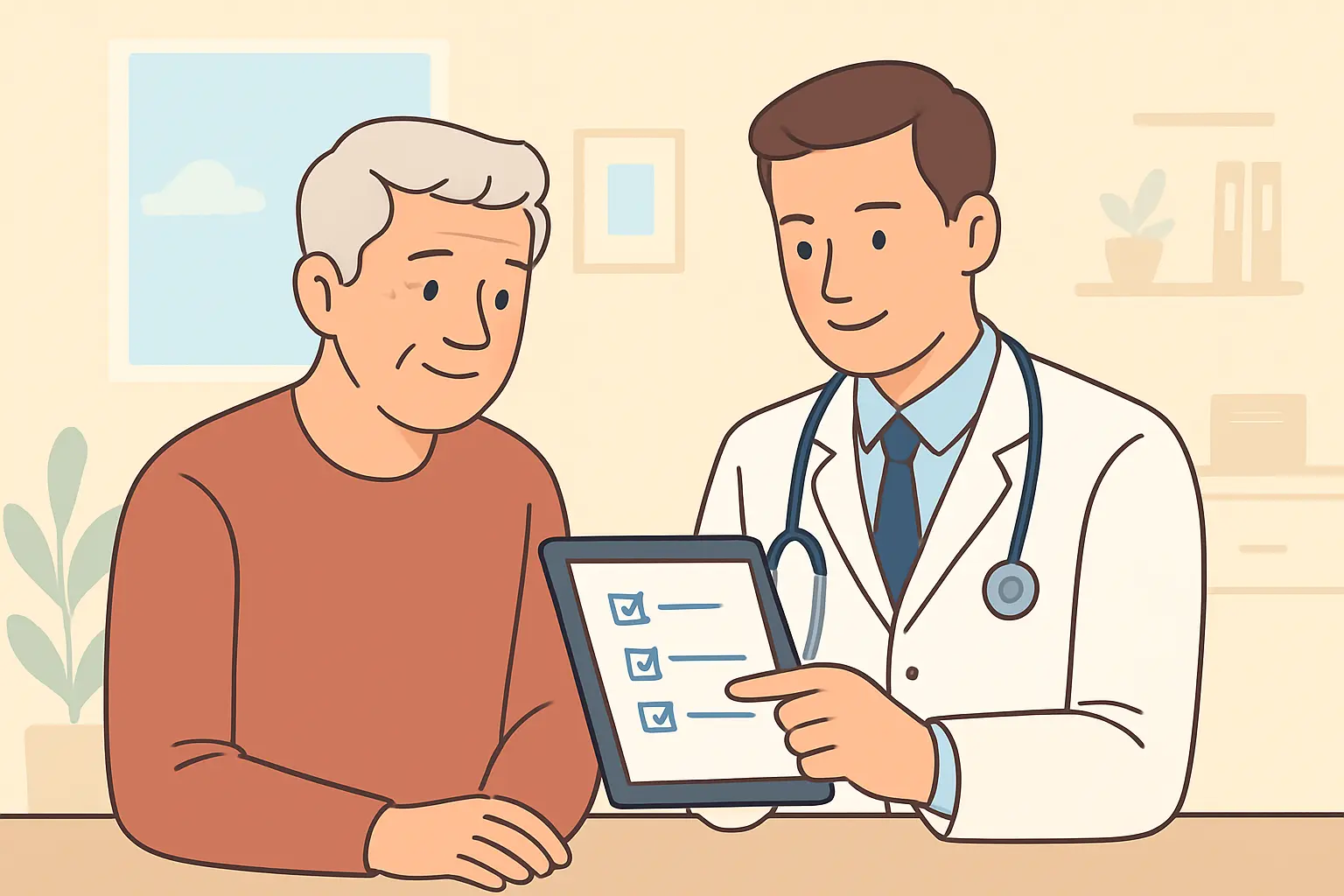
This is the step that makes an older-adult quit plan different from a general one, and it is easy to skip. Smoking speeds up how your liver processes certain medicines, so when you stop, those medicines can suddenly become more potent at the same dose. This is well documented for drugs including some antidepressants, some antipsychotics, insulin, and certain blood thinners and asthma medicines. The dose that has worked for years may need adjusting within days to weeks of quitting — not because quitting caused a problem, but because it removed something that was quietly changing how your other medicines behaved.
Book this conversation before your quit date, not after side effects show up. Bring your full medicine list, including anything over the counter. Our deeper look at why quitting smoking changes your medication doses explains the mechanism in more detail if you want to understand why this happens before your appointment.
NRT Choices When You Take Other Medicines
Nicotine replacement therapy is generally the most straightforward option to start alongside other medicines, but “speak to a healthcare professional so they can help you choose the right product” is the NHS’s own framing, not a formality (NHS stop smoking treatments). If you have heart disease, circulation problems, or take multiple daily medicines, your pharmacist can flag anything worth watching before you start a patch or gum. Our full comparison of NRT options covers the format differences (patch, gum, lozenge, spray, inhaler) if you are choosing for the first time, and if you later find yourself relying on gum longer than planned, our step-down plan for tapering off nicotine gum gives a dated exit route.
Varenicline and Bupropion: Prescriber Territory
Prescription stop-smoking medicines exist and can be more effective than NRT alone for some people, but this is genuinely prescriber territory once other conditions or medicines are in the picture. The NHS notes that “nicotine-free medicine varenicline is now available again in the UK, along with a new option called cytisine,” both of which work by blunting nicotine’s effect in the brain rather than replacing it. Neither is a decision to make from an article — your GP will weigh your specific heart, kidney, mood and medicine history before prescribing either one, and dosing is not something to adjust yourself.
Handling a Decades-Long Routine
Quitting after 20, 30 or 40 years is not the same task as quitting after five, mainly because the behavioural cues are more deeply embedded — a specific chair, a specific time of day, a specific person you used to smoke with. Our guide to quitting after 20 to 30 years of smoking and the fuller long-term smoker’s guide both go deeper on rebuilding routines that have been fixed for decades — the short version is that you rebuild the ritual around the trigger (the coffee, the chair, the phone call) rather than trying to remove the trigger from your life entirely.
Retirement can cut both ways here. Losing a workplace smoking break removes one set of triggers, but more unstructured time at home can also mean more opportunities to smoke out of habit rather than urge. If you have recently retired, it is worth mapping your new daily rhythm for a few days before setting a quit date, the same way you would map any other routine change — the triggers in a retired routine are often different from the ones you spent decades managing at work.
Cough, Breathlessness and What to Expect
A temporary increase in coughing is common in the first couple of weeks after quitting, as the lungs’ cleaning mechanism (cilia) starts working again after years of being suppressed by smoke. This is a sign of recovery, not a new problem, though it is worth mentioning at your GP visit if you have an existing lung condition. If you already have COPD or another lung condition, our guide to COPD and smoking cessation covers what recovery looks like when your lungs were already compromised before you quit, since the timeline and expectations differ from someone quitting with healthy lungs.
Support That Suits You
| Option | Best for | Note |
|---|---|---|
| GP or practice nurse | Anyone on other medicines | First stop before starting any product |
| Pharmacist | Choosing between NRT formats | Free, no appointment usually needed |
| Local Stop Smoking Service (UK) / Quitline equivalents | Combining behavioural support with medicine | Improves success rates versus willpower alone |
| Quit-tracking app | Daily motivation and visible progress | Useful alongside, not instead of, medical advice |
| Family or friends who have quit | Accountability | Especially valuable if your routine involved smoking together |
Your Week One Plan
- Days before: Book your GP or pharmacist conversation and confirm your medicine list. Ask specifically whether any current dose might need reviewing after you quit.
- Day 1: Start your chosen NRT or prescribed medicine exactly as advised; remove cigarettes, lighters and ashtrays from the house so the environment matches the decision.
- Days 2–3: Expect the cravings to peak; lean on your identified rituals (the chair, the coffee, the phone call) with a substitute already in hand rather than improvising in the moment.
- Days 4–7: Note any new cough, breathlessness change, or medicine side effect to mention at a follow-up call; keep the same wake-up and break routine so only the cigarette is missing, not the whole day’s structure.
- End of week one: Review what worked and what nearly didn’t. If a specific hour or situation kept generating cravings, plan for it by name in week two rather than hoping it resolves itself.
Involve someone in this plan if you can — a spouse, adult child, or a friend who has also quit. Long-term smokers often quit as part of a shared household habit, and having that person aware of your week-one plan (even if they are not quitting themselves) makes the early days easier to talk through.
Visible Wins From Day One
One thing that helps at any age is seeing progress rather than just feeling it. iQuit’s health-recovery timeline shows milestones as they happen — from the first hours through to longer-term markers — alongside a craving log and streak shields, so a 60-plus quit attempt gets the same visible reinforcement as any other. Many long-term smokers find the money-saved tracker especially motivating after decades of buying the same pack out of habit, since the running total over a year or more is often larger than expected.
Frequently Asked Questions
Is it too late to quit smoking at 60?
No. Research reported by the American Cancer Society found people who quit at 65 have about a 1 in 4 chance of gaining another year of life, and people who quit at 75 still have more than a 1 in 10 chance — the benefit shrinks with age but does not disappear.
Will quitting smoking affect my other medications?
It can. Smoking changes how quickly the liver processes some medicines, so stopping can make certain drugs, including some antidepressants, antipsychotics, insulin and asthma medicines, act more strongly at the same dose. Talk to your GP before your quit date so any dose changes are planned rather than discovered.
Can I use nicotine patches if I have heart disease?
Many people with stable heart disease can use NRT, but this needs a proper check with a healthcare professional first, since NRT products carry specific advice for people with cardiovascular conditions. The NHS’s own guidance is to speak to a healthcare professional before starting so they can help you pick the right product.
Is varenicline safe for older adults?
Varenicline is prescribed to older adults, but the decision and dose are made by a prescriber who reviews your other health conditions and medicines first. The NHS notes varenicline is available again in the UK alongside a newer option, cytisine — neither should be started without a prescriber’s review.
Why do I cough more in the first weeks after quitting?
Smoking suppresses the tiny hair-like structures (cilia) in your airways that clear mucus and debris. Once you quit, they start working again, which can temporarily increase coughing as your lungs clear out years of residue. This is generally a sign of recovery rather than a new problem, but mention it to your GP if it is severe or you have an existing lung condition.
It’s Not Too Late — Start Today
iQuit tracks your health-recovery milestones, cravings and savings from the very first hour, whatever age you start. Free on Google Play and the App Store.
Download iQuit Free on Google Play
Download on the App Store


