
Wondering how to quit smoking with no willpower usually means you’ve already tried the “just resist it” approach and watched it fail. That’s not a character flaw — it’s evidence that willpower was never a reliable plan to begin with. The people who quit for good tend to lean on structure, medication, and support instead of grit, and all three are things you can set up starting today.
Why Willpower Is the Wrong Plan
Willpower is a finite, moment-to-moment resource. It’s highest first thing in the morning and lowest at 4pm after a stressful meeting — which is exactly when most cravings hit. A quit plan that depends on willpower is a plan that depends on you having your best mental resources available at the worst possible moments, over and over, for months. That’s a design flaw, not a personal one.
The alternative isn’t “try harder.” It’s building a plan where the craving arrives and there’s already a medication reducing its intensity, an environment with fewer triggers in it, and a specific action ready to go — so you’re not relying on in-the-moment resolve at all.
There’s also a practical reason “no willpower” isn’t a disqualifier: nicotine cravings are a physiological response, not just a mental one. The urge you feel is your brain’s chemistry asking for nicotine, and no amount of willpower changes the chemistry — what changes it is either lowering the nicotine level gradually (which is what NRT does) or interrupting the craving with a different action long enough for it to pass on its own, which it reliably does within a few minutes whether or not you “resisted” it.
What Actually Predicts Success (Medication, Support, Structure)
A prospective cohort study following 337 people trying to quit found that adherence to treatment — actually using the medication or support program as prescribed — was one of the strongest predictors of successful abstinence, far outweighing psychological factors. People who stuck with their treatment plan had roughly 8 times higher odds of quitting at 24 weeks (adjusted odds ratio 8.03) and roughly 12 times higher odds at 52 weeks (adjusted odds ratio 12.03), compared with those who didn’t.
Separately, the CDC states that stop-smoking medicines could more than double your chance of success compared with quitting unaided. Neither of these findings is about how much you want it or how disciplined you are — they’re both about whether you actually use the tools available, consistently, whether or not you feel motivated on a given day.
This Mayo Clinic Minute covers practical strategies clinicians recommend — most of them structural, not motivational.
Removing Decisions Instead of Resisting Them
Every time you have to decide “should I smoke right now,” there’s a chance you’ll decide wrong. The fix is to remove as many of those decision points as possible before they happen:
- Throw away cigarettes, lighters, and ashtrays the night before your quit date — every one of them, not “just in case” backups.
- Pre-commit publicly to your quit date with one or two people, so backing out requires an active conversation, not a quiet slip.
- Automate your medication. Set a daily alarm for your patch, gum, or pill so taking it isn’t a decision you make fresh each day — it’s just what happens at 8am.
- Pick your response to cravings in advance. “When I get a craving, I do X” removes the in-the-moment decision of what to do instead of smoking.
- Delete the mental bargaining, not just the cigarettes. “Just one won’t hurt” and “I’ll quit properly next week” are decisions dressed up as thoughts. Write down your actual reasons for quitting once, and reread them instead of re-litigating the decision every time a craving shows up.
Common Willpower Traps to Avoid
A few patterns quietly turn a structured plan back into a willpower contest without you noticing:
- “I’ll allow myself one at parties.” A single planned exception reopens the decision point at exactly the moment — social pressure, alcohol, group cues — where you have the least capacity to make it well.
- Waiting to “feel ready” before starting NRT. Motivation fluctuates day to day; treatment works whether or not you feel ready on a given morning, so starting on schedule matters more than starting on a good-feeling day.
- Treating a slip as proof the plan failed. One cigarette after two smoke-free weeks is a data point, not a verdict — the response that matters is going straight back to the plan, not abandoning it.
- Under-using support because “I should be able to do this myself.” Needing a pharmacist, a quitline, or an app isn’t a lack of willpower — it’s the actual mechanism that predicts success in the research above.
Designing Your Environment for Week 1
Your environment either makes quitting easier or actively works against you. For the first week specifically:
| Change | Why it matters |
|---|---|
| Clean the car and clothes of smoke smell | Removes a sensory trigger you’d otherwise hit dozens of times a day |
| Rearrange your usual smoking spot | Breaks the automatic “I’m here, so I smoke” association |
| Stock non-smoking alternatives where cigarettes used to be | Gum, a water bottle, or a stress ball fills the same physical routine |
| Tell people you interact with daily | Removes the awkwardness of hiding a quit attempt, which itself takes energy |
| Plan your first few high-risk moments | Coffee breaks, driving, after meals — know what you’ll do instead before you’re in it |
Using NRT Properly So Cravings Stay Small
Nicotine replacement therapy (patches, gum, lozenges, inhalers, nasal spray) works by keeping a low, steady level of nicotine in your system so cravings never spike as hard as they do going cold turkey. The most common mistake is underdosing — using a lower-strength product than your smoking history calls for, or stopping as soon as you feel “fine,” which is usually a sign the product is working, not a sign you can stop it.
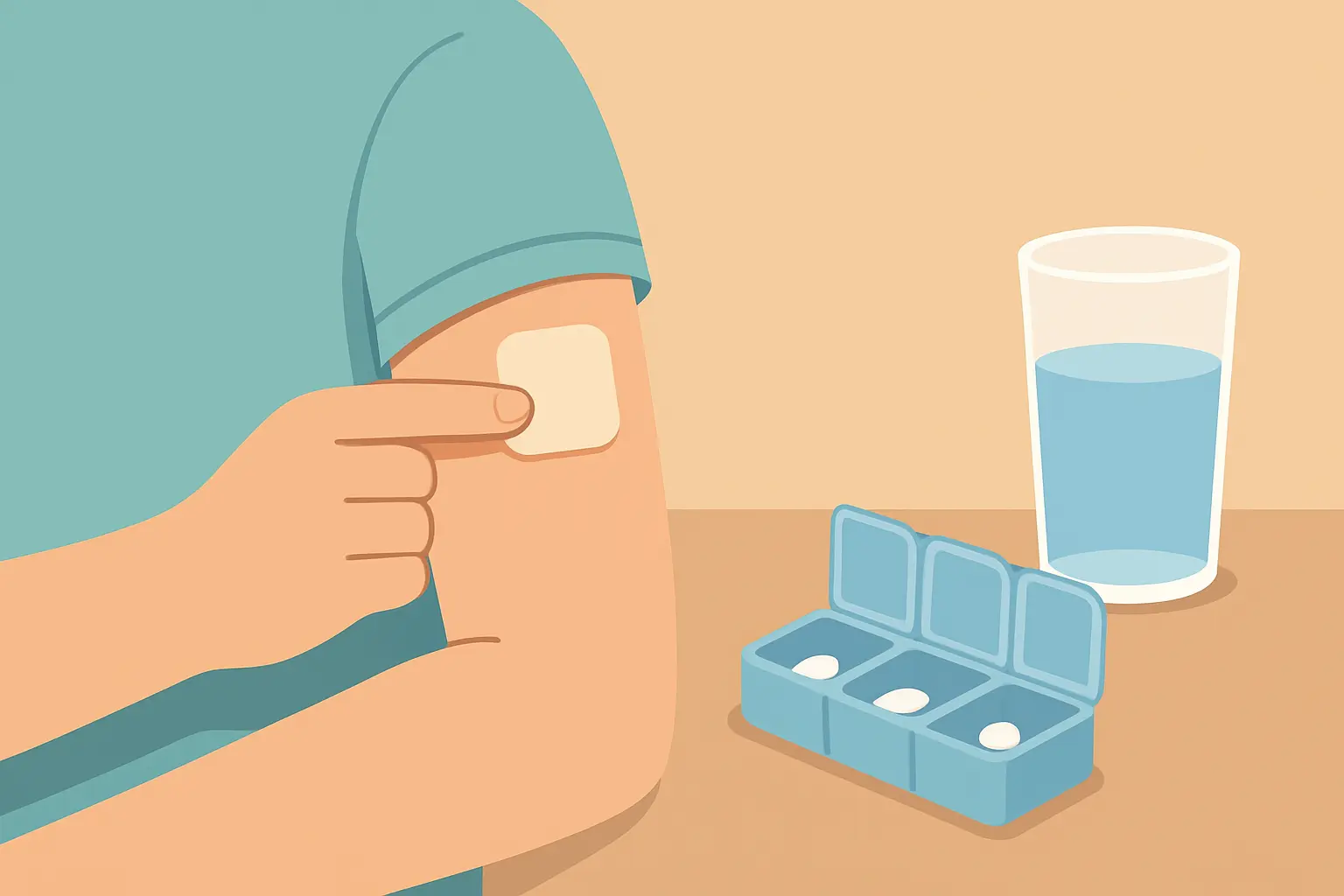
Combining a long-acting product (like a patch, worn all day) with a fast-acting one (like gum or a lozenge, used for sudden cravings) generally covers more situations than either alone. If you’re not sure which combination or dose fits your smoking history, a pharmacist or your local stop-smoking service can match one to how much and how often you currently smoke — see our comparison of NRT options for how the products differ.
What to Do at the Moment You Would Normally Cave
This is the moment the whole plan is built to survive. When it arrives:
- Use your fast-acting NRT immediately if you have it, rather than waiting to see if the craving passes on its own.
- Change your physical location for at least three minutes — step outside, walk to another room, anything that breaks the association between where you are and smoking.
- Do the thing you picked in advance instead of deciding fresh — this is why planning it earlier matters more than willpower in the moment.
- Text the person you told about your quit date. Accountability in real time is more effective than accountability you only feel afterward.
Cravings are also worth telling apart from habit — if you’re unsure whether what you’re feeling is a chemical craving or a routine cue, see the difference between nicotine craving and habit, since the two call for different responses.
A No-Willpower First Week
- Day before: Remove all cigarettes and paraphernalia. Fill your first NRT prescription. Tell one or two people your quit date.
- Days 1–2: Use NRT on schedule, not on demand. Expect this to be the hardest physical stretch — that’s normal, not a sign the plan isn’t working.
- Days 3–4: Cravings shorten but may still feel intense. Keep the environment changes from week 1 in place; don’t “test” your triggers yet.
- Days 5–7: Notice which planned responses you’re actually using, and drop the ones you’re not — a plan you’ll follow beats a perfect plan you’ll abandon.
Frequently Asked Questions
Can I really quit smoking without willpower?
Yes — a prospective cohort study found that adherence to treatment, not psychological willpower, was one of the strongest predictors of quitting successfully at both 24 and 52 weeks (adjusted odds ratios of 8.03 and 12.03).
Do stop-smoking medications actually work better than trying alone?
The CDC states that stop-smoking medicines could more than double your chance of success compared with quitting unaided, which is why medication is usually recommended over an unaided attempt.
What if I’ve failed to quit before because I “gave in”?
A previous unsuccessful attempt is common and doesn’t predict this attempt will fail the same way, especially if you change the approach from resisting cravings to reducing how often you face them.
Is NRT a crutch that just delays quitting nicotine?
NRT delivers nicotine without the thousands of other chemicals in cigarette smoke, and is intended to be tapered down over weeks to months — using it as directed is treatment, not a substitute addiction.
How long until quitting stops requiring so much structure?
Most people need the most structure in the first two to four weeks; after that, many of the planned responses become habits themselves and require less conscious effort to maintain.
What’s the single highest-leverage change if I can only do one thing?
Start and stick with a stop-smoking medication or NRT product on a fixed schedule — adherence to treatment showed the largest effect on long-term success in the cohort data above.
Is it normal to still have cravings even with medication and a plan?
Yes — medication and structure reduce the frequency and intensity of cravings, they don’t eliminate every one. The goal of the plan above is to make each craving smaller and shorter, not to guarantee you’ll never feel one.
Build the Structure, Not the Grit
iQuit’s daily missions, streak shields, and SOS tools exist so you don’t have to rely on willpower in the moment — the structure is already there when a craving hits. Craving forecasts learn your risky hours so your planned response is ready before you need it. For the next step in your plan, see how to set a quit date that actually sticks, and if you’re quitting despite not feeling fully ready, this guide to quitting when you don’t want to covers that specific version of low motivation. For how an app-based structure compares with going unaided, see quit-smoking app vs. willpower alone: what the research shows.
Structure Beats Willpower — Every Time
iQuit’s daily missions, craving forecasts, and streak shields do the deciding for you, so quitting doesn’t depend on how strong you feel today. Free on Google Play and the App Store.
Download iQuit Free on Google Play Download on the App Store


