Is Hookah Worse Than Cigarettes? What the Science Says in 2026
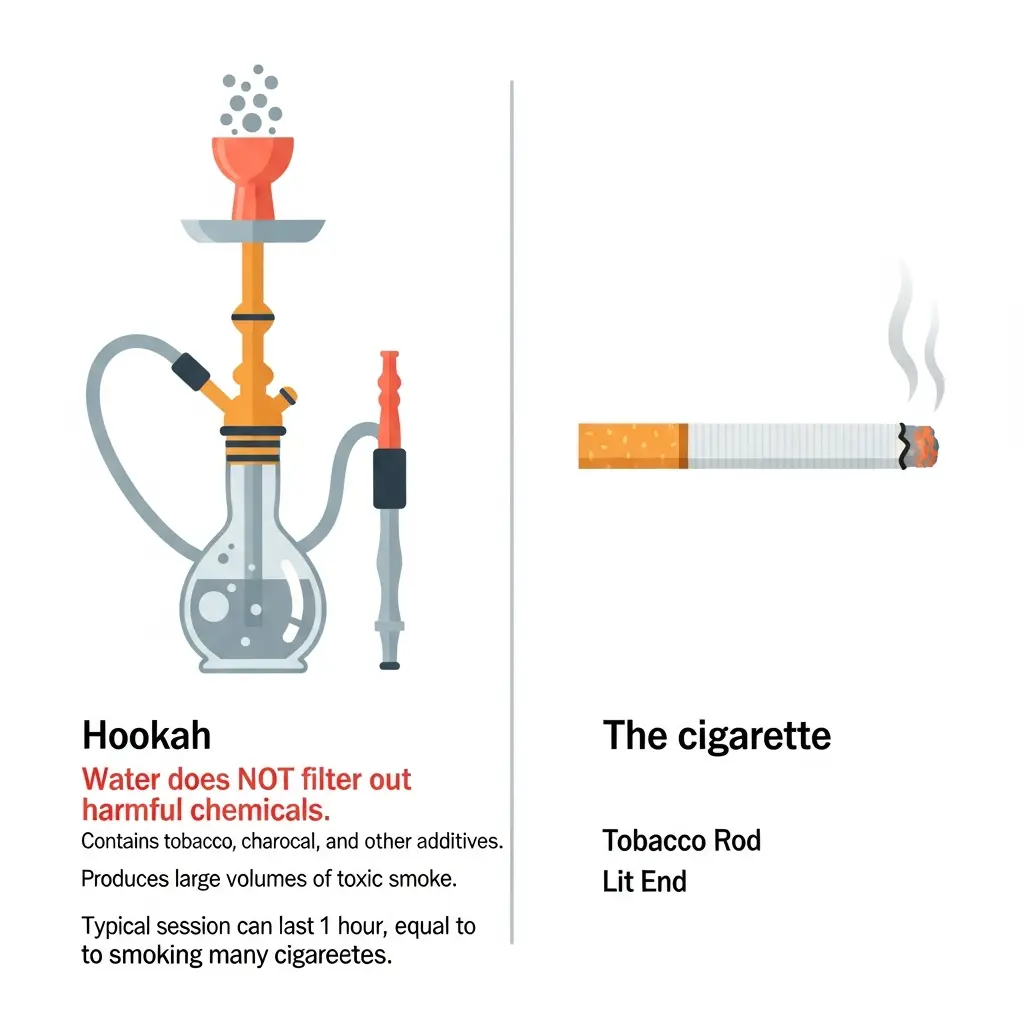
On a per-session basis, hookah is significantly more harmful than a single cigarette — delivering nearly nine times more carbon monoxide and 100–200 times more smoke volume according to the CDC (updated October 2024). The popular belief that water filters out the dangerous toxins is false, and both the WHO and CDC confirm that hookah use carries the same serious disease risks as cigarette smoking. There is no safe form of hookah.
How Much Carbon Monoxide Does Hookah Produce?
Carbon monoxide (CO) is a colourless, odourless gas that binds to haemoglobin in the blood — reducing the blood’s ability to carry oxygen to the heart, brain, and muscles. It is a key driver of tobacco-related cardiovascular disease. According to the CDC, a typical 60-minute hookah session produces inhaled smoke containing at least 145 mg of carbon monoxide — roughly eight to nine times the concentration found in a single cigarette.
Much of this CO comes not just from the tobacco itself, but from the charcoal used to heat the hookah. Charcoal combustion produces substantial amounts of CO, heavy metals, and polycyclic aromatic hydrocarbons — all of which are inhaled directly during a session. This is important because hookah users sometimes believe that using “premium” or “natural” charcoal reduces harm. It does not: all combustion charcoal generates these toxins.
Beyond CO, the total smoke volume inhaled during a 60–90 minute hookah session is approximately 90,000 ml — compared to roughly 500–600 ml for a single cigarette. A person using hookah inhales between 100 and 200 times more smoke per session than from one cigarette. Even accounting for the difference in session frequency (most cigarette smokers smoke multiple cigarettes per day), hookah represents a substantial per-use toxic load.
Does the Water Filter Actually Work?
The belief that water in the hookah base filters out harmful chemicals is perhaps the most persistent and most dangerous myth in tobacco harm perception. The CDC explicitly states that the water in a hookah pipe does not filter out carbon monoxide, heavy metals, or carcinogens. Studies have confirmed that toxic compounds remain in the smoke at harmful concentrations after passing through the water.
What the water actually does is cool the smoke — making it smoother and easier to inhale deeply and for longer periods. This effect can actually increase per-breath toxin deposition, because cooler smoke is drawn more deeply into the lungs without the harsh sensation that would otherwise signal overexposure. The perceived “smoothness” of hookah smoke is not evidence of safety — it is evidence of how effectively the cooling mechanism removes the body’s natural warning signals.
Can Hookah Cause Nicotine Addiction?
Yes, hookah is addictive. A single one-hour session can deliver 1.7 times more nicotine than a single cigarette, according to CDC data. Over a typical session, nicotine absorption in regular hookah users mirrors or exceeds that of cigarette smokers. The brain responds to this nicotine exactly as it does to cigarette nicotine — building tolerance, creating dependency, and establishing the craving-reward cycle that makes quitting difficult.
Many regular hookah users do not identify as “smokers” and therefore do not seek cessation support — a critical gap. If hookah use has become a daily or near-daily habit, the nicotine dependence is real and deserves the same evidence-based treatment options available to cigarette smokers: NRT, varenicline, bupropion, and behavioural support. Understanding your dependence level is a good starting point; read our overview of what nicotine dependence is and how it works.
What Diseases Does Hookah Cause?
Hookah smoking is associated with the same range of serious diseases as cigarette smoking. The WHO and CDC both confirm elevated risks of:
- Lung cancer and other respiratory cancers (oral, oesophageal, stomach)
- Chronic obstructive pulmonary disease (COPD) and reduced lung function
- Cardiovascular disease including coronary artery disease and stroke
- Periodontal disease and tooth loss
- Impaired fertility and pregnancy complications
- Respiratory infections (including from shared mouthpieces)
The notion that occasional hookah use is “just social” and carries low risk is not supported by evidence. Even infrequent sessions expose users to significant CO and carcinogen loads. For people who smoke cigarettes and also use hookah socially, the combined exposure increases total risk substantially.
CDC Facts: Hookah vs Cigarettes — Key Comparisons
- Smoke volume: ~90,000 ml per session vs ~500–600 ml per cigarette
- Carbon monoxide: up to 9× more than a single cigarette
- Nicotine: up to 1.7× more than a single cigarette
- Water does not filter CO, heavy metals, or carcinogens (CDC confirmed)
- Herbal hookah still produces CO and toxic compounds from charcoal combustion
Is Herbal (Tobacco-Free) Hookah Safe?
Herbal or tobacco-free shisha removes tobacco-specific nitrosamines and nicotine from the equation, but it does not eliminate the health risk. The CDC states that studies of herbal shisha show that the smoke still contains carbon monoxide, heavy metals from the charcoal, and other toxic agents. The combustion of organic material — whether tobacco or herbal blend — combined with charcoal heating produces carbon monoxide, benzene, and formaldehyde in the smoke.
While herbal hookah eliminates nicotine addiction risk, it does not protect against cardiovascular effects from CO exposure or carcinogen inhalation. There is no safe form of hookah smoking, whether tobacco-based or herbal.
Is Secondhand Hookah Smoke Dangerous?
Yes. Secondhand smoke from hookah contains the same toxins as the smoke the user inhales: CO, heavy metals, carcinogens, and fine particulate matter. Because hookah sessions last 45–90 minutes in typically enclosed social spaces, bystanders can be exposed to prolonged high-concentration secondhand smoke. The WHO urges that smoke-free environment legislation should explicitly include hookah cafes and shisha bars. People with asthma, cardiovascular disease, or pregnancy should avoid hookah venues entirely.
How Do You Quit Hookah?
If hookah use has become habitual or daily, treat it as you would cigarette dependence: with evidence-based support. Nicotine replacement therapy, varenicline, and bupropion are all appropriate if you have established nicotine dependence from hookah. Behavioural strategies for managing social smoking cues — hookah is heavily associated with social settings — are particularly important. Identify the social environments that cue the urge to use hookah and plan alternatives or exits in advance.
The same craving-management techniques used for cigarette quitting apply directly to hookah. Our guide on how to deal with cigarette cravings covers breathing techniques, CBT-based urge surfing, and distraction methods that work for any tobacco or nicotine craving, including hookah. Apps like iQuit help you log cravings, track your days smoke-free, and stay accountable whether you’re quitting cigarettes or hookah.
And for anyone considering whether switching from cigarettes to vaping might be a safer stepping stone out of tobacco, our article on does vaping help you quit smoking covers what the current evidence actually shows. The same “is switching actually safer” question comes up around smokeless tobacco too — our analysis of whether snus is safer than smoking applies the same evidence-first approach to that comparison.
Frequently Asked Questions
Is hookah worse than cigarettes for your health?
On a per-session basis, yes — a single hookah session exposes users to nearly 9 times more carbon monoxide and 100–200 times more smoke volume than a single cigarette, according to the CDC (updated October 2024). Both carry serious long-term disease risks, and there is no safe amount of tobacco smoking.
Does the water in a hookah filter out toxins?
No. The CDC confirms that water does not filter carbon monoxide, heavy metals, or carcinogens. It only cools the smoke, making it easier to inhale deeply — which can increase toxin deposition per breath.
How much carbon monoxide does a hookah session produce?
A typical 60-minute hookah session produces inhaled smoke containing at least 145 mg of carbon monoxide — approximately eight to nine times the concentration in a single cigarette (CDC, 2024). The charcoal used for heating is a major additional source of CO.
Is herbal (tobacco-free) hookah safe?
No. The CDC states herbal shisha smoke still contains carbon monoxide and heavy metals from charcoal combustion. While it removes nicotine and tobacco-specific carcinogens, the CO exposure and fine particulate inhalation remain harmful. There is no safe form of hookah.
Can you get addicted to nicotine from hookah?
Yes. A one-hour session can deliver 1.7 times more nicotine than a single cigarette. Regular hookah use produces the same patterns of nicotine dependence as cigarette smoking, and cessation requires the same evidence-based pharmacological and behavioural support.
Does hookah cause lung disease or cancer?
Yes. The WHO and CDC both confirm that hookah is associated with lung cancer, oral and oesophageal cancer, COPD, cardiovascular disease, and periodontal disease. Hookah users face the same disease risk profile as cigarette smokers.
Is secondhand smoke from hookah harmful?
Yes. Secondhand hookah smoke contains carbon monoxide, heavy metals, and carcinogens. Because sessions are lengthy (45–90 minutes) in typically enclosed spaces, bystander exposure can be substantial. The WHO recommends smoke-free legislation to include hookah venues.
If I switch from cigarettes to hookah, am I reducing my health risk?
No. Switching from cigarettes to hookah does not reduce health risk and may increase exposure to certain toxins per session. Quitting all tobacco and nicotine use is the only approach that delivers genuine health benefits. Evidence-based cessation tools — NRT, medication, behavioural coaching — apply equally to hookah users.