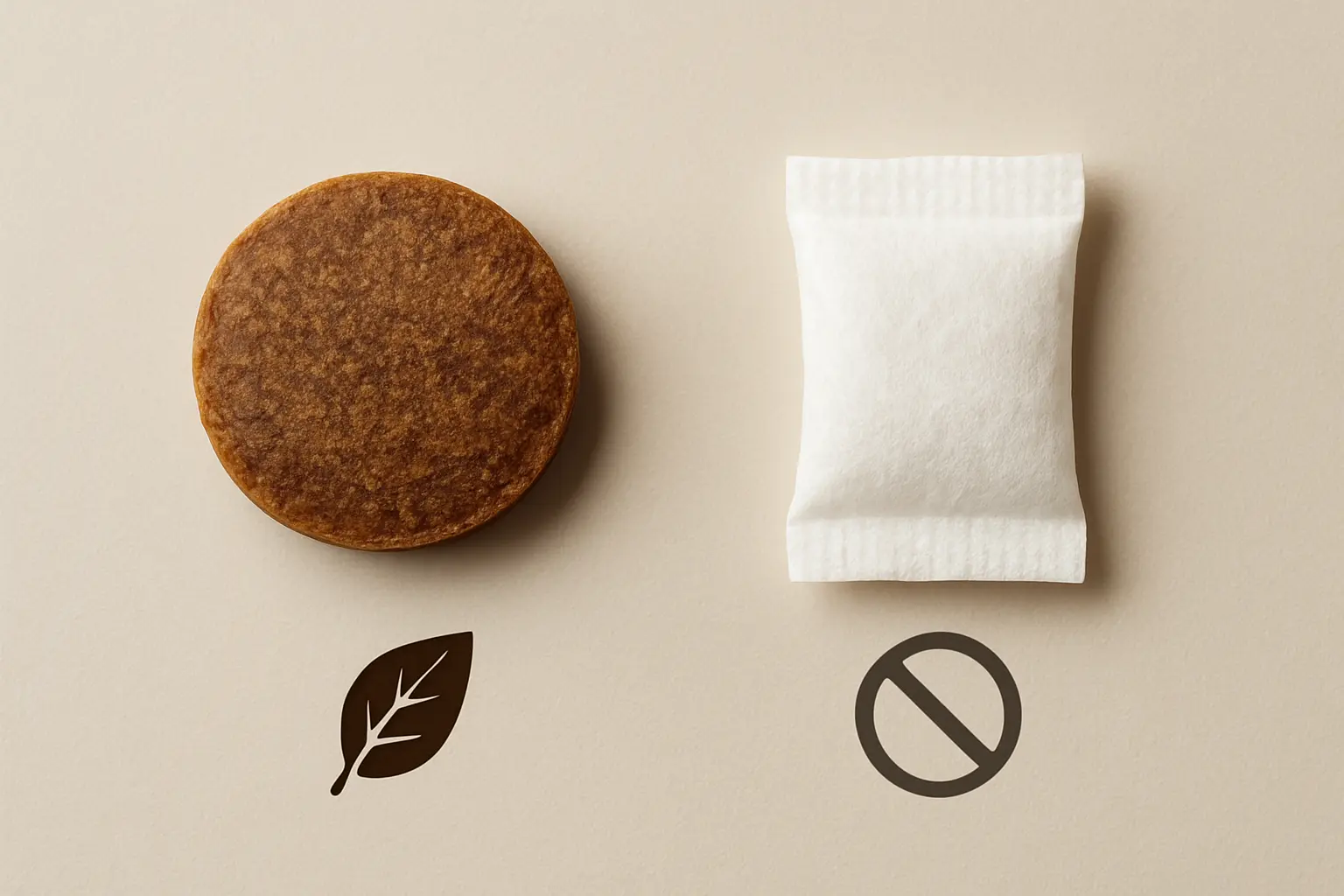
Snus is a moist, ground smokeless tobacco product placed under the upper lip, popular in Sweden and Norway and sold as loose tobacco or in small portioned sachets. It is often confused with tobacco-free nicotine pouches, but the two are genuinely different products: snus contains real tobacco leaf, has its own distinct legal status, and a different evidence base behind it. This guide separates snus from pouches and cigarettes, walks through what the Swedish population data actually shows (and why it is contested), covers the oral and pancreatic cancer research, explains where snus is legal, and looks honestly at whether it works as a way to quit smoking.
What Is Snus, Exactly?
Snus (pronounced “snoos”) is a moist oral tobacco product made from ground tobacco leaf, water, salt, and flavorings, traditionally sold loose or, more commonly today, in small teabag-style portion pouches placed under the upper lip. Unlike cigarettes, it is not burned, so users are not inhaling combustion smoke or the thousands of chemicals that come from it. It originated in Sweden in the early 19th century and remains deeply embedded in Nordic culture, particularly in Sweden and Norway.
Because it delivers nicotine without combustion, snus sits within the broader category of harm-reduction tobacco products — alongside vapes, heated tobacco, and nicotine pouches — that are lower-risk than cigarettes but not risk-free.
Snus vs Nicotine Pouches vs Chewing Tobacco
The single most important distinction, and the one most often missed, is tobacco content. Snus contains real ground tobacco leaf; modern nicotine pouches like Zyn or Velo contain no tobacco at all — their nicotine is extracted from tobacco plants and then added to a plant-fiber pouch base, with no leaf material present in the finished product. Snus pouches are typically darker and moister than the drier, whiter nicotine-only pouches. If you have already looked into tobacco-free pouches, our guide on whether Zyn and Velo are safe to quit smoking with covers that product category specifically, and our roundup of nicotine pouch and Zyn usage statistics shows how fast that market has grown.
Chewing tobacco is a third, distinct product: coarser, loose-leaf tobacco that is chewed rather than held stationary against the gum, and it produces significant excess saliva that most users spit out — a different use pattern from either snus or pouches, and with its own separate (and generally worse) oral health evidence base.

| Product | Contains tobacco? | Use pattern | Legal in EU (outside Sweden)? |
|---|---|---|---|
| Snus | Yes | Placed under lip, no spitting needed | No (Sweden-only exemption) |
| Nicotine pouches (Zyn, Velo) | No | Placed under lip, no spitting needed | Yes, widely sold |
| Chewing tobacco | Yes | Chewed, produces excess saliva, usually spat out | Varies by country |
The Swedish Population Data — and Why It’s Contested
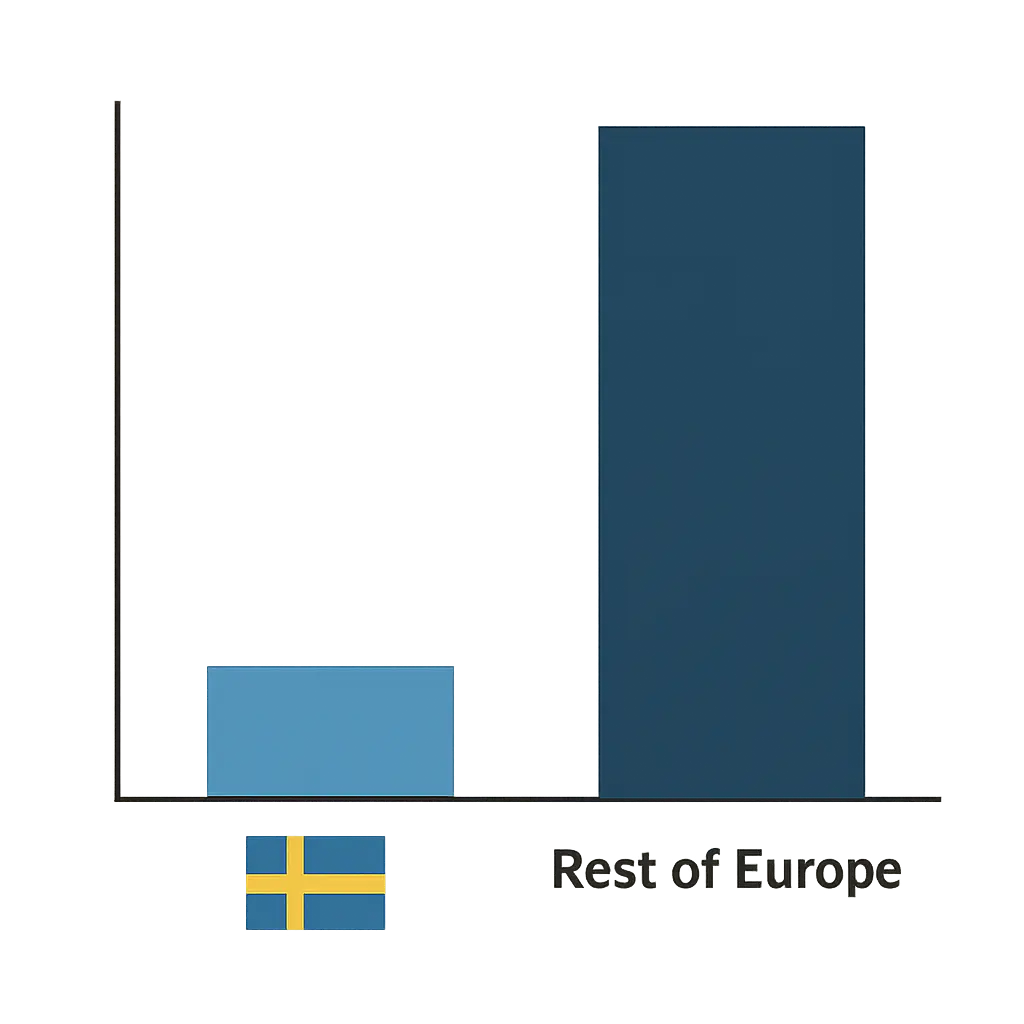
Sweden’s daily smoking rate has fallen below 5% of adults — the lowest in the European Union, and under the threshold commonly used to describe a country as “smoke-free.” For comparison, the European Commission puts smoking across the EU general population at around 26%, with tobacco causing close to 700,000 deaths in the EU every year (European Commission, tobacco policy overview). Snus advocates, including the industry-backed “Swedish Experience” narrative, point to widespread snus use as the reason smoking fell so far below the rest of Europe.
Public health researchers are more cautious. Sweden’s own public health agency has pushed back on the claim that snus alone drove the decline, pointing instead to Sweden’s long history of strong, comprehensive tobacco control policy — advertising bans, high taxation, smoke-free public spaces, and sustained public education campaigns — as a major independent driver. It is also worth noting that much of the material promoting the snus explanation comes from industry-funded sources, which is a real limitation that reputable public health bodies flag when weighing the evidence.
A separate and genuinely concerning recent trend: snus use among young Swedish adults, and young women in particular, has risen sharply over the past several years, reversing decades in which snus was overwhelmingly a middle-aged male product. Researchers also report that people who take up snus or e-cigarettes are more likely than non-users to go on to start smoking. That pattern complicates any simple “snus replaced cigarettes” story for younger users specifically.
Bloomberg News examines Sweden’s falling smoking rate and the debate over how much credit belongs to snus versus decades of tobacco control policy.
Oral and Pancreatic Cancer Risk: What the Research Shows
The single best dataset on this comes from a retrospective cohort of 279,897 male Swedish construction workers followed to the end of 2004, with the analysis focused on the 125,576 men who had never smoked — which is what makes it possible to separate the effects of snus from the effects of cigarettes. Among those never-smokers, snus use was not associated with oral cancer (relative risk 0.8, 95% CI 0.4–1.7) or lung cancer (0.8, 95% CI 0.5–1.3), a striking contrast with smoking, which is a leading cause of both (Luo et al., The Lancet, 2007).
Pancreatic cancer is the more contested question, and it comes from the same study: ever-use of snus was independently associated with roughly double the pancreatic cancer risk of never-users of any tobacco (relative risk 2.0, 95% CI 1.2–3.3). The authors concluded that snus “should be added to the list of tentative risk factors for pancreatic cancer” — deliberately cautious wording. Later pooled analyses of prospective studies have not consistently reproduced that association, so the honest summary is that the pancreatic signal is real enough that it should not be dismissed, but it has not been firmly established either (Luo et al., 2007).
Cardiovascular effects are still debated in the literature, but are considered clearly less severe than those from cigarette smoking. Snus is not risk-free — nicotine dependence, gum recession at the placement site, and the unresolved pancreatic cancer question all remain real considerations.
Where Snus Is Legal
Snus sale has been banned across the European Union since 1992, with a single permanent exemption for Sweden, negotiated when Sweden joined the EU in 1995 in recognition of how embedded snus already was in Swedish culture. Outside the EU sales ban’s reach, snus is widely and legally sold in Norway. The UK, which had already banned it, restated and strengthened the position in the Tobacco and Vapes Act 2026, which makes it an offence to manufacture, sell, or possess snus with intent to supply.
The United States takes a different approach. The FDA granted Swedish Match’s General snus products a Modified Risk Tobacco Product order on October 22, 2019 — the first such authorization the agency ever issued — and renewed it on November 7, 2024 (FDA, Modified Risk Tobacco Products). That order permits a specific claim that switching completely from cigarettes to those particular products lowers risk of mouth cancer, heart disease, lung cancer, stroke, emphysema, and chronic bronchitis. It is narrow and product-specific — not a blanket safety claim for smokeless tobacco in general, and explicitly conditional on switching completely rather than using both.
Does Snus Work as a Way to Quit Smoking?
The trial evidence for snus as a cessation aid is thinner than the enthusiasm around it suggests. The one randomized, double-blind, placebo-controlled trial of snus for smoking cessation followed 250 smokers for 28 weeks. Point-prevalence abstinence at six weeks favored snus (18.4% versus 8.8% on placebo snus, a statistically significant difference), but by week 28 the gap had narrowed to 12.8% versus 7.2% and was no longer statistically significant, as was continuous abstinence from week 6 to 28 (4.0% versus 1.6%). The authors’ own conclusion was that early quit rates looked promising and comparable to nicotine replacement, but that snus “needs to be further researched” as a cessation treatment (Fagerström et al., Nicotine and Tobacco Research, 2012).
Swedish population surveys report considerably higher success rates among people who used snus during a quit attempt, but those figures are self-reported, not randomized, and prone to the usual recall and selection effects — so they are suggestive rather than conclusive.
Crucially, snus is not licensed or approved as a smoking cessation medicine anywhere, including in Sweden. It functions, at best, as an unlicensed harm-reduction substitution route, not a clinically validated quit aid the way varenicline, bupropion, or NRT are. If you want a fully licensed route instead, our complete evidence-based guide to quitting covers the approved options.
Snus vs Pouches vs NRT Lozenge vs Cigarettes
| Product | Tobacco? | Combustion? | Licensed cessation aid? | Relative risk vs cigarettes |
|---|---|---|---|---|
| Cigarettes | Yes | Yes | No | Baseline (highest risk) |
| Snus | Yes | No | No, unlicensed | Substantially lower, not zero |
| Nicotine pouches | No | No | No, unlicensed | Lower still; long-term data limited |
| NRT lozenge | No | No | Yes, licensed | Lowest of this group; clinically studied |
For a closer look at how licensed nicotine replacement compares on effectiveness and cost, see our roundup of the best NRT options compared. If you are weighing smokeless products more broadly against other non-cigarette routes, our comparison of heated tobacco versus vaping versus quitting outright covers the same trade-off from a different angle, and our piece on how hookah compares with cigarettes is a useful companion, since hookah is frequently misjudged as safer in the same way snus sometimes is.
The Exit Problem: Getting Off Snus Itself
Because snus delivers nicotine efficiently and is used many times a day by regular users, it creates its own dependence, and stepping away from snus involves the same withdrawal process as stepping away from any nicotine product — cravings, irritability, and difficulty concentrating for the first one to two weeks. Nicotine’s overall addictive ranking relative to other substances is covered in detail in how addictive nicotine really is, and gum health is a relevant consideration for any oral tobacco product, covered in our data on smoking and gum disease.
If your goal is genuinely to step down from cigarettes toward a lower-risk product and eventually off nicotine altogether, a structured plan matters more than the specific substitute you choose. This is exactly the kind of staged approach iQuit’s gradual and harm-reduction quit methods are built to support, alongside craving logging that helps you notice which triggers are driving continued use, whatever the source of nicotine.
Frequently Asked Questions
Is snus the same thing as nicotine pouches?
No. Snus contains real ground tobacco leaf, while nicotine pouches like Zyn or Velo contain no tobacco at all — their nicotine is extracted and added to a plant-fiber base. They look similar and are used the same way, but they are legally and chemically distinct products, which is why they are regulated differently across Europe.
Is snus legal to buy in the EU?
Snus sale is banned across the EU except in Sweden, which negotiated a permanent exemption when it joined in 1995. It is also widely sold in Norway, which is not an EU member. In the UK it remains illegal, and the Tobacco and Vapes Act 2026 makes manufacturing, selling, or possessing snus with intent to supply an offence.
Does snus cause oral cancer?
The largest Swedish cohort study, restricted to men who had never smoked, found no association between snus use and oral cancer (relative risk 0.8, 95% CI 0.4 to 1.7). That is a marked contrast with smoking, which is a well-established oral cancer risk factor (Luo et al., The Lancet, 2007).
Does snus increase pancreatic cancer risk?
Possibly. The same Swedish cohort found ever-users of snus had roughly double the pancreatic cancer risk of never-users of any tobacco (relative risk 2.0, 95% CI 1.2 to 3.3). Later pooled analyses have not consistently reproduced it, so the authors themselves called snus a tentative rather than confirmed risk factor (Luo et al., The Lancet, 2007).
Is snus safer than smoking cigarettes?
On most measured outcomes, yes, and substantially so, because there is no combustion and no smoke drawn into the lungs. The FDA has authorized a specific reduced-risk claim for certain General snus products for smokers who switch completely. It is not risk-free, and it carries its own nicotine dependence (FDA, 2024).
Is snus approved as a smoking cessation aid?
No, snus is not licensed as a cessation medicine anywhere, including Sweden. The one placebo-controlled trial found an early advantage that had faded to a non-significant difference by 28 weeks, and its authors called for more research rather than declaring it effective (Fagerstrom et al., Nicotine and Tobacco Research, 2012).
Why is Sweden’s smoking rate so much lower than the rest of Europe?
Sweden’s daily smoking rate has fallen below 5%, against roughly 26% smoking across the EU general population. Snus advocates credit widespread snus use, but Sweden’s public health agency attributes much of the decline to decades of strong tobacco control policy rather than snus alone (European Commission, 2026).
Can teenagers legally buy snus in Sweden?
No. Snus is age-restricted in Sweden in the same way as other tobacco products. Even so, snus use among young Swedish adults, and young women in particular, has risen sharply in recent years, which is one of the main reasons researchers are cautious about presenting snus purely as a harm-reduction success story.
Whatever Your Step-Down Looks Like, Track It With iQuit
Whether you are moving away from cigarettes gradually or aiming for a clean quit, iQuit supports harm-reduction and gradual methods alongside cold turkey, with craving logs, milestone tracking, and money-saved calculations that work for whatever path you are on. Free on Android.