Lung Function After Quitting: How Your FEV1 and Breathing Recover Over Time (2026)
One of the first questions people ask after quitting smoking is: “Will my lungs ever fully recover?” The honest, evidence-based answer is: it depends on how long and how heavily you smoked — but stopping produces meaningful, measurable improvements for almost everyone, starting within days. Lung function recovery after quitting smoking involves two distinct processes: a genuine initial improvement in airflow, and — critically — a dramatic slowing of the rate at which lung function continues to decline. For people with early COPD, that second process may be the more important of the two.
The landmark evidence comes from the Lung Health Study, published in the American Journal of Respiratory and Critical Care Medicine, which followed 3,926 smokers with mild-to-moderate airway obstruction over five years with annual lung function testing. Its findings remain among the most cited in respiratory medicine. This guide translates those findings — and those from supporting research — into a practical timeline you can map onto your own quit journey.
What Smoking Does to Lung Function
Every puff of cigarette smoke deposits particulates and carcinogens into the airways, triggering a cascade of damage:
- Cilia paralysis: The tiny hair-like structures lining your airways — which sweep mucus and particles out of the lungs — are paralysed and eventually destroyed by cigarette smoke. This is why smokers cough more and are more prone to chest infections.
- Mucus hypersecretion: The airway lining responds to constant irritation by producing far more mucus than normal, further narrowing the airways.
- Airway inflammation: Chronic smoke exposure causes persistent low-grade inflammation throughout the bronchial tree, thickening the airway walls and reducing airflow.
- Alveolar destruction: In heavy, long-term smokers, the delicate air sacs (alveoli) responsible for gas exchange are progressively destroyed. This destruction is what defines emphysema, and unlike cilia or mucus changes, it is not reversible.
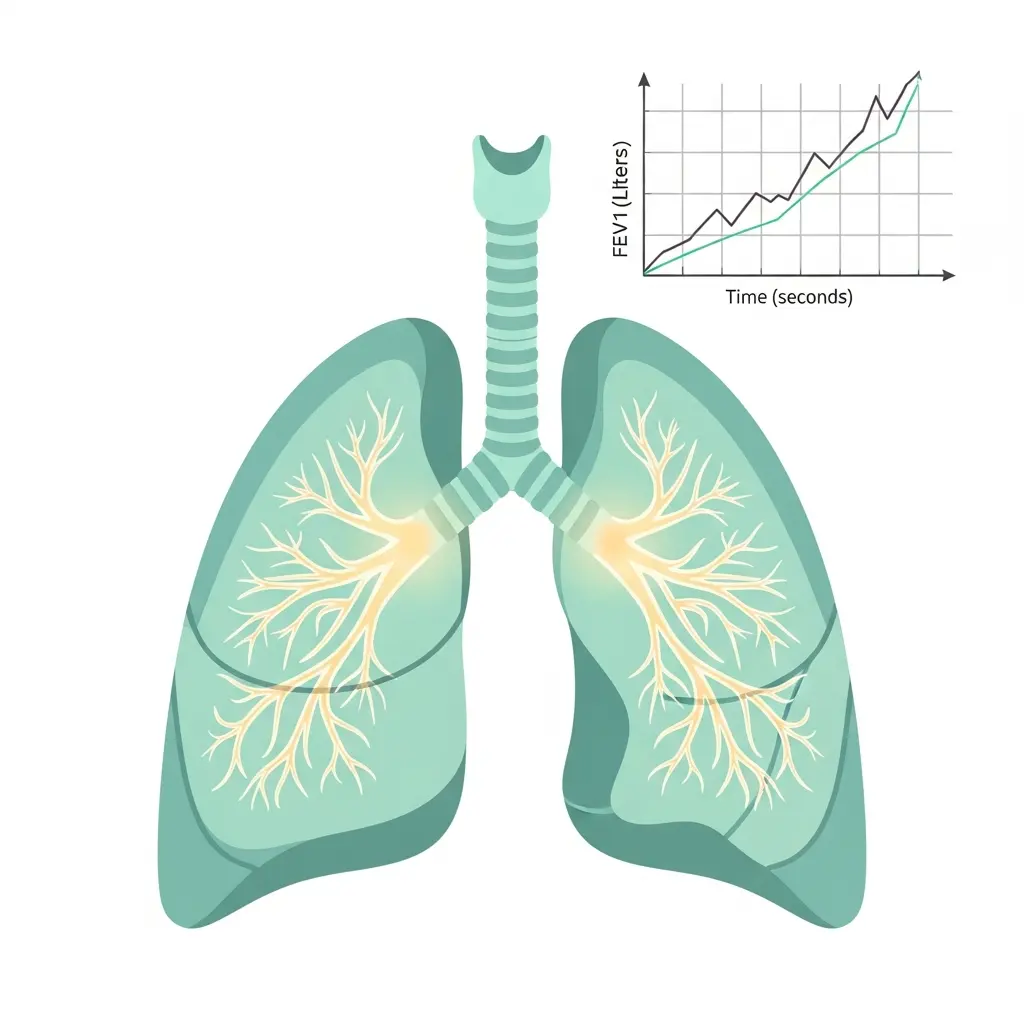
The combined effect is measured as a reduction in FEV1 — forced expiratory volume in one second — the gold-standard measure of airway obstruction. Smoking accelerates the natural age-related decline in FEV1. A healthy non-smoking adult loses approximately 25–30 ml of FEV1 per year as a normal part of ageing; a regular smoker can lose 50–80 ml per year or more.
Cilia Recovery: The First Win
Within 24 to 72 hours of your last cigarette, the paralysed cilia in your airways begin to recover function. Within a few weeks, new cilia are growing back in areas where they were damaged. This is one of the earliest and most tangible lung improvements:
- The smoker’s cough — which often gets temporarily worse in the first 1–2 weeks as recovering cilia begin clearing the backlog of mucus — typically improves substantially within 4–8 weeks.
- The rate of chest infections begins to fall within weeks of cessation as mucociliary clearance is restored.
- Wheeze associated with excess mucus and airway inflammation often improves noticeably within the first month.
The European Respiratory Journal published research confirming that the prevalence of respiratory symptoms — chronic cough, chronic phlegm, wheeze, and dyspnoea — decreased by more than 80% after five years of smoking cessation in studied populations. The early improvements in cilia function are the foundation of this long-term benefit.
FEV1 Improvement After Quitting
The Lung Health Study provides the most robust data on FEV1 changes after cessation. Participants who successfully stopped smoking experienced an average improvement in FEV1 of approximately 47 ml (around 2%) in the year after quitting. This is modest in absolute terms, but the clinical meaning is important for two reasons:
- It reverses roughly two years of smoking-accelerated decline in a single year.
- The rate of FEV1 decline in sustained quitters was halved compared to people who kept smoking: 31 ml per year versus 62 ml per year, as reported in the European Respiratory Journal’s analysis of the Lung Health Study data.
A Greek tobacco cessation clinic follow-up study published in PMC similarly found FEV1 improvements after cessation, with the magnitude of improvement linked to age at quitting (younger quitters gained more), baseline lung function, and the number of years smoke-free. Younger former smokers who had not yet developed significant obstruction saw the greatest percentage gains.
It is essential to be clear: this initial FEV1 improvement does not mean you “reverse” years of damage in one year. It reflects the resolution of acute, reversible components — airway inflammation, mucus plugging, and bronchospasm. The structural damage underlying established COPD is not reversed by this mechanism. If you have had a spirometry test and are trying to make sense of the result, our guide on the lung age test and what your result means translates raw FEV1 numbers like these into a single, more intuitive “lung age” figure.
Full Lung Function Recovery Timeline
| Time After Quitting | Lung Changes | Source |
|---|---|---|
| 24–72 hours | Cilia begin recovering function; airways start clearing mucus build-up | NHS / CDC |
| 1–2 weeks | Cough may temporarily worsen as cilia clear mucus; airway inflammation begins reducing | NHS |
| 1 month | Wheeze and shortness of breath often noticeably improved; cilia largely restored in upper airways | ERJ / NHS |
| 3–6 months | Measurable improvement in FEV1 and airflow; mucus production normalising | Lung Health Study / PMC |
| 1 year | Average FEV1 gain of ~47 ml (2%); annual rate of FEV1 decline halved vs. continuing smokers | Lung Health Study (AJRCCM) |
| 2–5 years | Sustained quitters maintain halved decline rate; chronic cough and phlegm continuing to reduce | ERJ Lung Health Study analysis |
| 5+ years | >80% reduction in chronic respiratory symptoms; evidence of lung function stabilisation in some; alveolar damage remains | ERJ / PMC 11668769 |
American Lung Association: How Smoking Impacts Your Lung Health
Lung function can improve up to 30% in the first weeks after quitting. Over 87% of lung cancers have already spread by diagnosis. This ALA resource compares healthy and damaged lungs and explains what quitting does for lung recovery.
What Cannot Be Fully Reversed
Honest medical information about lung recovery must acknowledge what quitting smoking cannot undo. This is not a reason not to quit — it is precisely the opposite, because every year of continued smoking adds more irreversible damage.
The alveolar destruction that characterises emphysema — the “holes in the lung” caused by years of oxidative damage and inflammation — does not regenerate in adults. Once emphysema is established, quitting smoking halts further destruction and dramatically slows decline, but it does not rebuild destroyed lung tissue. The air trapping and hyperinflation associated with emphysema therefore persists, though it does not worsen at the same rate.
This is the key finding that should be understood clearly: quitting smoking does not cure COPD, and it does not reverse emphysema. What it does — and this is enormously clinically meaningful — is convert a progressive, accelerating disease trajectory into a much slower one, often comparable to the normal age-related decline of a non-smoker. For many people with COPD, this is the difference between a decade of manageable symptoms and severe respiratory failure.
For a deeper dive into COPD-specific outcomes, see our dedicated guide: COPD and Smoking Cessation: What Happens to Your Lungs When You Quit.
COPD and Quitting: Why Slowing the Decline Matters
The Lung Health Study’s most important message for people with COPD is this: the benefits of quitting apply even to smokers with advanced age, long smoking history, poor baseline lung function, or airway hyperresponsiveness. No one is “too far gone” to benefit from cessation.
A 2024 systematic review and meta-analysis published in PMC on smoking cessation in COPD confirmed that cessation significantly reduces annual FEV1 decline, improves quality of life, reduces COPD exacerbations, and extends survival. The benefit is present across all COPD severity stages.
Respiratory Symptoms: What Improves and When
Beyond the numerical FEV1 data, the subjective respiratory experience of most quitters improves substantially:
- Morning cough — typically improves within 2–4 weeks as mucociliary clearance is restored
- Phlegm production — may temporarily increase in weeks 1–2 (mucus clearing), then decreases substantially by months 1–3
- Wheeze — often improves within weeks as airway inflammation settles
- Exercise tolerance — many people notice they can climb stairs or walk briskly with less breathlessness within 2–3 months
- Breathlessness at rest (if present) — improves more slowly, over months to years, as the reversible components of airway obstruction resolve
For a comprehensive view of all the concurrent physical changes happening as you quit, our Body Recovery After Quitting Smoking: Complete Timeline and the Health Recovery Timeline: 50+ Data Points are useful companions to this article.
How iQuit Supports Your Lung Recovery
Tracking your lung health milestones can be one of the most powerful motivators to stay quit. The iQuit app maps your smoke-free days against a personalised health recovery timeline, showing you exactly when key respiratory milestones — cilia recovery, FEV1 improvement, reduced cough risk — are occurring. When you are struggling with a craving at the six-week mark, knowing your airways have been clearing for weeks and your annual lung function decline rate has already started slowing is meaningful, concrete motivation.
Frequently Asked Questions
Does FEV1 improve after quitting smoking?
Yes. The Lung Health Study found an average FEV1 improvement of approximately 47 ml (2%) in the first year after sustained cessation, primarily due to the resolution of reversible airway inflammation and mucus production. More significantly, the annual rate of FEV1 decline in sustained quitters was halved compared to continuing smokers.
Can you reverse COPD by quitting smoking?
No — quitting smoking does not reverse established COPD or regenerate destroyed alveoli. However, it is the single most effective intervention available: it halves the rate of annual lung function decline, dramatically slows disease progression, reduces exacerbations, and improves survival. Quitting does not cure COPD but it does fundamentally change its trajectory.
How long does it take for lungs to clear after quitting smoking?
Cilia begin recovering within 24–72 hours and are largely restored in the upper airways within a few weeks, allowing active clearing of mucus. The smoker’s cough often gets briefly worse before improving — most people notice a significant reduction in cough and phlegm within 4–8 weeks. Complete clearing of airway inflammation takes months to years.
Why does coughing get worse after quitting smoking?
When you quit, your recovering cilia begin sweeping accumulated mucus and debris out of your airways — often more aggressively than before. This temporarily increases coughing in the first one to two weeks. It is a sign of healing, not damage. The cough typically settles substantially within 4–8 weeks as the initial backlog is cleared.
Does quitting smoking improve breathing immediately?
Some people notice improved breathing within days as airways begin clearing. More significant improvements in exercise tolerance and breathlessness are typically noticeable within 2–3 months as inflammation reduces and mucus production normalises. People with severe COPD may see slower improvements, but benefit is still measurable over months to years.