Almost every parent who smokes has said it: I am doing this for my kids. It is a genuinely good reason. But quitting smoking for your kids has a known weakness as a motive: it is strongest on day one, when the guilt is loudest, and weakest in week three, when the guilt has faded and the cravings have not. This guide converts that reason into something that still works on a bad Tuesday, without a single sentence designed to make you feel worse.
Why For My Kids Fades by Week Three

A motive built on guilt has a short half-life. It burns brightly for the first few days, while quitting still feels like an event. Then the days stop being remarkable, your children carry on being fine, and the reason quietly stops arguing back.
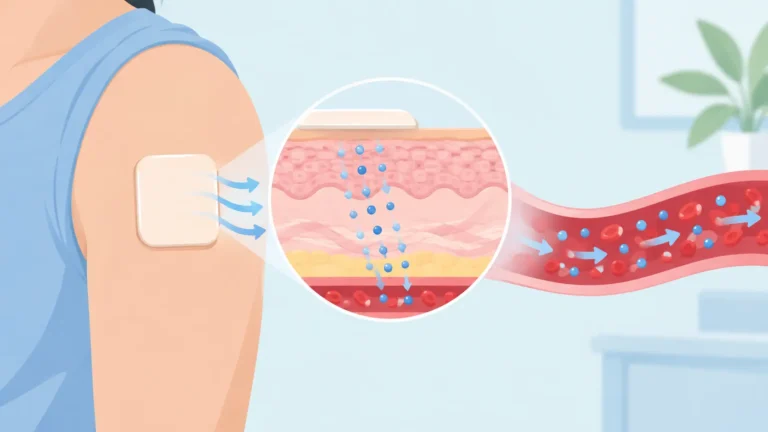
Meanwhile the physical side has not finished. The NHS says withdrawal symptoms are strongest in the first week, especially the first three days, and last three to four weeks on average, sometimes longer (NHS Better Health). So your motivation curve and your discomfort curve cross at roughly the worst possible moment, somewhere in weeks two and three.
That crossover is not a character flaw. It is a design problem with a design answer: stop relying on how you feel and start relying on things that do not need you to feel anything. A written reason. A reminder you see without looking for it. One person who knows. A rule for after a slip.
If you are still in the run-up rather than past your quit date, the arguments your own head makes in the final fortnight are covered in our piece on talking yourself out of quitting.
What Your Children Actually Learn From Watching
Parents tend to assume the lesson is transmitted in the lecture. It mostly is not. The American Academy of Pediatrics puts modeling first in its list of ways to protect children: set the example, because if your children see you smoking they may want to try it, and cigarettes at home make experimenting more likely (HealthyChildren.org, AAP). The NHS makes the same point in one blunt line about passive vaping: young children often copy adults.
This cuts both ways, and the second way is worth holding on to. A child who watches a parent struggle with something hard and keep going is learning about difficulty, not just about cigarettes. You cannot show them that by never having smoked. You can only show it by stopping.
The video below, from Johns Hopkins All Children’s Hospital, covers thirdhand smoke: the residue left on surfaces, clothes and hair after the cigarette is out. It is the part most parents who smoke outside have not heard about.
The Risk Numbers, Briefly and Honestly
This section is short on purpose and appears once rather than threaded through the article. You do not need to be frightened repeatedly to make a decision you have already made.
The largest review pooled 58 studies and reported the odds of a child taking up smoking against who smoked at home (Leonardi-Bee and colleagues, Thorax, 2011). These are associations from observational research, not proof that one causes the other.
| Who smokes in the household | Pooled odds ratio | 95% confidence interval |
|---|---|---|
| At least one parent | 1.72 | 1.59 to 1.86 |
| Father | 1.66 | 1.42 to 1.94 |
| Mother | 2.19 | 1.73 to 2.79 |
| Both parents | 2.73 | 2.28 to 3.28 |
| A sibling | 2.30 | 1.85 to 2.86 |
| Any household member | 1.92 | 1.70 to 2.16 |
The same authors estimated that around 17,000 young people in England and Wales take up smoking by the age of 15 each year as a consequence of household smoking exposure (Leonardi-Bee et al., Thorax, 2011). That is a population estimate, not a prediction about your child.
On exposure rather than uptake, the NHS describes secondhand smoke as a lethal cocktail of more than 5,000 irritants, toxins and cancer-causing substances, mostly invisible and odorless, and lists asthma, chest infections such as pneumonia and bronchitis, meningitis, ear infections, coughs and colds as more likely in children living with someone who smokes (NHS). The WHO puts second-hand smoke deaths at more than 1.6 million a year and states there is no safe level of exposure (WHO, June 2026). Fuller breakdowns are in the secondhand smoke risks guide and the data on children and exposure. That is the whole risk section.
What Changes for Them When You Stop
Most of what improves for your children is invisible and gradual, which is exactly why it makes a poor daily motivator on its own. It is still worth knowing what you are buying.
- Their exposure stops at the source. The AAP is direct about the half-measure everyone tries first: children whose parents smoke only outside are still exposed to the chemicals in secondhand smoke, and quitting is the way to eliminate it.
- The house stops being a reservoir. Thirdhand smoke is the residue left in walls, upholstery and a child’s hair; the AAP notes chemicals from smoke can be found on surfaces days after the smoking happened. When you stop, that stock stops being topped up.
- The everyday illnesses get a better baseline. Children of smokers cough and wheeze more, take longer to get over colds and miss more school days, per the AAP. Asthma attacks may be more frequent and more severe.
- The car stops being the worst room in the house. The NHS singles out the family car, where secondhand smoke can reach hazardous levels even with the windows open. In the UK it has been illegal since 2015 to smoke in a private vehicle carrying anyone under 18.
Note what is not on that list: a promise. Nobody can tell you quitting guarantees your child never smokes. What the evidence supports is a shift in the odds, which is the only thing any parent has ever been able to influence.
Telling Your Children You Are Quitting
Whether to say anything depends mostly on age, and the failure modes are opposite at each end of the range.
Under about seven. One sentence, no drama: I am stopping smoking because it is bad for me. Young children cannot hold a health lecture. What they notice is the absent smell and that you no longer disappear outside.
Seven to twelve. This age asks direct questions and deserves direct answers, including the uncomfortable one about why you started. Saying that it is hard is more useful than pretending it is easy, because the pretence is what they will remember if you slip.
Teenagers. The risk here is the lecture reflex. A teenager who has watched you smoke for a decade will hear any warning as hypocrisy. Announce the decision, invite nothing, and let the behavior carry the argument. If they smoke or vape themselves, offering to do it together works far better than an instruction.
Do not make your children your accountability system. A child made responsible for a parent’s quit attempt carries the failure too, and that is not a load to hand over. Recruit an adult for that job. Our guide to telling your family you are quitting has the wording for the wider household, and helping someone else quit is worth forwarding to whichever adult you do recruit.
What to Do If You Slip in Front of Them
It happens, and the recovery matters more than the cigarette. The NHS separates the two things people muddle together: a single cigarette or puff is a lapse, and the advice is to shrug it off and keep going; smoking regularly again is a relapse, and the advice then is to take stock and set a new quit date, ideally within two weeks (NHS Better Health).
If a child saw it, say something short and true the same day: I smoked one today, I did not want to, and I am carrying on stopping. That sentence hides nothing, dramatizes nothing, and models the thing you want them to learn, which is that a bad day is not a reason to abandon a plan.
Do not promise it will never happen again. A promise you cannot underwrite turns the next slip into a broken word, which costs more than the cigarette did. Our restart guide for after a relapse covers the practical reset.
Making the Motive a Daily Mechanism
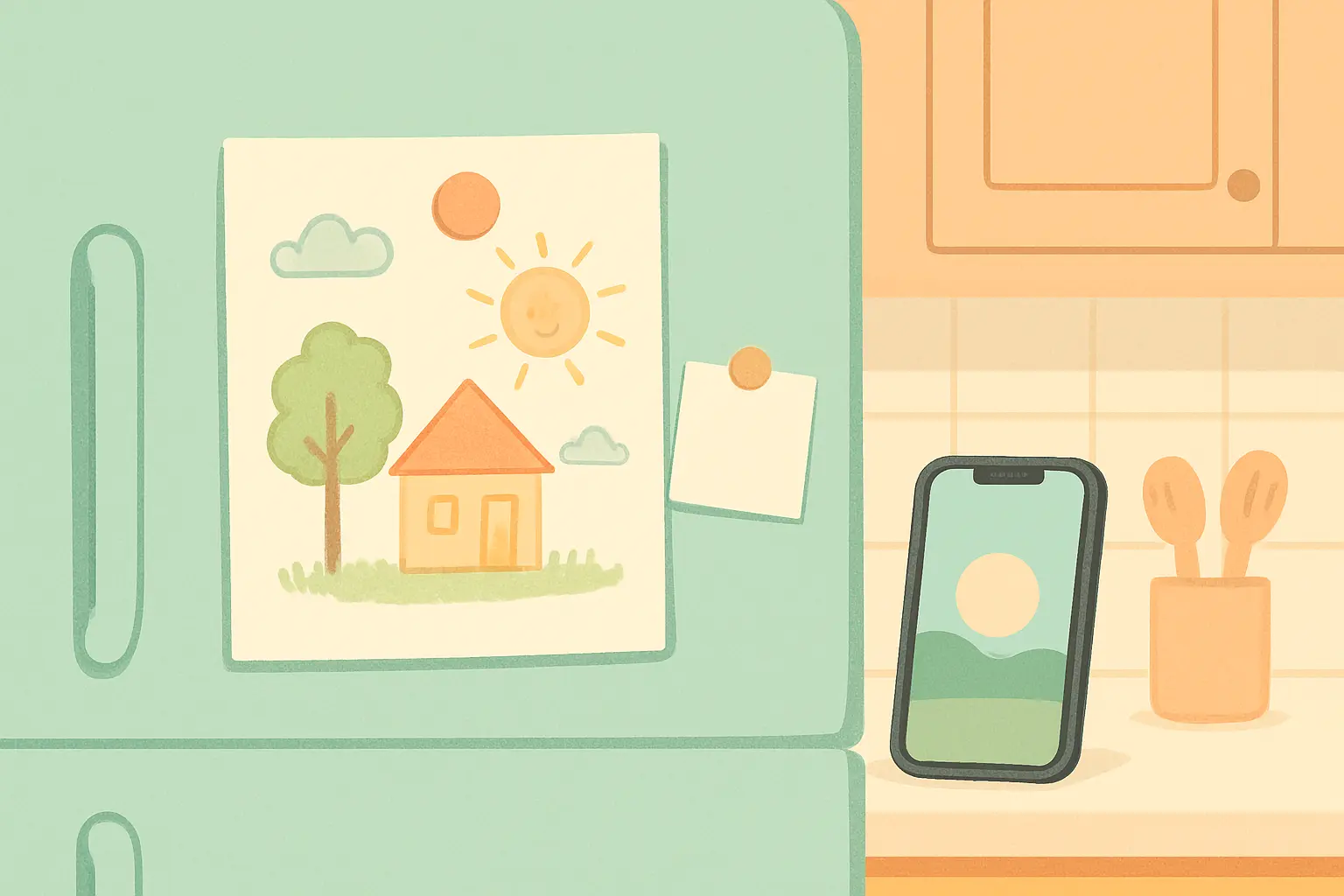
Each of these takes a feeling that fades and turns it into an object that does not.
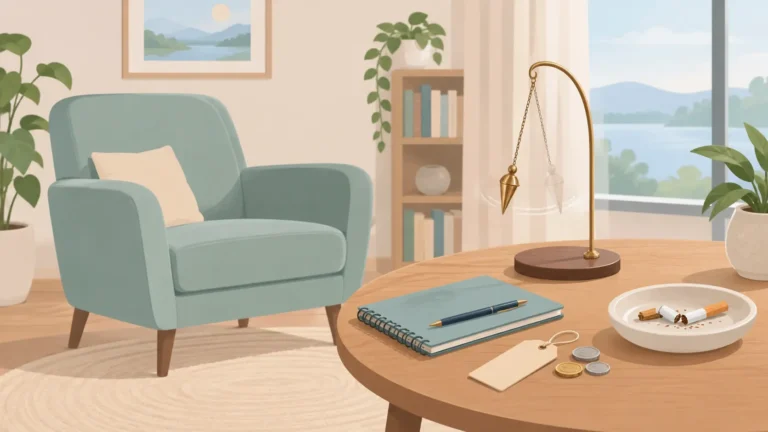
- Write the reason down in your own words, once. Not for my kids but the specific version: the thing you do not want to be doing when they are fifteen. The NHS advice during withdrawal is explicit about this: keep reminding yourself why you want to quit, because focusing on your reasons helps while your body adjusts.
- Put it somewhere you do not choose to look. A lock screen, the inside of the cupboard where the ashtray lived, the fridge door. A reminder you must decide to read is one you will stop reading by week two.
- Count something visible. Days, cigarettes not smoked, money not spent. A number does not need you to be in the mood.
- Spend the money where they can see it. Move the cigarette money to a jar or a named savings pot on payday and let it buy something specific. It is the only part of the motive your children can observe, and it does more work than any conversation about lungs.
- Pre-decide the two hard moments. Most parents name them without thinking: the ten minutes after the school run, and the hour after the children are in bed. Decide now what fills those two slots instead.
- Mark the milestones out loud. The NHS notes that once you reach 28 days smoke-free you are five times more likely to stay quit for good, so put that date in a calendar. Our guide to rewards and milestones covers how to structure them, and motivation that actually holds is for a flat day.
This is the job the iQuit app is built around. You write your reason once, and the AI coach surfaces it at the hours your own craving log says are risky, rather than at a time you picked while you felt fine. The dashboard keeps days smoke-free, cigarettes avoided and money saved visible without you going to look.
When Your Partner Still Smokes
This is the hardest version of the problem. A household where one adult has stopped and the other has not means cigarettes in the house, a smell that still triggers you, and a running negotiation you did not want.
Separate two things. Your own quit does not depend on their decision and should not be held hostage to it. Your children’s exposure does. On that, the AAP is clear that smoking in one room does not contain it, because air moves through a house, and that opening car windows is not enough.
What works is a small, specific request rather than a campaign. Not you should quit, but outside, not in the car, and keep the pack out of sight. Ultimatums about someone else’s addiction have a poor record and a high relationship cost.
One encouraging piece of evidence here comes with its own caveat. A review of 18 controlled trials of programs that encouraged parents to stop smoking for their children’s benefit found quit rates averaging 23.1 percent in the intervention groups against 18.4 percent in the controls, a significant increase. The same authors wrote plainly that most parents do not quit and that additional strategies to protect children are needed (Rosen et al., Pediatrics, 2012). The child-focused motive genuinely moves the numbers, and on its own it is not enough. Pair it with nicotine replacement or medication, a support service and a plan.
Frequently Asked Questions
Is quitting for my kids a strong enough reason on its own?
It is a strong reason and a weak mechanism. A review of 18 trials of child-focused cessation programs found higher quit rates in the intervention groups than the controls, but noted most parents in those trials did not quit (Rosen et al., Pediatrics, 2012). Treat it as the reason you write down, and pair it with nicotine replacement or medication and a support service.
Will my children definitely smoke because I do?
No. The largest review of 58 studies found raised odds, not certainty: the pooled odds of smoking uptake were 1.72 where at least one parent smoked and 2.73 where both did (Leonardi-Bee et al., Thorax, 2011). These are associations from observational research. Plenty of children of smokers never smoke, and plenty of smokers had non-smoking parents.
I only smoke outside. Are my children still affected?
Yes, to a degree. The American Academy of Pediatrics states that children whose parents smoke only outside are still exposed to the chemicals in secondhand smoke, and that quitting is the way to eliminate that exposure. The NHS adds that chemicals from smoke stay on your clothes. Smoking outside is a real improvement on smoking indoors; it is not the same as stopping.
How old should my children be before I tell them I am quitting?
Any age, with the length of the explanation matched to them. Under seven, one sentence is plenty. Seven to twelve will ask direct questions and deserve direct answers, including why you started. With teenagers, announce it and then say very little, because a warning from someone who has smoked for years reads as a lecture. Never make a child your accountability partner.
I smoked in front of my child. Have I undone it?
No. The NHS calls a single cigarette or puff a lapse rather than a relapse and advises shrugging it off and carrying on. Say one short true sentence to your child the same day and continue. What a child takes from the episode is mostly determined by what you do next, not by the cigarette itself.
My partner will not quit. Is there any point in me stopping?
Yes. The pooled odds of a child taking up smoking were lower where one parent smoked than where both did, 1.72 against 2.73 (Leonardi-Bee et al., Thorax, 2011), and halving the smoke in a home reduces exposure. Make specific, small requests about outdoors and the car rather than an ultimatum, and keep your own quit independent of their decision.
Put the Reason Where You Will See It
iQuit is built for the week your motivation goes quiet. Write your reason for quitting once and the AI coach brings it back at the hours your own craving log says are risky, not at a time you guessed. The dashboard keeps days smoke-free, cigarettes avoided and money saved in front of you, streak shields and slip recovery handle the bad day without ending the quit, and the health-recovery timeline gives you the next milestone to aim at. Free on Google Play and the App Store.