If you still have a disposable in a drawer, or you’ve seen one on a shop counter, you may be asking: are disposable vapes illegal in the UK? The answer depends on who is doing what. Selling and supplying them has been banned across the UK since 1 June 2025, but the rules are aimed at businesses. This page walks through what the law actually says, what it means if you still own one, and why the change can be a useful moment to stop vaping altogether.
Are Disposable Vapes Illegal in the UK? The Legal Position
The UK government’s guidance on the ban, last updated in July 2025, says: “It is illegal for businesses to sell or supply single-use vapes.” It adds that businesses cannot offer to sell or supply them, or stock them intending to do so. The ban came into force on 1 June 2025 and covers the UK’s four nations.
The detail sits in legislation. The Environmental Protection (Single-use Vapes) (England) Regulations 2024 say that a person “who supplies, offers to supply or has in their possession for supply a single-use vape” commits an offense. Those regulations define supply as supply, whether by way of sale or not, in the course of a business.
Read that closely and two things stand out. “Possession” in these rules means possession for supply, in other words holding stock to sell or hand out as a business. And the text does not create an offense for someone who owns or uses a vape they already have. Scotland, Wales and Northern Ireland have their own regulations, and they take the same approach: the Scottish, Welsh and Northern Ireland texts each make it an offense to supply, offer to supply, or possess a single-use vape for supply, with supply defined as supply in the course of a business. Northern Ireland’s 2025 amendment added an offense of failing to comply with a government direction to dispose of vapes, which the law firm Tughans describes as aimed at retailers and suppliers holding stock. None of these texts creates an offense for simply owning or using a vape. This is general information, not legal advice.
Who Is Breaking the Law, and Who Isn’t
| Situation | Position under the regulations |
|---|---|
| A shop or online seller sells a single-use vape | Offense |
| A business offers one for sale, or gives them away in the course of business | Offense |
| A business keeps stock intended for supply | Offense |
| A person owns or uses a disposable they already have | No offense created by these regulations |
So if someone sells you a disposable today, they are the one breaking this law. A disposable offered for sale now is a sign that the seller is ignoring the rules, and that is worth remembering if you’re tempted to buy one “just this once.”

What Counts as a Single-Use Vape
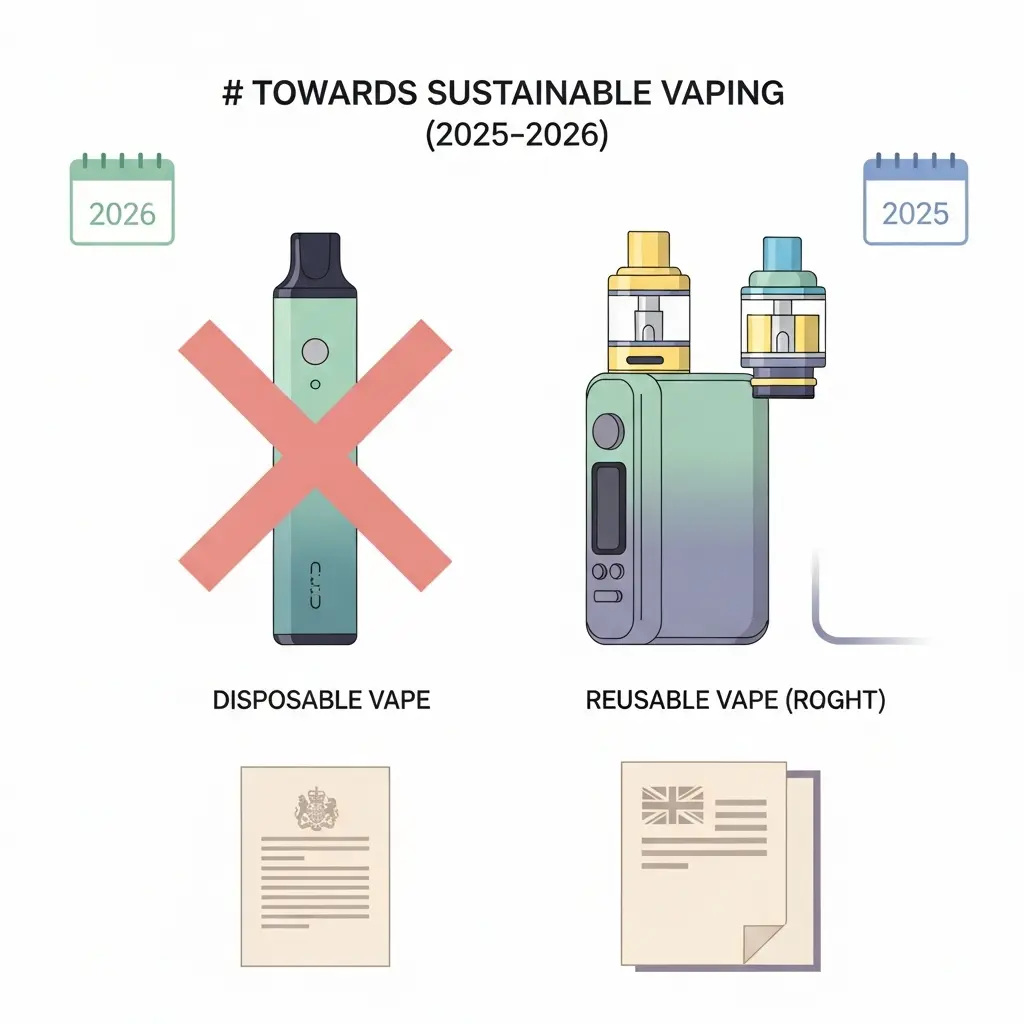
The guidance defines the term simply: single-use vapes are not designed or intended for reuse. A vape is single-use if it has a battery you cannot recharge or if it is not refillable. The ban applies to vapes with or without nicotine, and to sales in shops and online.
If a vape is reusable, it can still be sold. But a legal product is not the same as a safe or recommended one. The NHS says the healthiest option is not to smoke or vape, and that people who vape to stop smoking should aim to quit vaping too once they feel sure they will not go back to cigarettes.
Buying One Now: What to Watch For
The law is aimed at sellers, but that does not make a disposable a sensible purchase. If a shop is willing to ignore this ban, you have no way of knowing what other rules it is ignoring. And if you are trying to cut down or stop, a fresh disposable is the habit coming back through the door.
Some products look like disposables but are sold as rechargeable. The government guidance sets out what a vape must have to count as reusable:
- a rechargeable battery;
- a refillable container for the e-liquid, such as a chamber, capsule, cartridge, pod or tank;
- a removable and replaceable coil, if the vape contains a coil.
Refills, and coils where there is one, should be separately available for users to buy. The guidance says it is the seller’s responsibility to check that products meet the definition, and that a business unsure about a product can contact its local Trading Standards. None of this is a recommendation to buy one. The aim is to help you see what the rules are, so you can decide what comes next for you.
Four Common Mix-Ups About the Ban
- “The ban means vaping is illegal now.” It doesn’t. The ban is on single-use vapes. Reusable vapes can still be sold.
- “Keeping a disposable at home is a crime.” The regulations in each UK nation create offenses around supplying vapes in the course of business, and possessing them for supply. None of them creates an offense for simply keeping one.
- “Nicotine-free disposables are fine.” The guidance says the ban applies to all vapes whether or not they contain nicotine.
- “Online sellers aren’t covered.” The ban applies to sales online and in shops, and to businesses including convenience stores, market stalls, petrol stations, specialist vape shops, supermarkets, wholesalers and importers.
Penalties for Selling Them, by Nation
Enforcement varies across the UK, according to the government guidance. Here is the summary it gives, which applies to sellers rather than people who use vapes.
- England: Trading Standards usually starts with civil sanctions such as a stop notice, a compliance notice or a £200 fine, and can seize vapes. Continued offending can lead to an unlimited fine and up to two years in prison.
- Wales: Civil sanctions include fixed fines. Magistrates’ courts can impose an unlimited fine and up to six months in prison; the Crown Court up to two years and an unlimited fine.
- Scotland: A fixed penalty of £200 for a first offense, reduced to £150 if paid within 14 days. Conviction on indictment can bring up to two years in prison, a fine, or both.
- Northern Ireland: No civil sanctions. A fine of up to £5,000 on summary conviction, and up to two years in prison, a fine, or both on conviction in the Crown Court.
If You Still Have a Disposable
Check drawers, coat pockets, bags and the glove box. Then decide what you’re going to do with them, because a stash makes quitting harder. Defra’s advice is direct: “If you’ve got a collection of used up vapes in a drawer at home, don’t bin them.” Return them to your vape supplier or take them to your nearest recycling point. Retailers have a legal duty to provide collection points for waste vapes. If you want a step-by-step routine, including what to do with the battery, read how to dispose of vapes safely.
Keeping one “for emergencies” is a common way a quit attempt unravels. If you’ve decided to stop, clear them all out on the same day.
It can also help to write down why you used disposables in the first place. Was it convenience, the flavor, or never having to think about charging or refilling? Each answer tells you what your plan needs to replace. If it was convenience, line up something just as easy for the moments you used to reach for one, such as a glass of water, a short walk, or a text to someone who knows you are stopping. If it was mostly being around other people who vape, plan for that too.
What Else Has Changed: Vape Duty
The ban is no longer the only change. The government’s Vaping Products Duty was set to apply from 1 October 2026, at a flat rate of £2.20 per 10 millilitres of vaping liquid, whatever its nicotine content. If you’re watching what vaping costs you, that is another reason to do the math. To see how the numbers look across the UK, the UK vaping statistics page covers how many people vape and how disposables have changed. Further rules are also coming through the generational smoking ban and vapes bill.
Using the Ban as Your Reason to Stop
When the product you depended on disappears, you have a decision to make. You could look for another way to keep vaping, or you could use the moment to stop. The NHS advice on how to quit vaping offers two routes:
- Gradually. The NHS says cutting down on nicotine vaping gradually can make quitting easier, for example by checking your e-liquid’s nicotine content and reducing it over time.
- In one step. You can ask a pharmacist or stop smoking adviser about switching to nicotine replacement therapy, which may also ease withdrawal.
The NHS also says it is okay if it takes a few tries to quit for good, and that going back to vaping is much better than starting to smoke again. If you smoke as well as vape, that matters: don’t let the ban push you back to cigarettes. In England, the NHS says your local Stop Smoking Service is free, and advisers can support you with one-to-one or group sessions in person, by phone or by video call.
A clear plan helps most. If disposables were your device, how to quit disposable vapes step by step walks through the switch from “constant puffs” to nothing. And if you’re under 18, the NHS is plain that young people should not take up vaping. Talk to a parent, GP or school nurse about help to stop.
Frequently Asked Questions
Is it illegal to own a disposable vape in the UK?
The regulations for England, Scotland, Wales and Northern Ireland each make it an offense to supply, offer to supply, or hold a single-use vape for supply in the course of a business. None of them creates an offense for simply owning one. This is general information, not legal advice.
Can shops still sell disposable vapes in the UK?
No. Since 1 June 2025, it has been illegal for businesses in England, Scotland, Wales and Northern Ireland to sell or supply single-use vapes, whether in a shop or online. Reusable vapes can still be sold.
What is the fine for selling disposable vapes?
In England, Trading Standards usually starts with civil sanctions such as a stop notice or a £200 fine, and continued offending can lead to an unlimited fine and up to two years in prison. Penalties differ in Wales, Scotland and Northern Ireland.
What should I do with old disposable vapes?
Do not put them in your household bin. Defra says to return them to your vape supplier or take them to your nearest recycling point, and that retailers have a legal duty to provide collection points for waste vapes.
Should I switch to a rechargeable vape after the ban?
If you do not smoke, the NHS says the healthiest option is not to smoke or vape. If you vape to stay off cigarettes, the NHS advises aiming to quit vaping too once you are sure you will not go back to smoking. A free local Stop Smoking Service can help in England.
Stopping Vaping With iQuit
If the ban has you thinking about stopping for good, a clear record of your urges can help. iQuit is free on Google Play and the App Store. You can log cravings with their triggers and intensity, use SOS support when an urge hits, and choose cold turkey or gradual reduction. If you are in the UK, your local Stop Smoking Service can also help.
Download iQuit Free on Google Play Download on the App Store