If you picked up a disposable vape to get off cigarettes, how to quit disposable vapes is a different question from how to quit a refillable one, and most generic vaping guides skip the part that actually trips people up: a disposable has one fixed nicotine strength baked in, no dial to turn down, and no way to taper the device itself. This guide gives you three realistic exits, a way to work out what you are actually taking, and an hour-by-hour plan for the first two weeks.
Why disposables are harder to taper
A refillable vape lets you buy the same e-liquid in a lower strength next month and keep everything else the same: the device, the draw, the ritual. A disposable does not give you that option. The nicotine concentration is sealed inside at manufacture, so the only variables you control are how often you puff and how many devices you go through. That is a much blunter set of levers than a taper is supposed to give you.
It matters because it changes which of the standard step-by-step vaping quit plans actually apply to you. A plan built around lowering e-liquid strength assumes a refillable tank. If you have been buying disposables, that advice is not wrong, it just is not written for your device, which is exactly the gap this guide fills. If you want the wider evidence-based case for quitting any vape, not just the disposable format, our evidence-based answer on how to quit vaping is a useful companion read.
Worth knowing before you plan anything: single-use disposable vapes are no longer legal to sell or supply in the UK. As the UK disposable vape ban explainer covers in full, the sale ban took effect on 1 June 2025, so UK readers restocking a disposable habit are already being pushed toward reusable devices or a full quit whether they planned it or not.
Work out what you’re actually taking
Before choosing an exit route, work out your real daily nicotine intake. Disposables are labelled by e-liquid volume in millilitres and nicotine strength in mg/mL — multiply the two and you get total nicotine in the device, then divide by the number of days one device lasts you to get a rough daily figure. A 2 mL device at 20 mg/mL contains 40 mg of nicotine; if it lasts you two days, that is roughly 20 mg a day.
Two things skew this estimate, so treat it as a starting point rather than a lab result. First, not all of the liquid in the pod is actually inhaled and absorbed — a meaningful share is exhaled or lost in the heating process, so your real absorbed dose is lower than the label math suggests. Second, how hard and how often you puff changes how much of that nicotine you actually pull into your body in a day, which is why two people using an identical device can be at very different levels of dependence.
What the number is useful for is comparison, not precision: it lets you see whether you are closer to a light smoker’s intake or a heavy one’s, which is the detail that determines the starting NRT strength later in this guide, and it gives you a baseline to check your progress against if you switch to a refillable and start counting mg/mL instead of devices.
This short UK Health Security Agency demonstration shows why the NHS still frames vaping, disposable or not, as a harm-reduction step rather than a finish line.
Option 1: Switch to a refillable to step down
The most direct fix for the no-taper problem is to stop buying disposables and move to a refillable pod system or vape pen, where you choose the e-liquid strength yourself. This gets you back the dial that disposables took away.
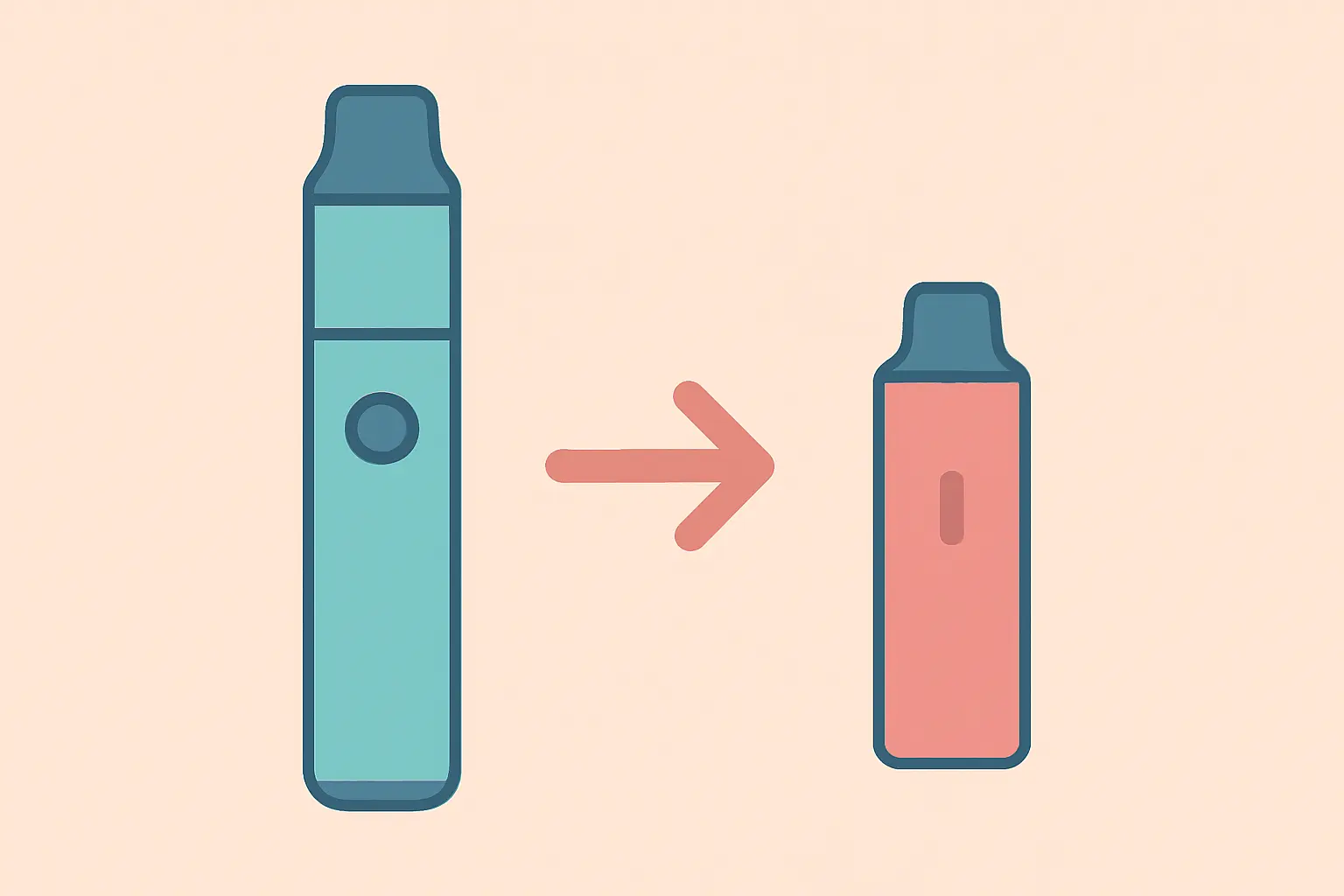
The NHS’s own guidance on vaping to quit smoking backs the general move to vaping over continued smoking, noting that people are roughly twice as likely to quit smoking using a nicotine vape compared with other nicotine replacement products such as patches or gum. That comparison is about vaping versus smoking, not about disposables versus refillables specifically, but it explains why switching device type rather than abandoning vaping altogether is a reasonable middle step if cigarettes are still the thing you are actually trying to stay away from.
- Match your starting strength to your disposable’s mg/mL, not to what feels “safer” — starting too low usually sends people back to their old disposable within a week.
- Hold each strength for at least two weeks before dropping again. If your puff count climbs after a cut, you dropped too fast.
- Buy one strength lower than your current one each time you restock, so there is no leftover disposable pulling you back.
- Set an end date for reaching 0 mg or stopping altogether, and write it down somewhere you will see it.
Option 2: Cut the number of devices per week
If switching hardware is not realistic right now — cost, a device you already trust, or simply not wanting to deal with tanks and coils — you can taper by frequency instead of strength. This is a blunter tool than adjusting mg/mL, but it works if you track it honestly.
Pick a starting weekly count from your last two weeks of actual purchases, not what you wish it were. Cut by roughly 10–15% every week, holding for an extra week whenever cravings spike rather than pushing through. A rough example: seven devices a week becomes six, then five, over five or six weeks, with pauses built in rather than a straight line down. The schedule only works if the number you start from is accurate, so count your empties for a few days before you set the target.
The weak point of this method is that people compensate by puffing harder or more often on the devices they do use, which quietly cancels the cut. If you notice yourself doing that, that is a sign to try Option 1 instead, where the strength itself comes down rather than relying on willpower to ration puffs.
Option 3: Stop outright and manage the first 72 hours
Some people do better setting a hard stop date than managing a taper that can always be postponed by “one more device.” If that is you, the first 72 hours are the part to plan for, because nicotine withdrawal peaks in roughly that window before it starts to ease — our vape withdrawal timeline breaks the full curve down day by day if you want more detail than the summary below. Stopping this way also settles the underlying comparison some people ask about: how a disposable’s nicotine load stacks up against cigarettes is worth reading if you switched from smoking to a disposable and are now trying to quit that too.
- Hour 0–24: Expect irritability, restlessness and strong urges at your usual trigger moments (waking up, after meals, driving). This is the point where a craving-logging tool that records trigger and intensity, like iQuit’s craving log, is most useful — it turns a vague “I need to vape” into a pattern you can actually see and plan around.
- Day 2: Often the hardest day. Sleep can be disrupted and concentration dips. Have NRT and a distraction plan ready before you wake up, not after the craving hits.
- Day 3: Physical symptoms usually start to soften even if the mental pull has not. This is a common relapse point precisely because people assume it should already feel easier.
SOS tools matter most in exactly this window: box breathing (4-4-4-4), the 5-4-3-2-1 grounding technique, and a virtual cigarette you can press and hold while a craving passes are built for the specific 2–5 minute spike a craving usually follows, not for willpower over hours. NICE’s guideline on tobacco dependence treatment covers behavioral support alongside medicine for exactly this kind of quit attempt, for anyone aged 12 and over. If you would rather compare dedicated tracking apps first, our ranked comparison of quit-vaping apps covers the field beyond iQuit.
NRT alongside a vape quit
Nicotine replacement therapy is not just for people quitting cigarettes directly — it is also a reasonable bridge if you are stopping a disposable outright rather than tapering the device. The NHS notes that you can use nicotine patches alongside a vape, or with nothing at all, because patches give ongoing background support by releasing nicotine slowly, while a fast-acting product like gum or a lozenge covers a sudden spike.
Match the NRT strength roughly to the daily nicotine estimate you worked out earlier: a higher estimated intake generally points toward a 21 mg patch plus a fast-acting product for breakthrough cravings, while a lower estimate may suit a 14 mg patch. Our guides to comparing NRT formats and picking from the full range of nicotine replacement options go through the specifics, including label-based dosing. Always follow the product label rather than estimating your own strength beyond that starting point, and check with a pharmacist if you are combining NRT products for the first time.
The bin-it day and what to do with spares
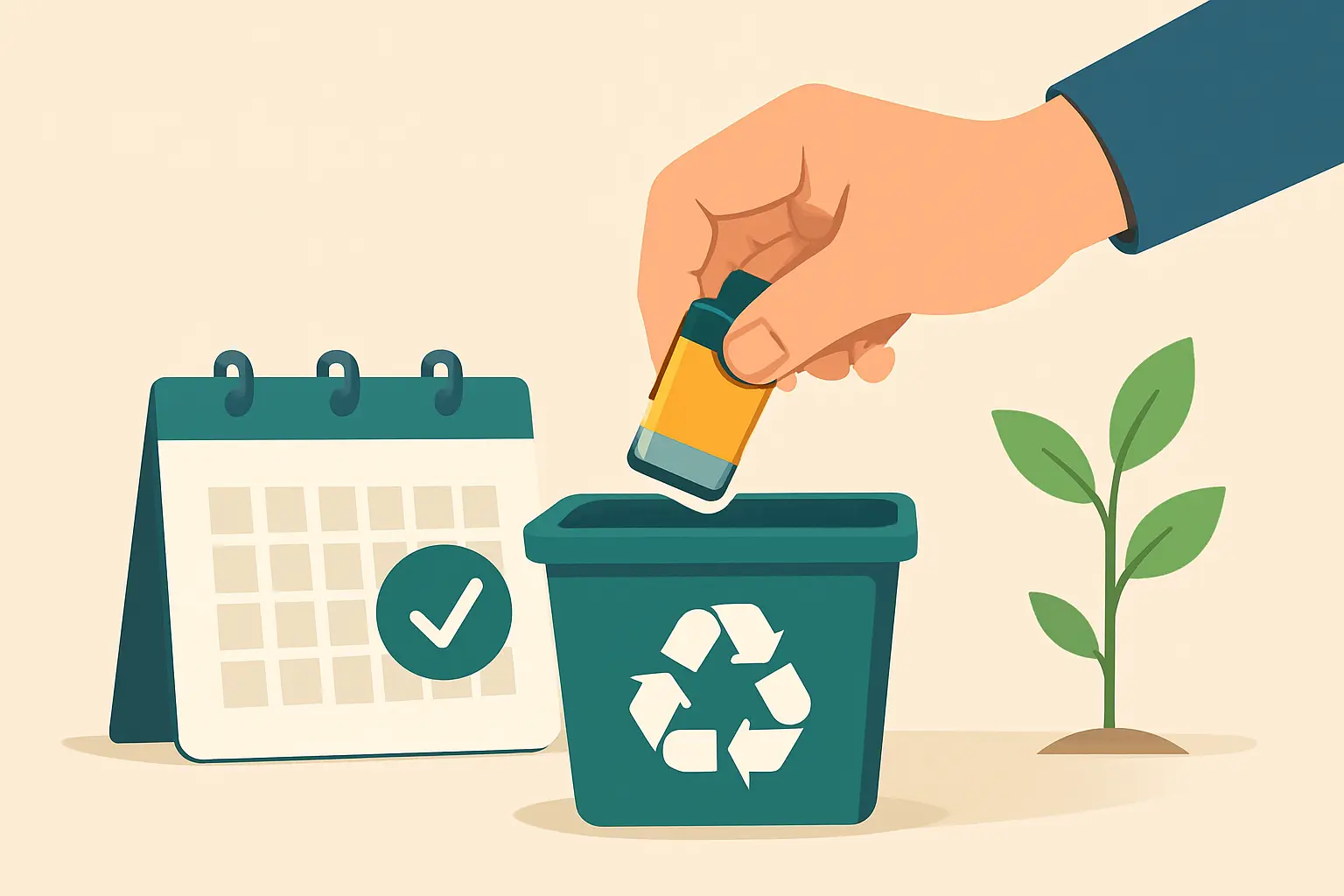
Pick a specific day to get rid of every spare disposable in the house — not “eventually,” an actual date on the calendar. Having a stash within reach is one of the most common reasons a planned taper or a hard stop quietly fails in week one.
Disposables are electronic waste, not household rubbish. The NHS is explicit that vapes, including single-use disposables, are classed as Waste Electrical and Electronic Equipment, and should never go in general waste: damaged batteries in a bin lorry or at a waste site are a real fire risk, and discarded devices that break down outdoors leak heavy metals and other pollutants into the environment. Take spares back to the shop where you buy replacements, a pharmacy that accepts vape returns, or your local household waste recycling centre — most areas now have dedicated vape recycling points.
If you are not ready to destroy every spare the day you quit, at minimum move them out of sight and out of your usual routine — a drawer at work, a box in the garage — so the decision to use one takes a deliberate extra step rather than being the easiest thing within arm’s reach.
Days 1–14 hour by hour
| When | What to expect | What to do |
|---|---|---|
| Hours 0–24 | Peak urge frequency, restlessness, irritability | NRT if planned, SOS breathing, remove spares from reach |
| Days 2–3 | Physical peak, disrupted sleep, low mood | Keep NRT consistent, log every craving’s trigger and intensity, avoid decisions made mid-craving |
| Days 4–7 | Symptoms start to ease unevenly; hand-to-mouth habit is now the main pull | Find a physical substitute (gum, a fidget object, a short walk), keep tracking your streak |
| Days 8–14 | Fewer, shorter cravings, but specific triggers (stress, alcohol, a particular friend) still catch people | Identify your top two trigger situations from the log and plan a specific response for each |
If you slip and use a device during this window, that is data, not a reason to start over from zero in your head. Streak shields and slip-recovery tools exist for exactly this — noting the slip, noting what triggered it, and picking the plan back up the same day rather than waiting for a symbolic new “day one.”
Frequently Asked Questions
Can I taper a disposable vape the way I would a refillable one?
Not directly — a disposable’s nicotine strength is fixed at manufacture, so there is no dial to turn down on the same device. You can taper indirectly by switching to a refillable device and lowering the e-liquid strength there, or by reducing how many disposables you use per week, but you cannot lower the strength of a disposable itself (NHS, 2026).
Are disposable vapes still legal to buy?
In the UK, no — single-use disposable vapes have been illegal to sell or supply since 1 June 2025, and reusable, refillable devices are the legal alternative on sale. Rules differ elsewhere, so check your own country’s current position before assuming disposables are still available where you live (NHS; iQuit UK disposable vape ban explainer, 2026).
Is it better to quit a disposable vape cold turkey or gradually?
Both are valid and the right choice depends on you. A hard stop suits people who find an open-ended taper easy to postpone; switching to a refillable and stepping the strength down suits people who do better with a gradual reduction. If you stop outright, plan specifically for the first 72 hours, since that is when nicotine withdrawal is usually most intense.
How do I know how much nicotine I’m actually getting from a disposable?
Multiply the device’s e-liquid volume in mL by its nicotine strength in mg/mL to get total nicotine content, then divide by how many days one device lasts you for a rough daily figure. Treat it as an estimate, not an exact dose — not all the liquid in the pod is absorbed, and puffing style changes the real amount you take in.
Can I use nicotine patches while I still vape occasionally?
The NHS notes you can use patches alongside a vape if needed, since patches give ongoing background support by releasing nicotine slowly while you top up cravings with the vape. This is commonly used as a bridge while stepping down rather than a permanent combination, and dosing should follow the patch label (NHS, 2026).
What should I do with leftover disposable vapes?
Never put them in general household waste. Disposables are classed as Waste Electrical and Electronic Equipment because of the battery inside, and damaged batteries in bins or waste vehicles are a fire risk. Return them to a shop that sells replacements, a participating pharmacy, or your local household waste recycling centre (NHS, 2026).
Is vaping without nicotine a good way to finish quitting a disposable?
It can work as a short, dated final step once nicotine is essentially handled, mainly to let go of the hand-to-mouth habit. It is not a treatment for nicotine withdrawal itself, since there is no nicotine left to taper, so set an end date before you start rather than letting it become an open-ended replacement habit.
What if I slip and buy another disposable during my quit?
Treat it as information rather than a failed attempt — note what triggered it, then return to your plan the same day instead of waiting for a new start date. Streak-shield and slip-recovery features are built specifically for this moment, since a single slip is a far smaller setback than the delay caused by abandoning the attempt entirely.
Track cravings while you quit disposable vapes
iQuit logs every craving by trigger and intensity, gives you SOS breathing and grounding tools for the first 72 hours, and keeps your streak going even through a slip. Free on Google Play and the App Store.
Download iQuit Free on Google Play
Download on the App Store